
Clothes Have Always Had Something To Say
Clothes have always carried information, even if a large portion of the population didn’t necessarily know it did. Sometimes it was a look tied to a political group that wanted to be recognized in a crowd. Other times, it was a styling choice that only made sense once you knew the social rules of a specific city, scene, or decade. Here are twenty styles that came with extra meaning, whether you wore them for the message or just liked the look.

1. Zoot Suits
The zoot suit became a flashpoint in the early 1940s, especially for Mexican American, Black, and Filipino youth in Los Angeles. It's often featured a long overcoat, wide lapels, padded shoulders, and high-waisted, wide-leg pants. The 1943 Zoot Suit Riots pertain to the era’s wider struggles with racialized violence and World War II fabric rationing.
 William P. Gottlieb on Wikimedia
2. Black Berets
Black berets became strongly associated with the Black Panther Party, which used coordinated clothing as a visible sign of discipline and political presence, while also signaling their desire to push against conformity.

3. Mao Suits
The Zhongshan suit, often called the Mao suit in the West, became widely worn in China after 1949 as the new government promoted a uniform public look. Its plain cut and standardized feel were closely tied to Communist Party ideals, especially during the Cultural Revolution, when standing out through dress could bring unwanted attention.
 Unknown authorUnknown author on Wikimedia
4. Safety Pins
Safety pins moved from household object to punk signifier in the late 1970s, turning up as jewelry and as visible garment fixes. The styling choice, as well as the punk movement, appeared as a response to working-class challenges of the time.

5. The Handkerchief Code
In parts of gay male culture, colored bandanas worn in back pockets signaled specific preferences and availability. The code circulated through community knowledge and gay press, but didn’t look like much to someone outside of the circle.

6. The Pink Triangle
The pink triangle began as a badge used by the Nazi regime to mark imprisoned gay men in concentration camps. Reclaimed later by activists, particularly during the AIDS crisis, it started appearing in protest graphics and public art. Its modern use carries a direct link to both persecution and political organizing.

7. Suffragette Colors
White, purple, and green were widely used by parts of the women’s suffrage movement, including the Women’s Social and Political Union in Britain. These colors appeared on sashes and accessories in marches because coordinated dress helped groups show unity in public.
 Unknown authorUnknown author (possibly 'Gilette'?) on Wikimedia
8. The Power Suit
In the 1980s, the structured suit became shorthand for women signaling authority in workplaces that still treated “professional” as synonymous with male dominance. Strong shoulders and crisp tailoring communicated seriousness in settings where women needed to give a more masculine appearance.
9. Labrys Jewelry
The labrys, a double-headed axe symbol, became associated with lesbian feminism and lesbian identity in the 1970s, showing up on jewelry and patches within activist circles. Wearing it functioned as a quiet signal of community, and the symbol later appeared on the lesbian labrys flag design, which helped reinforce the connection in modern memory.

10. Denim
Denim started as workwear, then became a recurring symbol of anti-establishment style in mid-twentieth-century youth culture. Wearing jeans in places that expect formal dress reads as a refusal to perform. Cultural institutions that document American workwear often trace this shift with wider issues surrounding class, labor, and public behavior.

11. White Dresses
All-white outfits have been used as coordinated political dress in women-led movements, including suffrage and Black Trans Lives Matter. Originally, the white represented purity and virtue in suffragette circles, but it is commonly used to represent a collective voice in modern contexts.

12. The Dashiki
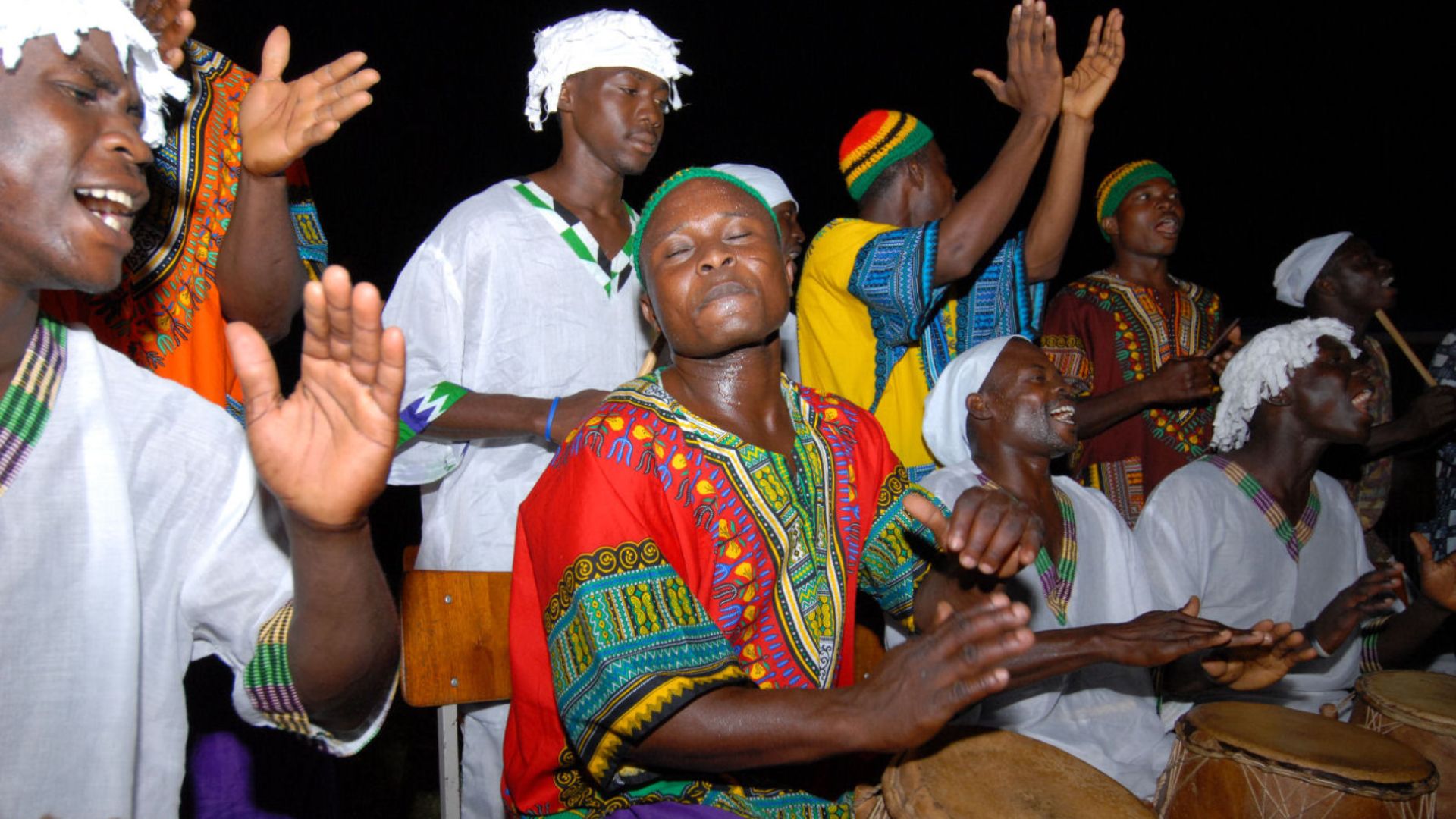
The dashiki became widely visible in the United States during the 1960s and 1970s as part of Black cultural pride and Pan-African identity. Wearing it could signal political awareness and connection to heritage, especially during the Black Arts Movement era.
13. The Leather Jacket
The leather jacket became a recognizable sign of rebellion through film and music culture, and it later took on layered meaning across different communities. In gay leather culture, it also functioned as a marker of identity and belonging in social spaces built for community.

14. Dr. Martens Boots
Dr. Martens began as durable work footwear, then moved into street style through subcultures in the UK and beyond. Over time, the boots became tied to punk scenes and skinhead scenes, but don’t have as much political or cultural association today.

15. Rosie-Style Headscarves
The tied headscarf, especially the rolled bandana style, is strongly associated with women’s industrial labor during World War II in the United States. Government poster imagery and wartime photography helped cement it as a visual sign of women “doing men’s work.”

16. The Phrygian Cap
The Phrygian cap is closely tied to the French Revolution and appears in historical art as a symbol of liberty. It shows up in iconography connected to republican ideals, including national imagery that circulated widely in Europe.

17. Sans-Culottes Trousers
During the French Revolution, “sans-culottes” referred to working-class radicals who rejected the knee breeks worn by elites. Wearing long trousers became part of a visible class statement, tied to political alignment and public identity.

18. Ladder-Laced Boots
Ladder lacing is a specific way of threading boot laces so they form clean horizontal bars across the front. In punk and skinhead scenes, lace choices sometimes carried coded meaning, and this style made lace color stand out more clearly. While not as common today, many folks still use ladder lacing as a physical symbol of their political affiliations or personal beliefs.
 José Martin Segura Benites on Pexels
19. Prep Styling
Preppy styling connected to Ivy League campuses became shorthand for class, access, and a certain kind of American respectability. The look traveled far beyond the schools themselves, functioning as a visual credential in some workplaces and social spaces.

20. Green Carnations
In the late nineteenth century, the green carnation became a recognizable symbol in queer circles in London and Paris. Oscar Wilde is widely linked to popularizing it, and the unusual color made it easy to spot on a lapel in a crowded room.