
The Day They Vanished
My name is Mara, and for the past ten years I've lived with a wound that never closed. I still remember that Friday morning like it was yesterday. Mom was packing her favorite trail mix while Dad loaded their old blue pickup with camping gear. "We'll be back Sunday evening, honey," Mom said, hugging me goodbye. "Don't forget to water the plants." Dad winked and tossed me the spare house key – our little ritual. I stood in the driveway waving as they pulled away, the desert sun glinting off their windshield. If I had known that casual goodbye would be our last, would I have said something different? Held on longer? Now, sitting in my apartment surrounded by police reports, satellite images, and faded missing person flyers, that final wave haunts me. Their coffee mugs from that morning still sit in my cabinet – I couldn't bear to move them. People tell me I need to "let go" after all this time, but how do you let go of a story without an ending? The desert took my parents that weekend, and with them, it took my ability to trust that goodbyes are temporary.
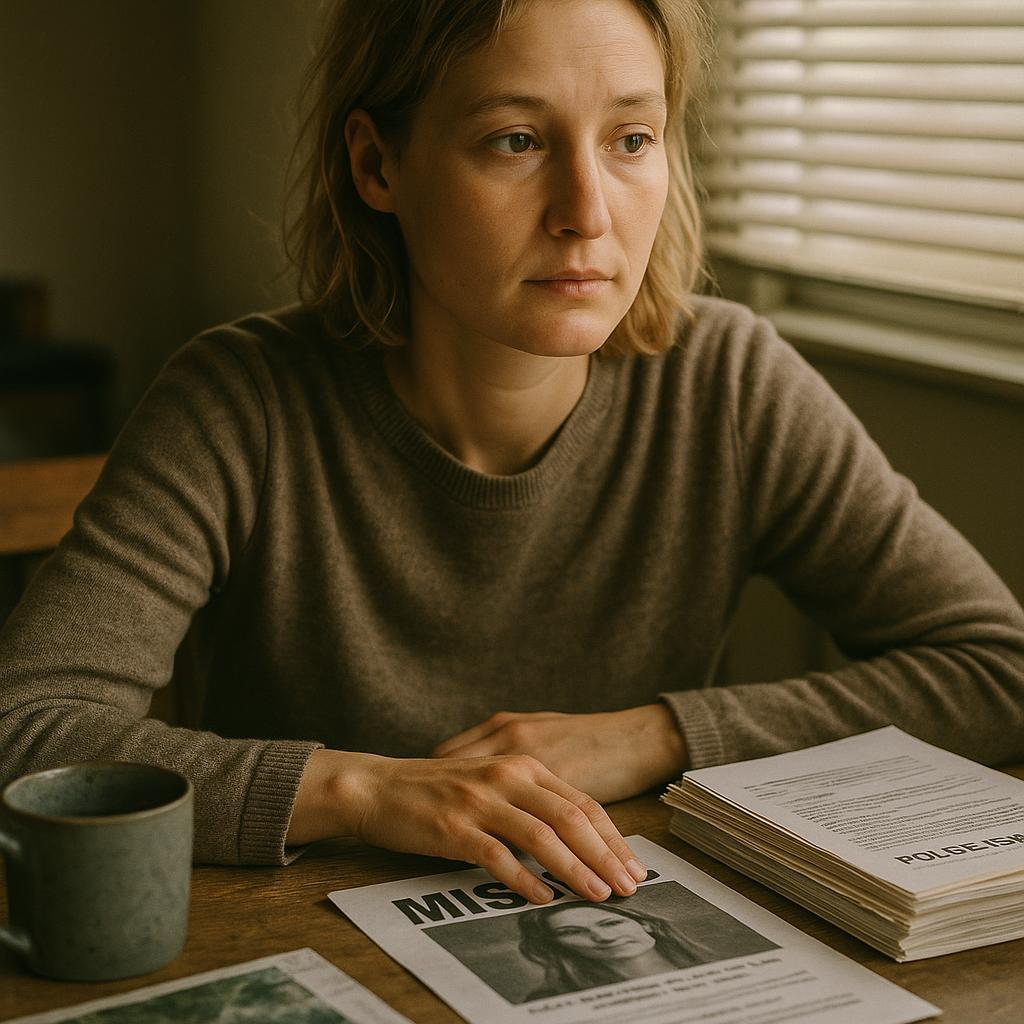 Image by RM AI
Waiting for Sunday
Sunday arrived with a golden sunset that painted my kitchen walls the same amber hue as when Mom and Dad left. I'd spent the afternoon preparing their favorite welcome-home meal—Dad's beloved pot roast with those little potatoes he always picked out first, and Mom's apple cobbler cooling on the counter. Six o'clock came and went. I checked my phone for the hundredth time—no messages, no missed calls. 'The reception out there is terrible,' I reminded myself, stirring the gravy that was starting to form a skin. By eight, I'd called their voicemail just to hear their voices. 'They probably got a late start,' I reasoned, wrapping the untouched dinner plates with plastic. 'Or maybe they stopped to help someone with car trouble.' That was so like them. By midnight, I'd created a dozen scenarios in my head—all of them ending with them walking through that door, apologizing for worrying me. I curled up on the couch, our family photo album open beside me, my phone clutched in my hand with the ringer volume maxed out. 'They'll be here by morning,' I whispered to our empty house as my eyes grew heavy. I fell asleep that night still believing in temporary goodbyes, completely unaware that tomorrow would be the first day of my new life—a life defined by their absence.
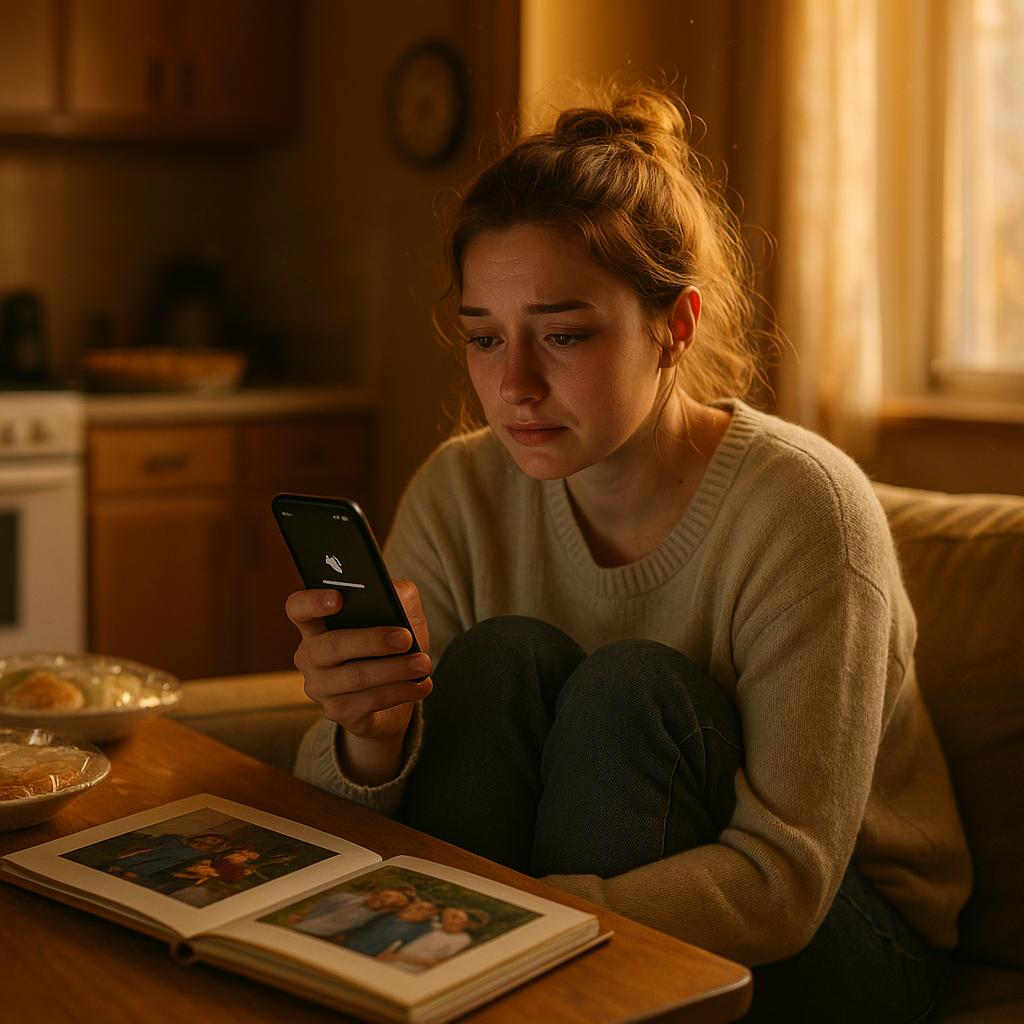 Image by RM AI
Monday's Dread
Monday morning arrived with a heaviness I'd never felt before. The pot roast sat untouched in the fridge, a painful reminder that something was wrong. I called Mom's best friend, Janet, who hadn't heard from them. Then Dad's fishing buddy, Mike. No one had any news. By noon, I was dialing every hospital within a hundred-mile radius of the desert park. "No patients matching that description," each voice told me with clinical detachment. My hands shook as I finally called the park rangers, explaining my parents were a day late. "Ma'am, folks often extend their stays when the weather's nice," the ranger said, his voice kind but dismissive. "Cell service is spotty out here." I stared at the last photo they'd sent me—Dad pointing at a sunset, Mom laughing beside him, their faces glowing orange in the fading light. I zoomed in, searching for clues I knew weren't there. Every few minutes, I checked my phone, willing it to ring. The house felt impossibly quiet. That night, I slept with my car keys in my hand, half-convinced I should drive out there myself. But where would I even start looking in 1.5 million acres of wilderness? The desert is vast and unforgiving, and as I drifted into uneasy sleep, I couldn't shake the feeling that it was already too late.
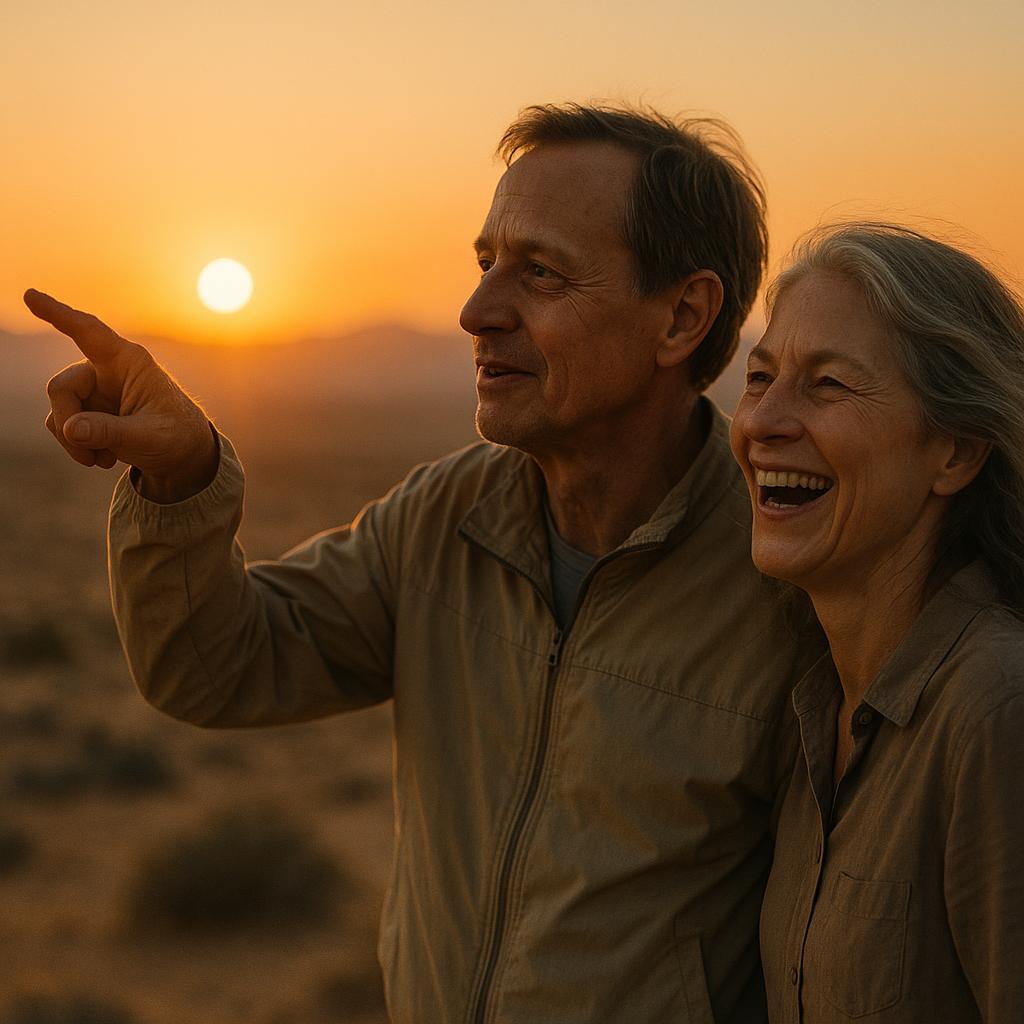 Image by RM AI
The Official Search Begins
Tuesday morning, I walked into the police station with shaking hands and a folder of photos. "My parents are missing," I said to the desk sergeant, my voice cracking. The officer who took my statement—Officer Reyes according to his nameplate—nodded mechanically as I described their planned route, the camping equipment they'd packed, Dad's heart medication. "Three days is significant," he admitted, but his tone suggested this was routine for him. By afternoon, a search and rescue team had been assembled. "Stay by your phone," the coordinator told me. "We'll call with updates." I nodded, though the thought of sitting alone with my ringing phone was unbearable. That night, I couldn't face my empty apartment. I drove back to my parents' house instead, crawling into their bed like I used to during thunderstorms as a child. I buried my face in Mom's pillow, inhaling the faint scent of her lavender shampoo, terrified that even this small piece of her was already fading. The search helicopter's spotlight swept across their bedroom window every few hours, a harsh reminder that somewhere in the vast desert, my parents might be seeing that same light, desperately hoping to be found. Or worse—not seeing it at all.
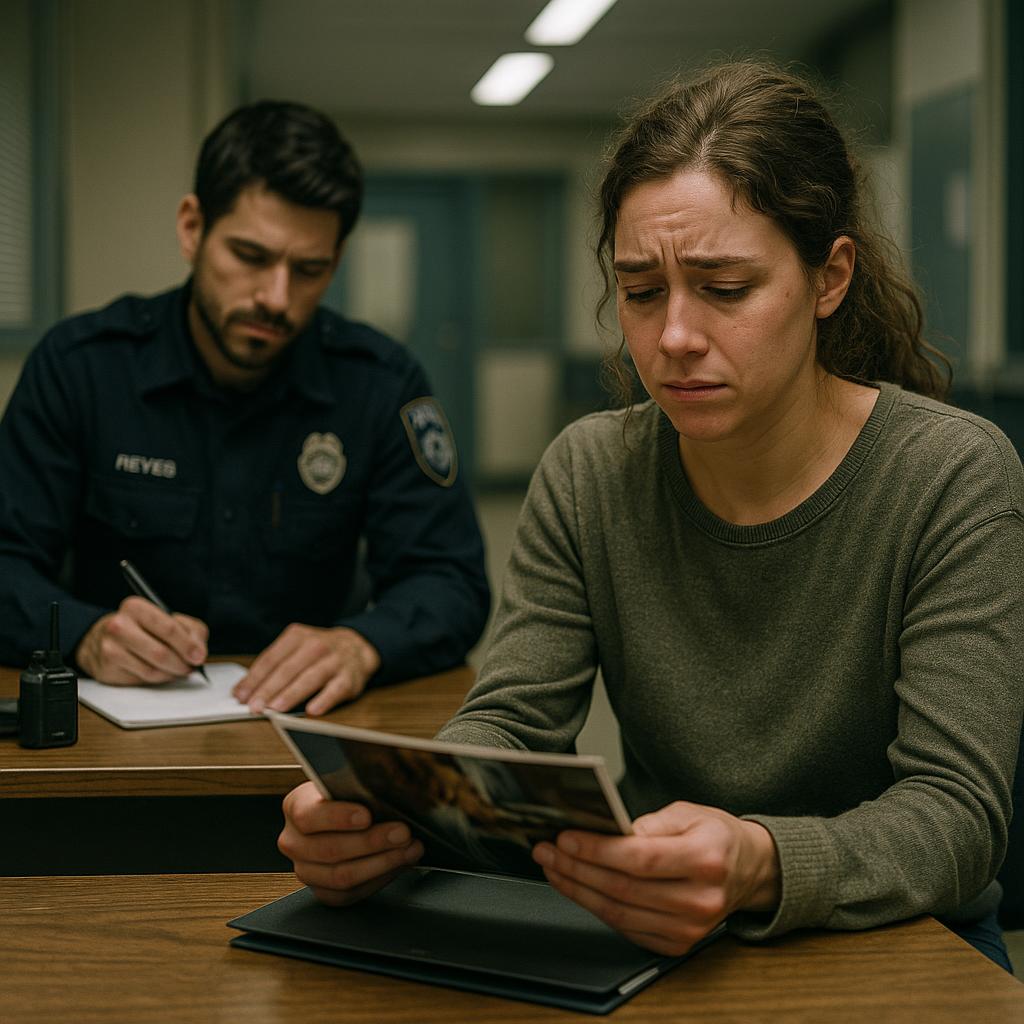 Image by RM AI
Helicopter Searches and False Hopes
Wednesday morning found me at the search command center, a makeshift operation set up in a park ranger station. The room buzzed with activity—radios crackling, fingers tracing routes on maps, volunteers huddled around thermoses of coffee. I watched as tiny helicopter icons moved across digital terrain displays, each one representing actual people searching for my parents. 'We've got four choppers in the air and six ground teams,' explained Commander Wilson, a weathered man with kind eyes. 'If they're out there, we'll find them.' When the radio suddenly erupted with chatter about a possible sighting, my heart nearly burst from my chest. I gripped the edge of the table so hard my knuckles turned white, watching as everyone in the room froze. 'Two individuals spotted near the western ridge,' the voice crackled. For thirty agonizing minutes, hope bloomed painfully in my chest—only to wither when confirmation came through: just another camping party who hadn't registered their trip. As evening approached, Commander Wilson gently suggested I go home. 'There's nothing more you can do tonight,' he said, squeezing my shoulder. But how could I possibly sleep in my quiet apartment while my parents might be out there, watching the same stars, wondering if anyone was looking for them?
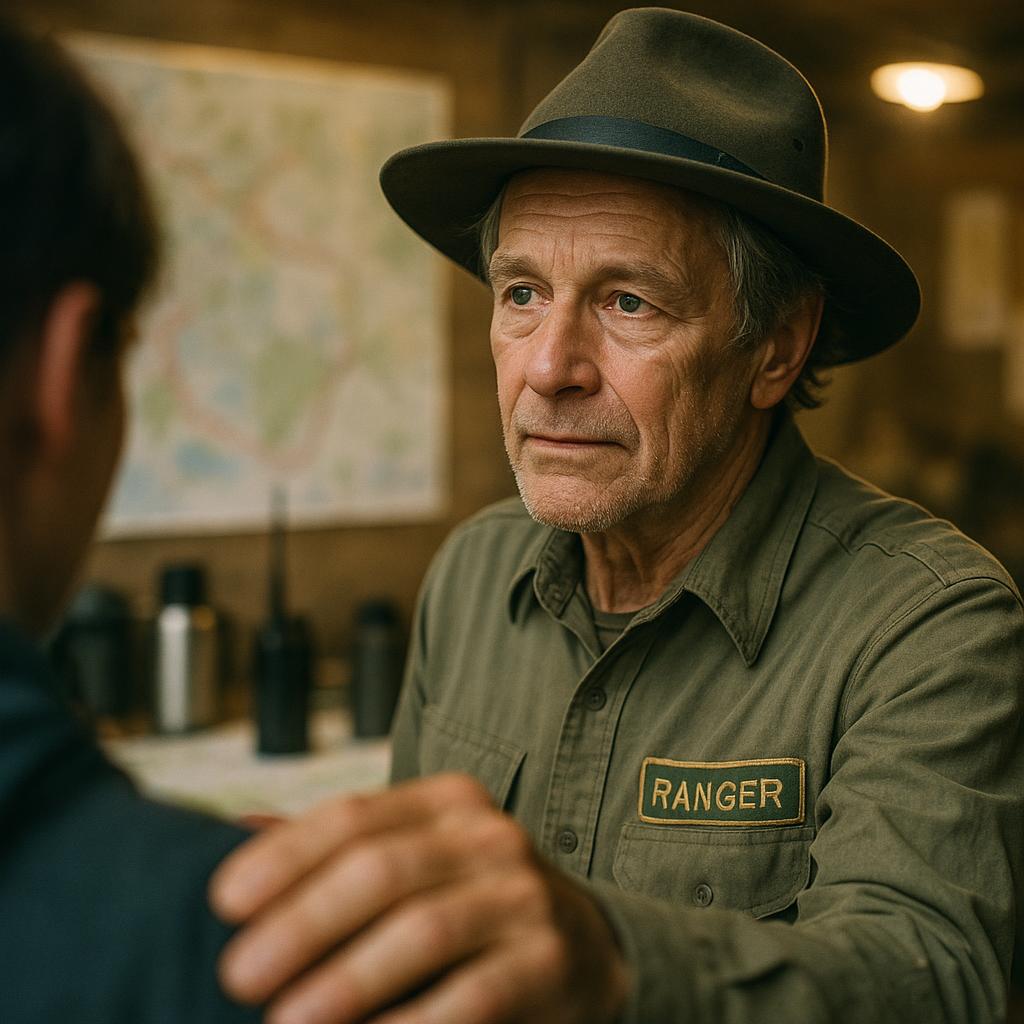 Image by RM AI
The Desert Gives No Answers
Seven days into the search, I joined the volunteer team, desperate to do something—anything—besides wait by the phone. The desert sun beat down mercilessly as we spread out across the rocky terrain, each of us scanning for any sign of life or disturbance. Every distant shape made my heart race—a jutting rock formation became a person sitting, a twisted juniper looked like someone waving. The heat played cruel tricks on my eyes and crueler ones on my hope. "Over here!" someone called out around midday, and we all rushed over, adrenaline pumping. A water bottle, dusty but intact, lay wedged between two rocks. It looked exactly like Dad's—the same brand, the same blue cap he always struggled to twist open with his arthritis. I grabbed it with trembling hands, turning it over to check the serial number I'd memorized from his spare bottles at home. The numbers didn't match. Just another false lead, another moment where hope rose and crashed within seconds. As the search team packed up for the day, I broke away, climbing to the highest ridge I could find. The setting sun painted the landscape in oranges and reds as I cupped my hands around my mouth and screamed their names until my voice gave out. "MOM! DAD!" Only my own echo answered, bouncing back like a taunt. Standing there, surrounded by miles of indifferent wilderness, I finally understood what true helplessness felt like. The desert had swallowed them whole, and it wasn't interested in giving me answers.
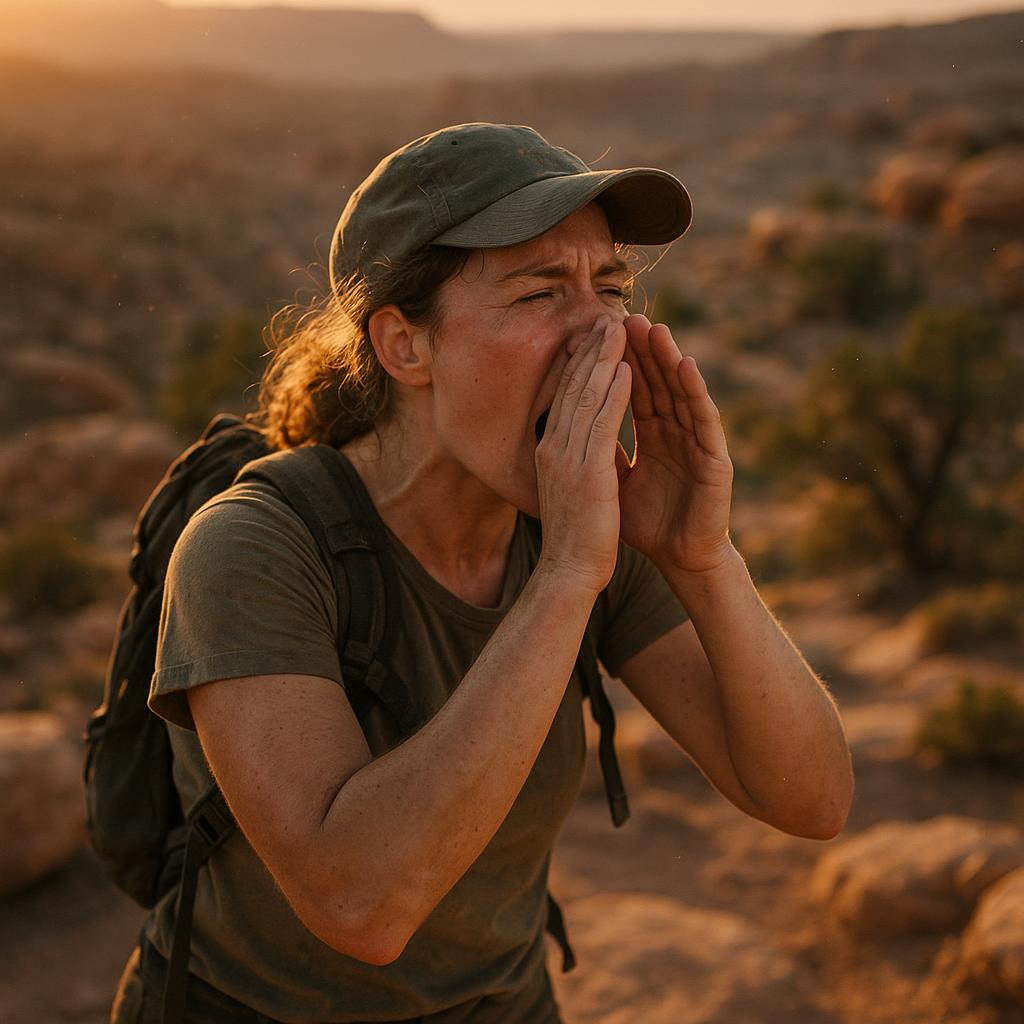 Image by RM AI
When Hope Begins to Fade
Two weeks in, and I watched the search for my parents dwindle like a flame running out of oxygen. The command center that once buzzed with activity now stood half-empty, maps rolled up, coffee thermoses disappearing one by one. 'Miss Mara,' Commander Wilson said, his weathered face unable to meet my eyes, 'we're transitioning to a limited search pattern.' The careful way he avoided words like 'body' or 'remains' wasn't lost on me. That night, I overheard two rangers talking outside—'At this point, it's recovery, not rescue'—and something inside me shattered completely. I drove home in a daze and stepped into the shower fully clothed, sinking to the tile floor as scalding water pounded my back. I screamed until my throat burned raw, the sound drowned out by the rushing water. How do you mourn someone who might still be alive? How do you hope for someone the world has already written off as dead? The limbo was unbearable—their toothbrushes still in the bathroom cup, their mail piling up, their voices still on the answering machine. I couldn't bring myself to touch any of it. That night, I dreamt they walked through the front door, dusty but alive, wondering why I was crying. I woke up reaching for ghosts, the cruel hope of that dream worse than any nightmare could ever be.
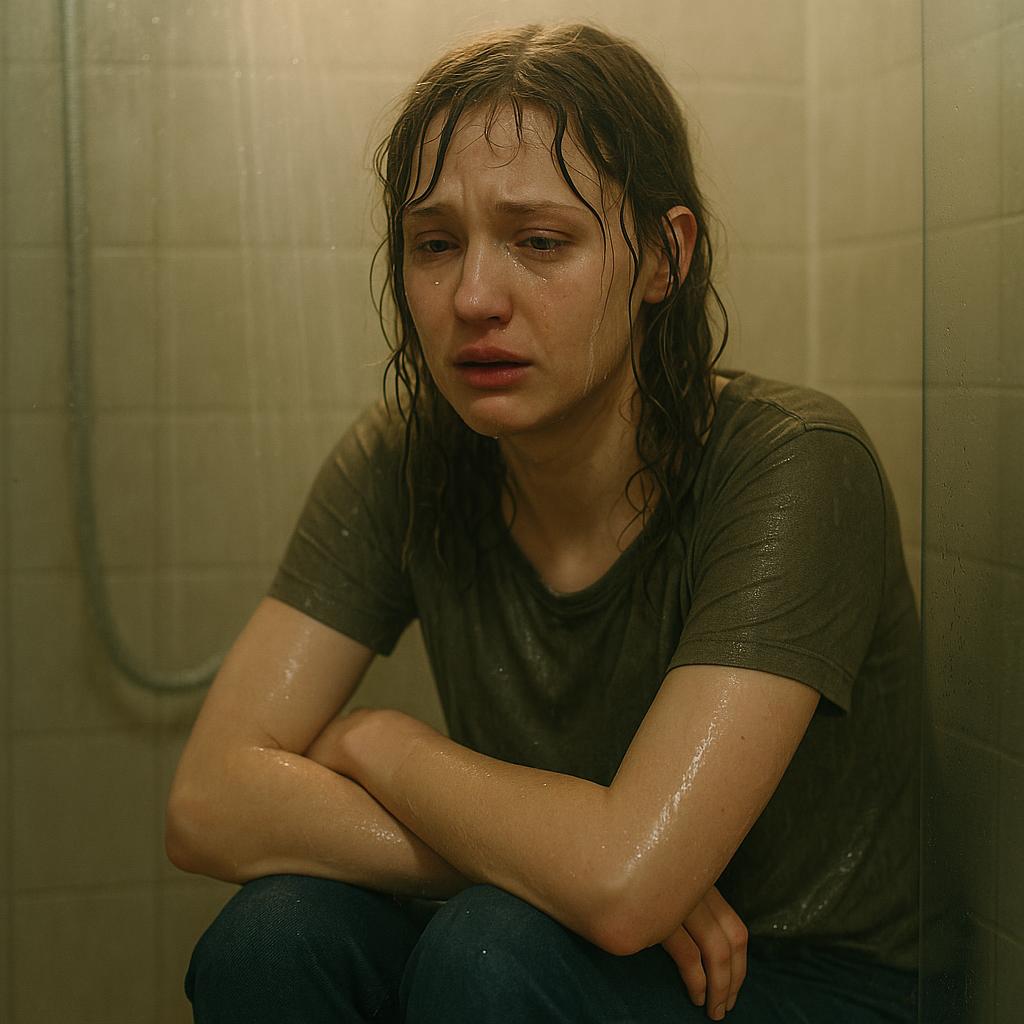 Image by RM AI
The Last Search Party
One month after Mom and Dad vanished, the final official search was organized. I insisted on joining despite everyone's worried glances at my hollow cheeks and red-rimmed eyes. 'Mara, you need rest,' Commander Wilson said, but I just shook my head. How could I rest when they were still out there? The team had new calculations about wind patterns and how far a person might drift when disoriented by heat. We combed through a section of canyon that looked like Mars—all rust-colored rock and unforgiving sun. I called their names until my voice gave out, scanning every shadow and crevice. By midday, we'd found nothing but sun-bleached animal bones and faded beer cans from someone else's forgotten adventure. As the sun began to set, the search leader gathered us in a circle. 'I think we need to accept that some mysteries don't get solved,' he said gently, his hand on my shoulder. The other volunteers nodded, their faces etched with pity I couldn't stand. I pulled away, turning my back so they wouldn't see my tears. 'I'm not giving up,' I whispered, more to myself than to them. What no one understood was that giving up on finding them meant giving up on the last thing keeping me sane—the desperate, irrational hope that somewhere, somehow, they were still alive.
The Case Goes Cold
Six weeks after my parents vanished, I sat in Detective Morales' office, watching him slide their case file into a drawer marked 'COLD CASES.' The fluorescent lights buzzed overhead like angry wasps as he explained in his practiced, sympathetic voice that without new evidence, active investigation would be suspended. 'We're not giving up, Mara,' he said, but his eyes told a different story. He handed me a cardboard box—surprisingly light for something that contained the sum total of the search for my parents' lives. Police reports, satellite images, witness statements, all neatly organized with color-coded tabs. 'Everything's here,' he said, 'in case you ever want to review it.' I nodded numbly, my fingers tracing the edge of the box. Walking through the police station with that box in my arms felt like carrying my parents' coffins. Officers averted their eyes as I passed—no one knows what to say to the daughter of the vanished. In the parking lot, I placed the box carefully on my passenger seat and sat behind the wheel, unable to start the engine. This box was all I had left—the official acknowledgment that my parents had become statistics, names in a database of the missing. I didn't cry. I was beyond tears by then. Instead, I placed my hand on the box and made a silent promise: 'This isn't over.' What the detective didn't understand was that for me, this case would never go cold.
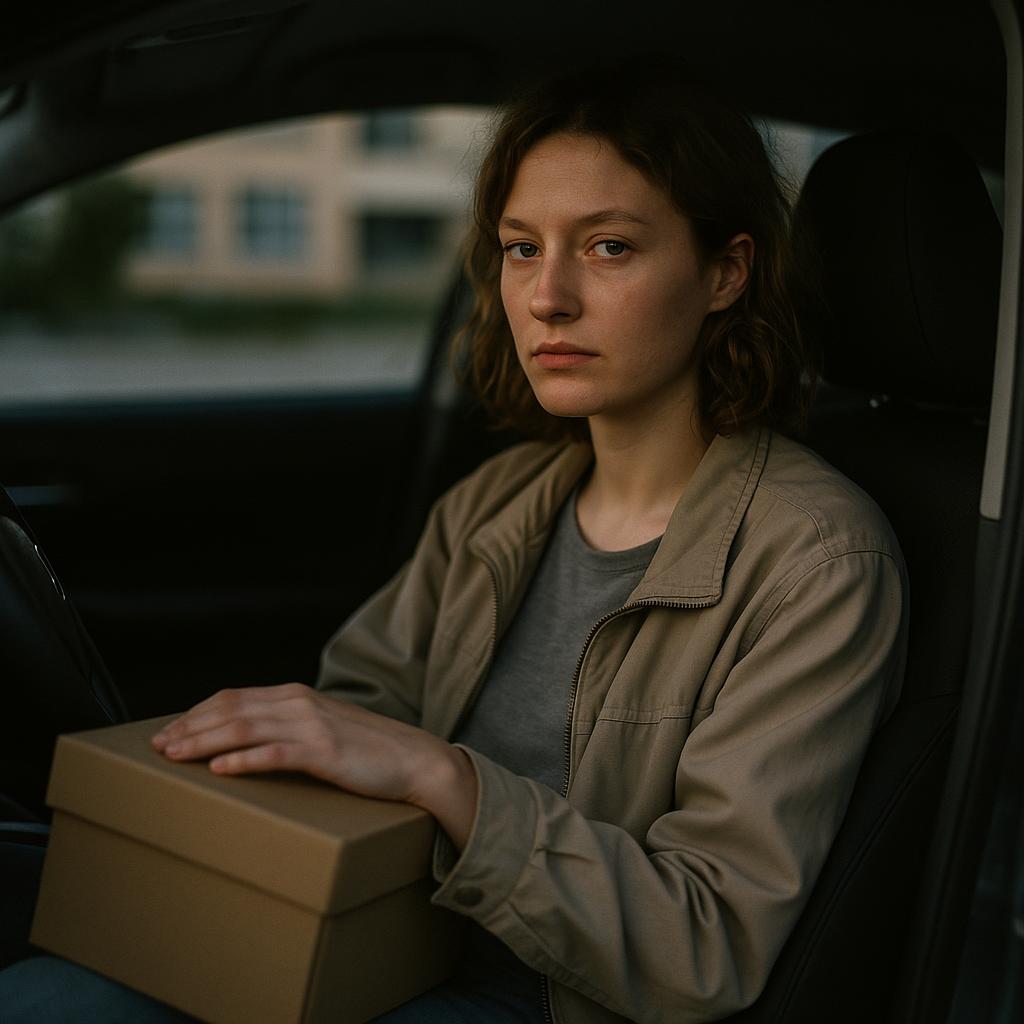 Image by RM AI
Drowning in Paperwork
Title: Drowning in Paperwork The word 'missing' became my personal curse. 'I'm sorry, but without a death certificate...' became the refrain of my existence as I navigated the cruel bureaucracy of my parents' limbo. Their mortgage payments drained my savings account like a slow leak I couldn't patch. The bank wouldn't let me access their accounts—'You're not an authorized user, Miss'—even as I sobbed into the phone. Insurance companies put me on eternal hold, transferring me between departments like a hot potato no one wanted to handle. One afternoon, I spent four hours on the phone with their credit card company, explaining the situation six different times to six different representatives, each one asking me to 'verify the cardholder's mother's maiden name' as if my parents were just refusing to come to the phone. I taped sticky notes around my apartment with case numbers, reference codes, and the rare names of representatives who'd shown a flicker of humanity. The system isn't built for people who aren't officially dead but aren't answering their phones either. Some nights, I'd stare at their bills piling up on my kitchen table and think the most terrible thought: how much easier this would all be if I just had bodies to bury.
 Image by RM AI
The Empty House
Three months after my parents vanished, I stood in their kitchen, surrounded by cardboard boxes and the crushing weight of financial reality. I couldn't afford both their mortgage and my rent anymore. Each item I packed felt like a betrayal—Dad's reading glasses still perched on his nightstand as if he'd just stepped out, Mom's knitting needles frozen mid-stitch in a half-finished sweater she'd never complete. I found myself apologizing out loud to empty rooms: "I'm sorry, I'm not giving up on you." The worst part was packing their clothes, still carrying faint traces of their scents. I buried my face in Dad's flannel shirt and sobbed until I couldn't breathe. Their neighbor Mrs. Calloway brought me sandwiches I couldn't eat and watched with sad eyes as I labeled boxes with trembling hands. "You're doing the right thing, dear," she said, but it felt like the ultimate admission of defeat. I couldn't bear to sell anything, so I emptied my savings for a storage unit instead. Unit #247 became a shrine to my parents' interrupted lives—furniture, photo albums, holiday decorations—all waiting in climate-controlled limbo. As I locked the metal door for the first time, I realized I was creating a tomb without bodies, preserving everything except what mattered most.
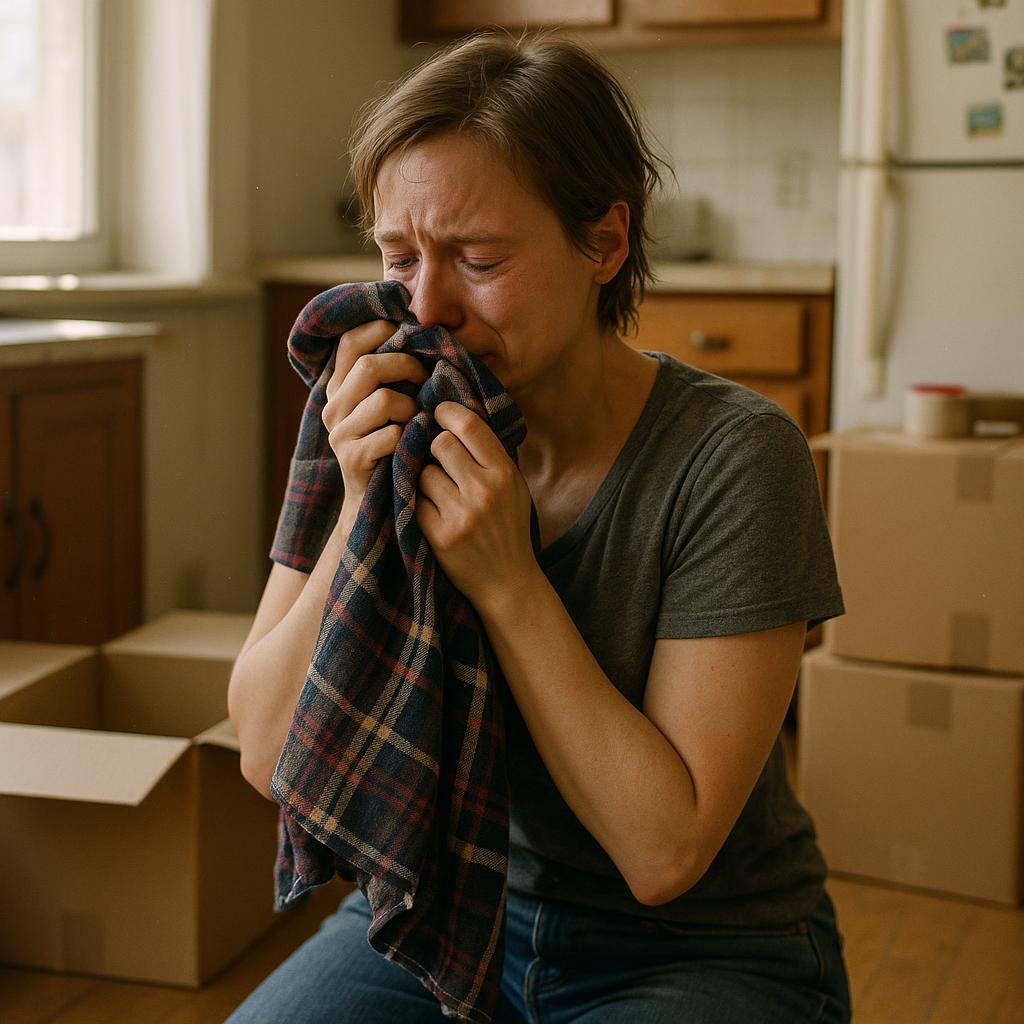 Image by RM AI
Well-Meaning Platitudes
Six months after my parents vanished, the well-meaning platitudes began. "Mara, honey, at some point you need to find closure," my aunt Carol said over a dinner she'd organized to "cheer me up." I pushed salmon around my plate, avoiding eye contact with the relatives who'd gathered at her suburban dining table. "Maybe it's a blessing they went together," she continued, reaching for my hand. "They wouldn't have wanted to live without each other." I pulled away, my fork clattering against fine china. The table fell silent until my cousin Tyler, always socially tone-deaf, leaned forward. "So, I was wondering about Uncle Jim's vinyl collection. He always said I could have his first-press Beatles albums someday." Something inside me snapped. I stood so quickly my chair toppled backward. "There's nothing to inherit because they aren't dead!" I screamed, tears streaming down my face. "They're missing. MISSING. Not dead. Why can't any of you understand that?" I grabbed my purse and fled, ignoring their calls to come back. The invitations to family gatherings dwindled after that night. Apparently, unresolved grief makes people uncomfortable at potlucks. What they didn't understand was that their version of closure required me to bury parents without bodies, to accept an ending without proof. And I wasn't ready to write that final chapter—not when I still jumped every time my phone rang.
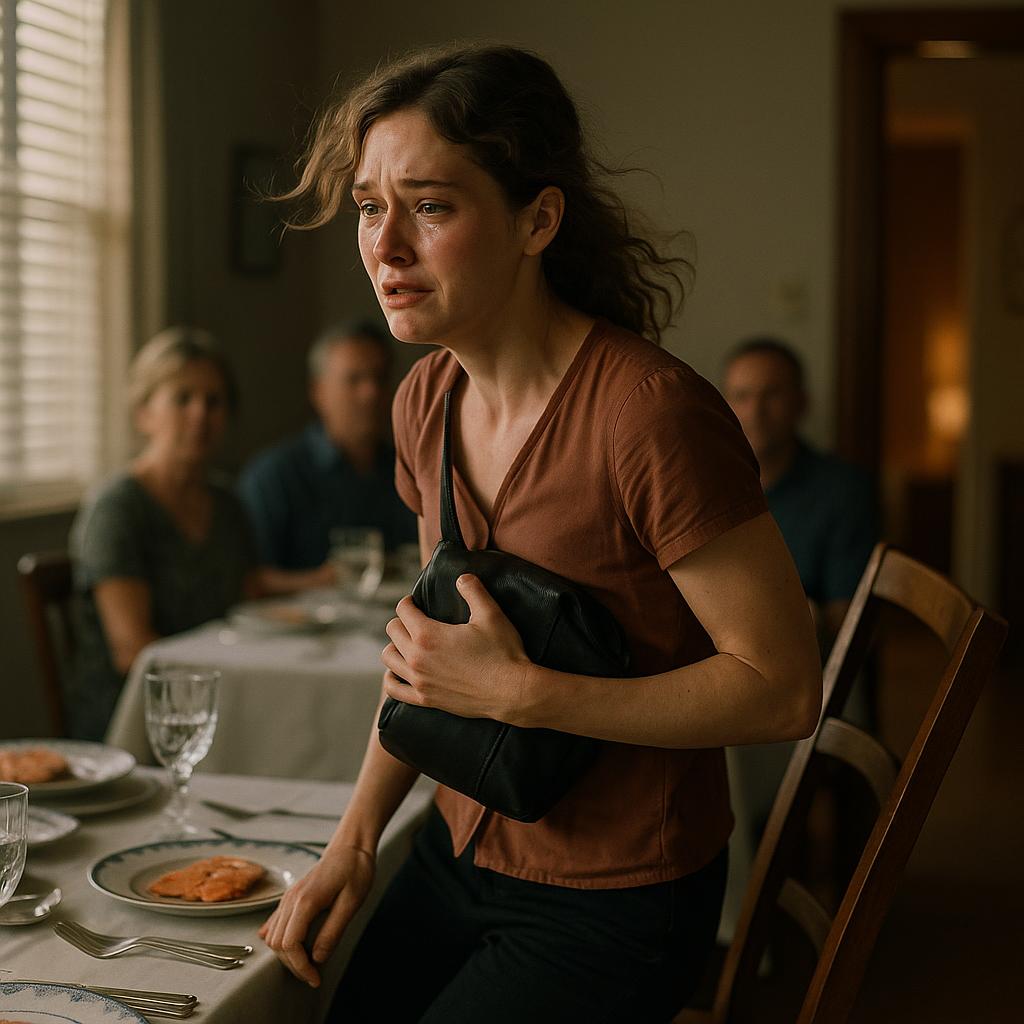 Image by RM AI
Therapy Sessions and Sleeping Pills
Eight months after my parents disappeared, Dr. Chen scribbled something on his prescription pad and handed it to me. 'For the insomnia,' he said gently. 'And Mara, I'm referring you to Dr. Patel. She specializes in... situations like yours.' I wanted to ask what 'situations' meant—people whose parents vanish into thin air?—but I just nodded. The first session with Dr. Patel, I sat rigid on her too-soft couch, arms crossed. 'I'm not grieving,' I insisted immediately. 'They're missing, not dead.' Instead of arguing, she introduced me to terms like 'ambiguous loss'—grief without closure—and 'complicated grief'—when normal mourning processes are disrupted. 'Your experience has a name,' she said, 'and you're not alone in it.' Something about those words broke through my armor. That night, I swallowed the tiny blue pill with water, staring at my reflection in the bathroom mirror. The medication helped quiet the endless loop of scenarios my brain created—them lost, them hurt, them calling for help no one could hear. For the first time in months, I slept six uninterrupted hours. But even pharmaceutical peace couldn't silence the question that haunted me between consciousness and dreams: if I accepted they might never come home, was I giving up on them?
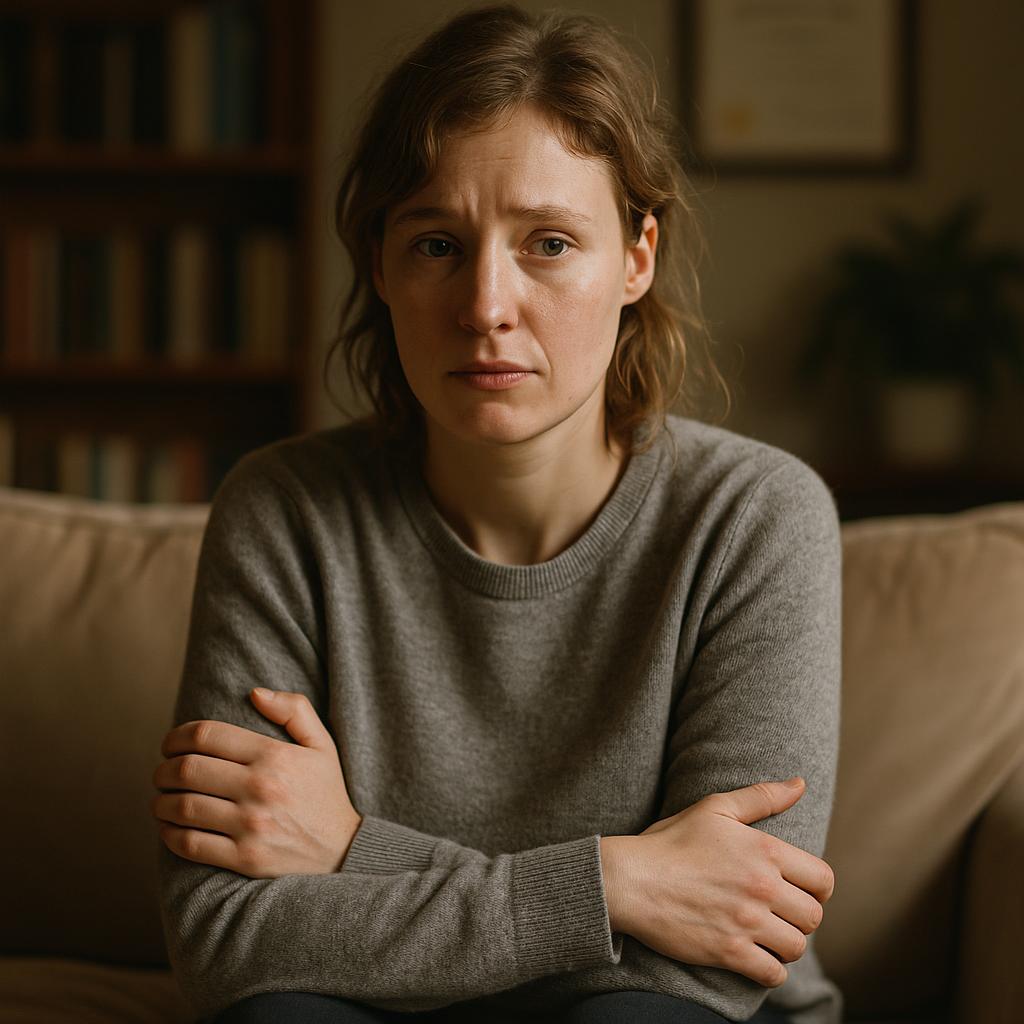 Image by RM AI
Finishing School in a Fog
I somehow managed to finish my senior year, though most of it remains a blur of lecture halls and sympathetic glances. My academic advisor pulled me aside after I submitted a research paper on desert survival rates instead of Shakespeare's sonnets. "Mara, I understand what you're going through, but..." she trailed off, unsure how to tell me I was drowning my education in my obsession. I nodded mechanically and promised to "stay on topic" next time, but my next psychology paper analyzed the psychological impacts of ambiguous loss. My professors passed me with gentle grading curves and concerned emails. On graduation day, I stood in my cap and gown, staring at the two empty folding chairs I'd reserved anyway. Mom would have brought her ridiculous zoom lens camera. Dad would have worn his one good suit that always smelled faintly of mothballs. After the ceremony, Jessica's mother found me standing alone, clutching my diploma like a life raft. "Oh, honey," she whispered, pulling me into her arms. I collapsed against her, inhaling her perfume—so different from my mother's, yet so achingly maternal that I couldn't stop the tears. I clung to her like a child, this stranger who smelled of department store perfume and hairspray, while somewhere inside me, a voice whispered that I should be celebrating this milestone with my own parents. Instead, I was accepting borrowed comfort from someone else's mother while mine remained a ghost I couldn't stop searching for.
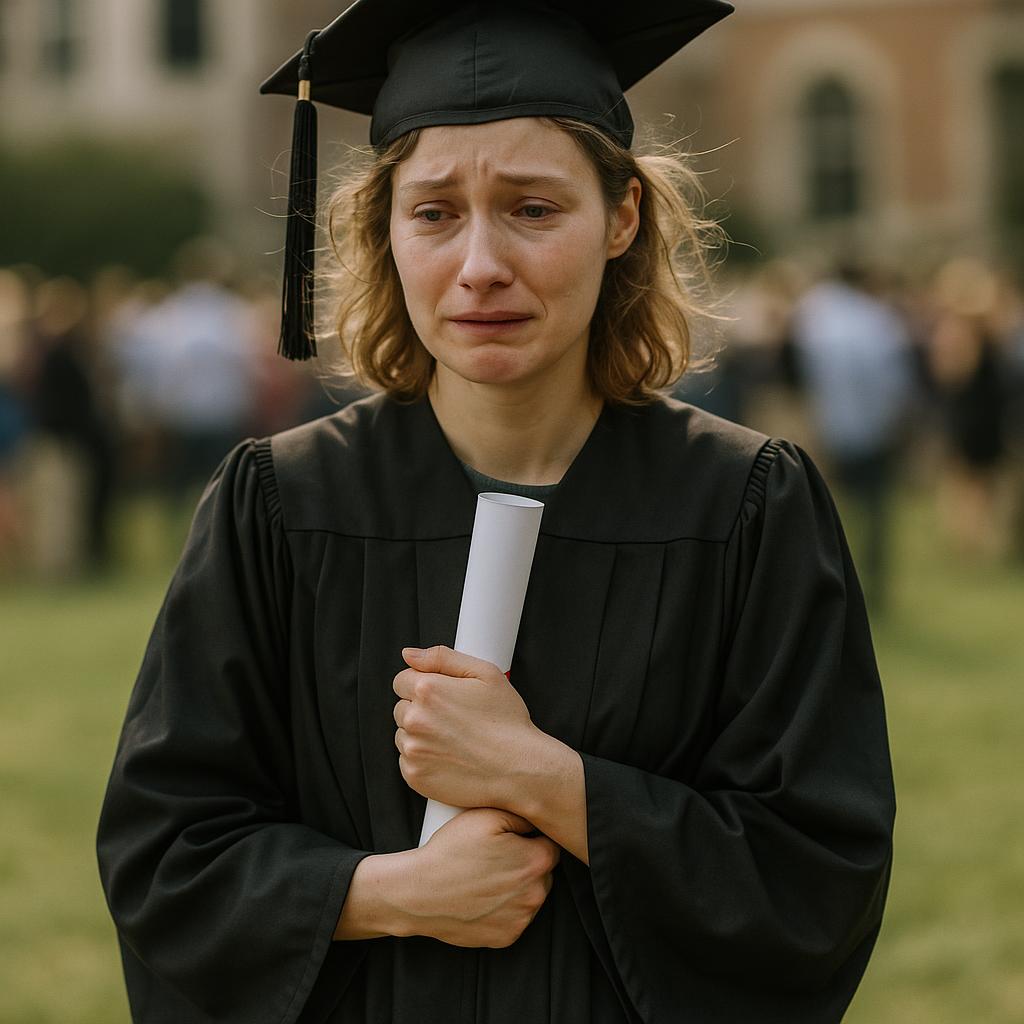 Image by RM AI
The First Anniversary
One year to the day after my parents vanished, I loaded my car with their favorite things—Dad's grilled cheese ingredients (extra sharp cheddar, the fancy sourdough he splurged on), Mom's chocolate-covered strawberries, and a bottle of the cabernet they'd save for special occasions. I drove three hours to their favorite desert lookout, the place where they'd taken me camping since I was little. Setting up a small folding table, I arranged framed photos of them—wedding day, family vacations, ordinary moments that now felt sacred. As the sun began its descent, painting the desert in gold and crimson, I uncorked the wine with shaking hands. 'To Mom and Dad,' I whispered, pouring three glasses though I'd only drink from one. I read aloud from Frost's poems that Mom loved, played Dad's Beatles albums on a portable speaker. When darkness finally swallowed the landscape, something primal broke loose inside me. I screamed their names into the vast emptiness until my voice shredded and tears blinded me. 'WHERE ARE YOU?' I collapsed onto the sand, gasping for breath, the stars above me blurring through my tears. In that moment, I realized I'd been holding my breath for an entire year, waiting for an answer that might never come.
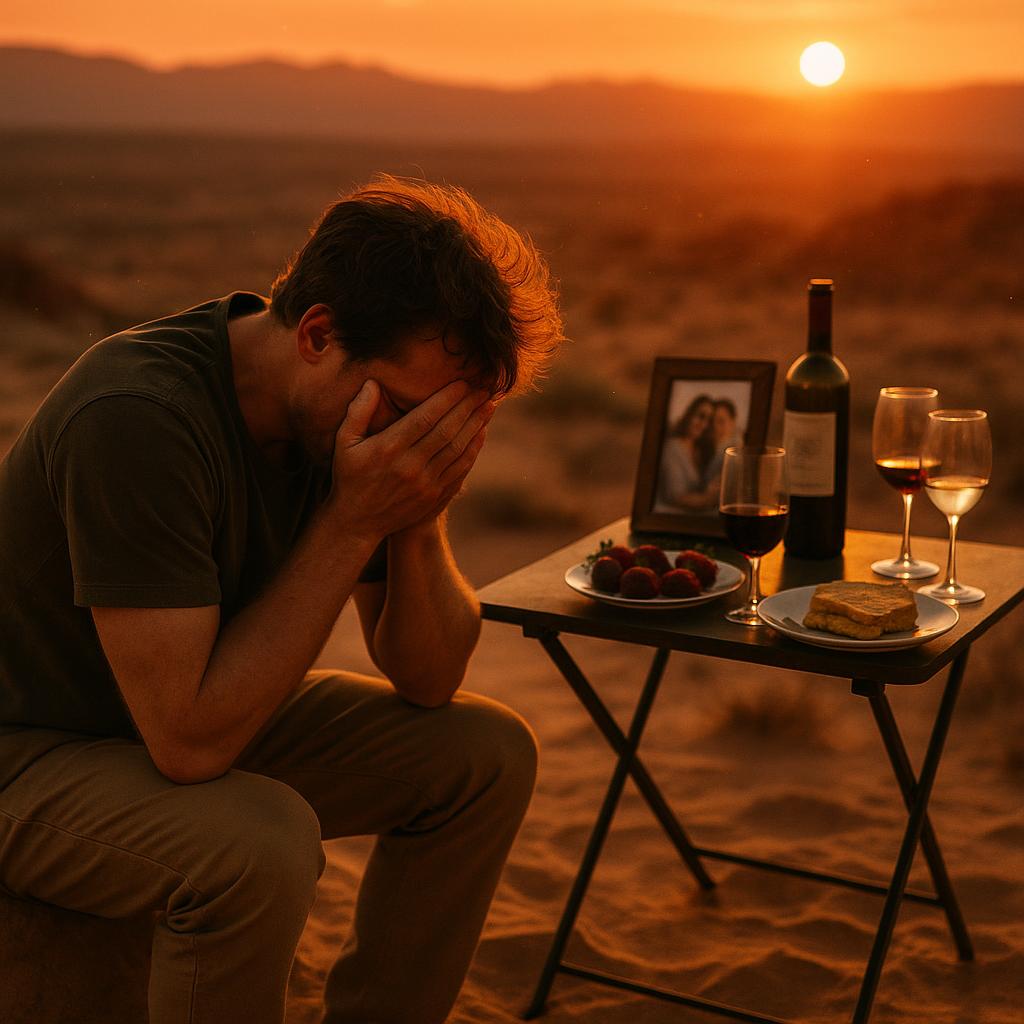 Image by RM AI
Dating Disasters
Eighteen months after my parents vanished, Jessica and Tara staged what they called an 'intervention.' 'You need to start living again,' Jessica insisted, downloading three dating apps onto my phone while I protested. My first date was with a software engineer named Kyle. Things were going fine until he asked about my family. I tried to explain calmly, but ended up sobbing into my pasta carbonara while he awkwardly patted my hand. The second guy, Marcus, seemed promising until I mentioned the search parties and satellite maps during our coffee date. He texted 'it was nice meeting you' that night and promptly disappeared—the irony wasn't lost on me. The third date was the final straw. Derek, a marketing executive with perfect teeth, listened to my story before leaning in conspiratorially. 'Have you considered they might have planned this?' he whispered. 'People do it all the time. New identities, fresh start...' I threw my gin and tonic directly in his face, the ice cubes sliding down his expensive shirt as I stormed out. That night, I deleted every dating app, watching the colorful icons vanish from my screen. How could I possibly build something new when I was still searching through the ruins of what I'd lost?
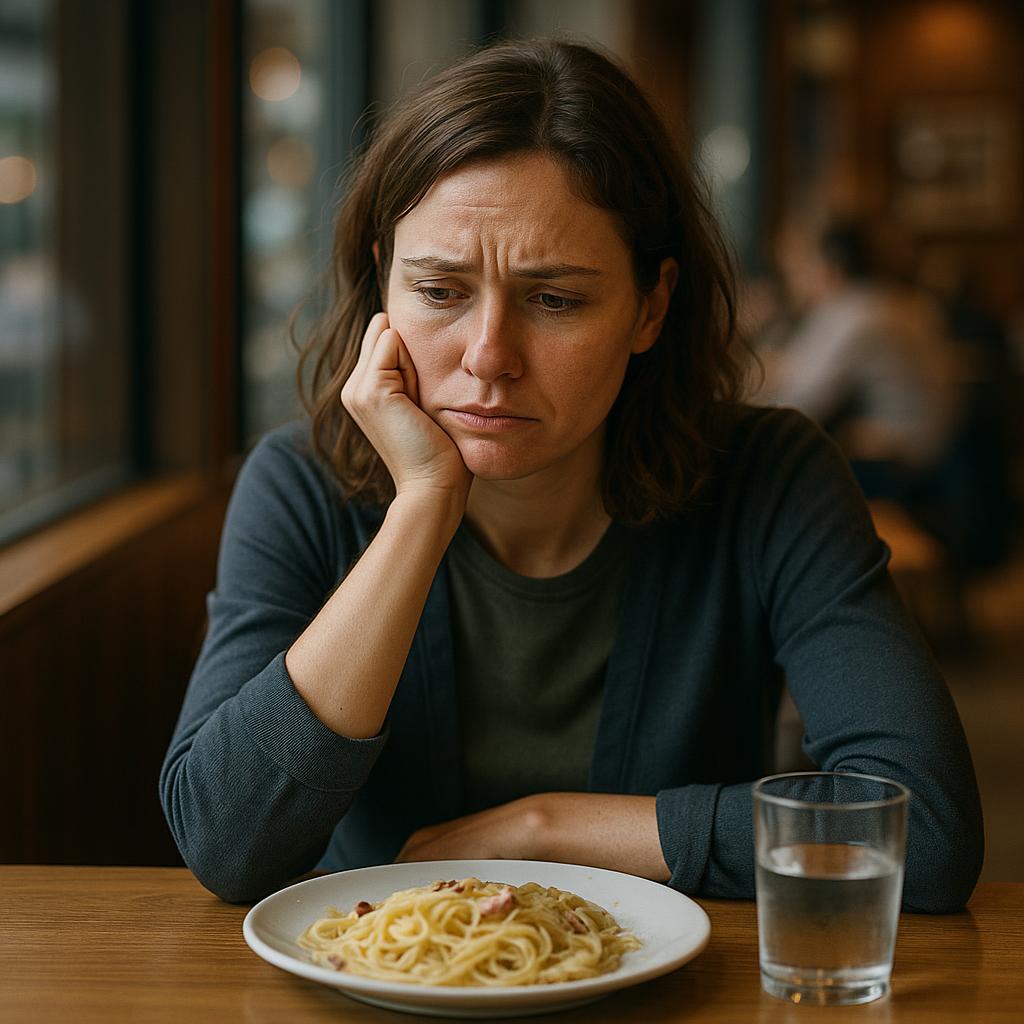 Image by RM AI
The Support Group
Two years after my parents vanished, I found myself sitting in a church basement, clutching a styrofoam cup of terrible coffee. The sign on the door read 'Missing Persons Family Support Group.' I'd driven past it three times before finding the courage to park. Inside, twelve faces looked up as I entered—all wearing the same haunted expression I saw in my mirror every morning. 'I'm Mara,' I whispered, voice cracking. 'My parents disappeared in the desert.' No one asked for details or timelines. They just nodded, making room in their circle. That night, I heard stories that mirrored my own—the bureaucratic nightmares, the well-meaning but hurtful comments from friends, the way holidays felt like walking through minefields of memory. Eleanor, a silver-haired woman whose daughter vanished twenty years ago, took me under her wing. 'You don't have to choose between hope and healing,' she told me over coffee after the meeting. 'The not-knowing is its own kind of grief, but it doesn't have to be your whole life.' For the first time since that terrible week two years ago, I felt understood. These people didn't expect me to 'move on' or 'find closure.' They knew what it meant to live with a question mark where an ending should be. What none of us realized that night was how Eleanor's decades-old case would unexpectedly collide with mine.
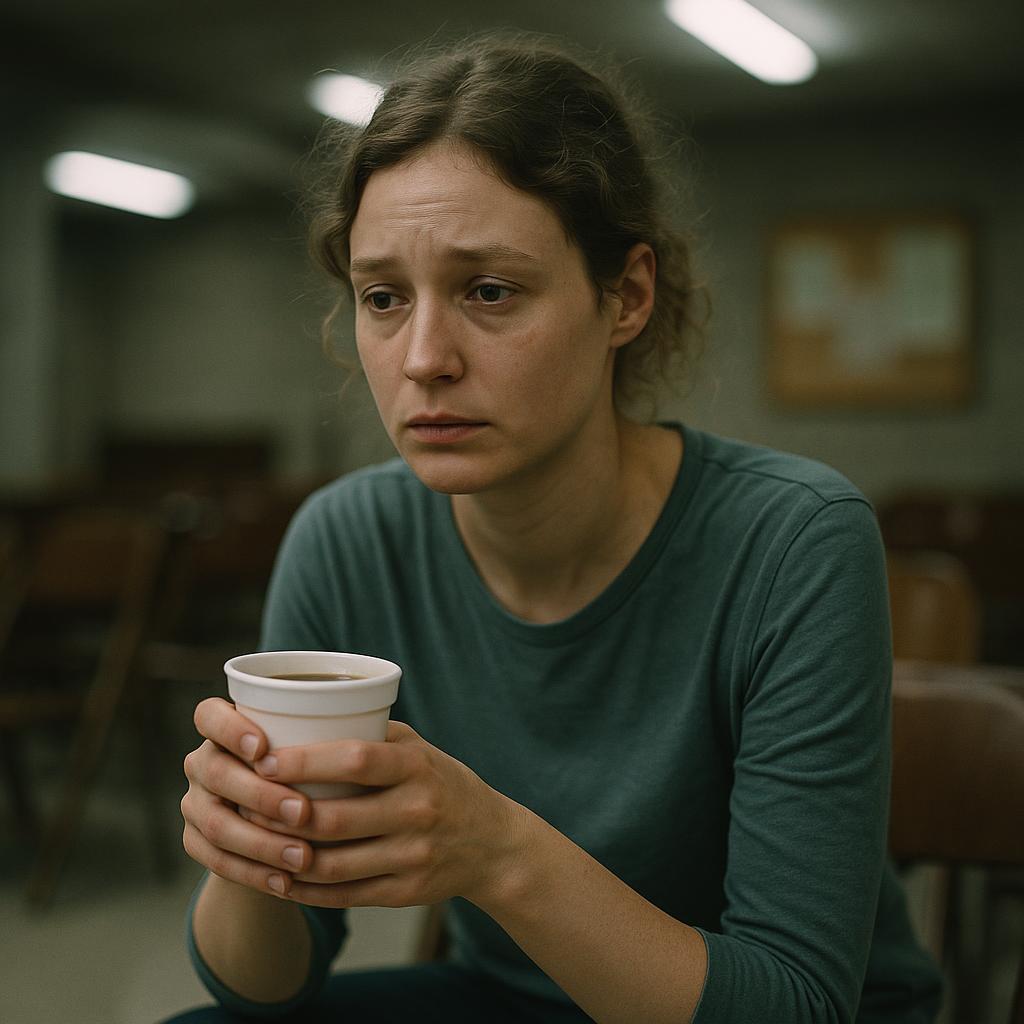 Image by RM AI
The Career Path
Three years after my parents vanished, I found purpose in my pain. I took a job at Desert Families United, a non-profit helping families of missing persons navigate the bureaucratic nightmare I knew too well. My desk was covered with sticky notes of case numbers and contact names—the same system I'd developed for my parents. 'You're a natural at this,' my supervisor Diane said after I helped a family access their missing father's pension. What I couldn't tell her was that every case file felt like my own. Last Tuesday, a woman walked in clutching a manila folder of papers, her hands trembling exactly like mine had. 'My sister disappeared hiking three weeks ago,' she whispered. Something in me cracked open. I excused myself mid-sentence and barely made it to the bathroom before collapsing against the wall, gasping for air. Diane found me there, knees pulled to my chest. 'Mara, honey, maybe this is too close to home,' she suggested gently. I wiped my eyes and stood up. 'That's exactly why I need to do it,' I insisted. 'Who better to guide them through hell than someone who's already mapping the territory?' What I didn't admit was that each family I helped felt like another search party for my parents—as if somehow, by finding answers for others, I might finally stumble upon my own.
The Detective Who Wouldn't Quit
Four years after my parents vanished, my doorbell rang at 8:17 PM on a Tuesday. I wasn't expecting anyone, and the peephole revealed a weathered face I recognized immediately—Detective Reeves, now with more gray hair than when he'd slid my parents' file into that cold case drawer. 'Miss Mara,' he said, shifting uncomfortably on my welcome mat. 'I'm retired now, but...' He held up a familiar-looking folder. 'Your parents' case. It's followed me home.' Over cheap takeout spread across my coffee table, he confessed that their disappearance had haunted his dreams for years. 'I've been reviewing everything in my spare time,' he said, unfolding a map I hadn't seen before. His weathered finger traced an unmarked road that didn't appear in the original search grids. 'This could have led them miles from where everyone was looking.' I felt that dangerous spark—hope—flaring in my chest as we hunched over satellite images until 3 AM, our coffee growing cold. When he finally left, squeezing my shoulder with a promise to 'keep digging,' I stood in my doorway, torn between gratitude for his dedication and terror that this would become just another dead end in a four-year maze of disappointments. But as I gathered the maps from my coffee table, I noticed something we'd both missed—a tiny structure visible in the newest satellite image, right where that unmarked road ended.
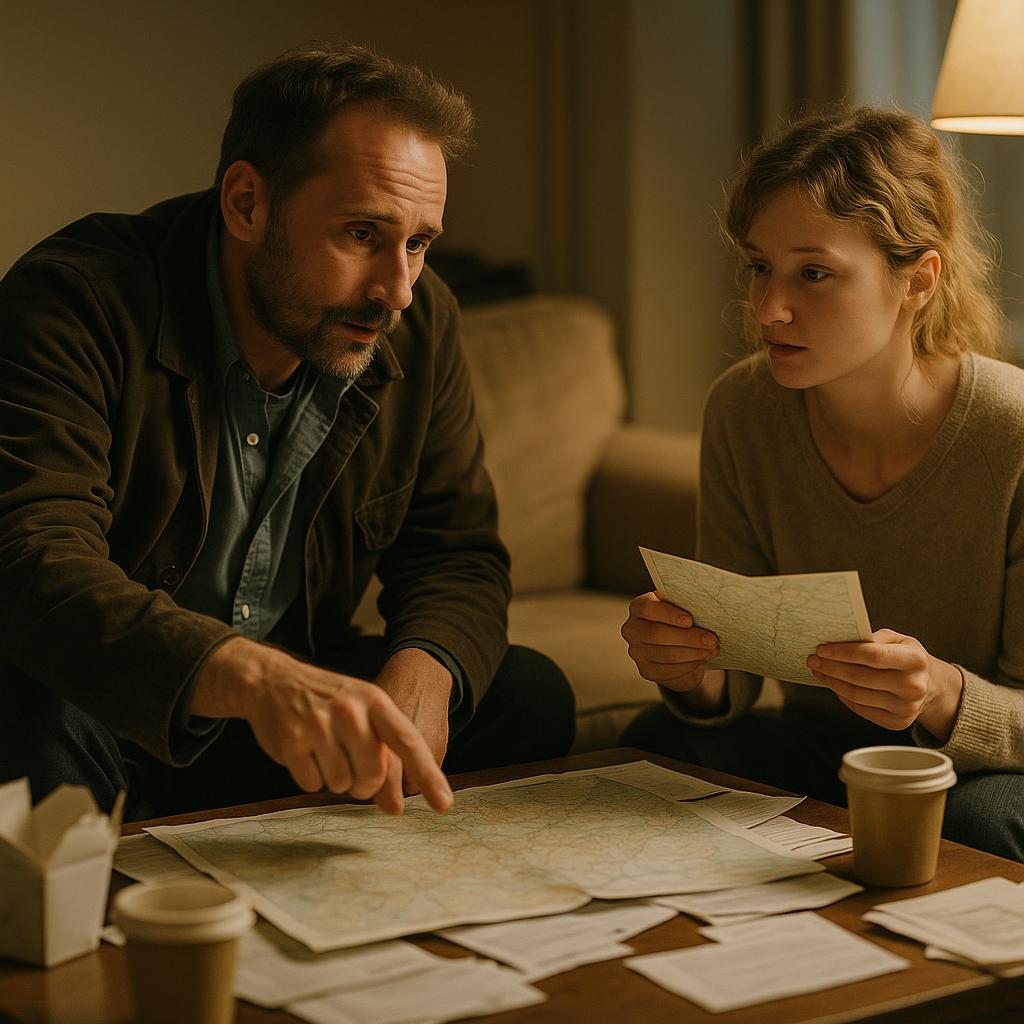 Image by RM AI
The Five-Year Mark
Five years to the day after my parents vanished, I sat across from Mr. Jacobson, a lawyer with kind eyes and a voice that reminded me of NPR hosts. 'The five-year mark is significant, Mara,' he explained, sliding papers across his mahogany desk. 'Declaring them legally dead would allow you to access their life insurance, pension benefits, and transfer property titles.' The fluorescent lights buzzed overhead as I stared at the dotted line where my signature would effectively end my parents' existence on paper. My throat tightened. 'And if I don't sign?' I asked, my voice barely audible. He leaned back, removing his glasses. 'You can postpone, of course. Many families do. But financially speaking...' I cut him off, gathering the papers with trembling hands. 'I need more time.' That night, I dreamt they walked through my front door, snow dusting their shoulders, faces lined with confusion. 'Why did you give up on us?' my mother asked, her voice echoing as I jolted awake, sheets damp with sweat. I reached for my phone at 3 AM and texted Detective Reeves: 'I can't do it. Not yet.' What I couldn't explain was how signing those papers felt like I'd be the one killing them—the final betrayal after five years of fighting to keep their memory alive.
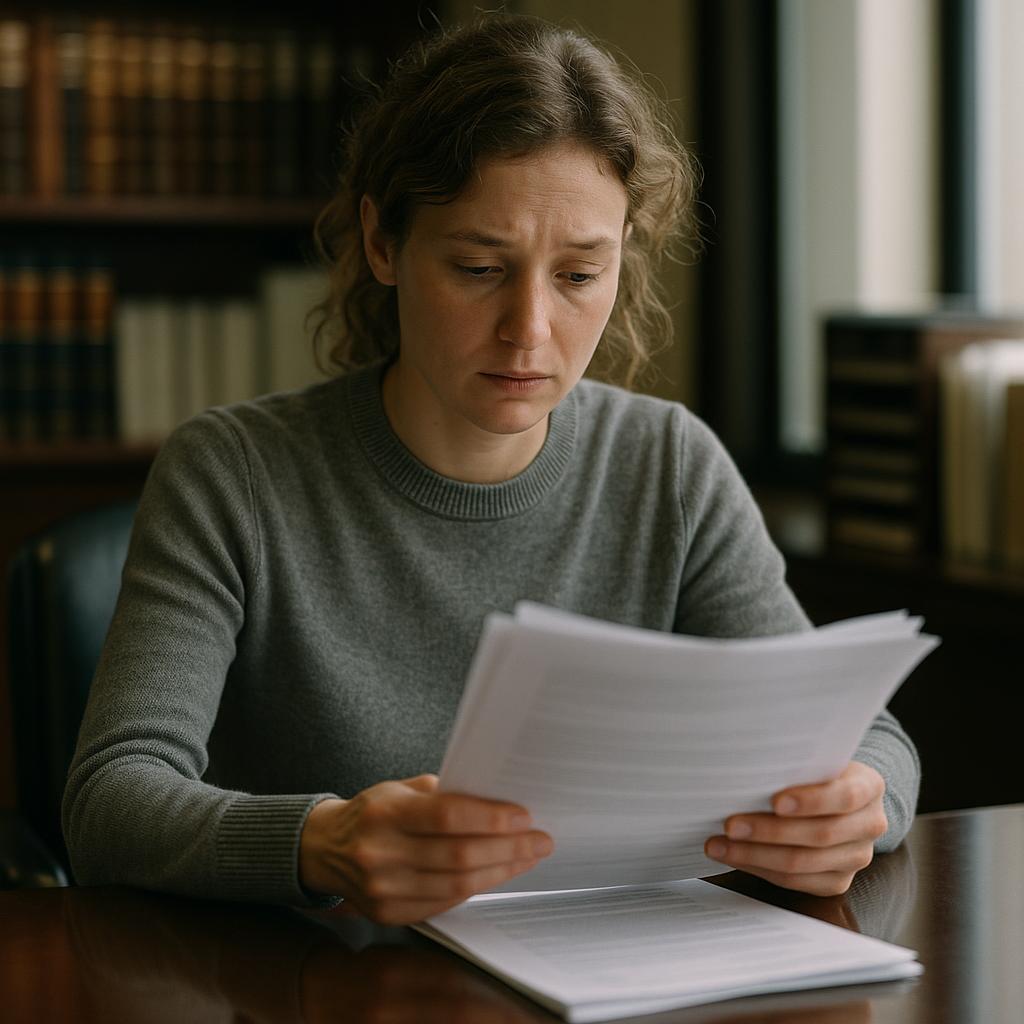 Image by RM AI
The Storage Unit Ritual
Six years after my parents vanished, I developed what I call my 'storage unit ritual.' Every birthday, anniversary, or milestone, I drive to Unit #247 with two cups of coffee—one for me, one for them. I unlock the metal door, pull the chain on the single bulb, and step into this time capsule of their interrupted lives. I pour coffee into Dad's chipped NASA mug, place it on a box, and settle into Mom's reading chair with its worn armrests. 'I got promoted last month,' I tell the silent room, my voice echoing against stacked furniture. 'Dad, you'd say it was about time.' Sometimes I open boxes just to press my face into Dad's flannel shirts or Mom's gardening sweaters, inhaling deeply for any lingering traces of them. Mr. Patel, the facility manager, has found me there more than once, surrounded by photo albums, tears streaming down my face. Instead of asking me to leave, he brings me tissues and once, a thermos of chai tea. 'My mother has been gone twenty years,' he told me softly. 'I still talk to her every day.' What he doesn't know is that sometimes, in the stillness of that climate-controlled tomb, I swear I can hear them answering back.
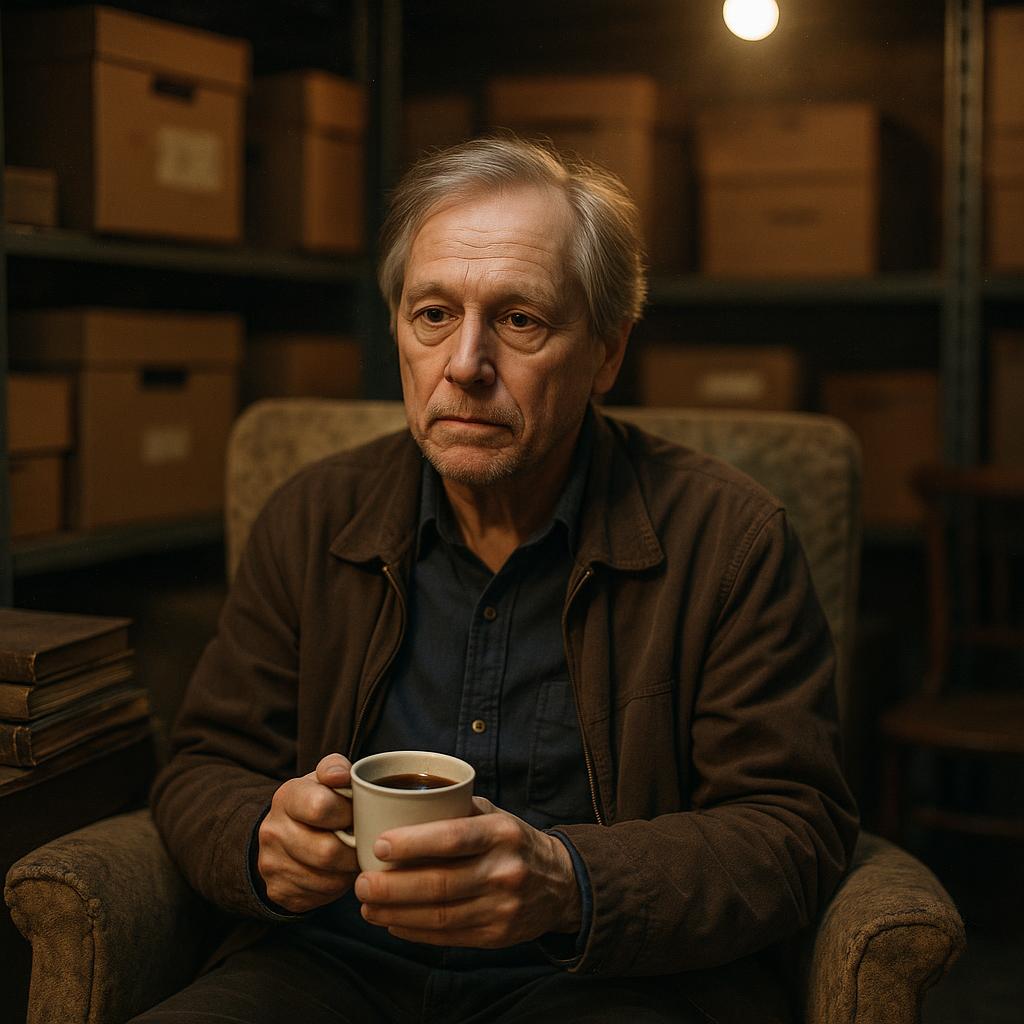 Image by RM AI
The Psychic Consultation
Seven years after my parents vanished, I found myself sitting in a dimly lit room that smelled of incense and disappointment. Eleanor from my support group had slipped me Madame Rosetta's business card with a whispered, "She helped me feel connected again." I'd tucked it away for months before desperation won over skepticism. "I sense them near water," Madame Rosetta murmured, her bangles jingling as she waved her hands over a crystal ball that looked straight out of a Halloween store. My heart sank. My parents disappeared in the desert—there was no water for miles. "Your father wants you to know about the blue boat," she continued confidently. Dad was terrified of water; he couldn't even swim. When she mentioned my mother's "beloved garden" (Mom killed every plant she touched), something inside me snapped. "That's enough," I said, standing so abruptly my chair scraped against the linoleum floor. I threw three twenties on the table—feeling like I was paying for my own humiliation—and walked out. In my car, I broke down completely, not because I believed in psychics, but because I understood why people like me—people suspended in the purgatory of not knowing—would grasp at anything, even obvious frauds, for answers. What scared me most wasn't that I'd wasted sixty dollars on a charlatan, but that part of me had desperately wanted to believe her.
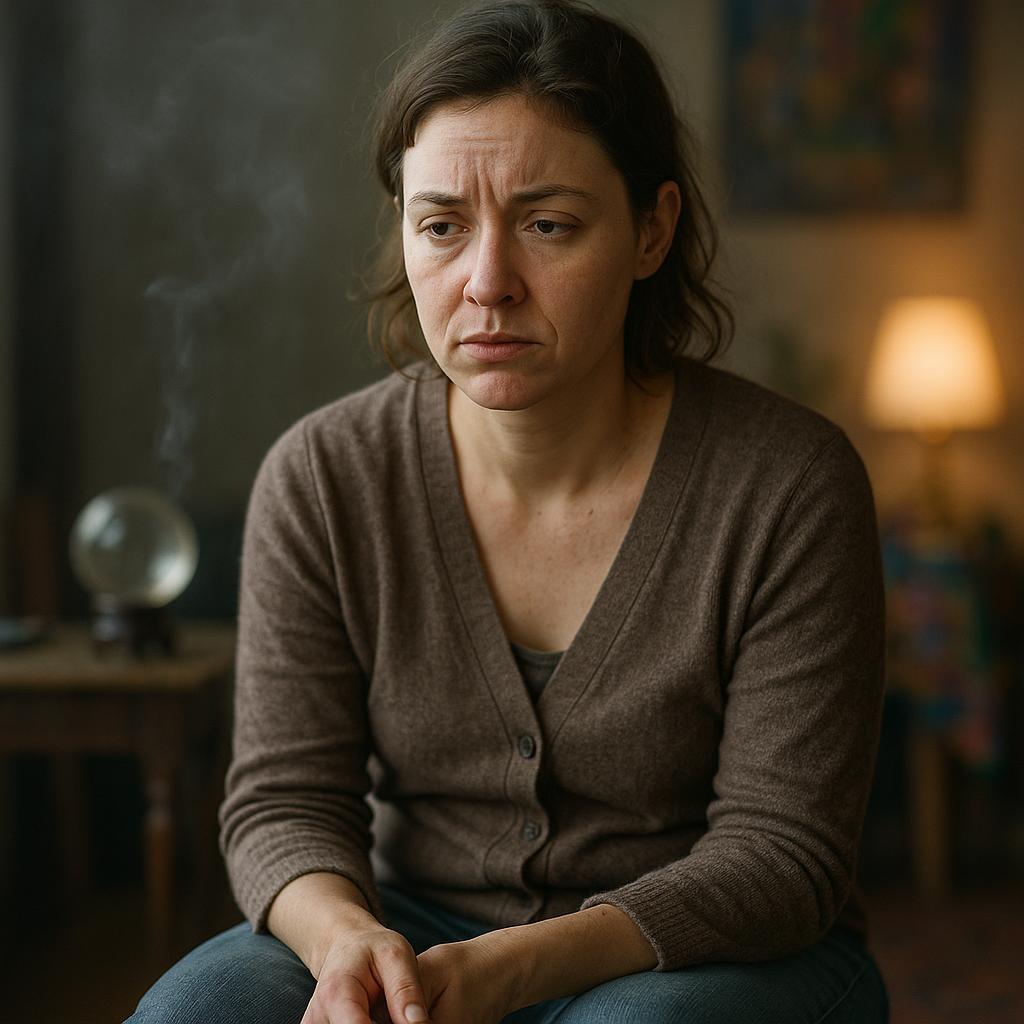 Image by RM AI
The Similar Case
Eight years after my parents vanished, I was scrolling through my news feed when a headline froze my fingers mid-swipe: 'Elderly Couple Found After Seven Years, Vehicle Discovered in Desert Ravine.' My coffee mug slipped from my hand, shattering on the kitchen tile as I frantically clicked the link. The Hendersons—both in their 70s—had been driving home from their grandson's graduation when they apparently missed a curve on Highway 16. Their sedan had plunged into a ravine, hidden from view by dense brush and the ravine's depth. They were only discovered when highway construction crews began clearing the area. For three straight nights, I stayed up until dawn, comparing maps of their route to my parents' last known location. I printed satellite images and marked them with red circles—every ravine, every dip, every place a truck could vanish from sight. By the weekend, I was driving desert roads with a cooler of water bottles and binoculars, pulling over at every turnout to scan the landscape below. 'You're being obsessive again,' Jessica texted after I missed our weekly dinner. Maybe I was. But as I stood at yet another roadside lookout, the setting sun casting long shadows that revealed contours invisible at midday, I couldn't shake the feeling that my parents' truck might be just like the Hendersons'—waiting to be found, perfectly preserved in the desert air, holding answers I'd spent eight years searching for.
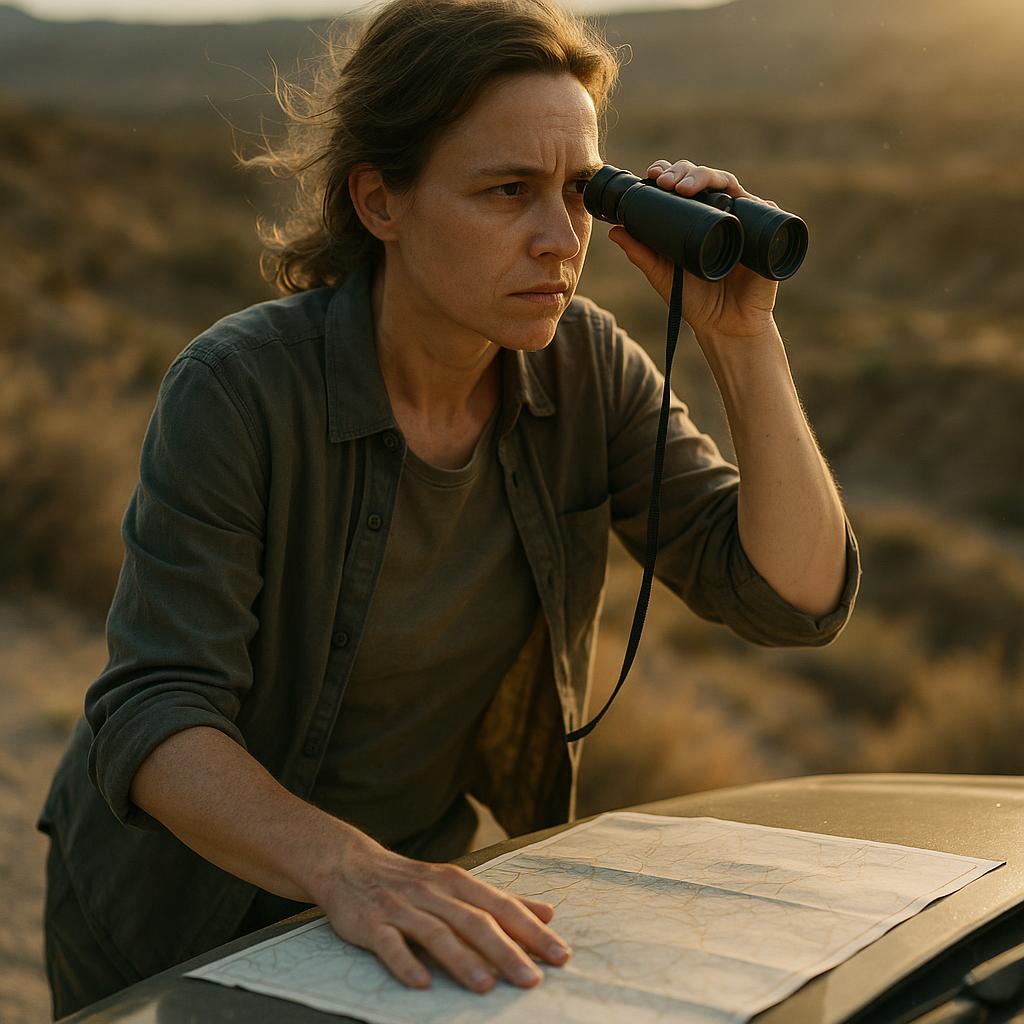 Image by RM AI
The Breakdown
Nine years after my parents vanished, their fortieth wedding anniversary broke me completely. I'd been functioning—if you could call it that—through nearly a decade of grief, but something about that milestone shattered whatever fragile scaffolding I'd built around myself. I called in sick to work, turned off my phone, and crawled into bed with their wedding album. For three days, I existed in a fog of unwashed hair and silent screams, surrounded by photographs I'd arranged in a semicircle like some desperate shrine. I don't remember eating. I barely remember bathroom breaks. What I do remember is the sound of my neighbor Jimmy's voice—'Holy shit, Mara!'—as he broke through my door after hearing what he later described as 'animal-like sobbing' through our shared wall. The hospital lights were too bright, the doctor's voice too gentle as she suggested inpatient treatment. 'We can help you process this grief,' she said, clipboard in hand. I recoiled at the word 'process'—as if my parents' disappearance was something to be digested and expelled. 'I don't need to be medicated into acceptance,' I hissed, signing my discharge papers with shaking hands. What I couldn't articulate was my deepest fear: that healing meant forgetting, and forgetting meant abandoning them all over again.
The New Therapist
Nine years and three months after my parents vanished, I sat across from Dr. Lena Chen, my fifth therapist but the first who didn't look at me with that pitying head-tilt when I explained my situation. 'Ambiguous loss is different,' she said, her voice steady as she handed me a tissue. 'You're not crazy for still searching.' Unlike the others who pushed me to 'find closure' or 'move on,' Dr. Chen introduced me to something called 'both-and thinking'—the ability to hold two contradicting truths simultaneously. I could both search for my parents AND build a life that didn't revolve around their absence. During our Tuesday sessions, she taught me grounding techniques for when my mind spiraled into those dark rabbit holes of what-ifs. 'Place your feet firmly on the floor,' she'd instruct when panic flickered across my face. 'Name five things you can see right now.' Slowly, I began separating Mara-the-person from Mara-the-daughter-of-missing-parents. I started painting again—something I hadn't done since before they disappeared. I joined a hiking group (though I still avoided desert trails). For the first time in nearly a decade, I could go hours—sometimes even a full day—without the weight of their absence crushing my chest. What I didn't tell Dr. Chen was that I'd recently received an email from a retired park ranger who claimed to have found something that might belong to my parents.
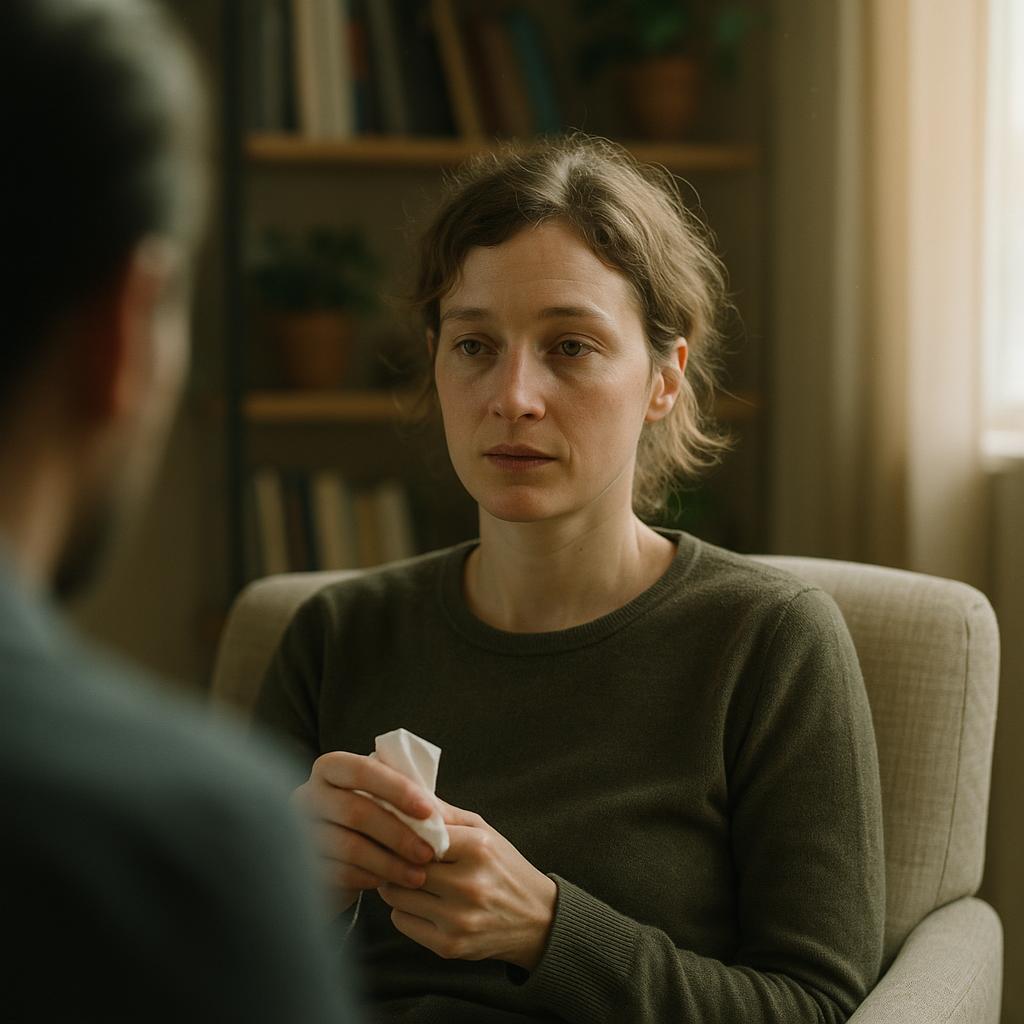 Image by RM AI
The Desert Photography Project
Nine years and six months after my parents vanished, I found myself standing in the same desert that took them, but this time with a camera in my hands instead of search maps. It started as therapy homework—Dr. Chen suggested I 'reclaim' the landscape that had become synonymous with loss in my mind. The first trip was brutal; I sat in my car for three hours before I could even step out. But something shifted when I looked through the viewfinder. The desert wasn't just a vast grave anymore—it was alive with the same beauty my parents had cherished. I captured the way morning light painted the rock formations gold, how wildflowers erupted after rare rains, the perfect stillness of dusk. Each weekend, I ventured further, sometimes camping overnight in spots they might have loved. 'These are extraordinary,' Elaine, a gallery owner in town, said when she spotted my prints at the local print shop. 'Would you consider an exhibition?' Her question left me frozen. These images were conversations with my parents, intimate moments where I felt their presence beside me saying, 'See, Mara? This is why we loved it here.' The thought of strangers analyzing them, perhaps pitying the backstory, made my stomach turn. Yet part of me wondered if sharing their desert—the real desert, not just the tragedy—might be the most honest way to honor them. What I never expected was who would walk into that gallery on opening night, or what they would be carrying.
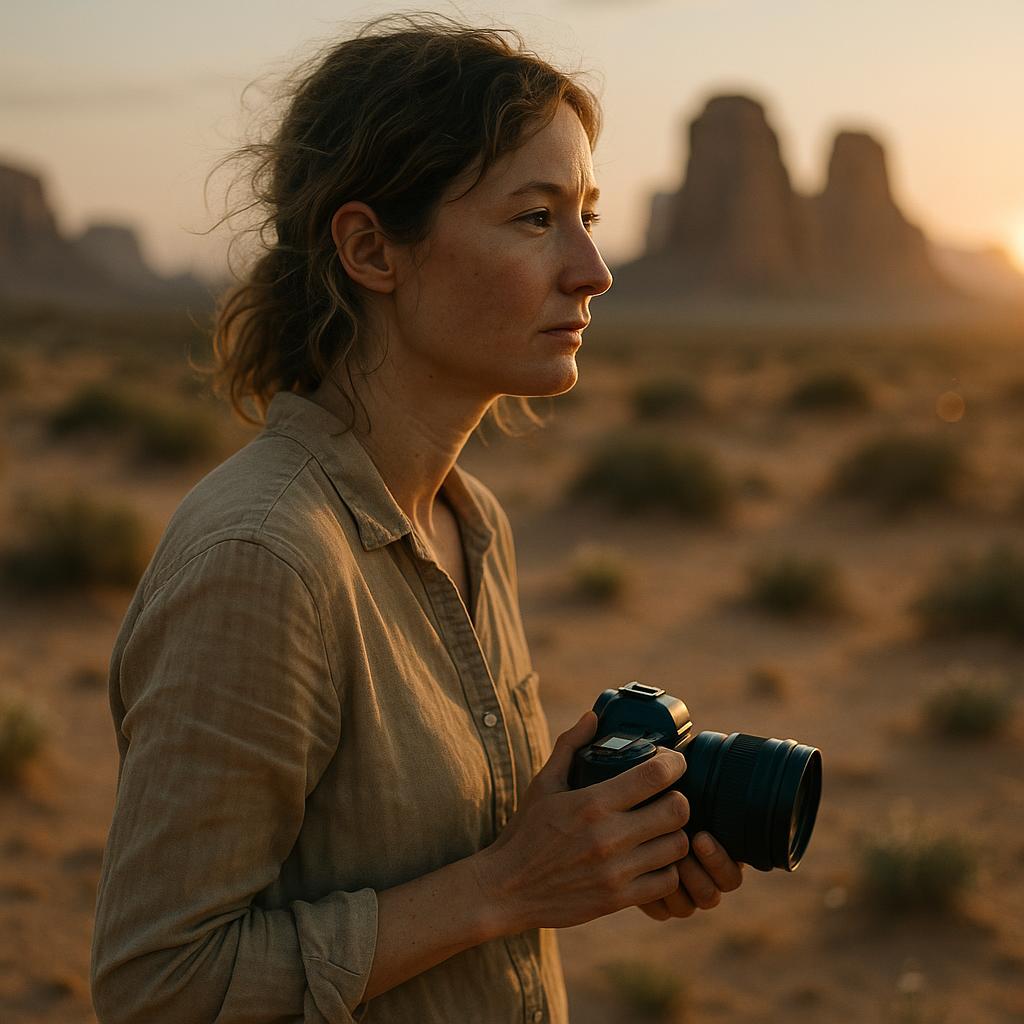 Image by RM AI
The Exhibition Opening
Ten years after my parents vanished, I stood in the center of Elaine's gallery surrounded by my photographs—thirty desert landscapes that told the story of my grief and healing. I'd titled the exhibition 'Searching: Landscapes of Loss and Beauty,' each image accompanied by a small note about my parents' connection to these spaces. 'Your work is extraordinary,' whispered a woman clutching a tissue. 'I feel like I know them.' I smiled weakly, still uncomfortable with the attention. As the crowd thinned, an elderly man in a faded park ranger uniform approached, his eyes red-rimmed. 'Miss Mara,' he said, voice cracking. 'I read your artist statement. I've been a ranger in these parts for forty years.' He gestured to a photograph of a particular rock formation bathed in sunset light. 'That area—we call it Shadow Canyon—it's claimed others before.' My heart stuttered as he continued, 'The desert gives up its secrets on its own timeline. Not ours.' He squeezed my arm gently. 'I've seen things appear after decades, preserved perfectly in the dry air.' Something in his weathered face, the certainty in his voice, ignited that dangerous spark in me again. As he walked away, he turned back. 'I'm heading out to that eastern ridge next week. You're welcome to join.' What he couldn't have known was that the eastern ridge was exactly where I'd spotted that rectangular shadow on the satellite map.
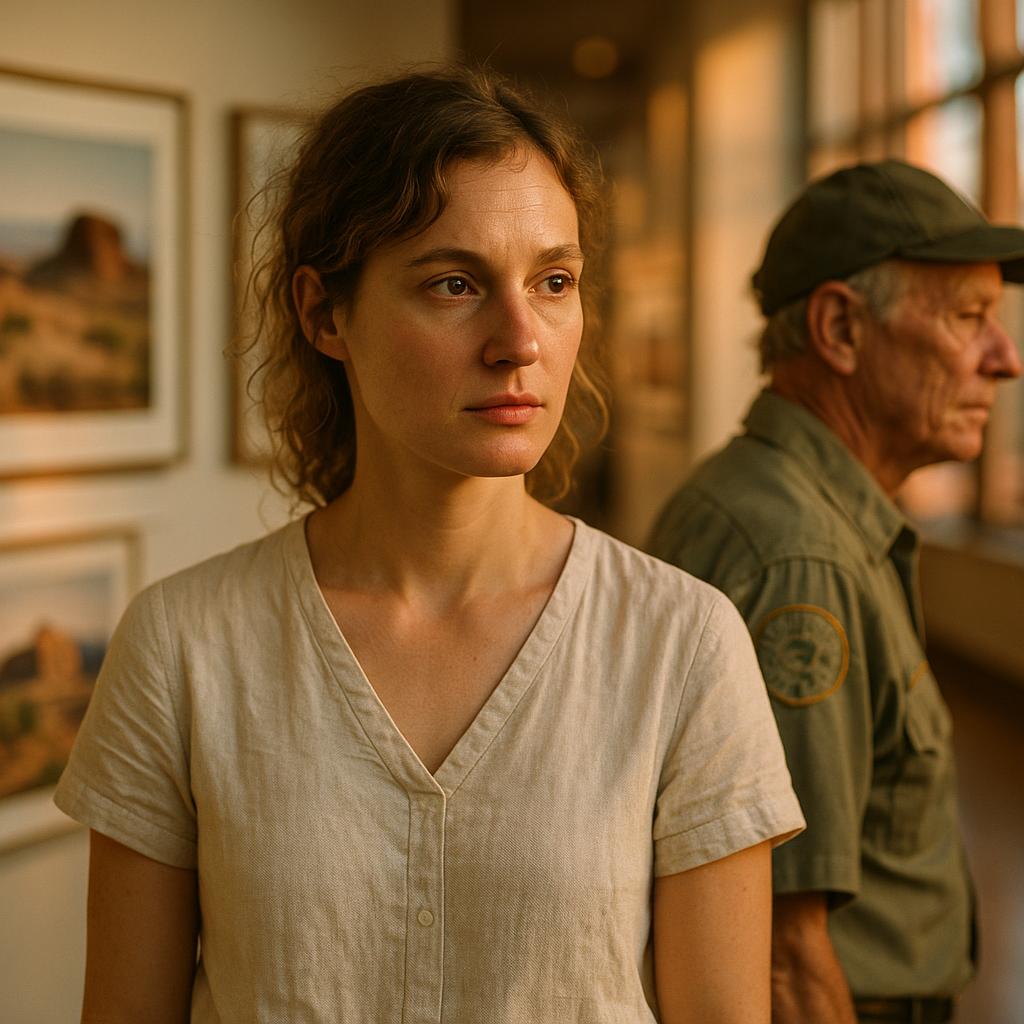 Image by RM AI
The Journalist's Interest
Ten years and two weeks after my parents vanished, a woman with sharp eyes and a recorder approached me at my exhibition closing. 'Sophia Reyes, Desert Chronicle,' she said, extending a business card. 'Your story deserves more attention than these walls can give it.' I hesitated, clutching my wine glass tighter. The thought of exposing my decade of pain to strangers made my stomach clench. 'I'm not looking for pity,' I warned. She shook her head. 'I'm looking for answers. A feature could reach thousands—maybe someone knows something.' Three days later, I sat across from her at a café, watching her fingers fly across her keyboard as I unraveled ten years of searching. 'What's your theory?' she asked suddenly, looking up. 'About what happened to them?' The question hit me like a physical blow. In all these years of searching, I'd never allowed myself to form a complete theory—as if doing so would be admitting they were truly gone. 'I don't...' my voice cracked. 'I can't...' She reached across the table and squeezed my hand. 'Maybe that's the headline right there,' she said softly. 'Daughter's decade-long search continues without answers.' What neither of us knew was that her article would reach someone who had been keeping a secret about my parents for exactly ten years.
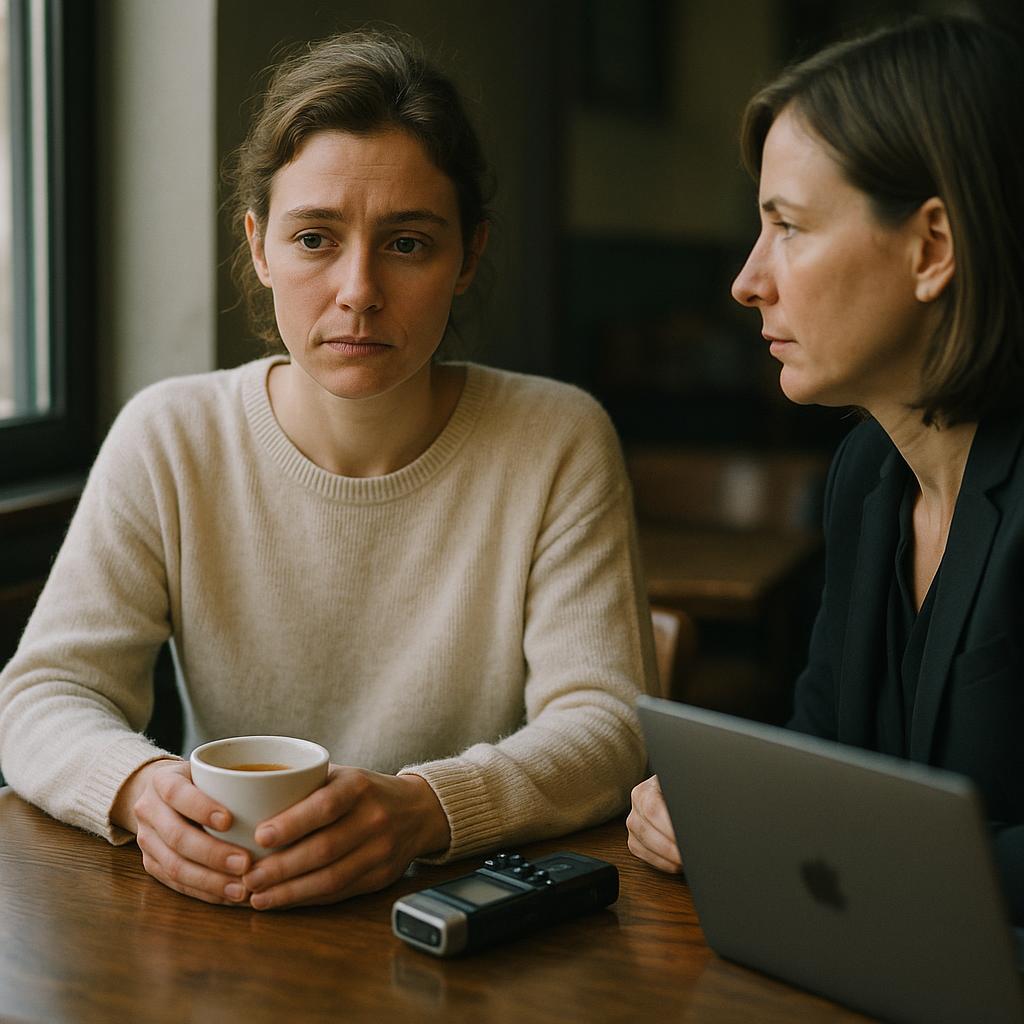 Image by RM AI
The Article Goes Viral
Ten years and three weeks after my parents vanished, Sophia's article hit the internet like a wildfire in drought season. 'The Woman Who Wouldn't Stop Searching: A Decade Without Answers' spread across social media platforms faster than I could process. My phone buzzed constantly with notifications—friends sharing the link, strangers following my newly-created social accounts, local news stations requesting interviews. My inbox transformed into a chaotic archive of humanity: tearful messages from people who'd lost loved ones, amateur sleuths offering theories, psychics (whom I promptly deleted), and conspiracy theorists convinced my parents had been abducted by everything from cults to aliens. I was about to shut down my computer when an email with the subject line 'Possible Vehicle Location - Geology Mapping Project' caught my eye. A graduate student named Eli had been using drone technology to map undocumented ravines for his dissertation. 'I read the article and recognized the search area,' he wrote. 'I've been mapping terrain that wasn't accessible during the original search.' Attached was a high-resolution image showing what appeared to be a metallic reflection in a narrow canyon—a rectangular shape partially covered by sand and rock. My hands trembled as I zoomed in, the familiar outline of my father's truck taking shape pixel by pixel. What made my heart nearly stop was the license plate—though partially obscured, I could make out the first three characters: JRW. My parents' plate started with those exact letters.
 Image by RM AI
The Satellite Images
Ten years and four weeks after my parents vanished, I sat in a cramped university office across from Eli, the geology grad student who'd emailed me. He was younger than I expected, maybe mid-twenties, with an earnestness that reminded me of my father. 'The technology we have now didn't exist when your parents disappeared,' he explained, clicking through slides on his laptop. 'These new satellite imaging systems can detect metal reflections even under layers of sand.' My heart hammered as he zoomed in on a particular section of desert. 'See this?' His cursor circled a rectangular shadow nestled between two rock formations. 'It's approximately sixteen feet long, consistent with a pickup truck.' I leaned closer, barely breathing. The location was miles from any marked trail—a blind spot the original search teams would never have reached. 'Could it be... something else?' I asked, afraid to hope. Eli shook his head. 'The dimensions are too precise. And look—' he enhanced the image further, revealing what appeared to be the glint of metal. 'That's a reflection pattern consistent with a vehicle.' My fingers traced the outline on his screen, tears blurring my vision. 'When can we go?' I whispered. What I didn't tell him was that I'd already packed my hiking gear in the car, ready to leave that very moment if necessary.
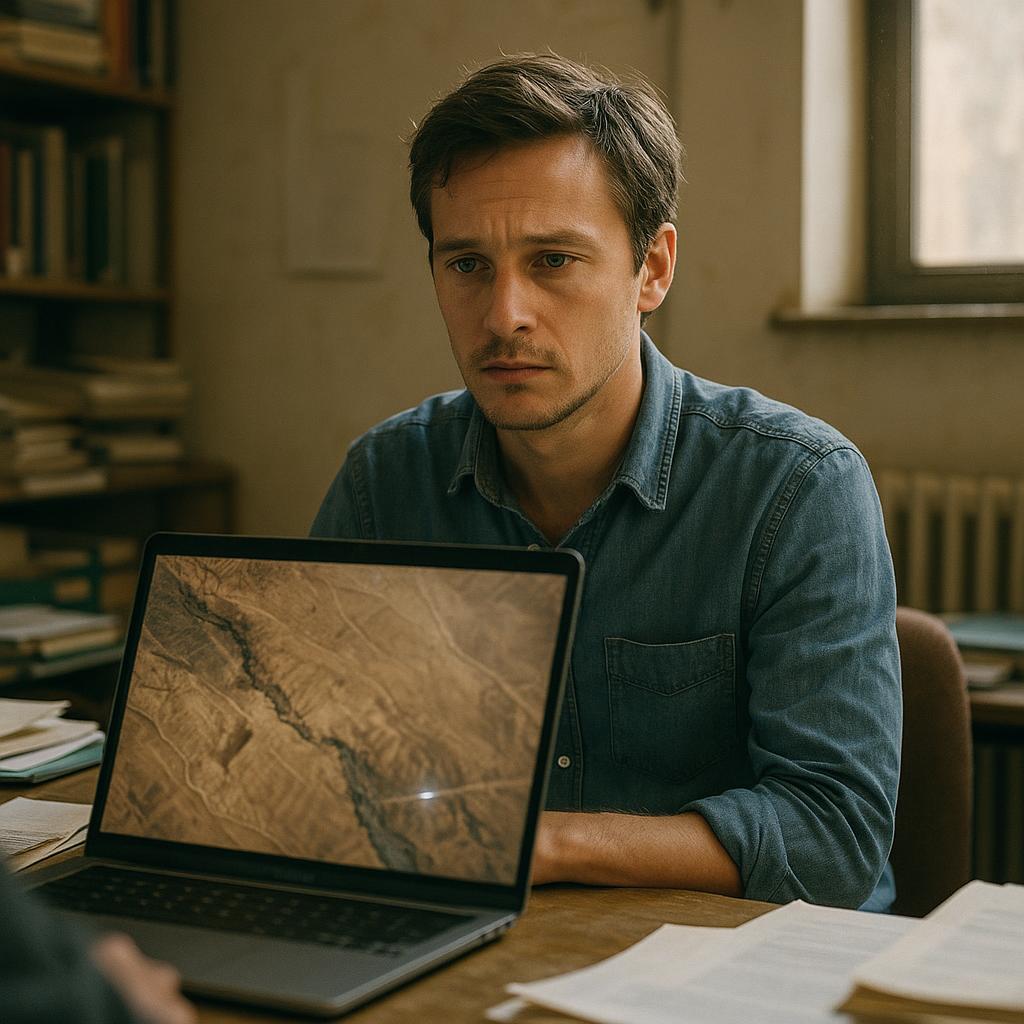 Image by RM AI
Planning the Search
Ten years and one month after my parents vanished, I found myself hunched over Detective Reeves' desk, sliding Eli's satellite images across to him. 'This could be it,' I whispered, my voice catching. His eyes widened as he studied the metallic reflection. 'I'll help you, Mara, but unofficially,' he warned. Within days, we assembled a small team—Reeves, Eli, two experienced search and rescue volunteers, and me. We spread topographical maps across my living room floor, marking GPS coordinates and planning emergency extraction routes. 'The terrain is treacherous,' Alex, one of the volunteers, explained as he showed us the 3D model he'd created. 'These ravines can flood with no warning.' That night, I laid out my hiking gear—boots, first aid kit, extra batteries—methodically checking each item three times. Sleep was impossible. Every time I closed my eyes, I saw my parents' truck emerging from the sand, and my mind raced between scenarios—finding them alive somehow (impossible, I knew) or finding remains (unbearable, but necessary). At 3 AM, I gave up trying, pulled their wedding photo from my nightstand, and tucked it carefully into my backpack's inner pocket. 'I'm still looking,' I promised their smiling faces. 'I won't stop until I bring you home.' What I couldn't have known then was that the desert was about to reveal secrets far more complicated than I had imagined.
Into the Desert
Ten years and one month after my parents vanished, our small search team set out at dawn. The rising sun painted the desert in hues of amber and gold—the same colors my parents must have witnessed countless times. Reeves walked ahead with Alex, while I followed behind with the two guides, Marco and Javier. 'Watch your footing here,' Marco warned as loose rocks tumbled beneath my boots. By midday, the heat had become a living thing—pressing down, stealing breath. We huddled in a sliver of shade beneath an overhanging rock, passing water bottles in silence. 'Your parents really came out here for fun?' Reeves asked, wiping sweat from his forehead. I nodded, suddenly understanding something I never had before. The desert wasn't just emptiness—it was raw, untamed beauty. Jagged rock formations stretched toward the sky like ancient cathedrals. Tiny wildflowers somehow survived in the harshest conditions. The silence was absolute, broken only by our breathing. 'I get it now,' I whispered, more to myself than the others. 'Why they loved it here.' As we prepared to continue, Marco pointed to a narrow canyon ahead. 'That's where your coordinates lead,' he said. 'But the ground's unstable from recent flash floods.' I stared at the path ahead, my heart hammering against my ribs. After ten years of searching, I was finally close—but what I didn't know was that the desert wasn't finished testing me yet.
 Image by RM AI
The Ridge
Ten years and one month after my parents vanished, we finally reached the ridge as the sun began its descent behind the mountains. The golden light stretched our shadows across the rocky terrain, making it nearly impossible to distinguish between natural formations and what might be my parents' truck below. 'This is it,' Alex whispered, adjusting his GPS. 'The coordinates match exactly.' I stood frozen at the edge, staring down at the small valley where the satellite had captured that rectangular shadow. My legs trembled—not from exhaustion, but from the overwhelming reality that after a decade of searching, I might be looking at the very spot where my parents' journey ended. 'We'll head down at first light,' Reeves decided, placing a steady hand on my shoulder. 'Too dangerous in the dark.' As the others set up camp, I wandered a few yards away and sat on a flat rock, watching the stars emerge one by one. The desert night wrapped around me like a familiar blanket, and for the first time in ten years, I felt an inexplicable sense of peace. 'Were you here?' I whispered to the vast darkness, imagining my parents sitting in this exact spot, sharing a thermos of coffee, pointing out constellations. What I couldn't have known then was that the valley below held answers far more complex than I had prepared myself to face.
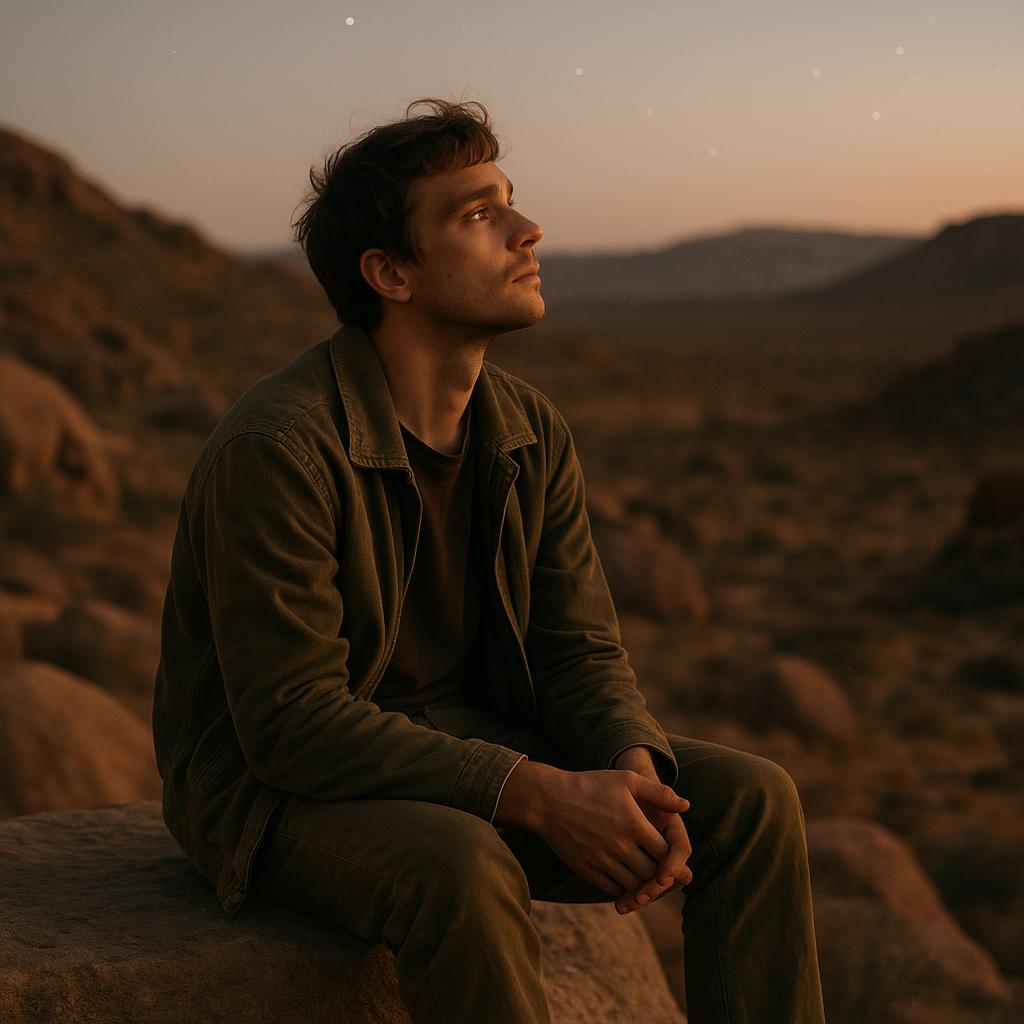 Image by RM AI
The Discovery
Ten years and one month after my parents vanished, dawn broke over the valley with an eerie stillness. We descended carefully, our boots crunching on loose gravel. That's when I saw it—a patch of faded blue that had no business being in this landscape of reds and browns. My heart slammed against my ribs as we got closer. 'Mara,' Reeves whispered, his hand finding my shoulder. 'Take it slow.' But I couldn't. Ten years of searching, of nightmares, of therapy sessions and breakdowns had led to this moment. The truck emerged from the sand like a shipwreck from the ocean floor—my father's beloved pickup, now a sun-bleached ghost of itself. My legs buckled beneath me. I would have fallen if Reeves hadn't caught me. 'It's theirs,' I choked out, recognizing the dent on the passenger door from when Mom had backed into our mailbox. 'It's really theirs.' The others hung back, giving me space as I approached what felt like a grave and a miracle all at once. My fingers trembled as they reached for the door handle, caked with a decade of dust. I hesitated, suddenly terrified of what I might find inside—not knowing that the truck was just the beginning of the truth I'd been searching for all these years.
The Truck
Ten years and one month after my parents vanished, I stood before their truck, my hand hovering over the door handle. The vehicle was partially buried, a time capsule preserved by the desert's dry embrace. I took a deep breath and pulled. The door creaked open, releasing a decade of stillness. Inside, everything was exactly as they'd left it—Mom's faded hiking jacket draped over the passenger seat, Dad's thermos still upright in the cup holder, their map neatly folded on the dashboard. My fingers trembled as I touched the steering wheel, feeling the ghost of my father's hands. No blood. No signs of struggle. Just... emptiness. It was as if they had simply stepped out for a moment and the desert swallowed them whole. I picked up Mom's jacket, pressing it to my face. Impossibly, it still carried the faint scent of her lavender soap beneath the mustiness of time. 'Where did you go?' I whispered, my voice breaking the decade-long silence inside the cab. In the middle console, something caught my eye—my mother's leather-bound notebook, its pages curled from years of heat and cold. I reached for it with shaking hands, not yet understanding that its final entry would rewrite everything I thought I knew about their disappearance.
 Image by RM AI
The Notebook
Ten years and one month after my parents vanished, I sat in the truck, cradling my mother's notebook in my trembling hands. The leather cover was cracked from years of desert heat, but her handwriting inside remained clear—those familiar loops and curves I'd recognize anywhere. I flipped through pages filled with her observations about wildflowers and rock formations until I reached the final entry, dated the morning they disappeared. 'Truck won't start,' she wrote. 'Battery completely dead. Jim thinks it might be the alternator. We can see rock formations about two miles east that might provide better shelter and visibility for signaling. We'll take water and emergency supplies and head that way.' My throat tightened as I read her final words: 'Not worried yet. Adventure, right? Will update when we return.' I traced my fingers over the dried ink, picturing them walking hand in hand into the vast emptiness, still believing they'd make it back. They never knew they were writing the first chapter of a mystery that would consume a decade of my life. I closed the notebook and held it against my chest, finally understanding their last moments. They hadn't abandoned the truck in panic—they'd made a rational decision to seek help, not knowing the desert had other plans. What I couldn't have anticipated was how the authorities would react when I showed them this final piece of evidence.
Calling the Authorities
Ten years and one month after my parents vanished, Reeves stepped away from our group and made the call that would change everything. 'This is Detective Reeves,' he said into the satellite phone, his voice echoing against the canyon walls. 'We've located the vehicle.' Within hours, the quiet valley transformed into something that looked like a movie set—helicopters thundering overhead, uniformed officers scaling the ridge, forensic teams in white suits meticulously photographing everything. I sat on a rock, clutching my mother's notebook, watching strangers swarm around the truck that had haunted my dreams for a decade. 'Miss Mara,' a woman in a crisp uniform approached, 'I'm Captain Hernandez. We need to go over your statement again.' I nodded numbly, having already repeated the story three times. Each official who interviewed me wore the same expression—a mixture of professional interest and personal embarrassment. How had their extensive search missed this? As the sun began to set, I watched them establish a grid pattern around the truck, placing small numbered markers on the ground. 'We'll begin searching for remains at first light,' Captain Hernandez explained gently. The word 'remains' hit me like a physical blow. After ten years of uncertainty, I was finally facing the reality I had both dreaded and needed—but what they found the next morning would challenge everything I thought I knew about my parents' disappearance.
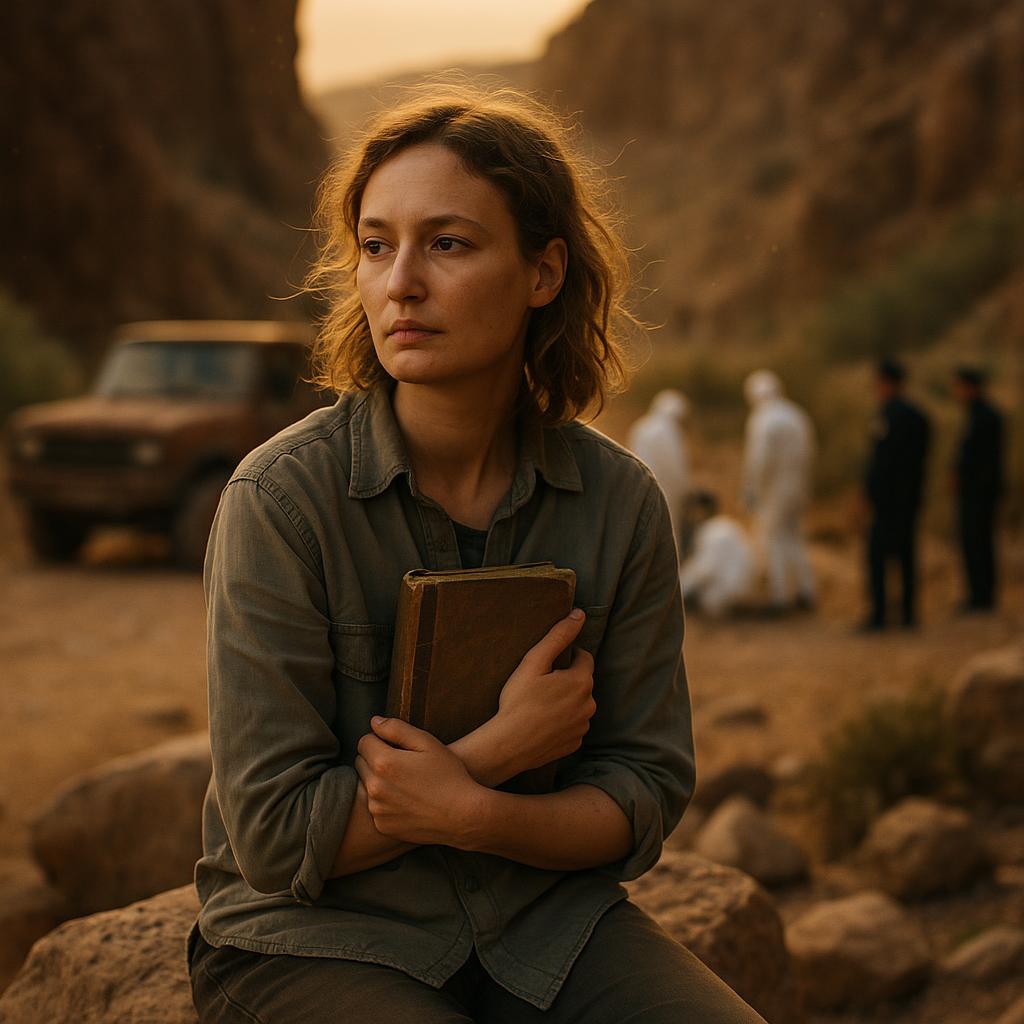 Image by RM AI
Following Their Footsteps
Ten years and one month after my parents vanished, I stood at the edge of our search grid, clutching Mom's notebook like a sacred text. 'I'm coming with you,' I told Captain Hernandez, my voice steadier than my legs. She hesitated, then nodded. 'Stay close.' We set out eastward toward the rock formations Mom had described—jagged sentinels rising from the desert floor. Every step felt like walking through my parents' final moments. The terrain was brutal—loose shale that shifted underfoot, sudden drops hidden by scrub brush, the sun a merciless eye overhead. By noon, the heat had become a physical weight pressing down on us. My water was half gone, my shirt soaked with sweat. 'They would have been disoriented quickly,' the heat specialist murmured, scanning the horizon. 'Dehydration affects judgment within hours.' I pictured my parents—my practical mother marking their path, my father conserving their water—becoming gradually more desperate as the desert revealed its true nature. When we reached a narrow pass between two towering rocks, I stopped, overcome by a sudden certainty. 'They came this way,' I whispered, noticing a small cairn of stacked stones half-collapsed by time. What I couldn't have known then was that twenty yards beyond that pass, the desert was about to give up its decade-long secret.
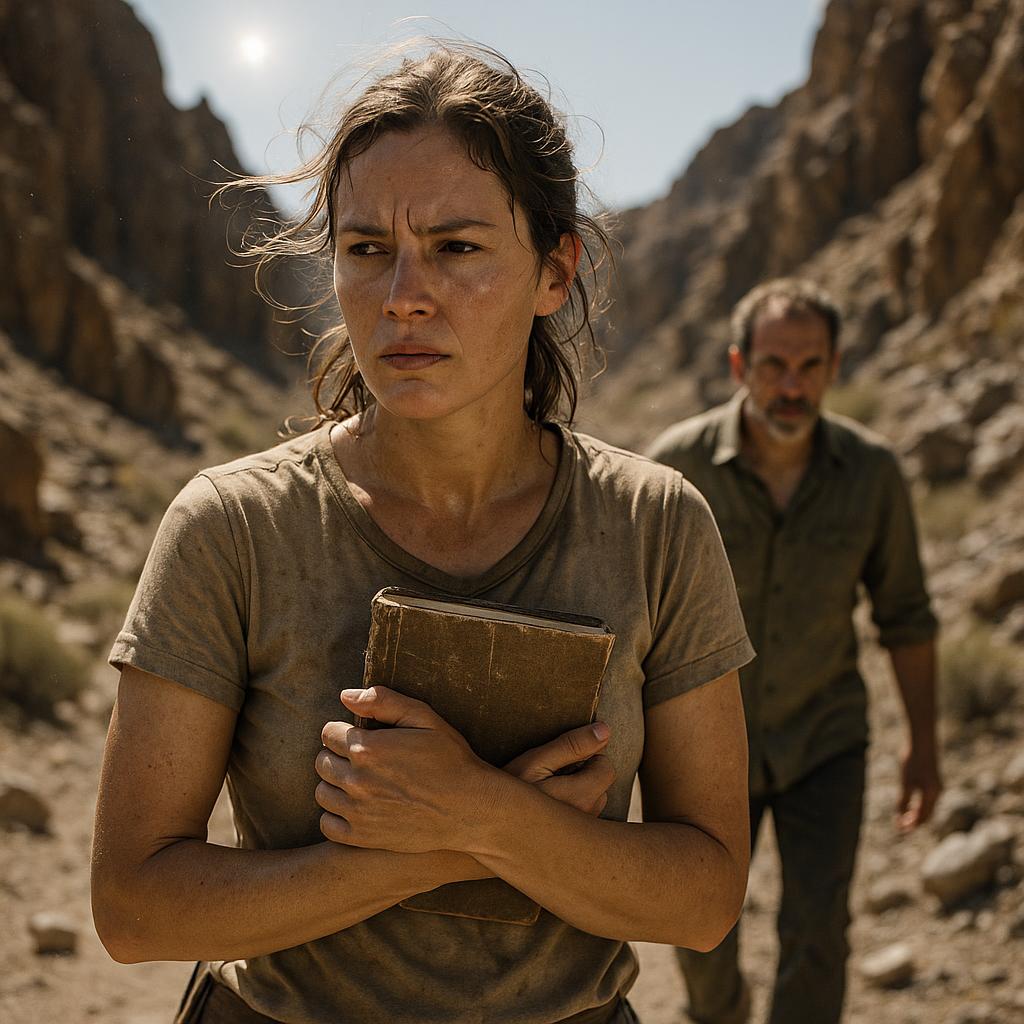 Image by RM AI
The Rock Formation
Ten years and one month after my parents vanished, we reached the rock formations my mother had described in her final notebook entry. The massive sandstone structures jutted from the earth like ancient guardians, creating pockets of blessed shade in the merciless desert. 'This is where they would have come,' I whispered, running my hand along the cool stone surface. I could almost see them—Mom calculating their options, Dad conserving their remaining water. The search team spread out methodically, their voices echoing against the rocks. I found a small alcove and sat where my parents might have rested, pressing my palm against the stone as if it might somehow connect us across time. The cadaver dogs worked in grid patterns while technicians swept the area with ground-penetrating radar. I closed my eyes, exhaustion washing over me, when a shout cut through the air. 'We've got something!' One of the handlers was restraining his dog, who had alerted at the far side of the formation. Captain Hernandez caught my eye, her expression carefully neutral. 'Mara, stay here for a moment.' But there was no force on earth that could have kept me from following as the team rushed toward what might finally be the answer to the question that had haunted me for a decade. What I found there would forever change how I understood my parents' final moments.
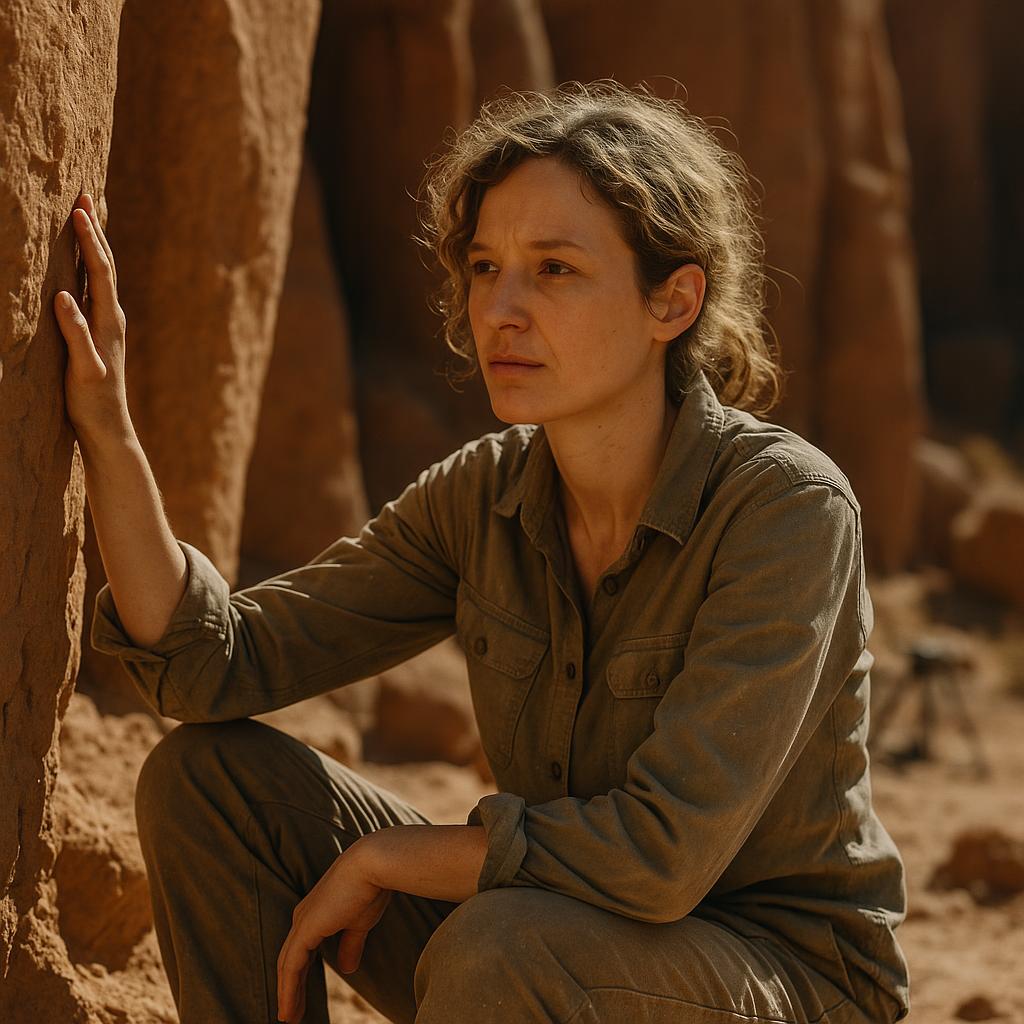 Image by RM AI
What the Desert Kept
Ten years and one month after my parents vanished, I stood frozen as the search team carefully excavated what the desert had hidden for a decade. 'Two sets of remains,' the forensic anthropologist confirmed quietly, her voice gentle but clinical. 'Found together, side by side.' The collapsed rock formation loomed above us like a monument. I stared at the scene, unable to move or speak, as technicians photographed and documented everything. My parents had made it to these rocks, just as Mom's notebook said they would. But instead of finding shelter, they'd found their final resting place when the unstable formation gave way. 'It appears they were together when it happened,' the anthropologist added, pointing to how their remains were positioned. 'It would have been quick.' I nodded, tears streaming down my face, but they weren't just tears of grief. After ten years of imagining a thousand horrible scenarios—them lost and separated, dying slowly of thirst, or worse—there was something merciful in knowing they'd been together until the end. Captain Hernandez placed a hand on my shoulder. 'We can bring them home now, Mara.' Home. The word echoed in my mind as I knelt beside the place where my parents had remained hidden for so long. What I couldn't have known then was that bringing them home would uncover one final secret that had been buried with them.
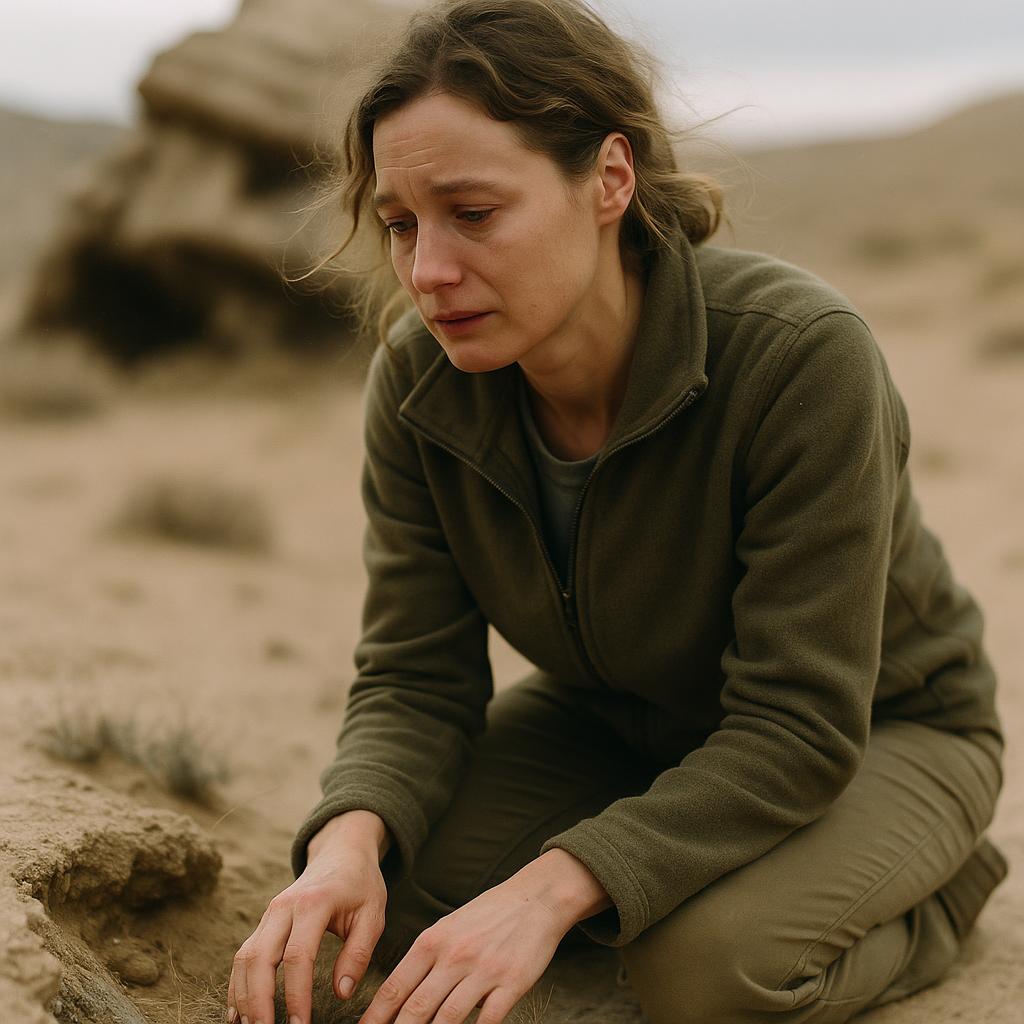 Image by RM AI
The Identification
Ten years and one month after my parents vanished, I sat in a sterile room at the county medical examiner's office, a box of their personal effects placed carefully before me. 'Take your time, Ms. Mara,' the examiner said softly before stepping back. My fingers trembled as I lifted each item for formal identification. Dad's wedding ring—the one with the tiny nick from when he'd caught it on a fishing hook. Mom's turquoise necklace that I'd saved up for months to buy her for her 50th birthday. Their matching Timex watches, still showing different times, frozen in the moment the rocks came down. 'Yes,' I whispered after each item, my voice barely audible. 'That's theirs.' The medical examiner explained in gentle terms that the position of their remains suggested they died quickly, together, without prolonged suffering. I nodded, clinging to this small mercy like a life raft in an ocean of grief. When she handed me the identification forms, my signature looked like it belonged to someone else—jagged and uncertain where it had once been fluid. As I placed the pen down, she hesitated before sliding one more item across the table. 'We found this tucked into your father's wallet,' she said. 'It was protected from the elements.' I looked down at the folded paper and felt my heart stop. It was a note, written in my father's handwriting, that would change everything I thought I knew about why they were in the desert that day.
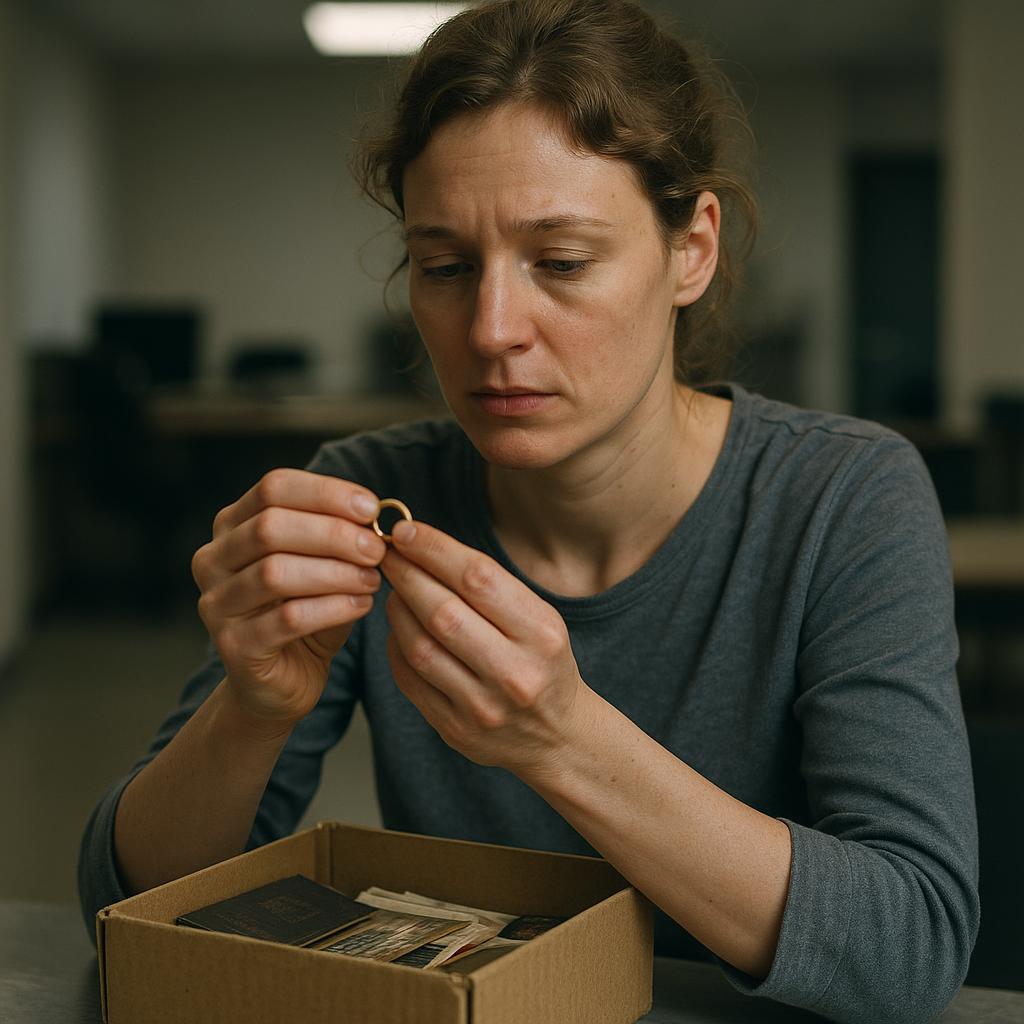 Image by RM AI
The Media Circus
Ten years and one month after my parents vanished, the world suddenly wanted to hear my story. I woke up to find a swarm of news vans outside my hotel, reporters clutching coffee cups and microphones like weapons. 'Mara! How does it feel to finally have closure?' they shouted as I tried to slip out for breakfast. Rebecca, the journalist who'd written about my parents' disappearance years ago, appeared like a guardian angel. 'Stay behind me,' she whispered, creating a human shield. 'They're vultures when they smell a good story.' She helped me craft a statement and arranged one interview—just one—where I could thank the search teams and maybe give hope to other families living in that terrible limbo of not knowing. I held it together on camera, answering questions with practiced calm, until the host asked, 'What would you tell your parents if you could speak to them now?' The dam broke. Ten years of composure crumbled on national television as I sobbed, 'I would tell them I never stopped looking.' The clip went viral within hours. What none of these strangers with their cameras and sympathy knew was that my father's note was burning a hole in my pocket—a secret I wasn't ready to share with anyone, not even Rebecca.
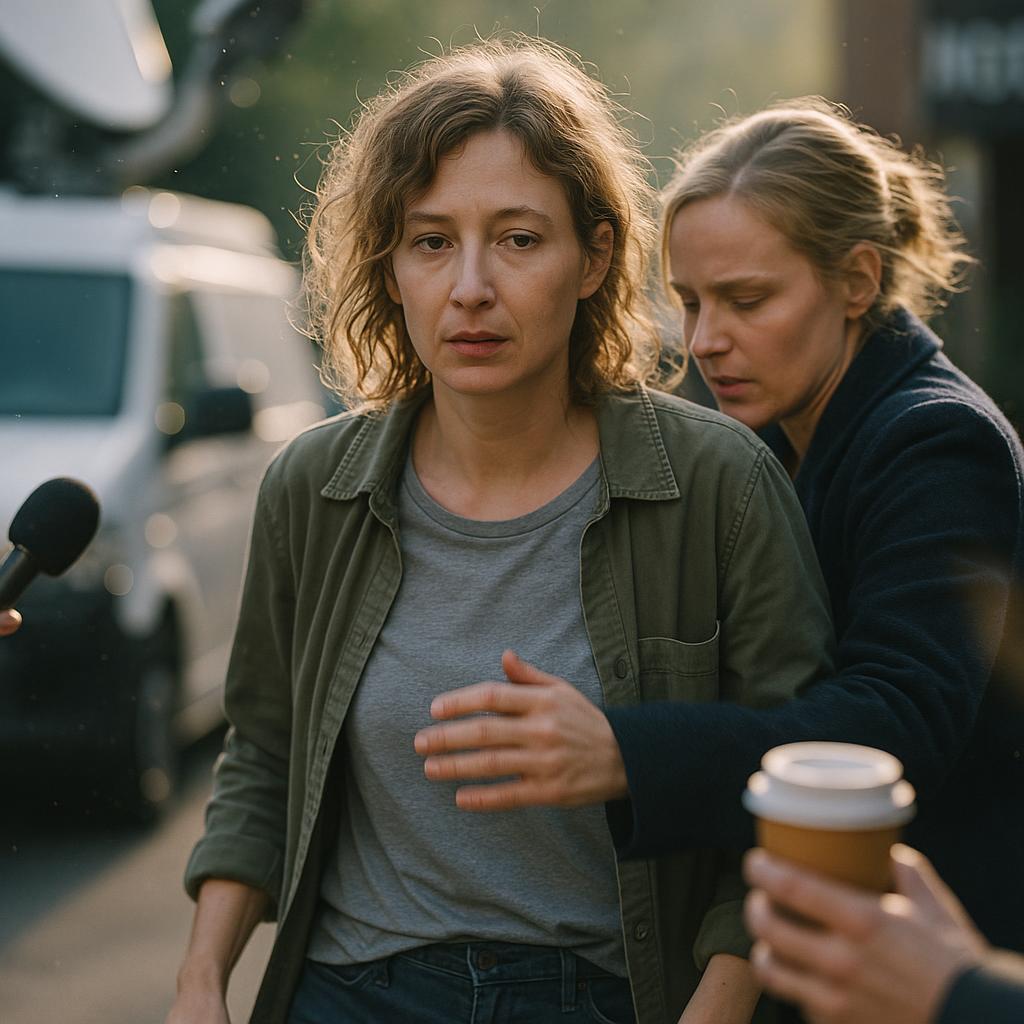 Image by RM AI
The Long Journey Home
Ten years and one month after my parents vanished, I finally brought them home. The funeral director had arranged everything with gentle efficiency—two simple urns, paperwork for transport, a private area at the airport. 'They'll be with you the entire journey,' she assured me. Sitting on the plane, I kept my hand on the carry-on bag containing their remains, as if they might somehow disappear again if I let go. The flight attendant noticed—they always notice more than we think. 'Can I get you anything?' she asked, her eyes taking in my red-rimmed eyes and trembling hands. When I whispered what I was carrying, she quietly brought me a blanket and water, then created a buffer of empty seats around me. For six hours, I sat suspended between earth and sky, between past and future, between grief and relief. The strangest part? For the first time in a decade, I knew exactly where my parents were. No more searching satellite images until 3 AM. No more jumping at every phone call. No more phantom sightings in crowds. Just two containers, surprisingly light for all they contained—two lives, thousands of memories, and the weight of ten years of searching. As the plane began its descent, I pressed my forehead against the cool window and whispered, 'We're almost home.' What I couldn't have known then was that home would never feel the same once I walked through the door with what remained of my parents in my arms.
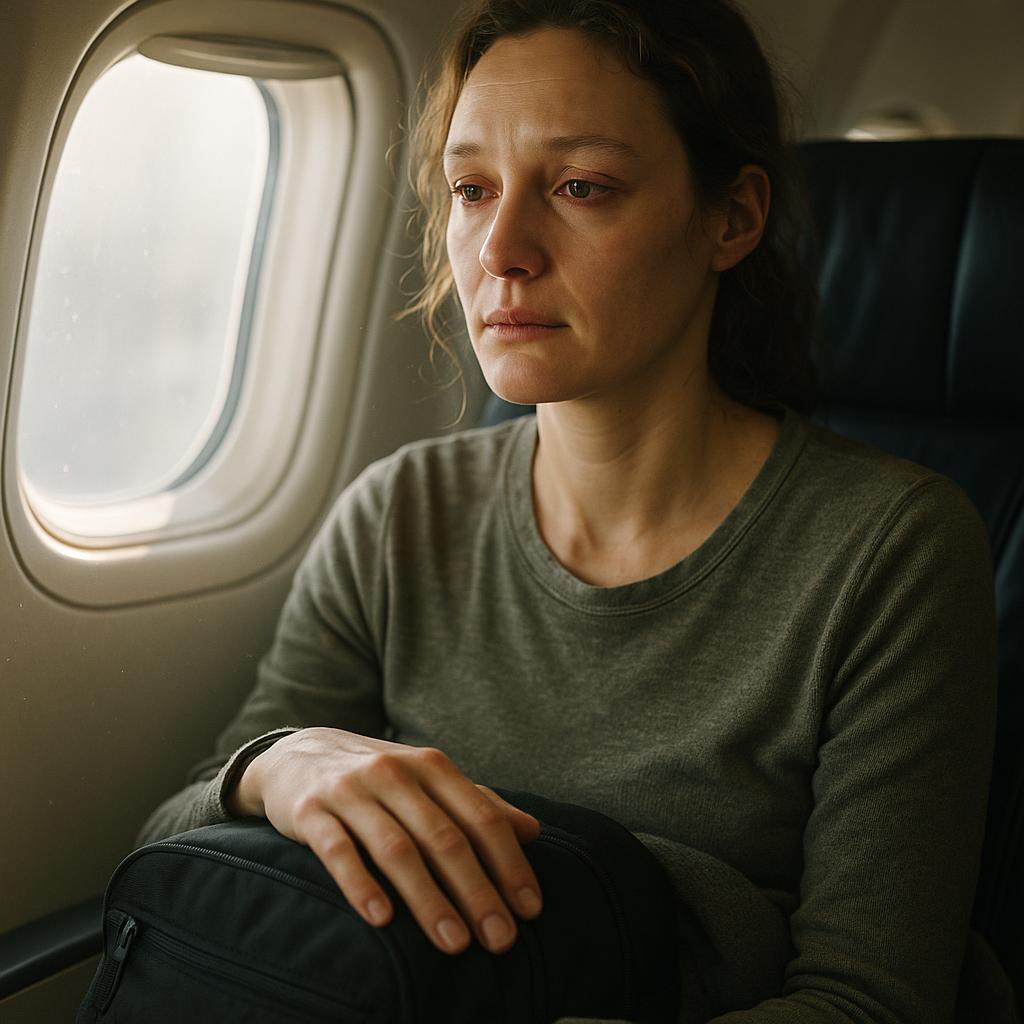 Image by RM AI
Planning the Funeral
Ten years and one month after my parents vanished, I found myself sitting across from a funeral director, planning a ceremony that should have happened a decade ago. 'Take your time,' she said, sliding fabric swatches and service templates toward me. 'This isn't just any funeral.' She was right. This wasn't just goodbye—it was the final chapter of the longest mystery of my life. I changed my mind fourteen times about the programs, seven times about the music. Should I play Dad's favorite Creedence Clearwater Revival songs or Mom's beloved Fleetwood Mac? Both, I finally decided. I spent three nights sorting through old photo albums, creating a timeline of their lives—their wedding day, camping trips, holiday celebrations—moments frozen in time before the desert claimed them. Friends I'd pushed away during my obsessive search began calling. 'Mara, let me help,' my college roommate Jen offered. 'I can coordinate the reception.' I found myself accepting help for the first time in years. The night before the service, I sat alone with their urns in my living room. 'I did it,' I whispered. 'I found you.' What I couldn't have anticipated was who would show up at the funeral the next day—a face I never expected to see, carrying information that would reopen wounds I thought were finally beginning to heal.
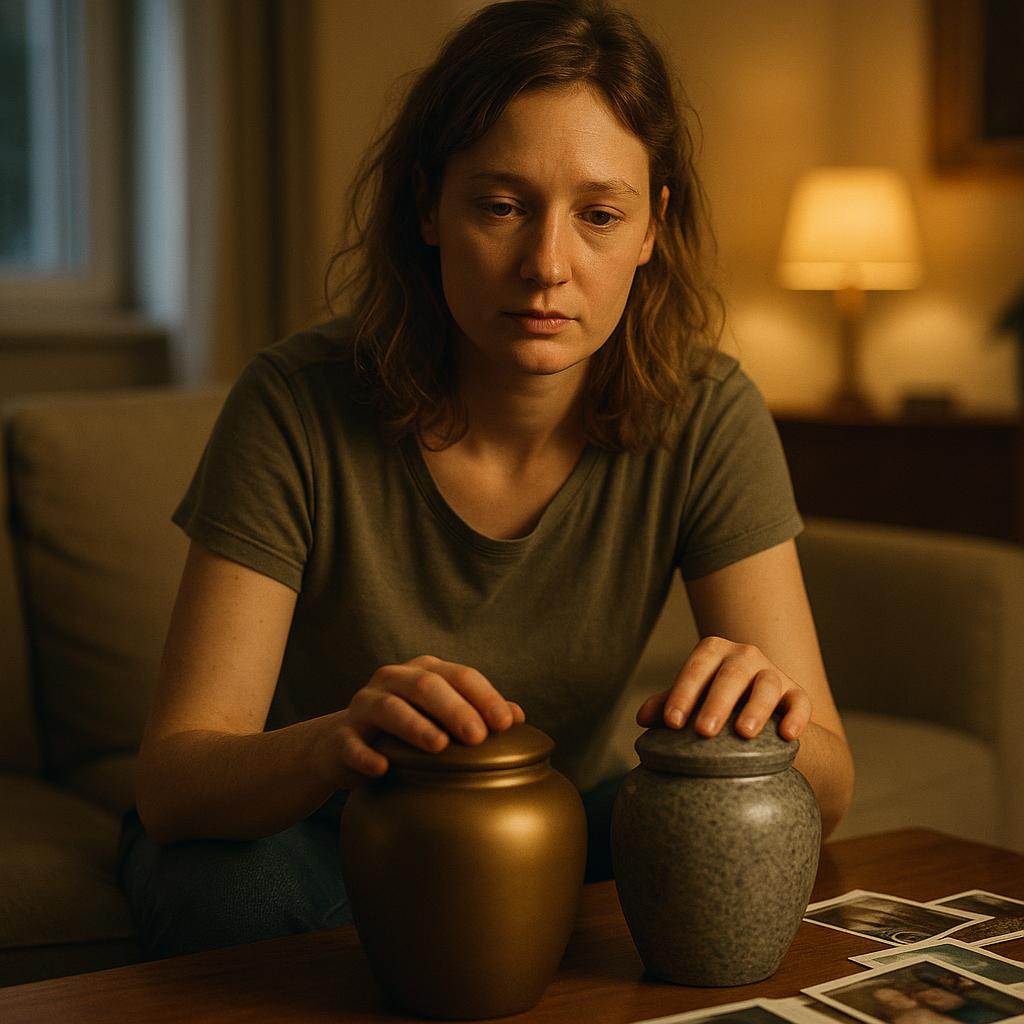 Image by RM AI
The Funeral
Ten years and one month after my parents vanished, I stood at the front of a church that should have held their funeral a decade ago. The day was impossibly beautiful—sunny and clear, exactly how Mom and Dad would have wanted it. I watched as the pews filled with faces from every chapter of their lives: Dad's fishing buddies, Mom's book club friends, former colleagues, neighbors. Some I hadn't seen since those first frantic weeks of searching. 'You look just like your mother,' whispered Mrs. Calloway, my mom's best friend, squeezing my hand with paper-thin fingers. When it came time for me to speak, I approached the podium where their urns sat side by side, finally reunited with the photos I'd chosen—Mom laughing by a campfire, Dad with his arm around her shoulders. For the first time, I could say 'they were' instead of 'they are' without feeling like I was betraying them. 'My parents loved adventures,' I began, my voice steadier than I expected. 'They loved the desert, each other, and coming home to tell the stories.' Tears and laughter rippled through the congregation as I shared memories that had been locked away for too long. What I didn't notice, until I stepped down from the podium, was the unfamiliar man in the back row, clutching what looked like my father's old camera—the one that had disappeared with them ten years ago.
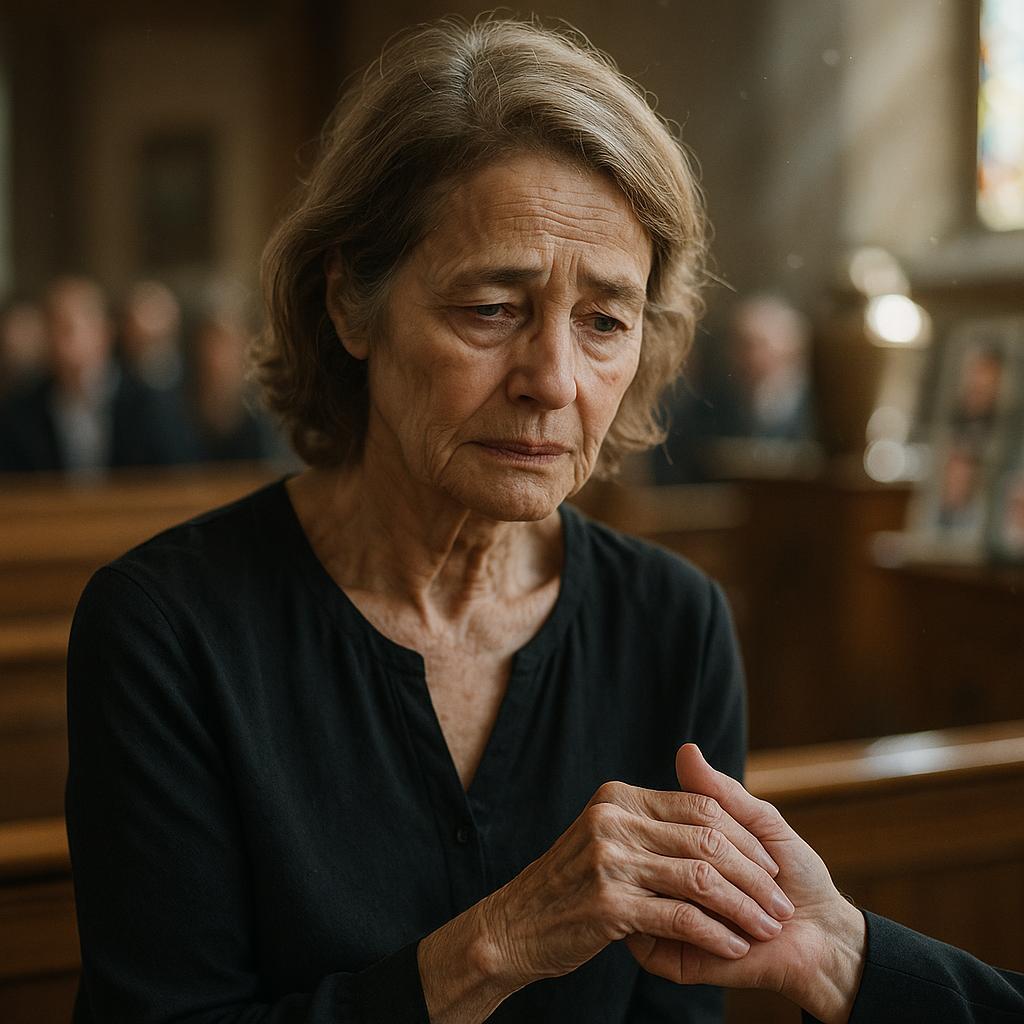 Image by RM AI
The Burial
Ten years and one month after my parents vanished, I watched as their caskets were lowered into the earth beneath a cloudless sky. The cemetery overlooked the mountains they'd hiked countless times—a view they would have approved of. As the minister spoke final words, I felt something physical shift inside me, like a stone I'd been carrying for a decade finally being set down. My aunt squeezed my hand as people began to disperse, but I stayed rooted in place. 'I'll meet you at the car,' I whispered. When everyone had gone, I knelt between their fresh graves and placed the desert wildflowers I'd collected that morning—the same varieties Mom had sketched in her notebook. 'I found you,' I said, my voice steady in the mountain air. 'I followed your footsteps. I brought you home.' For the first time since they disappeared, I felt they could hear me. The questions that had haunted my sleep for ten years were finally buried with them. As I stood to leave, I noticed something glinting in the freshly turned soil—a small object that shouldn't have been there, something that must have fallen from one of the caskets during the lowering.
 Image by RM AI
The Inheritance
Ten years and one month after my parents vanished, I sat in Mr. Feldman's office, watching him slide papers across his polished desk. 'With the death certificates now issued, we can finally settle your parents' estate,' he explained, his voice carrying the practiced gentleness of someone who regularly delivers difficult news. I nodded mechanically as he walked me through life insurance policies, retirement accounts, and property deeds—all now officially mine. The legal system had needed bodies to declare them dead; I'd needed bodies to grieve. Now we both had what we required. 'This check represents the life insurance payout,' Mr. Feldman said, sliding an envelope toward me. 'And these are the keys to their safety deposit box.' The amount on the check made me dizzy—money that had been accumulating interest while I'd been accumulating grief. 'It's all yours now,' he said with a small smile, like he was delivering good news. I wanted to tell him I'd live in poverty forever if it meant having one more conversation with them. Instead, I thanked him, gathered the paperwork, and walked out into the sunshine feeling strangely hollow. What do you do when the system finally acknowledges what your heart has known for years? What I couldn't have anticipated was what waited for me in that safety deposit box—something my parents had prepared for a day they somehow knew might come.
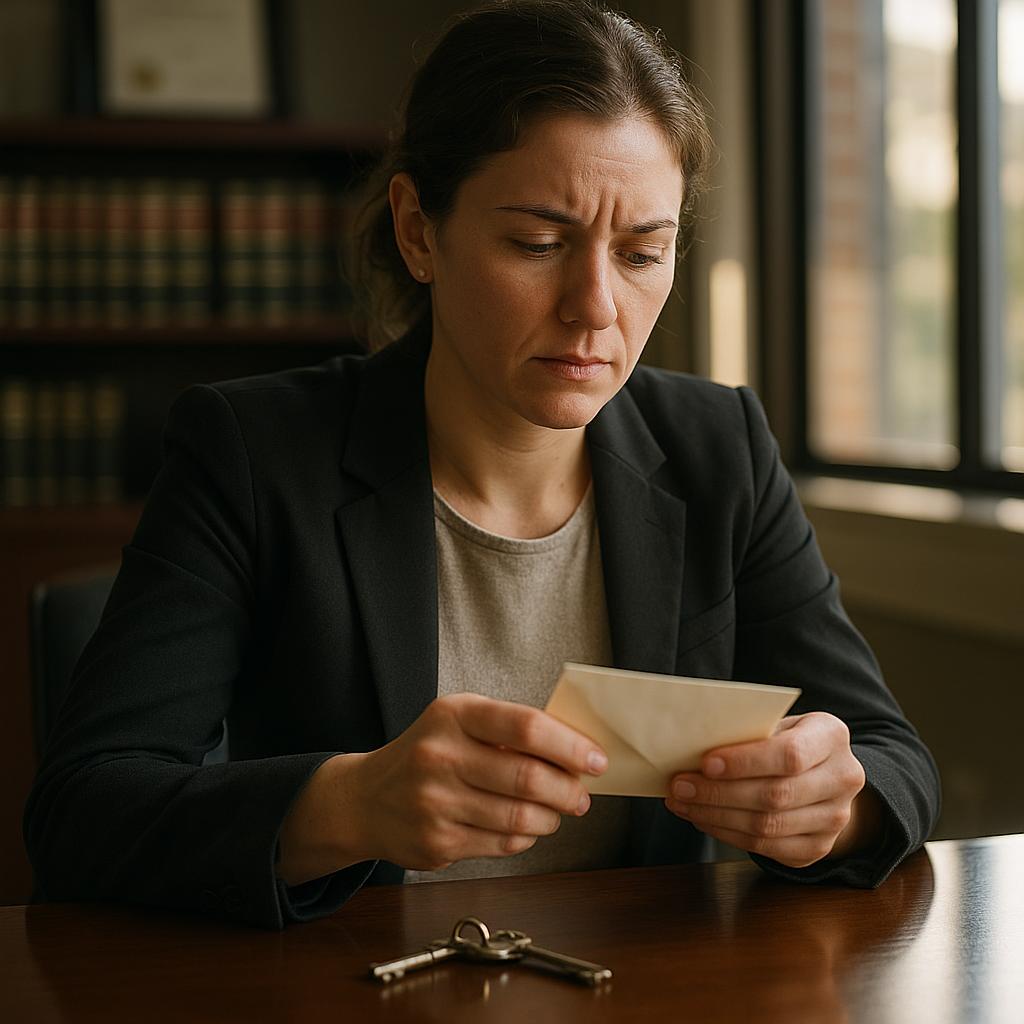 Image by RM AI
The Support Group Revisited
Ten years and two months after my parents vanished, I walked back into the community center basement where the Missing Persons Family Support Group still met every Thursday. The fluorescent lights buzzed overhead just like before, but everything else felt different. I wasn't one of them anymore. 'Mara's here!' Ellen, the group facilitator, announced as heads turned. The room fell silent before erupting in a chorus of congratulations and questions. 'How did you finally find them?' 'What made you look in that specific area?' 'Did the police help at all?' Their faces reflected a complicated mix of emotions I recognized all too well—hope that their loved ones might still be found, envy that my search was over, fear of what answers might reveal. During sharing time, I tried to be honest. 'Finding them didn't fix everything,' I admitted. 'I still wake up crying sometimes. The difference is now I know where to direct my grief.' After the meeting, Sophia, whose teenage son disappeared five years ago, grabbed my hands. 'You never stopped looking,' she whispered, tears streaming down her face. 'You give me hope.' As she hugged me tightly, I felt something shift inside—the weight of my story becoming a bridge for others still trapped in that terrible limbo of not knowing. What I couldn't have anticipated was how my father's mysterious note would soon connect to someone else in this very room.
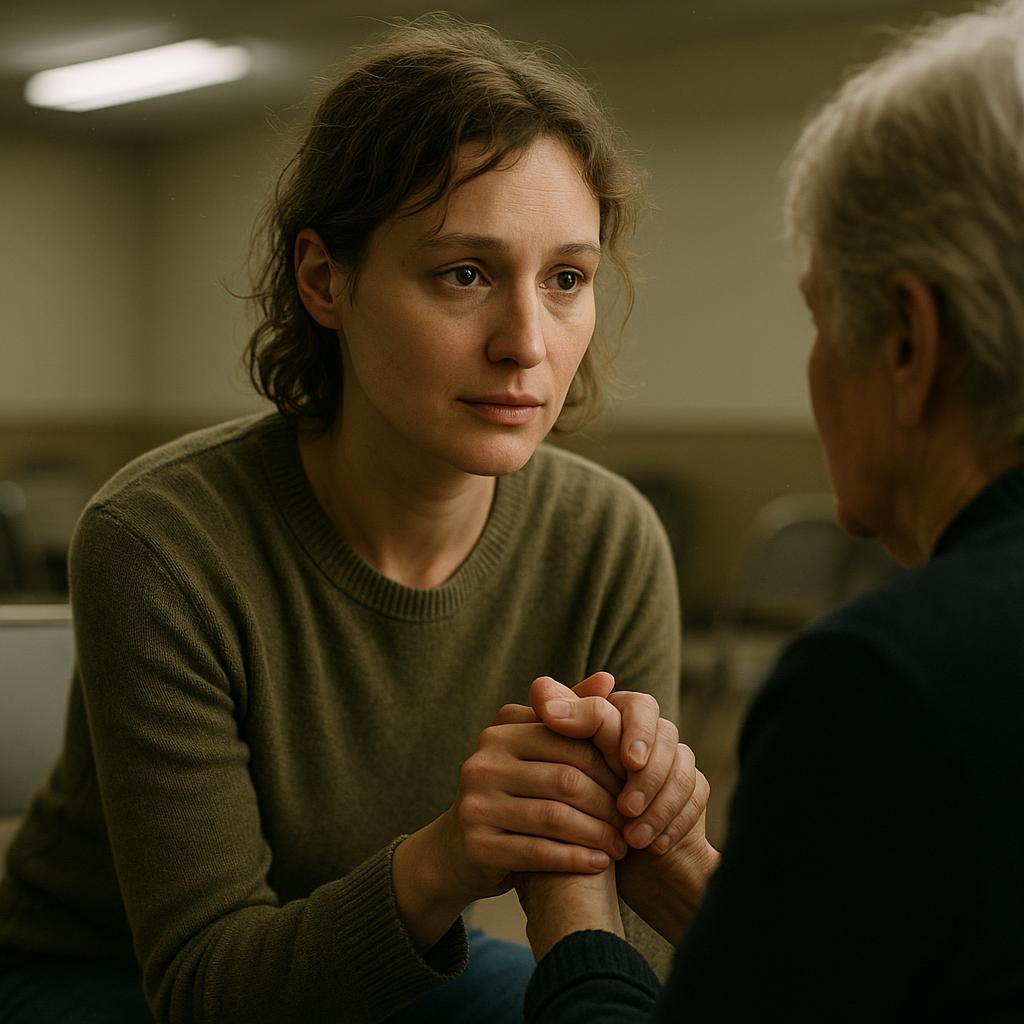 Image by RM AI
The Empty Storage Unit
Ten years and three months after my parents vanished, I stood in front of storage unit #247, key trembling in my hand. For a decade, this 10x15 space had been a shrine to their interrupted lives—furniture draped in sheets like ghosts, boxes of holiday decorations they'd never use again, Dad's fishing gear still smelling faintly of lake water. 'You don't have to do this all at once,' said Mike, the storage manager who'd watched me faithfully pay the bill every month for years. But I was ready. With each item I sorted—keep, donate, discard—I felt the weight of uncertainty lifting. I kept Mom's handwritten recipe book but donated her kitchen appliances. I saved Dad's leather jacket but let go of his collection of Western novels. 'It's strange,' I told Mike as we loaded the third donation truck, 'I thought this would feel like erasing them, but it doesn't.' He nodded, understanding without needing explanation. 'Their memory isn't in the stuff, Mara.' By sunset, the unit was nearly empty, revealing something I hadn't noticed before—a small metal lockbox tucked into the back corner, partially hidden beneath where Dad's workbench had stood. It wasn't on my inventory list, and I had no key that matched its unusual lock.
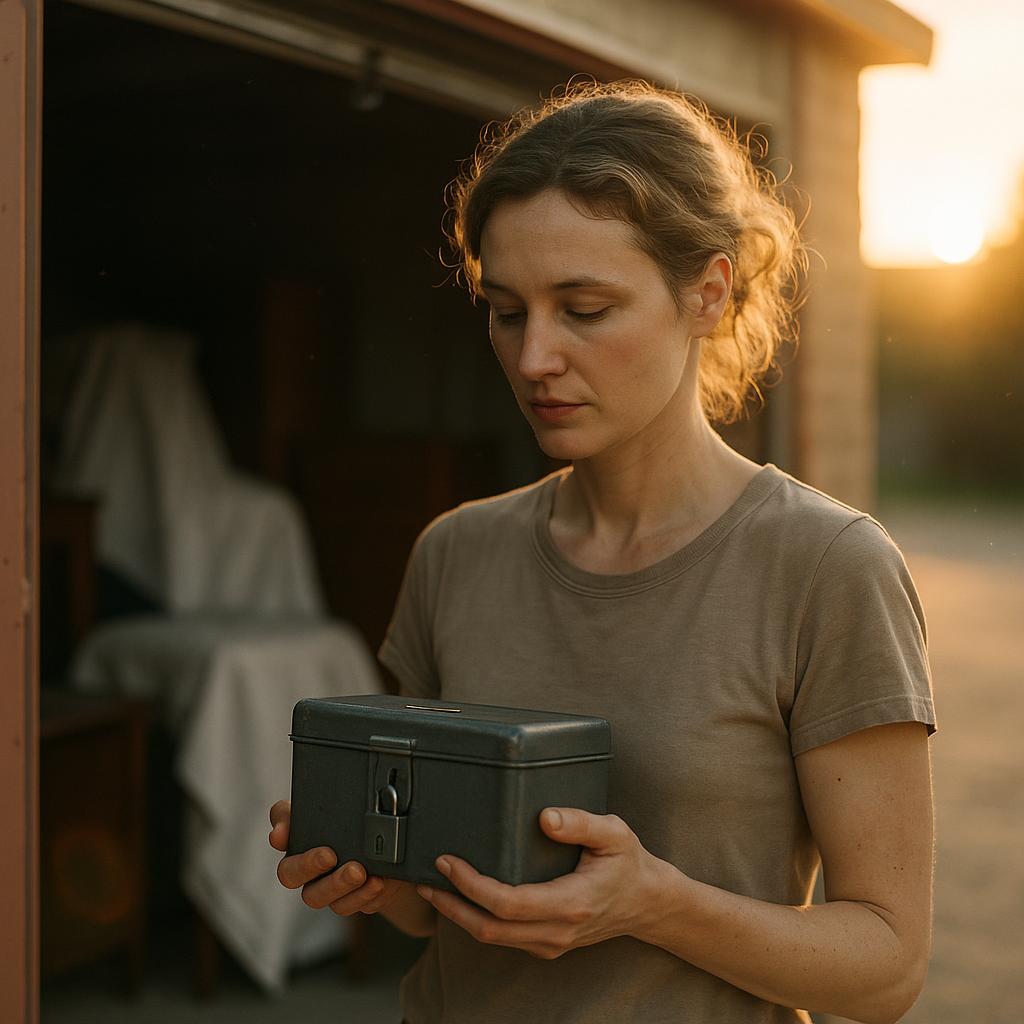 Image by RM AI
The Book Proposal
Ten years and three months after my parents vanished, I sat across from Rebecca at a downtown café, watching her tap her pen against a notepad with 'BOOK PROPOSAL' written in bold letters at the top. 'Your story deserves to be told, Mara,' she insisted, sliding the pad toward me. 'Think about how many families are out there still searching.' I wrapped my hands around my coffee mug, feeling the familiar resistance rise. 'I'm not interested in turning my trauma into entertainment,' I said flatly. Rebecca's eyes softened. 'That's not what this would be.' She explained how a book could become a roadmap for others navigating the limbo of missing loved ones—the bureaucratic hurdles, the search techniques, the ways to keep going when everyone tells you to give up. That night, I found myself opening a new document on my laptop. 'Chapter One: The Day They Didn't Come Home,' I typed, and something unexpected happened. The words began to flow, not as exploitation but as excavation. Each chapter outline became a way to organize the chaos of the past decade into something with meaning—a story with a beginning, middle, and finally, an end. What I didn't realize was that in trying to create a narrative that might help others, I was uncovering parts of my parents' story I had never fully understood.
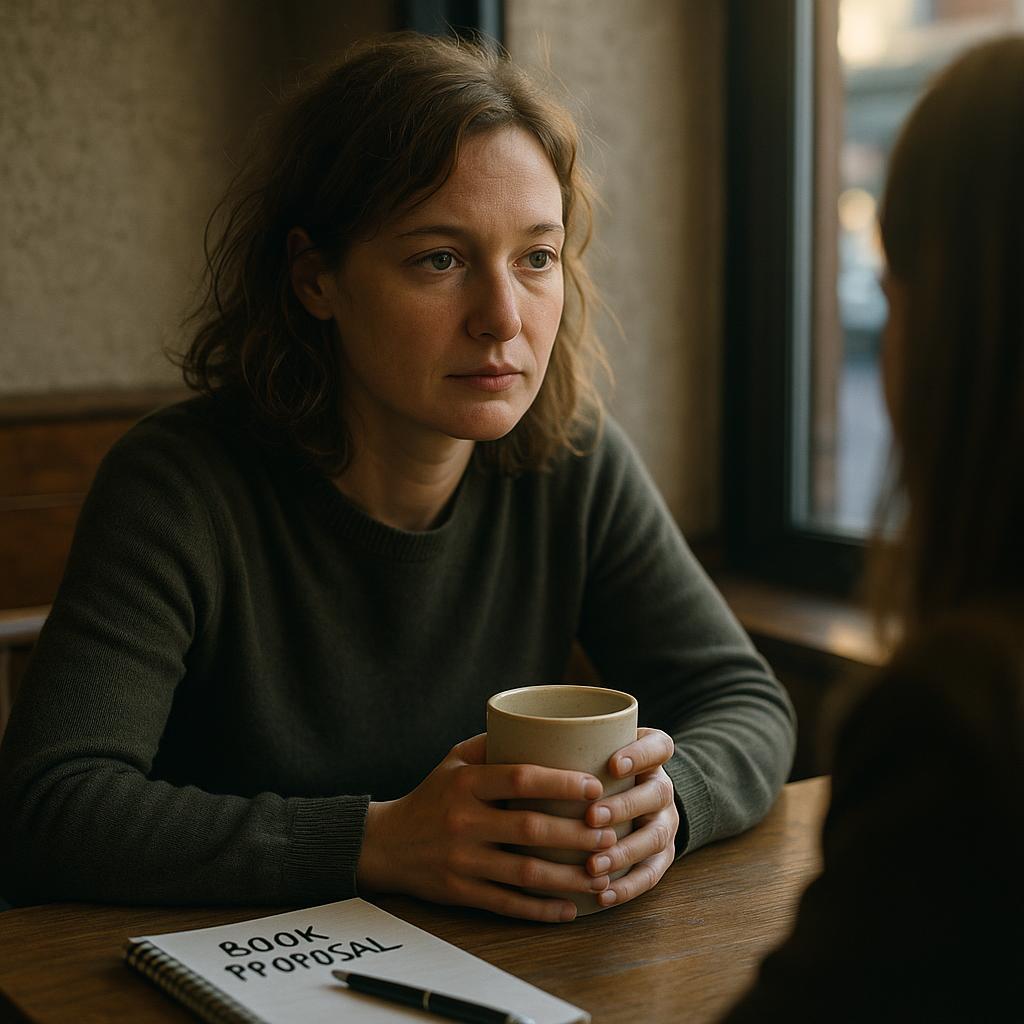 Image by RM AI
The Writing Process
Ten years and four months after my parents vanished, I found myself staring at a blinking cursor on my laptop screen at 2 AM, surrounded by interview notes and old search maps. Some days, writing flowed like a river—memories, facts, and feelings pouring onto the page in perfect harmony. Other days, like today, I could barely see the keyboard through my tears. 'You don't have to include everything,' Rebecca reminded me during our weekly check-in. But I did. The truth deserved to be whole. Yesterday, I interviewed Detective Reeves, who finally revealed what he'd protected me from a decade ago. 'We had a helicopter fly over that ridge,' he admitted, his weathered face creasing with regret. 'The pilot reported nothing unusual, but the sun angle created shadows that day.' My stomach dropped as the implication became clear—they might have been found years earlier if not for a simple trick of light. I sat with that knowledge for hours, anger and grief cycling through me like a storm. But somehow, by morning, the revelation had crystallized into something else: determination. Their story—our story—needed to be told completely, shadows and all. What I couldn't have anticipated was how the next interview would connect dots I never knew existed.
 Image by RM AI
The First Anniversary of Finding Them
Ten years and eleven months after my parents vanished, I stood at their graves with a bouquet of desert wildflowers and a box of my mother's favorite chocolate truffles. 'It's been a year since I found you,' I whispered, settling onto the grass between their headstones. The raw, jagged grief had softened into something I could carry without bleeding. I unwrapped a chocolate and placed it on Mom's headstone, a ritual that would seem strange to anyone watching. 'The book is almost finished,' I told them, running my fingers over the engraved dates. 'Rebecca thinks it might actually help people.' I sat there for hours, updating them on everything—the search and rescue training I'd started, my tentative steps into dating again (Dad would have interrogated Michael, but Mom would have loved his quiet thoughtfulness), the way I'd finally painted the living room the color Mom always wanted. For the first time since that camping trip eleven years ago, I felt like I was living my life rather than just surviving it. As the sun began to set, casting long shadows across the cemetery, I pressed my palm against each headstone. 'I'm okay,' I said, surprising myself with how true it felt. What I didn't notice was the familiar figure watching from a distance, holding what looked like my father's old journal—the one I thought had been buried with him.
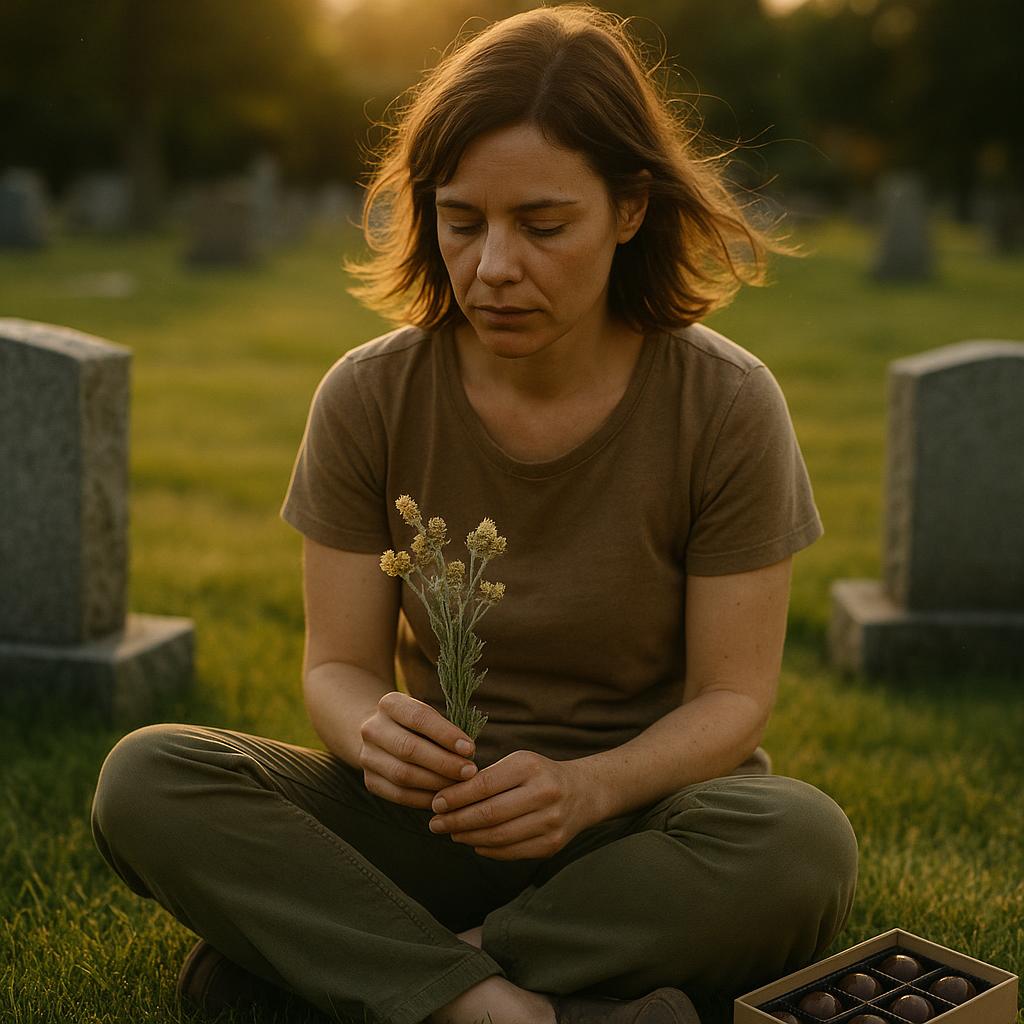 Image by RM AI
The Book Launch
Ten years and eleven months after my parents vanished, I stood at a podium in a packed bookstore, my trembling hands gripping the edges of my newly published memoir. 'The Desert Between Us: A Daughter's Ten-Year Search' sat in stacks around the room, its cover showing the desert landscape that had both taken and returned my parents to me. 'My parents loved adventures,' I read from the final chapter, my voice steadier than I expected. 'They loved the desert, each other, and coming home to tell the stories. This is the story they couldn't tell.' Looking up, I saw Detective Reeves nodding in the back row, Alex the geology student who'd helped analyze the satellite images, and faces from my support group—people who'd held me up when I couldn't stand alone. The Q&A session that followed was a blur of tissues and hugs from strangers who'd never met my parents but now carried pieces of their story. 'Your book gave me hope,' whispered a woman whose sister had been missing for three years. 'You showed me there can be peace, even without perfect answers.' As I signed copies afterward, I noticed someone lingering at the edge of the line—a man holding what looked unmistakably like my father's old camera, the one I thought had been swallowed by the desert eleven years ago.
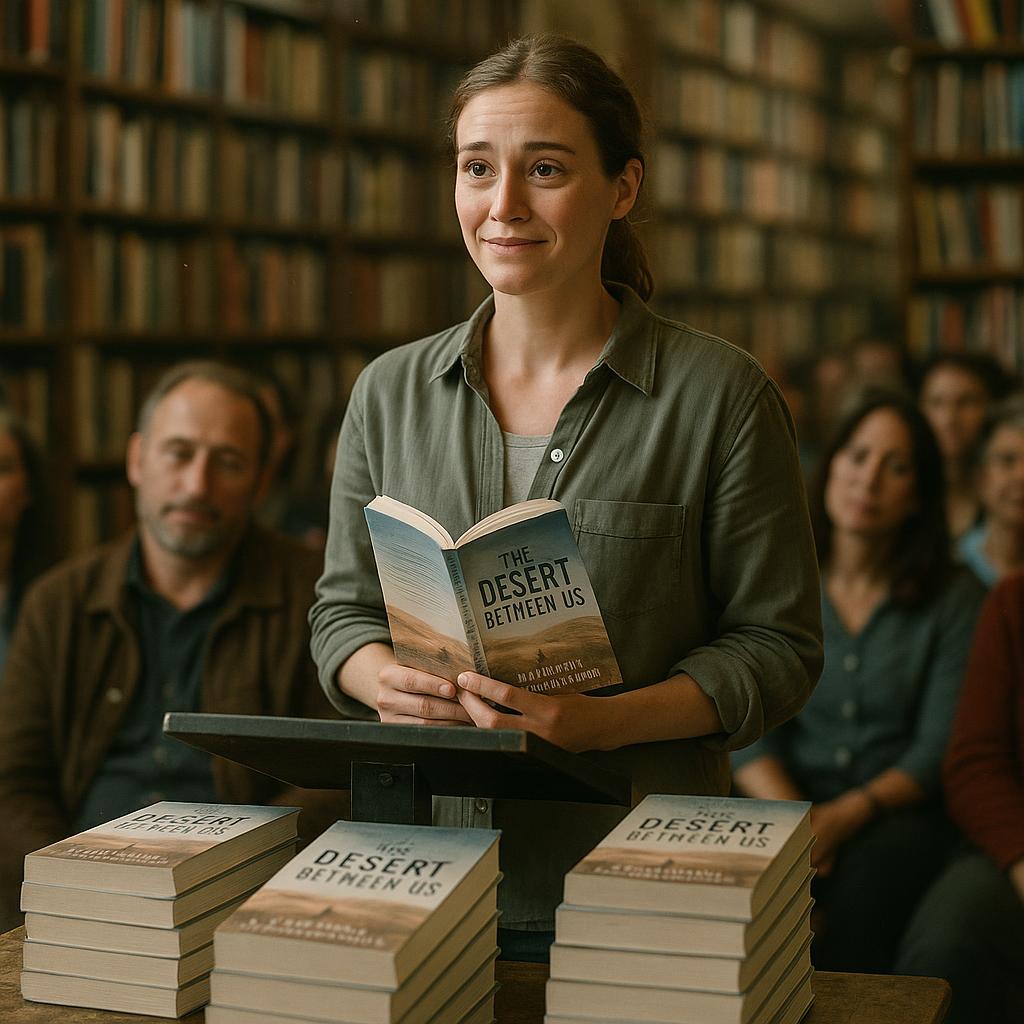 Image by RM AI
The Letters Start Coming
Ten years and eleven months after my parents vanished, I sat cross-legged on my living room floor surrounded by stacks of envelopes—hundreds of them, from every state and a dozen countries. 'The Desert Between Us' had been out for just three weeks, and already my P.O. box was overflowing daily. 'Dear Mara,' began a letter from Minnesota, 'My brother disappeared hiking in 2015. Your words gave me permission to both hope and grieve at the same time.' Another from Florida: 'I've been searching for my daughter for 22 years. Your book is the first time I've felt truly understood.' I answered each one by hand, often staying up until 2 AM, fingers cramping around my pen. These weren't just readers—they were fellow travelers on a road no one chooses. Some sent photos of their missing loved ones, others sent desert wildflower seeds or handmade bookmarks. A support group coordinator in Seattle asked if I'd speak at their annual gathering. What began as my private journey had somehow become a lighthouse for others lost in the same fog. 'You're not sleeping again,' Michael observed, bringing me tea one night as I worked through another stack. 'They need answers,' I explained, 'and I don't have them. But I can offer what I do have—proof that you can survive this.' What I couldn't have anticipated was the letter that arrived the next morning—postmarked from the same desert town where my parents had begun their final journey, written in handwriting I recognized instantly.
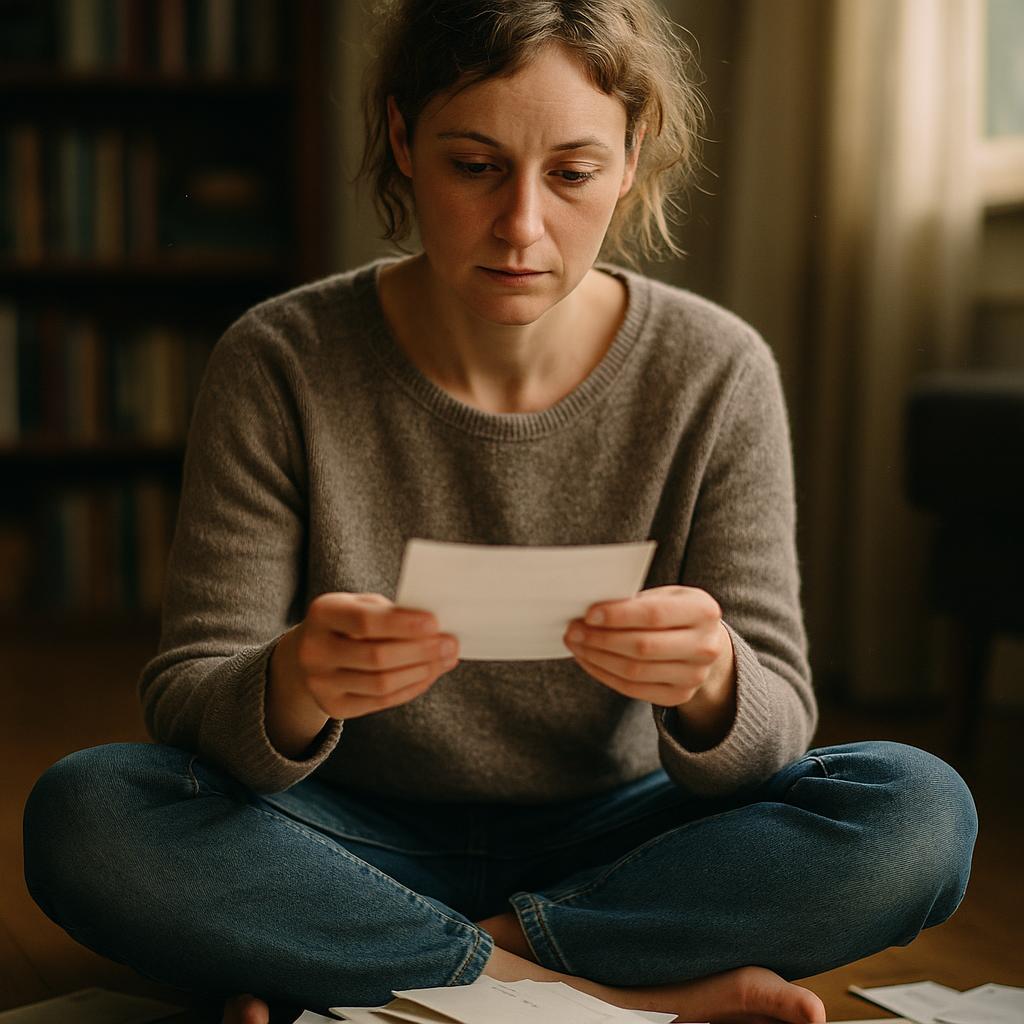 Image by RM AI
The Foundation
Ten years and eleven months after my parents vanished, I stood on a small stage at the Westridge Hotel ballroom, watching families file in with name tags that told stories without words—'Looking for Sarah, missing since 2018' and 'My son Jacob, 7 years missing.' The Desert Search Foundation was officially launching tonight, funded by the life insurance money that had sat untouched in my account for months. 'We offer three things,' I explained to the crowd, my voice steadier than my hands. 'Resources for specialized searches when authorities give up. Legal assistance to navigate the bureaucratic nightmare. And therapy—because the not knowing breaks something inside you.' I watched faces light up with recognition—that rare feeling of being truly understood. A woman in the front row nodded vigorously, tears streaming down her face as I described our drone search program. 'My parents loved adventures,' I said, concluding my speech with the words that had become both my wound and my strength. 'They loved the desert, each other, and coming home to tell stories. Through this foundation, their story continues.' As people approached afterward, sharing photos and last-known-whereabouts, I felt my parents' absence transform into something else—a presence that continued to shape lives, including my own. What I couldn't have anticipated was who would walk through those doors just as the event was ending—someone carrying a weathered backpack with a familiar patch, one I'd described in detail in chapter three of my book.
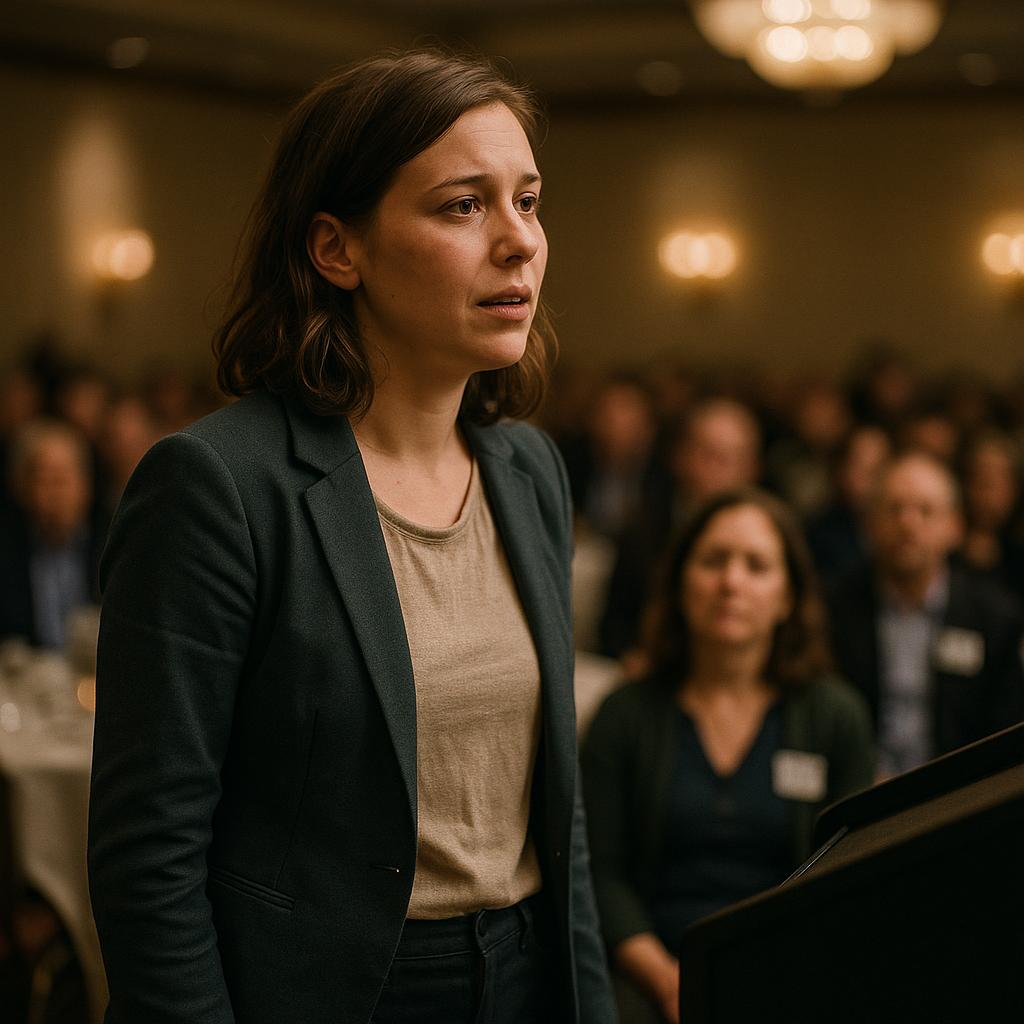 Image by RM AI
The Desert Return
Eleven years after my parents vanished, I returned to the desert—not to search, but to understand. I pitched my tent near the ridge where their truck had been found, watching as the sunset painted the rocks in fiery oranges and deep purples. These were the same colors they would have seen in their final hours together. As darkness fell, I sat outside my tent, wrapped in Mom's old hiking blanket that still smelled faintly of her perfume. The stars emerged one by one until the sky was a blanket of light, untouched by city pollution. 'I get it now,' I whispered to the empty air. 'I understand why you loved it here.' The desert, which I had once viewed as a cruel enemy that stole my parents, had somehow transformed into a sacred space—the last place they experienced together. In the profound silence, broken only by the occasional whisper of wind, I felt closer to them than I had in years. I traced the constellations Dad had taught me to identify, imagining them doing the same in their final nights. As I drifted toward sleep under that vast sky, I could almost hear Mom's laugh carried on the breeze. What I didn't expect was what I would discover buried in the sand the next morning—something that would change everything I thought I knew about their disappearance.
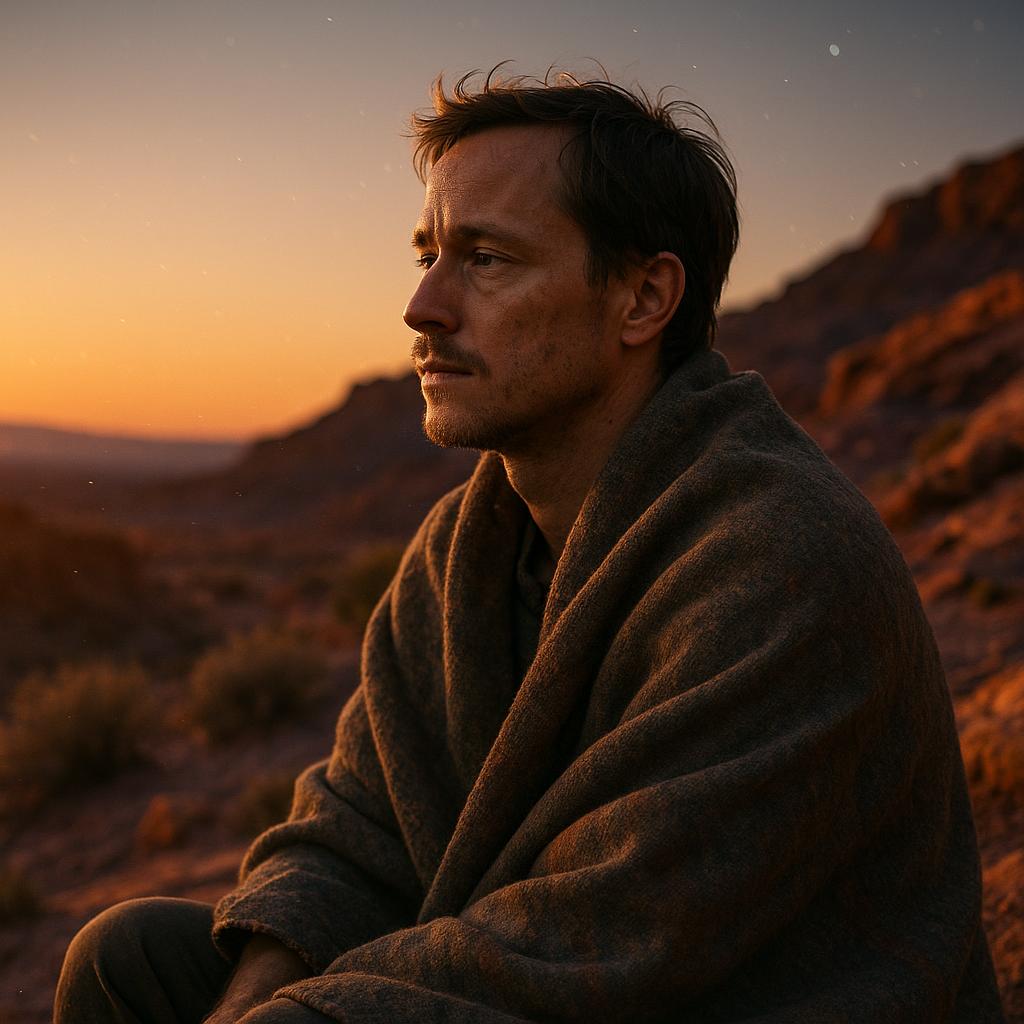 Image by RM AI
The Documentary Proposal
Eleven years and one month after my parents vanished, I sat across from Eliza Chen, an award-winning documentary filmmaker whose intense gaze made me feel like she was cataloging my every expression. 'Your book touched me deeply,' she said, sliding a formal proposal across the café table. 'I want to bring this story to people who don't read memoirs.' My stomach tightened at the thought of cameras retracing the ridge where I'd found their truck, of strangers analyzing my decade of grief like a plot point. 'I need time to think about it,' I told her, but she already understood. 'Of course. This isn't just a story to you.' Two weeks later, I found myself standing at the discovery site with Eliza and a small crew, having agreed with specific conditions—no dramatizations of their final moments, no exploitation of their memory. As the desert sun warmed my shoulders, I surprised myself by sharing stories I'd nearly forgotten—Mom's terrible singing voice that Dad claimed to love, their tradition of leaving silly notes in each other's hiking boots. 'They weren't just missing persons,' I explained as cameras rolled. 'They were people who lived fully before they were reduced to case numbers.' What I didn't expect was how the cameraman kept glancing nervously toward a distant figure watching us from the ridge—someone who seemed far too interested in our filming.
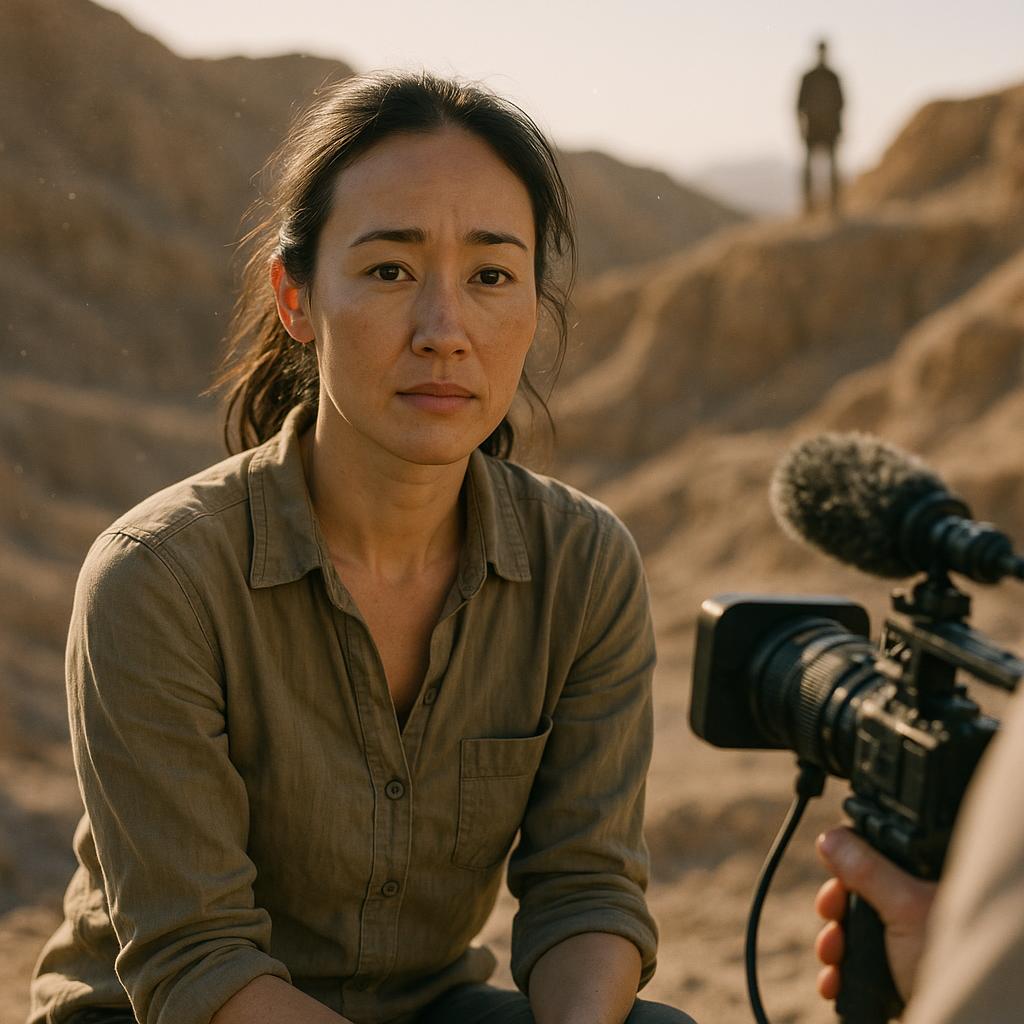 Image by RM AI
The New Relationship
Eleven years and two months after my parents vanished, I found myself sitting on the edge of my bed at 2 AM, trying to explain to David why I'd canceled our weekend plans to help with a search for a missing hiker in Nevada. 'I thought finding your parents meant you could finally move on,' he said, his voice gentle but frustrated. The words stung more than he knew. 'Finding them didn't erase the decade before,' I explained, watching his face in the dim light. 'It's not something I can just pack away.' David ran his hand through his hair, a gesture I'd come to recognize as his processing signal. 'Sometimes I feel like I'm competing with ghosts,' he admitted quietly. The honesty in his voice broke something open between us. I reached for his hand, explaining how trauma becomes woven into who you are—not a chapter you can simply close. 'My parents' story shaped me,' I told him, 'but it doesn't mean there isn't room for our story too.' The next morning, he surprised me with coffee and a small notebook. 'For our adventures,' he said simply. 'Past and future.' What he couldn't have known was how perfectly that gesture bridged my two worlds—the one defined by loss and the one still being written. What I couldn't have anticipated was the call I'd receive later that day from someone claiming to have known my parents before their final trip.
 Image by RM AI
The Museum Exhibition
Eleven years and three months after my parents vanished, I stood in the hushed gallery of the Southwest Natural History Museum, watching strangers lean in to read my mother's final journal entry displayed behind protective glass. 'Desert Survival: Lessons from the Lost' read the exhibition title above a wall-sized photo of my parents—Mom laughing, Dad mid-eye-roll—taken on their last birthday together. 'We wanted to create something that honors their memory while potentially saving lives,' explained Dr. Reyes, the curator who'd spent months working with me to get every detail right. The display included the sun-bleached map from their truck, Dad's compass with its cracked face, and my photographs documenting the search and discovery. What struck me most was watching visitors move through the space—parents tightening their grips on children's hands, hikers taking notes on the survival tips section, teenagers actually putting down their phones to read the timeline of events. 'Your parents' story matters,' whispered David, squeezing my hand as we watched a park ranger study the topographical model showing where they'd been found. 'It's saving lives now.' I nodded, throat tight with emotion that wasn't quite grief anymore. As I turned to leave, an elderly man approached me hesitantly, holding the exhibition pamphlet. 'Are you Mara?' he asked, his weathered face somehow familiar. 'I think I was the last person to see your parents alive.'
 Image by RM AI
The Peace That Comes
Twelve years after my parents vanished, I sat cross-legged between their headstones, watching the desert sunset paint the sky in the colors they loved most. 'Happy anniversary,' I whispered, arranging wildflowers I'd collected from the same desert that had both taken and returned them to me. The marble was cool against my palm as I traced their names with my fingertips. 'The foundation helped find three missing hikers last month,' I told them, as if they were sitting beside me instead of beneath me. 'One family had been searching for almost two years.' I showed them my engagement ring, the small diamond catching the fading light. 'David proposed last week. He understands about... all of this.' I gestured vaguely at the cemetery, at the decade of grief that had shaped me. 'He wants to go camping for our honeymoon,' I laughed, 'but I've convinced him we need satellite phones and emergency beacons.' As darkness settled around me, I felt something I never thought possible after they disappeared—peace. Not the kind that erases pain, but the kind that makes room for it alongside joy. The wound hadn't closed completely—it never would—but it no longer defined every breath I took. As I stood to leave, my phone buzzed with a text from an unknown number: 'I found something that belonged to your father. We need to talk.'
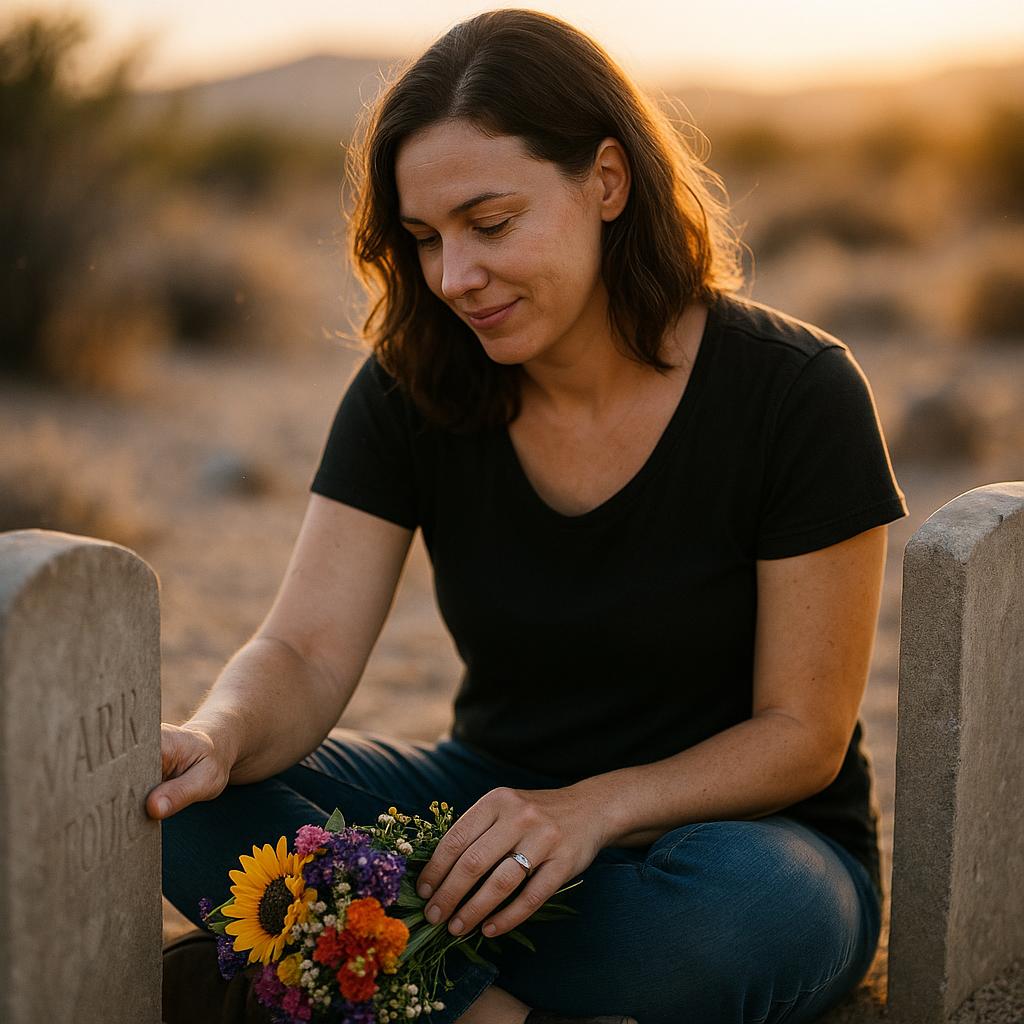 Image by RM AI