My Mother Had Been Lying To Me Since The Day I Was Born - How An Old Picture Changed My Life
My Mother Had Been Lying To Me Since The Day I Was Born - How An Old Picture Changed My Life
A Mother's Declining Health
My mother's health had been declining for several years, a slow but steady deterioration that kept me awake at night with worry. Since my Dad passed away, we'd been concerned about her living alone.
She was fiercely independent, though, brushing off our concerns with a wave of her hand and that stubborn smile I'd inherited. 'I'm fine,' she'd insist, even as I noticed her wincing when she stood or the way she'd grip the banister with white knuckles.
But deep down, I knew it was only a matter of time before something happened that would force our hand. And I was right—though I never imagined how that moment would completely unravel the fabric of my life.
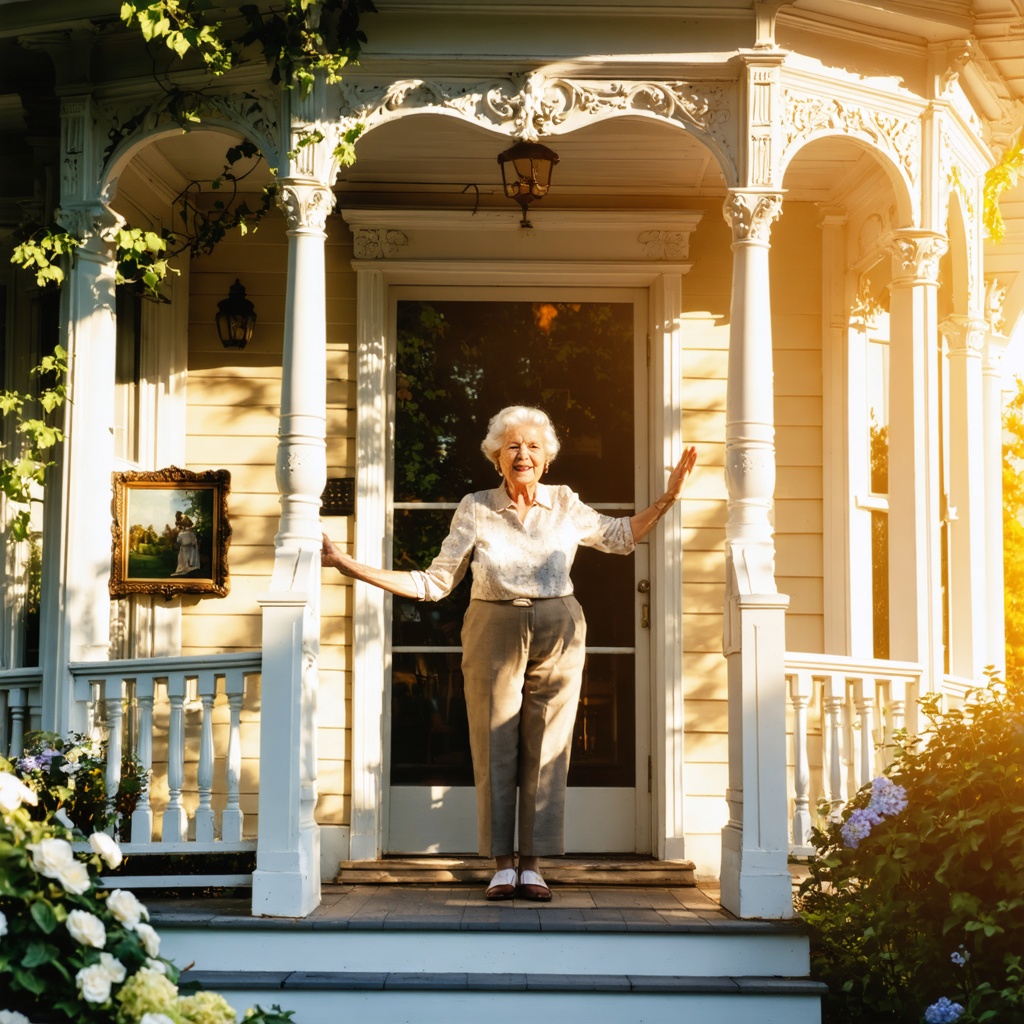 Image by RM AI
The Fall That Changed Everything
It was a Tuesday morning when I got the call from her neighbor, Mrs. Patterson.
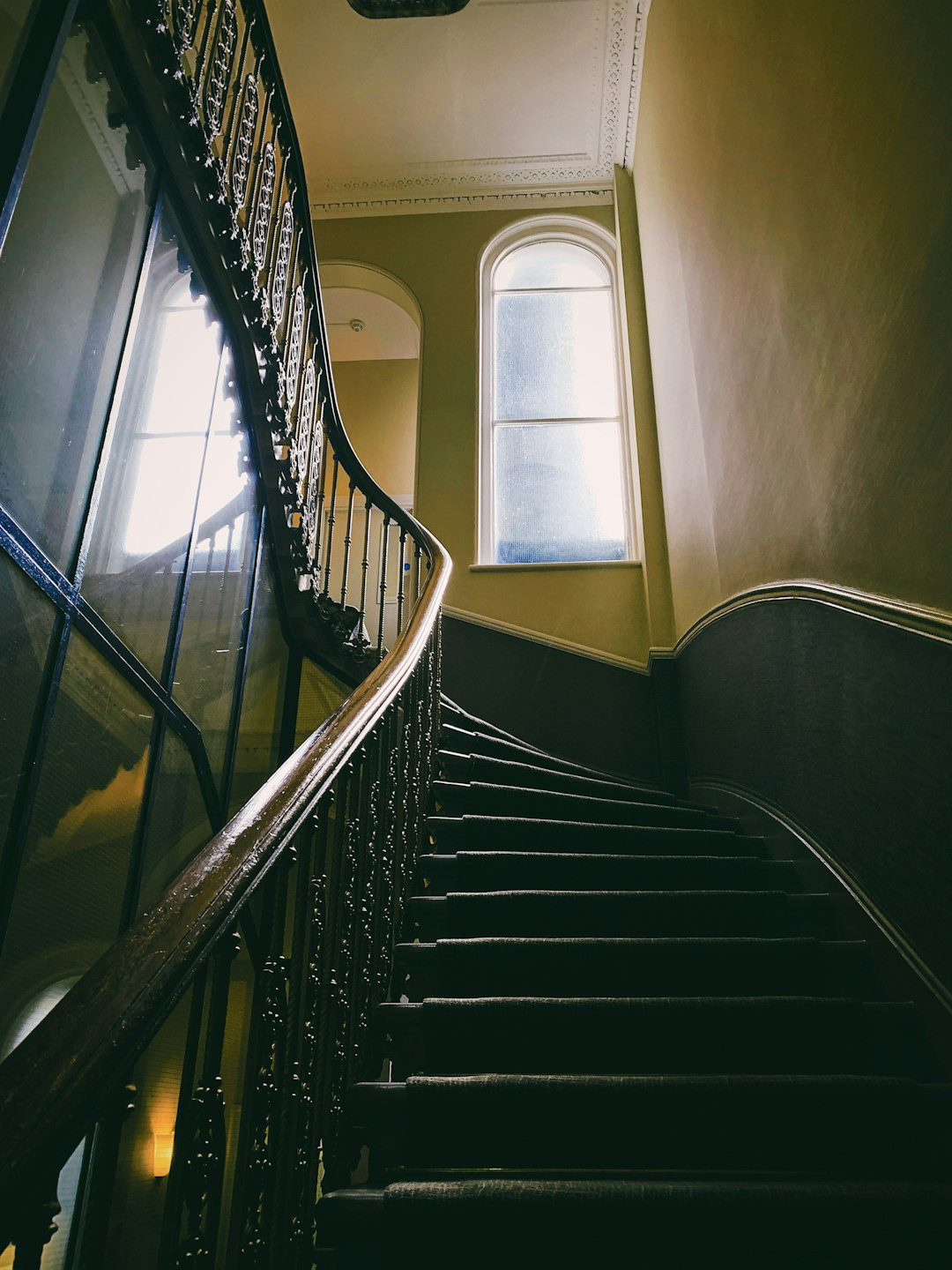
'Your mother fell going down the stairs,' she said, her voice shaking slightly. 'The ambulance just took her to Memorial.' I remember dropping everything at work, my half-finished coffee splashing across important documents as I grabbed my keys and raced to my car.
The twenty-minute drive to the hospital felt like hours, my mind conjuring worst-case scenarios with each mile.
When I finally saw her, small and fragile in that hospital bed with a cast on her wrist and bruises blooming across her pale skin, I knew we couldn't put it off any longer.
The doctor's words only confirmed what I already understood: living alone wasn't safe for her anymore.
As I held her hand I wondered how I would convince this proud woman that it was time for a change.
The Difficult Conversation
Breaking the news to Mom wasn't easy. 'I'm not moving in with you,' she declared, her chin jutting out defiantly despite the pain medication making her eyelids droop.
'I raised you in that house. Your father and I built our life there.' I sat beside her bed, choosing my words carefully as I explained our concerns.
'Mom, what if you had hit your head instead of just breaking your wrist? What if Mrs. Patterson hadn't heard you call for help?'
I watched emotions flicker across her face—anger, fear, resignation. We went back and forth for days, her resistance gradually weakening as reality set in.
The stairs were getting harder to navigate. The yard was too much to maintain.
The winters were lonely. Finally, after a particularly difficult night when she couldn't get out of bed without help, she looked at me with tears in her eyes and nodded.
'Alright,' she whispered, 'but I get to bring my garden gnomes.'
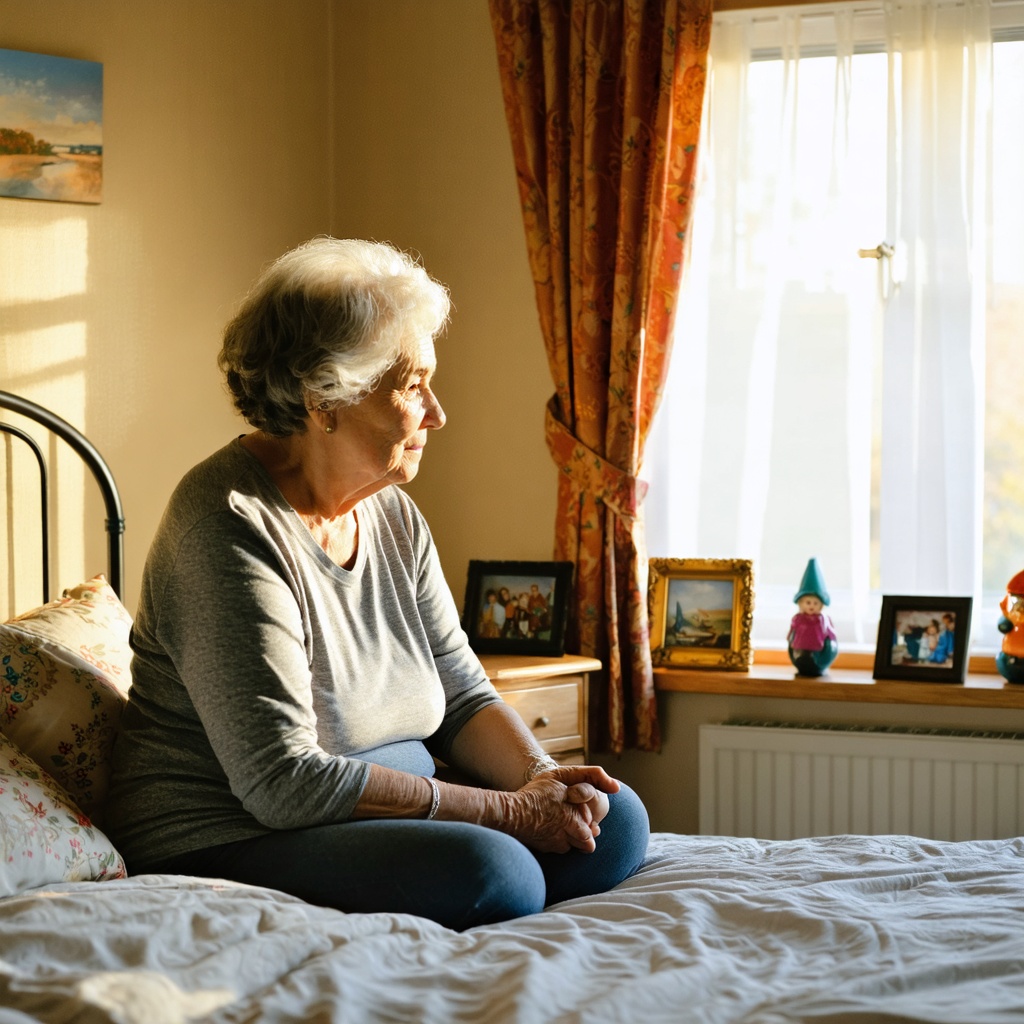 Image by RM AI
Preparing for a New Chapter
Once Mom agreed to move in with us, things moved quickly. We listed her house with a local realtor who promised to 'price it aggressively' in the current market.
My husband cleared out our guest room and started building a small ramp over the two steps leading to our back porch. Our teenage kids, though initially wary about having Grandma as a permanent fixture, helped paint the room her favorite shade of lavender.
I took a week off work to help her sort through decades of accumulated possessions, deciding what would come with her to our modest ranch-style home and what needed to be donated or sold. It was bittersweet watching her run her fingers over familiar objects, deciding their fate with a nod or shake of her head.
'Forty-five years in this house,' she murmured, looking around her kitchen. 'How do you pack up nearly half a century?'
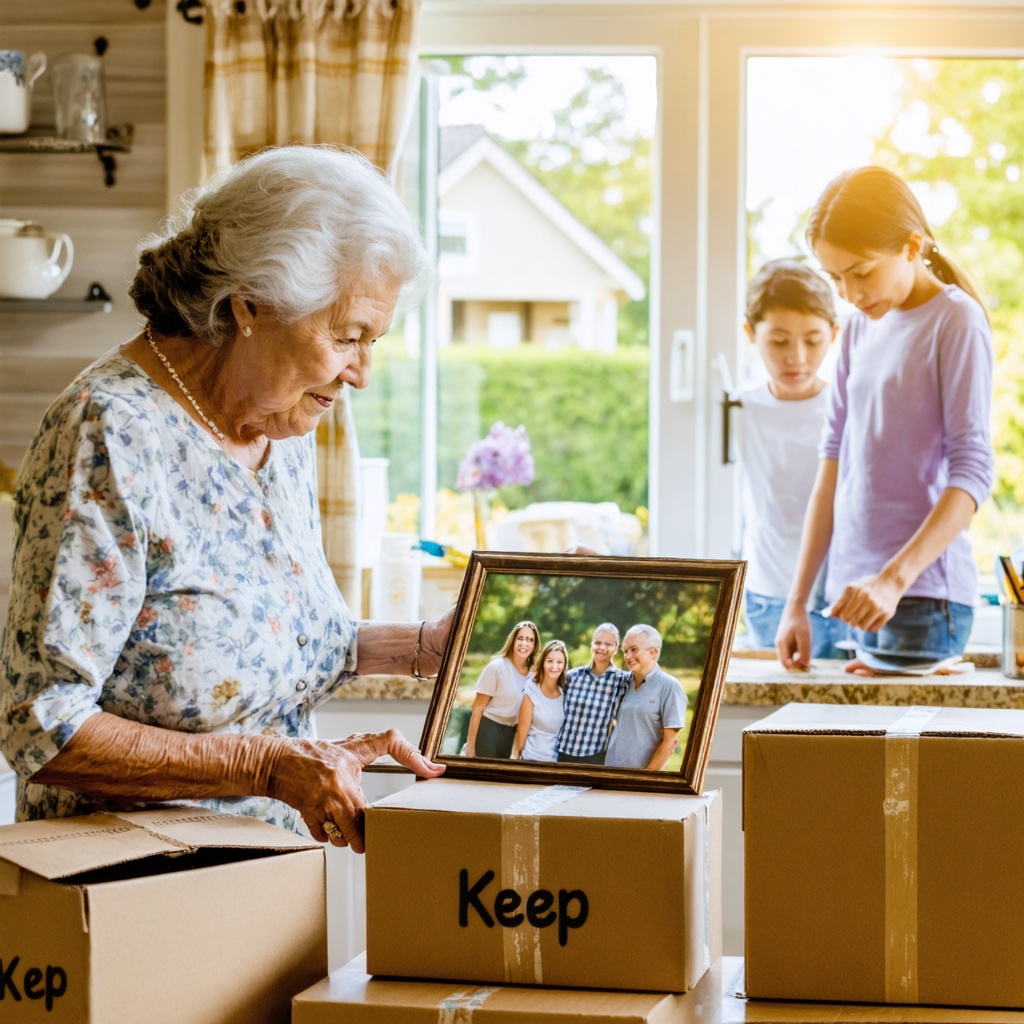 Image by RM AI
The Mysterious Photo Album
It was during this packing process that I made the discovery that would change everything. I was emptying Mom's bedroom closet, sorting winter clothes into vacuum-seal bags when my hand brushed against something hard pushed far into the corner.
Curious, I reached deeper and pulled out a dusty leather-bound photo album I'd never seen before. Unlike Mom's other meticulously labeled albums displayed proudly on the living room bookshelf, this one had no title, no dates, nothing to indicate its contents.
The leather was cracked with age, and a faint musty smell rose from its pages when I opened it. Something about the way it had been hidden, tucked away behind boxes of old tax returns and garment bags containing outdated formal wear, made me question why it was there.
Why would Mom hide a photo album? What memories were too painful—or too dangerous—to keep in plain sight?
I settled onto the floor of the closet, cross-legged like a child, and began to turn the pages.
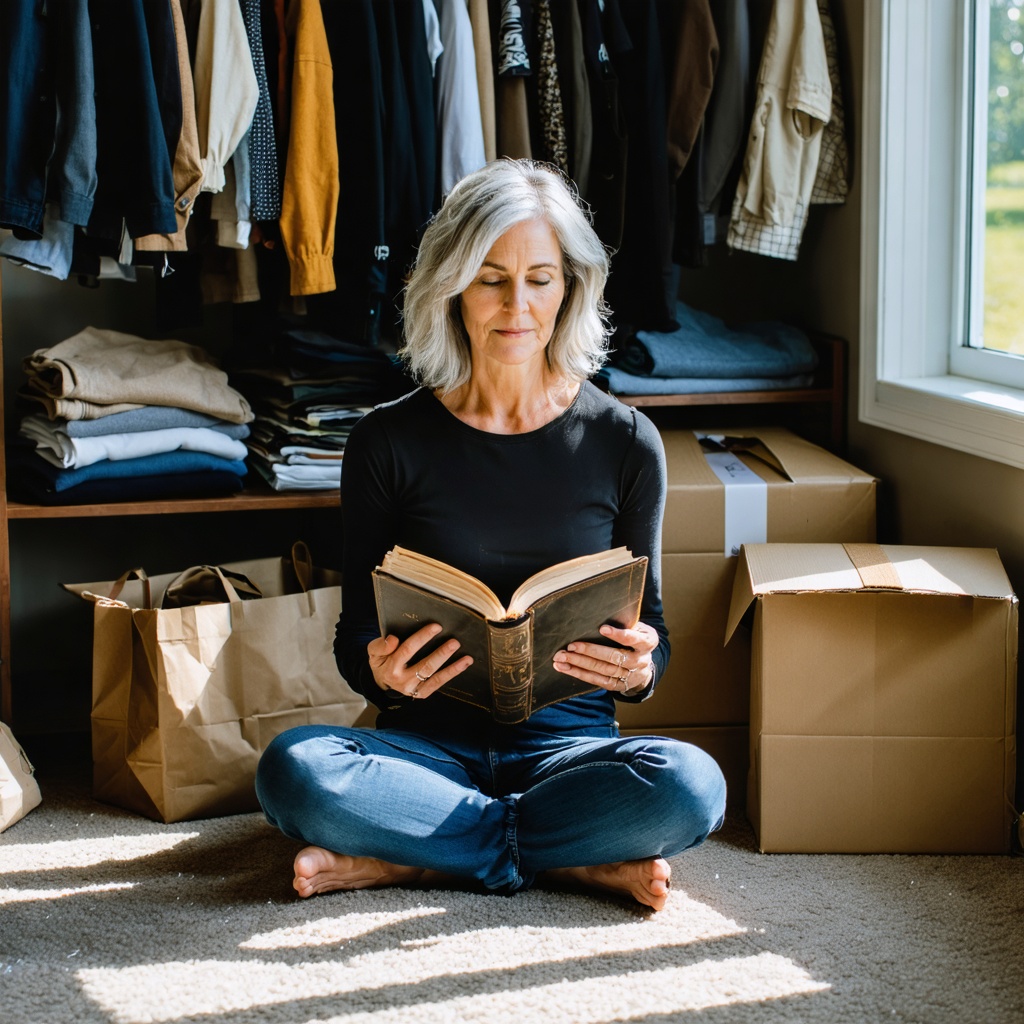 Image by RM AI
Unexpected Revelations
The first photo stopped me cold. There was my mother, much younger but unmistakably her, with her distinctive smile and the small mole near her left eyebrow.
She was standing in front of a Christmas tree, her sweater stretched tight over a very pregnant belly. But the man standing beside her with his arm wrapped protectively around her waist wasn't my Dad.
This stranger had darker hair, a broader build, and a smile that somehow seemed familiar though I couldn't place it. I flipped to the next page with trembling fingers, finding more photos of this mystery man with my mother.
They were at the beach, at what looked like a small apartment, and then—my breath caught—standing together at what was clearly their wedding. Mom in a simple white dress with daisies in her hair, the unknown man beaming at her in a blue suit.
The date stamp on the corner of the photo showed it was taken just over a year before I was born.
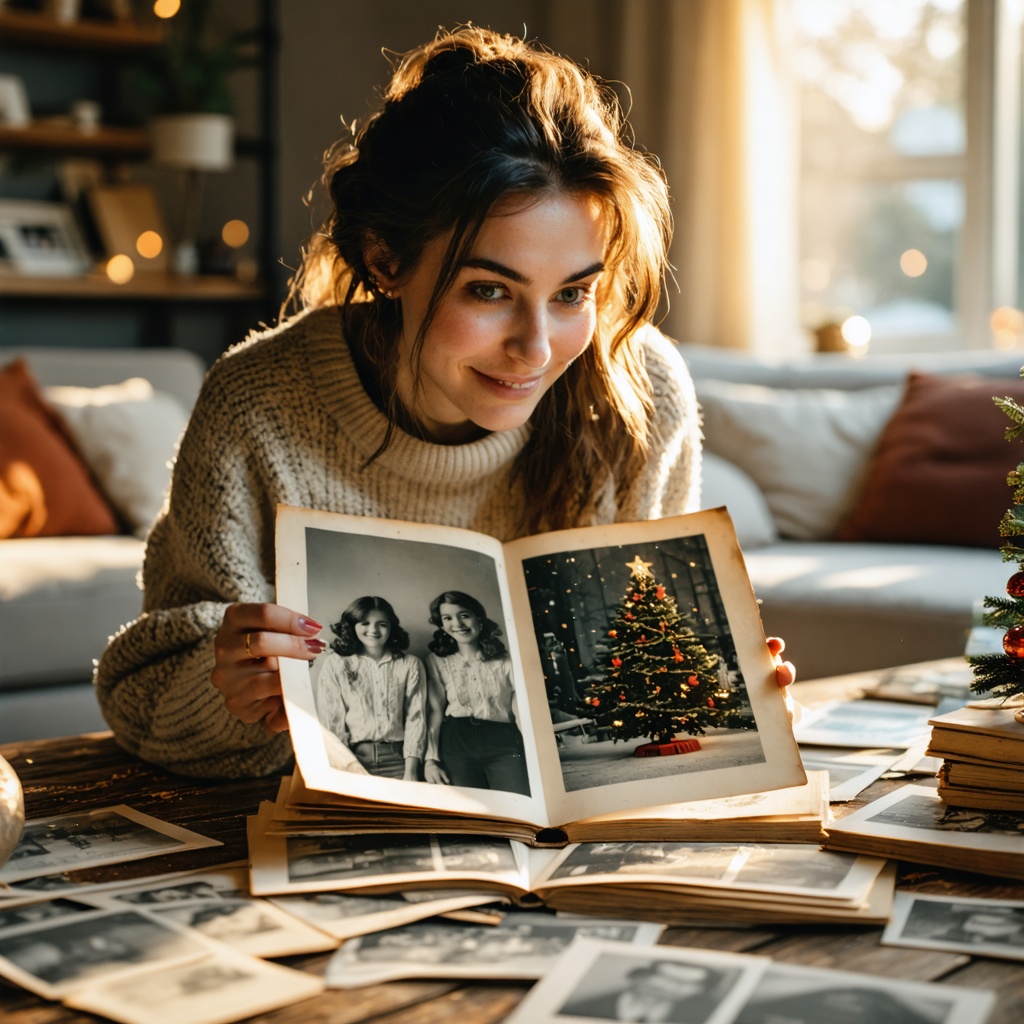 Image by RM AI
A World Turned Upside Down
My mind raced as I continued through the album. There were maybe twenty photos in all, documenting what appeared to be a brief but happy relationship.
The final picture showed my mother alone, still pregnant, sitting on a park bench with a distant expression. After that, nothing.
No baby pictures. No family portraits.
Just empty pages. I sat there for what felt like hours, trying to make sense of what I was seeing.
Had Mom been married before? Did she have another child?
But the timeline didn't make sense—she was clearly pregnant in these photos from right before my birth. A cold realization began to dawn on me, one that made my stomach clench and my hands shake even more violently.
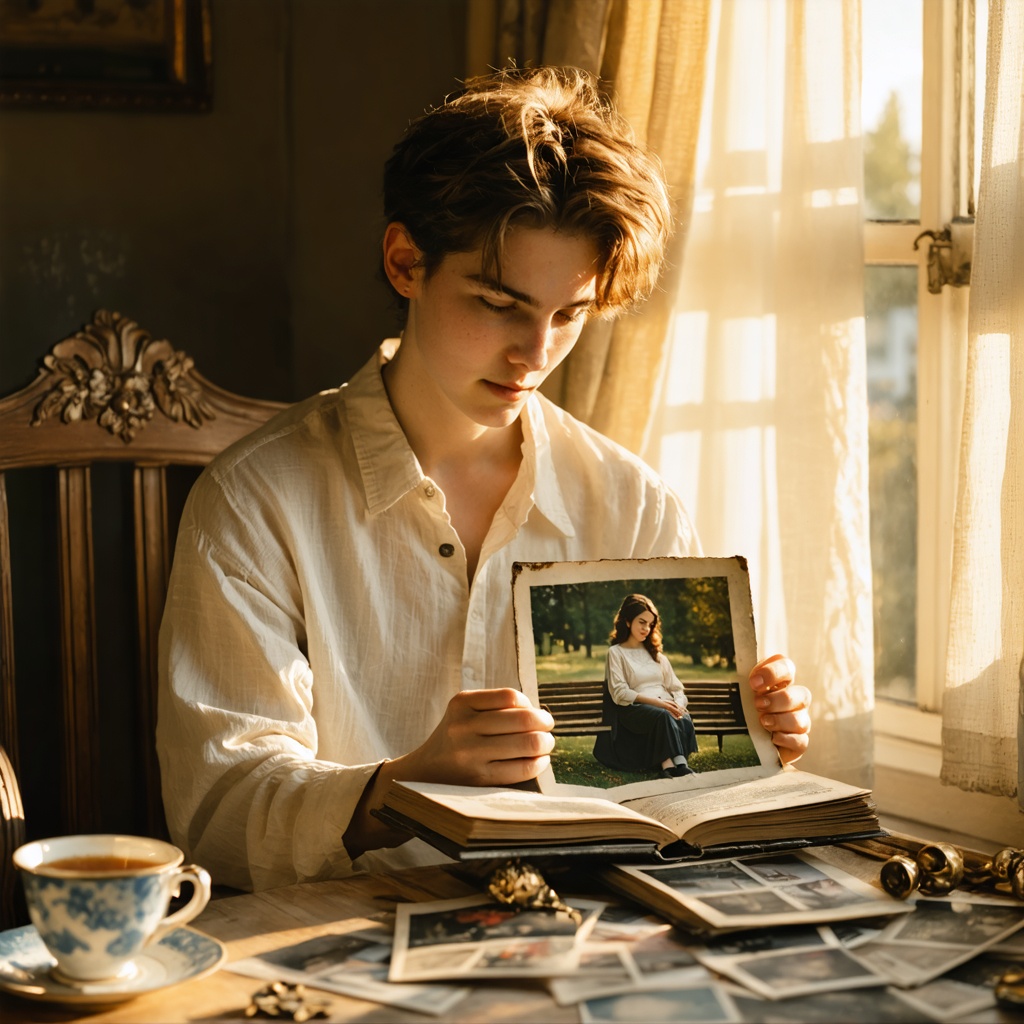 Image by RM AI
Gathering Courage
I sat on the closet floor for nearly an hour, the album open on my lap, trying to summon the courage to confront my mother. Part of me wanted to slide the album back into its hiding place and pretend I'd never found it.
We could continue packing, move her into our home, and carry on with our lives unchanged. But the photos seemed to burn in my hands, demanding acknowledgment.
The questions multiplied with each passing minute. Who was this man?
What happened to him? Why had this part of Mom's life—and potentially my own origins—been kept secret for over fifty years?
Finally, I closed the album with a decisive snap and stood up, my knees protesting after so long on the hard floor. My heart pounded as I made my way downstairs, clutching the album to my chest like a shield.
I found Mom in the dining room, carefully wrapping her good china in newspaper. She looked up with a smile that quickly faded when she saw my expression and what I was holding in my hands.
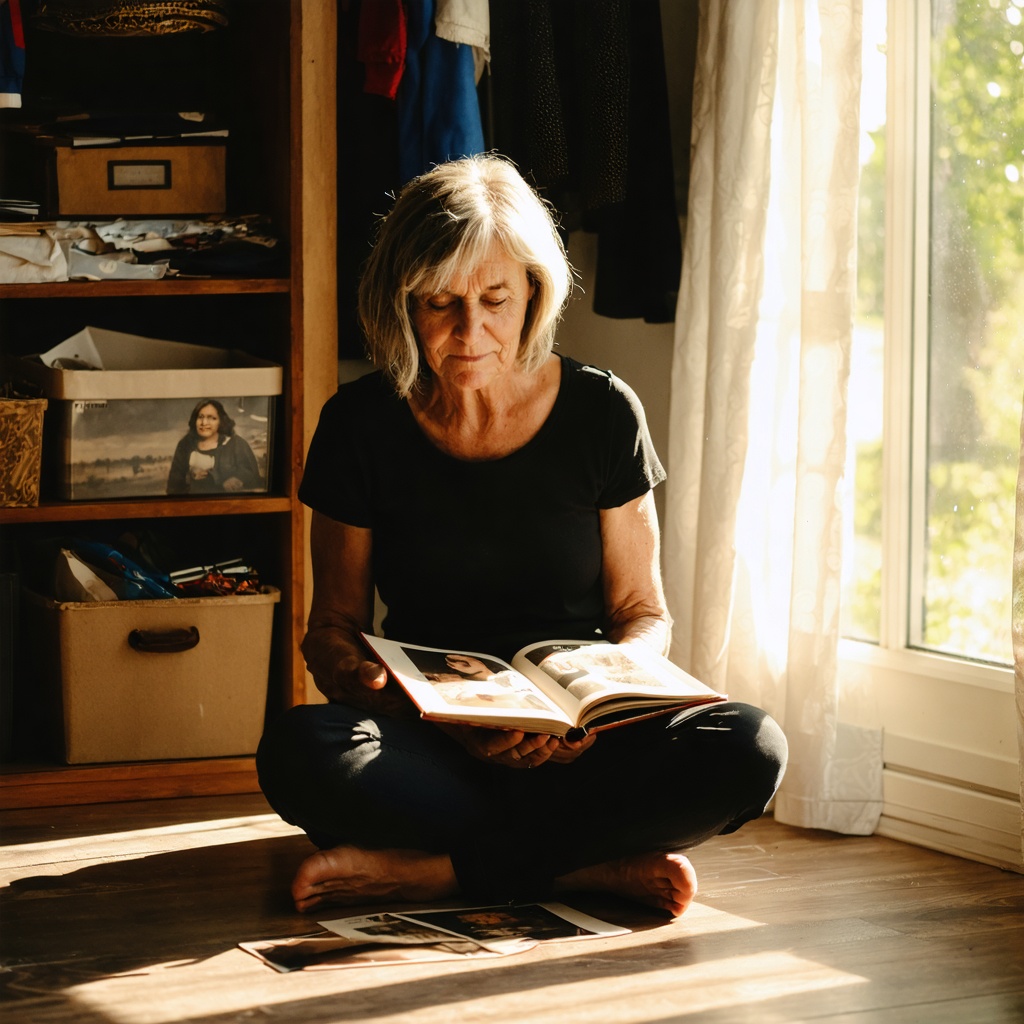 Image by RM AI
The Confrontation
"Who is this?" I asked without preamble, opening the album to a wedding photo and placing it on the table in front of her. The china plate she'd been wrapping slipped from her fingers, though thankfully it landed softly on the newspaper.
Her face drained of color so rapidly that I worried she might faint. "Where did you find that?" she demanded, her voice sharp with accusation and something else—fear, perhaps.
Her eyes darted around as if looking for an escape route, but there was nowhere to go. We were alone in the house, surrounded by half-packed boxes and decades of secrets.
I remained silent, waiting. Mom's shoulders slumped suddenly, the fight going out of her like air from a punctured balloon.
"You better sit down," she said in an almost defeated manner, gesturing to the chair across from her. Her hands trembled as she poured herself a glass of water from the pitcher on the table.
"I guess it's time you learn the truth," she continued, her voice barely above a whisper. "Bill was not your father."
 Image by RM AI
The Truth Emerges
"Your real father's name was Steven Forman," Mom said, her fingers tracing the outline of the man's face in the wedding photo. The name meant nothing to me, yet it was supposedly half of who I was.
Mom took a deep breath and began to unravel the story she'd kept hidden for over five decades. She and Steven had met at college, fallen madly in love, and married young against her parents' wishes.
They'd been ecstatic when they discovered she was pregnant, planning names and dreaming of their future as a family. But then, in her seventh month of pregnancy, she'd come home early from visiting her sister to find Steven in their bed with her best friend.
"I was so angry, so hurt," Mom said, tears now flowing freely down her lined face. "I kicked him out that very night.
Told him I never wanted to see him again." Steven had tried to apologize, had begged for another chance, but Mom's pride wouldn't allow it. He eventually stopped calling, stopped coming by, and simply disappeared from her life just weeks before I was born.
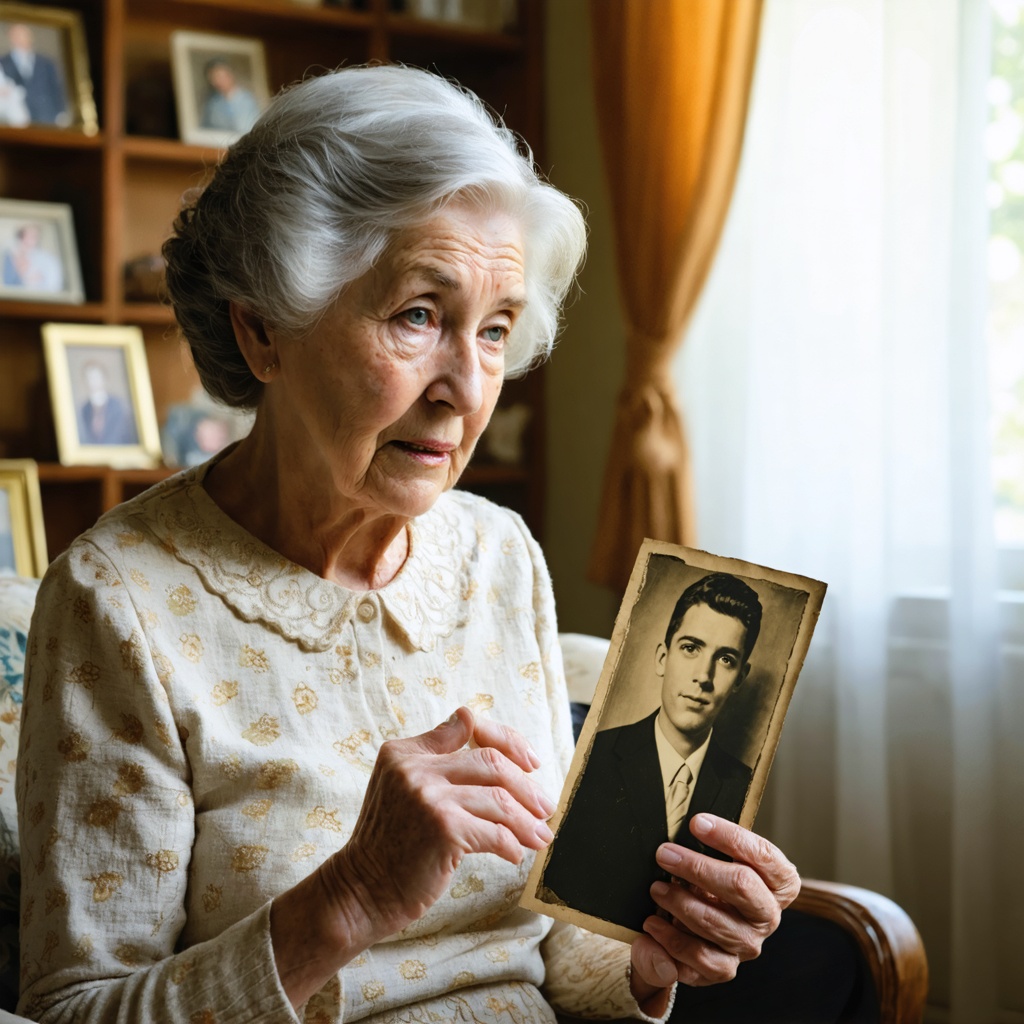 Image by RM AI
Bill's Entrance
"But what about Dad?" I asked, still struggling to process that the man who'd taught me to ride a bike, who'd walked me down the aisle at my wedding, who'd bounced my children on his knee, wasn't actually related to me by blood. Mom's expression softened at the mention of his name.
"Bill was my high school sweetheart," she explained. "We dated for years before I met Steven, but we wanted different things back then.
He wanted to settle down, and I wanted adventure." After Steven left, Mom found herself alone, pregnant, and terrified. She'd run into Bill at the grocery store one day, her belly obvious under her maternity dress.
Instead of awkwardness, he'd shown nothing but kindness, offering to help her carry her groceries and checking in on her regularly after that. "By the time you were born, he was at the hospital every day.
He asked if he could be there for the delivery, and I said yes." Mom smiled at the memory. "When the nurse asked for the father's name for your birth certificate, Bill spoke up before I could answer.
He said it should be his name, if I'd have him."
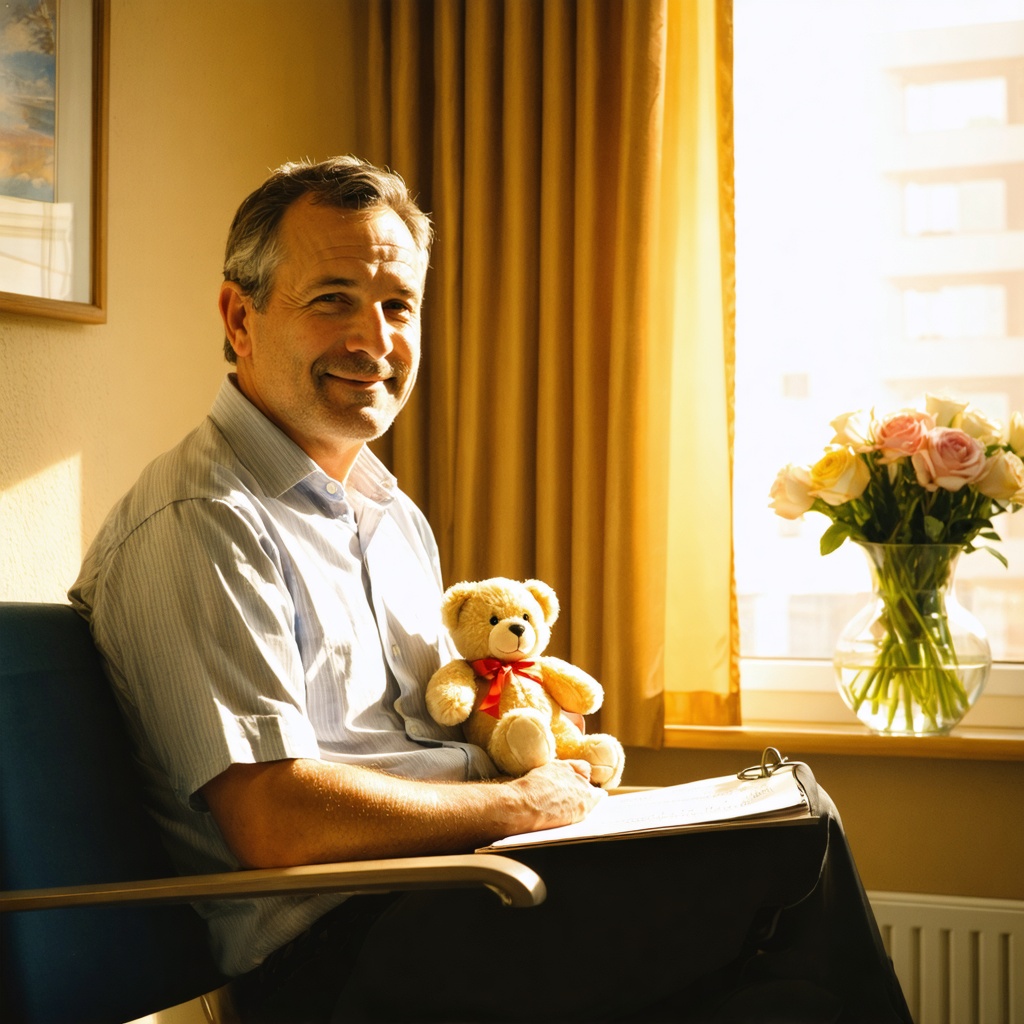 Image by RM AI
A Life Built on Secrets
"So you just...never told me?" I asked, unable to keep the hurt from my voice. Fifty-three years of believing a lie.
Fifty-three years of not knowing half of my genetic heritage, my medical history, my actual identity. Mom reached across the table and took my hand, her grip surprisingly strong despite her frail appearance.
"At first, we thought you were too young to understand. Then, as you grew older and loved Bill so much, it seemed cruel to disrupt that bond.
Eventually, it had been a secret for so long that telling the truth felt impossible." She paused, wiping away tears with her free hand. "Bill loved you as his own from the moment he saw you.
He never once treated you differently than if you'd been his biological child. In every way that matters, he was your father." I understood what she was saying, but it didn't erase the betrayal I felt.
My entire life had been built on a foundation of half-truths and omissions.
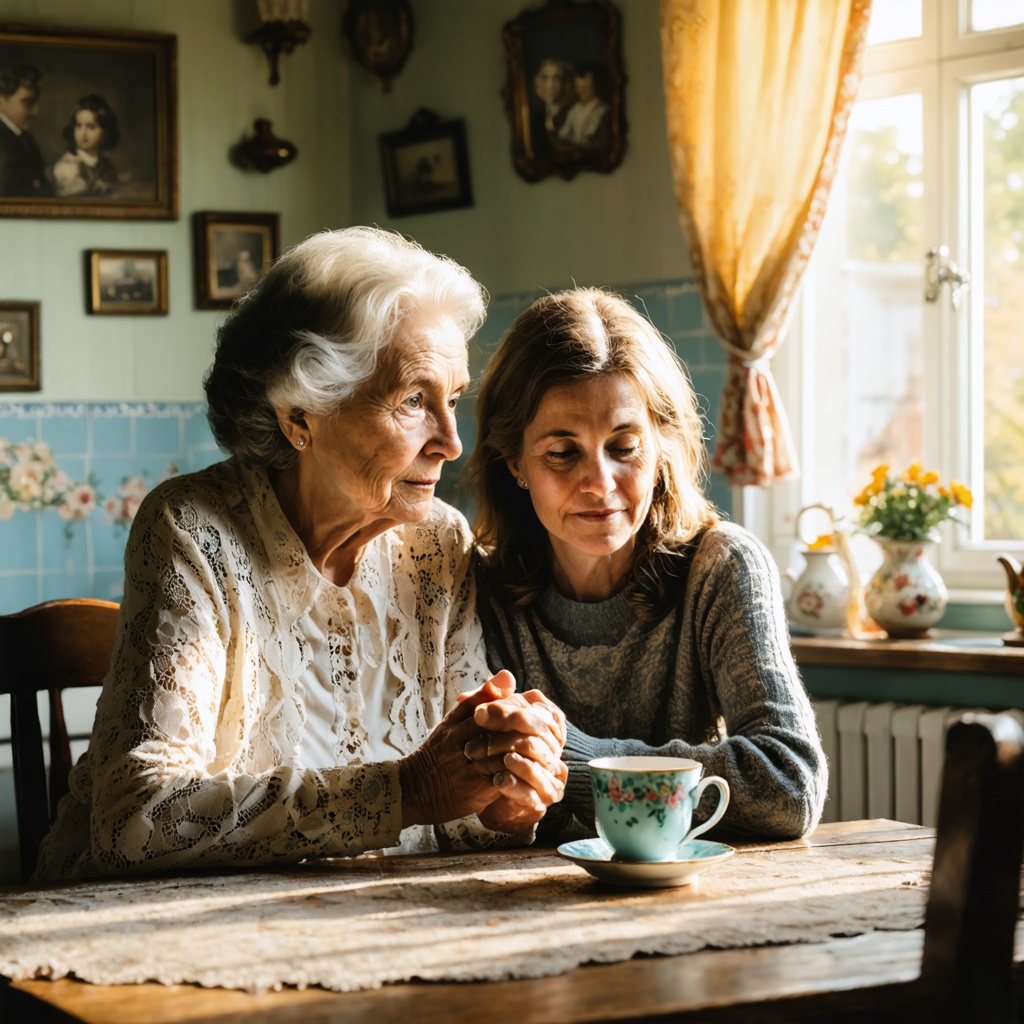 Image by RM AI
Processing the Revelation
I left Mom's house that afternoon in a daze, telling her I needed time to think. The photo album sat on the passenger seat beside me, a Pandora's box I couldn't close again.
As I drove aimlessly through familiar neighborhoods, my mind replayed countless moments from my childhood through this new lens. The time a distant relative had commented that I didn't look much like my dad.
The awkward silence when I'd done a family tree project in elementary school. The strange expression that would cross Mom's face whenever someone mentioned how I had 'Bill's smile' or 'Bill's laugh.' Had everyone known but me?
Had I been the only one blind to the truth about my own existence? I pulled over when tears made it impossible to see the road clearly.
Sitting in a random parking lot, I scrolled through my phone to find pictures of Bill—my dad, the only father I'd ever known. I studied his features, comparing them to my own reflection in the rearview mirror.
How had I never questioned our lack of resemblance?
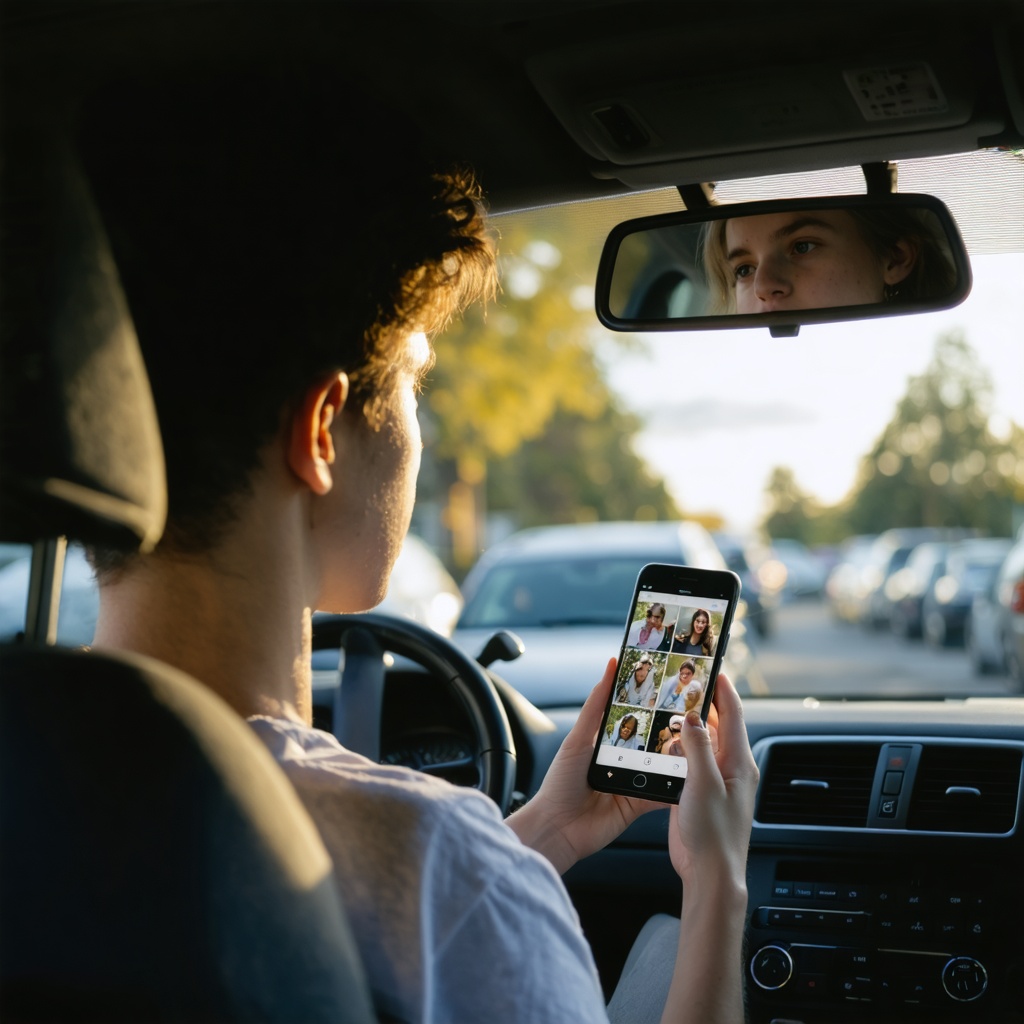 Image by RM AI
The Search Begins
That night, after putting Mom to bed in our guest room—now her room—I sat at my computer, the soft glow of the screen illuminating my determined face. "Steven Forman," I typed into the search bar, adding what little information I had gleaned from Mom during our conversation.
He had been a business major at the state university. He'd grown up somewhere in the northern part of the state.
He'd been born in the late 1930s. The search results populated my screen, and I began the painstaking process of elimination.
There were dozens of Steven Formans across the country, but I methodically narrowed them down based on age, location, and background. Social media yielded little for men of his generation, but public records, obituaries, and business registrations provided breadcrumbs to follow.
Around 3 AM, my husband found me still hunched over the keyboard, eyes red from strain and crying. "Come to bed," he urged gently.
"He's waited fifty years. He can wait until morning."
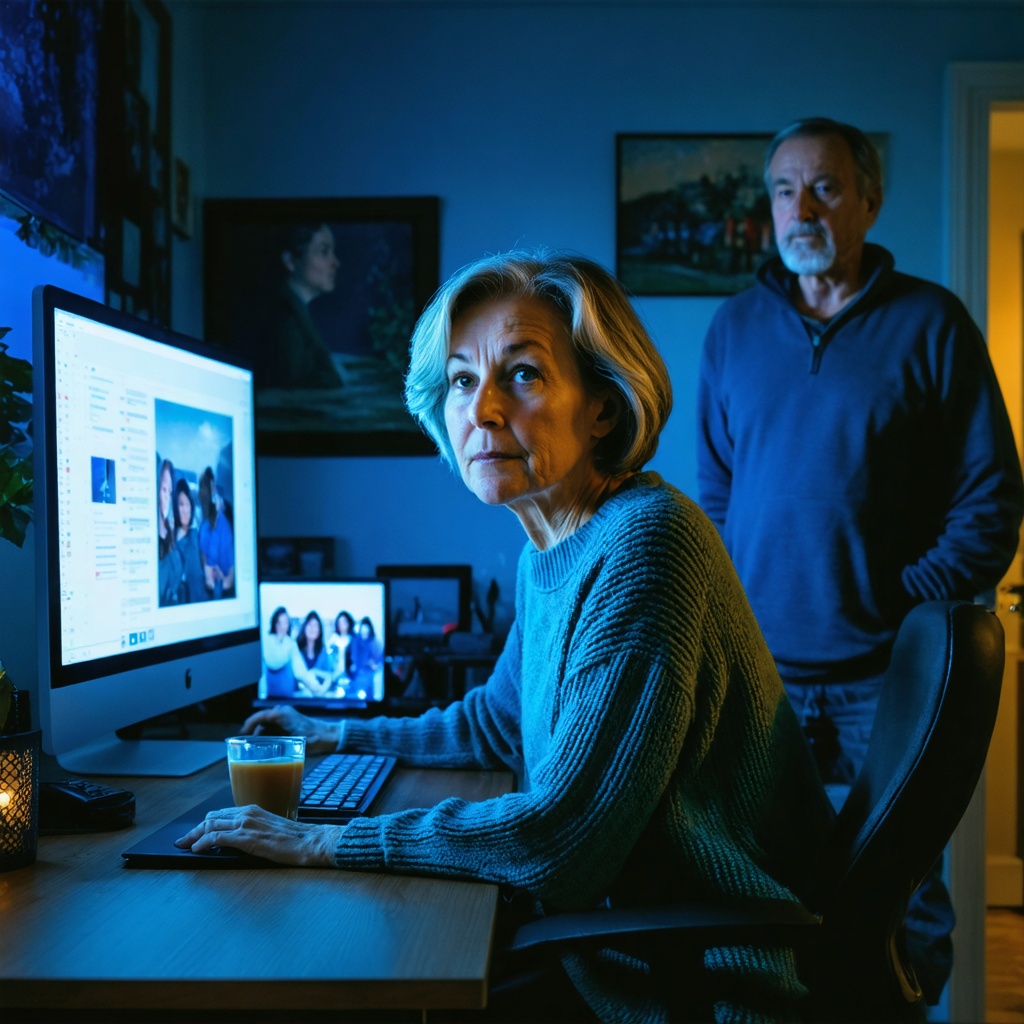 Image by RM AI
The Unexpected Discovery
It took nearly two weeks of searching, making calls, and even hiring a private investigator before I finally located Steven Forman. The shock of discovering he lived less than thirty miles away, in a retirement community just outside the city limits, left me speechless.
All these years, my biological father had been living practically in our backyard. Had we passed each other in grocery store aisles or sat near each other at local restaurants, never knowing our connection?
The private investigator provided me with his phone number and current address, along with a recent photo that made my heart skip a beat. Even at nearly ninety years old, I could see myself in his features—the shape of his eyes, the set of his jaw, the way one eyebrow arched slightly higher than the other.
I stared at his information for days, drafting and deleting text messages, picking up the phone only to immediately hang up again. What do you say to the father you never knew you had?
How do you introduce yourself to the man who contributed to your DNA but nothing else?
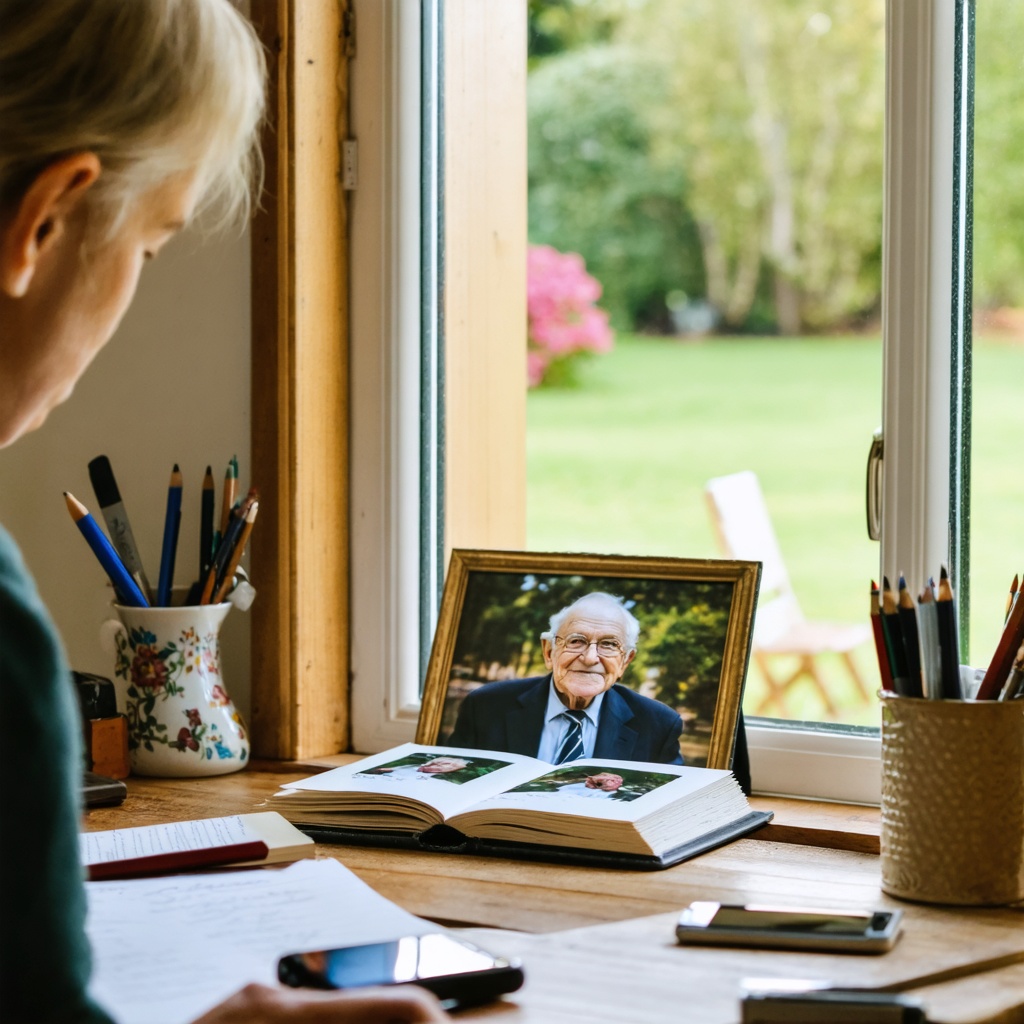 Image by RM AI
Gathering Courage Again
"I'm coming with you," my husband insisted when I finally decided to reach out. I shook my head, clutching my phone with white knuckles as I prepared to make the call.
"This is something I need to do alone," I told him, though my voice wavered with uncertainty. After three deep breaths, I dialed the number before I could lose my nerve again.
The phone rang four times, and I was simultaneously relieved and disappointed when it went to voicemail. "Hello, this is Steven Forman.
I can't come to the phone right now, but leave a message and I'll get back to you as soon as I can." His voice was deeper than I expected, with a slight raspiness that came with age. The beep sounded, and I froze momentarily before finding my voice.
"Hello, Mr. Forman.
My name is..." I paused, suddenly unsure which last name to use—my married name, my maiden name which was Bill's, or should I say Forman? "My name is Elizabeth.
I believe you knew my mother, Margaret Wilson, about fifty years ago. I...
I think you might be my biological father. If you're willing, I'd like to meet you.
My number is..."
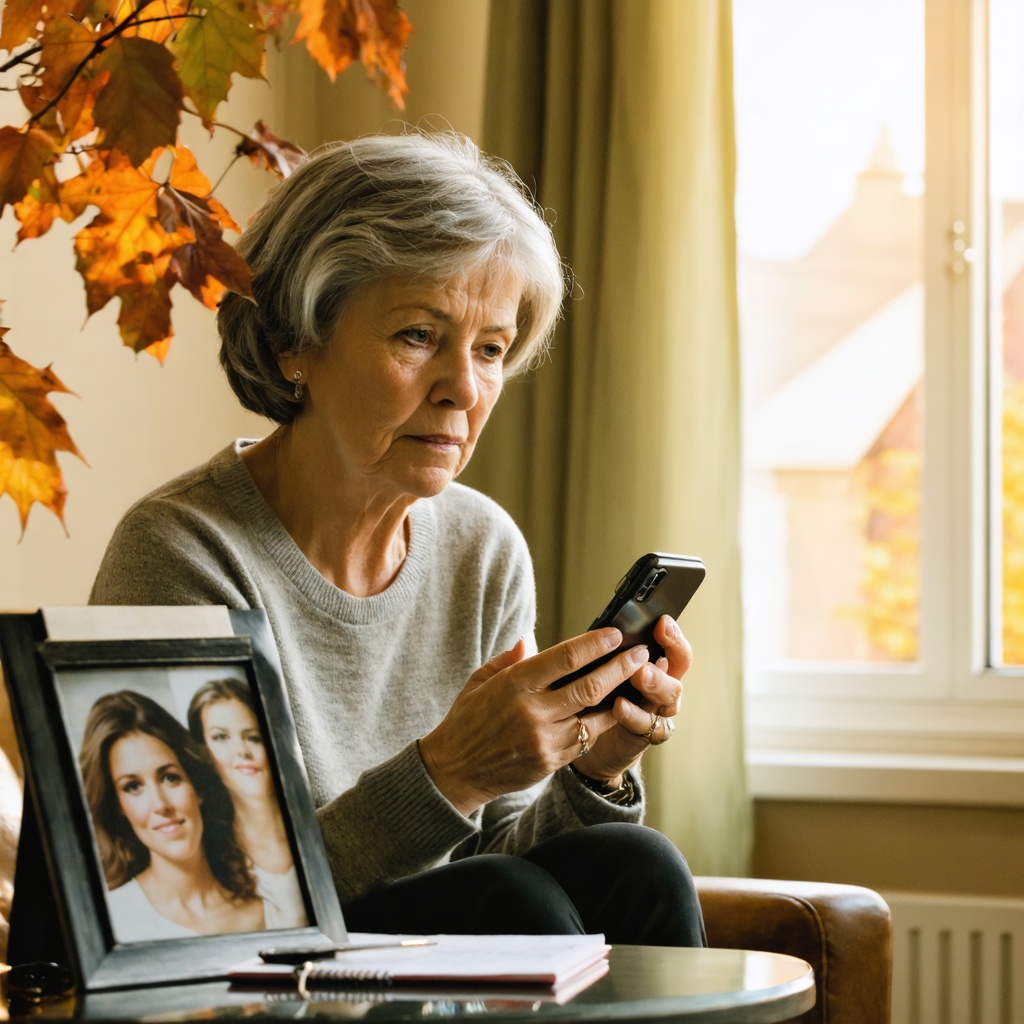 Image by RM AI
The Waiting Game
The twenty-four hours after leaving that voicemail were among the longest of my life. I jumped every time my phone rang, my heart racing only to plummet when the caller ID showed a work colleague or one of my children checking in.
Mom watched me with worried eyes but said little, perhaps understanding that this was a journey I needed to navigate in my own way. "He might not call back," she warned gently as we prepared dinner together.
"It was a long time ago, and he's an old man now. He might not want to revisit the past." I nodded, trying to temper my expectations while chopping vegetables with more force than necessary.
"Or he might not even remember me," Mom added, her voice smaller now. I looked up sharply at that, noting the vulnerability in her expression.
It hadn't occurred to me until that moment that this situation might be bringing up painful memories for her as well—the betrayal, the heartbreak, the difficult decisions she'd made as a young, pregnant woman abandoned by her husband.
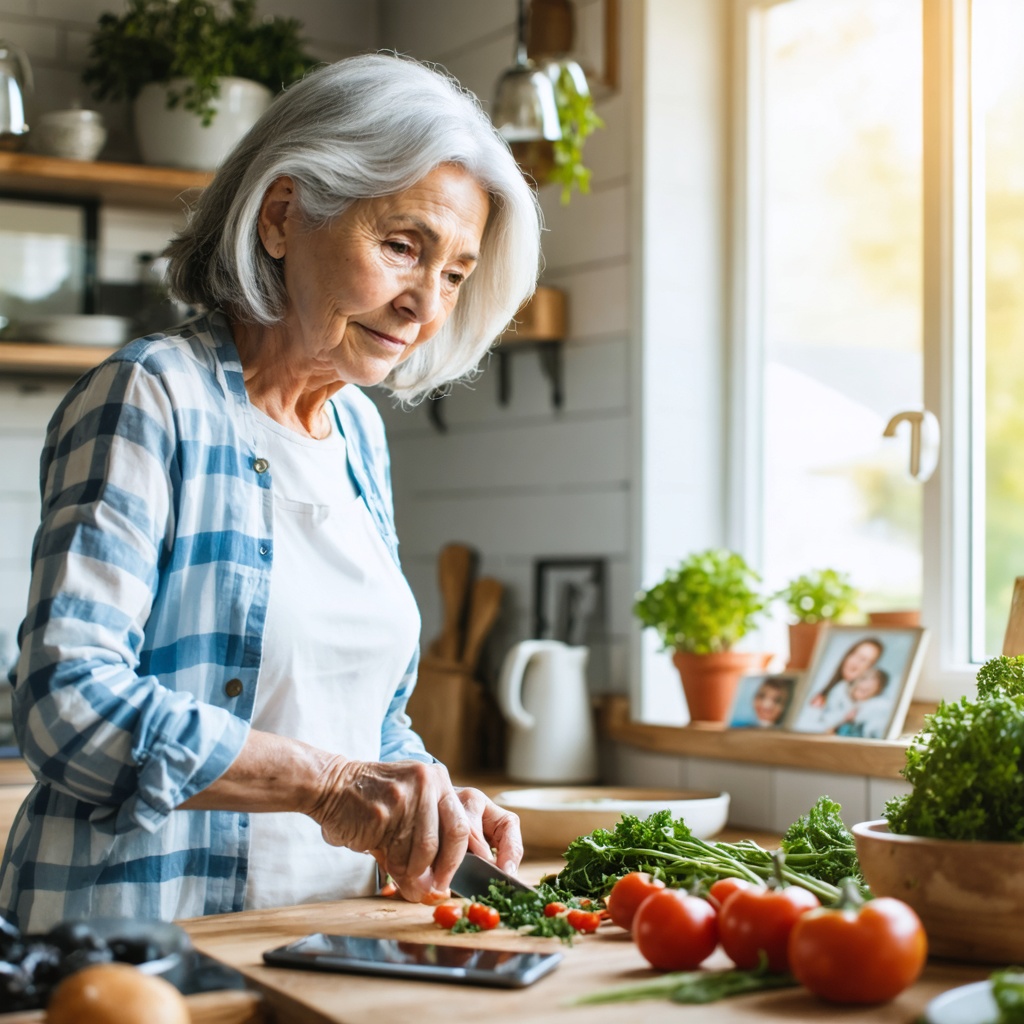 Image by RM AI
The Call Back
The call came the following evening as I was helping Mom unpack the last of her clothes. My phone vibrated on the dresser, an unknown number lighting up the screen.
I answered with a trembling "Hello?" and heard that same raspy voice from the voicemail, now speaking directly to me. "Elizabeth?" he asked tentatively.
"This is Steven Forman. I got your message." There was a long pause during which I could hear nothing but his breathing and the thundering of my own heart.
"I've been waiting for this call for fifty years," he finally continued, his voice thick with emotion. "I never thought it would come." We spoke for nearly an hour, the conversation awkward and halting at first, then gradually flowing more naturally.
He asked questions about my life—my education, my career, my family—and I found myself eager to share these details with him. When I suggested meeting in person, he immediately agreed.
"How about coffee tomorrow?" he proposed. "There's a little café near my place called Rosie's.
I can be there at ten if that works for you."
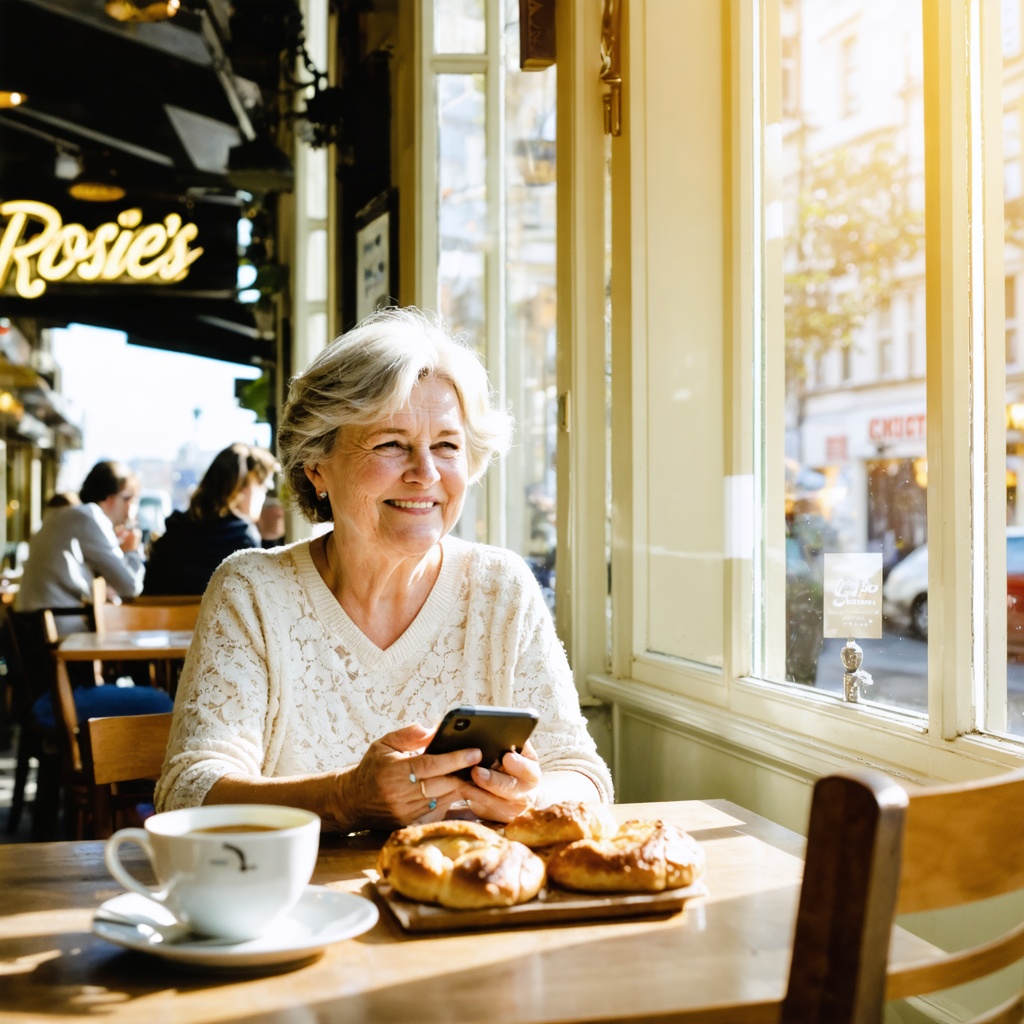 Image by RM AI
Face to Face with the Past
Rosie's Café was busier than I expected for a weekday morning, filled with retirees lingering over coffee and young professionals tapping on laptops. I arrived fifteen minutes early, choosing a table near the window where I could watch for him.
Though I had seen his photo, I worried I might not recognize him in person. My concern proved unnecessary.
The moment Steven Forman walked through the door, I knew him instantly. Despite his age—his back slightly stooped, his movements careful and measured—I could see myself in him.
He scanned the café until our eyes met, and a look of recognition crossed his weathered face. He made his way to my table with the help of a wooden cane, and I stood awkwardly, unsure whether to shake his hand or hug him or simply nod in greeting.
He solved the dilemma by reaching out and gently touching my cheek, his eyes filling with tears. "You look just like your grandmother," he said softly.
"My mother. She would have loved to meet you."
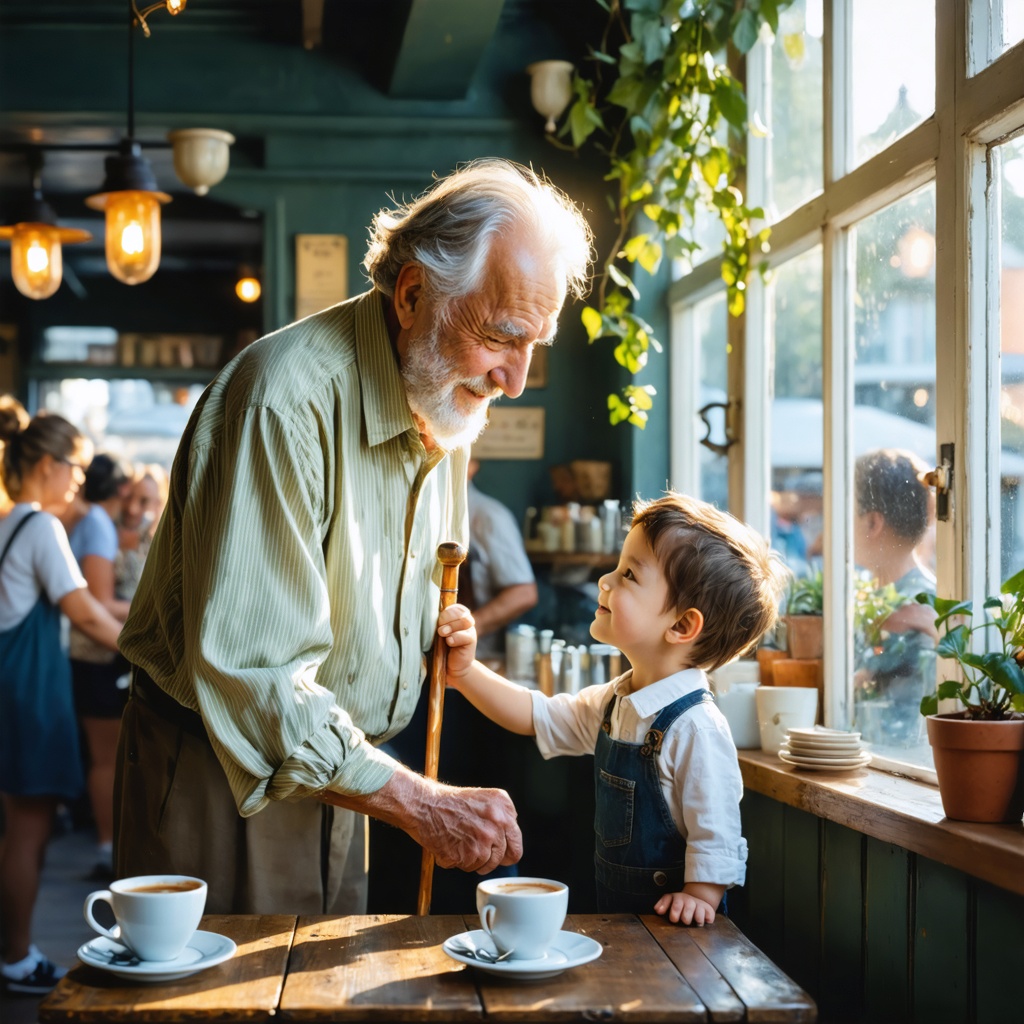 Image by RM AI
Conversations Long Overdue
We ordered coffee and pastries, though neither of us ate much as we began the strange process of getting to know each other. Steven—he insisted I call him Steven rather than Dad or Father—was forthright about the past.
"I made the biggest mistake of my life when I cheated on your mother," he admitted, stirring his coffee absently. "I was young and stupid and scared about becoming a father.
But that's no excuse." He explained how he'd tried repeatedly to contact Mom after I was born, calling and writing letters that were returned unopened. "Margaret's father finally told me she'd remarried and that her new husband had adopted you.
He said I should respect their family and stay away." This was news to me—Mom had never mentioned her father's involvement, though it explained some things. Grandpa Wilson had always been a stern, protective man who believed in traditional family values above all else.
He would have seen Steven as a threat to the stable home Mom had created with Bill.
 Image by RM AI
The Life He Built Without Me
"I remarried when you were about five," Steven continued, showing me a worn photo of a smiling woman with curly red hair that he kept in his wallet. "Charlotte was wonderful.
We were together for forty-two years before cancer took her." His voice cracked slightly at the mention of his late wife. "We had three children together—two boys and a girl.
Your half-siblings." He pulled out his phone with gnarled fingers, slowly navigating to his photo gallery to show me pictures of middle-aged adults with families of their own. I stared at these strangers who shared my blood, trying to find resemblances, wondering what it would have been like to grow up knowing them.
"James is a doctor in Boston," Steven said proudly. "Michael teaches high school science, and Sarah runs her own accounting firm." He paused, looking at me with regret clouding his eyes.
"I made sure to be there for every moment of their lives—every baseball game, every dance recital, every graduation. I was determined to be the father to them that I never got to be for you."
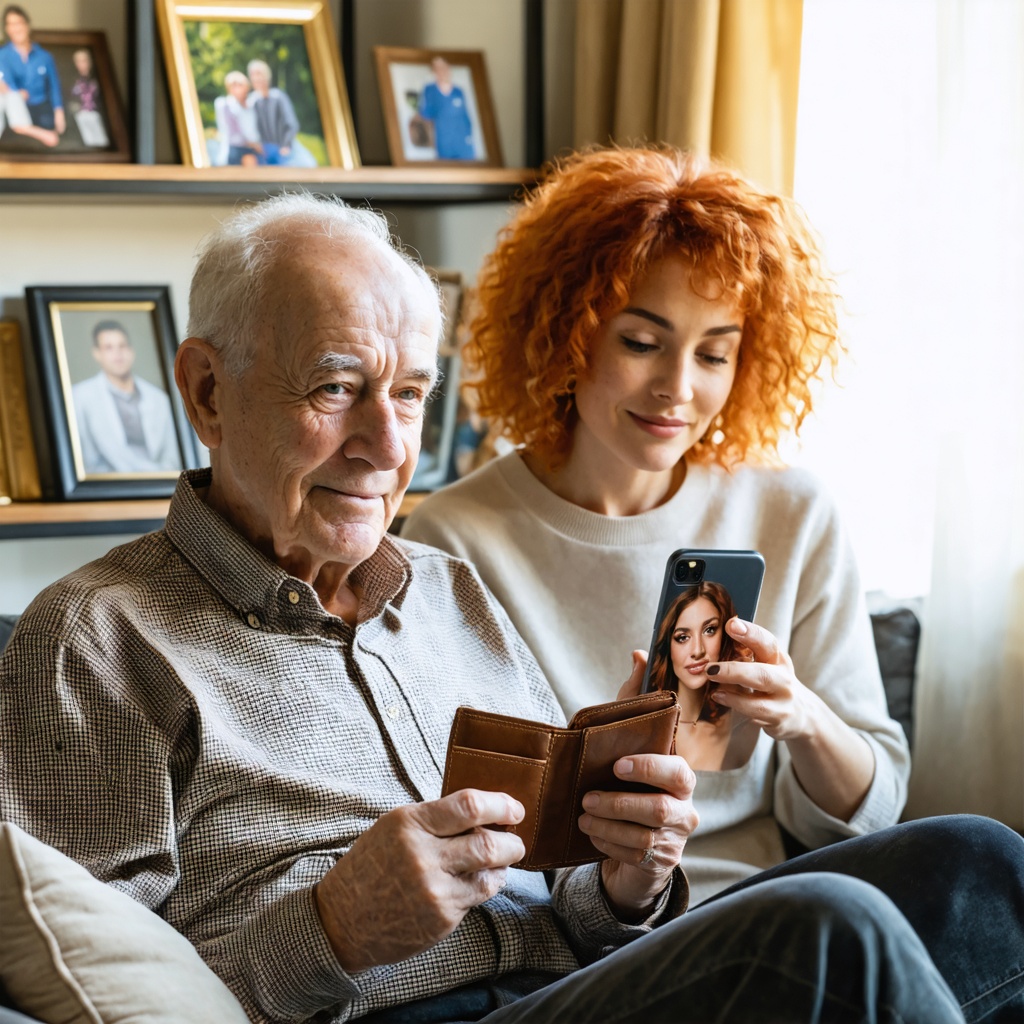 Image by RM AI
The Pain of What Could Have Been
His words hit me like a physical blow. While I'd had a loving father in Bill, there was something uniquely painful about knowing Steven had gone on to be an involved, dedicated parent to other children while I grew up never knowing he existed.
I excused myself to the restroom, needing a moment to compose myself as unexpected tears threatened to fall. Staring at my reflection in the mirror, I saw Steven's eyes looking back at me—the same shape, the same unusual gray-green color that had always seemed out of place in family photos with Bill's brown-eyed genes.
When I returned to the table, Steven was looking at old photos of me that I'd brought along. "You were a beautiful child," he murmured, lingering over a picture of me at my high school graduation.
"I missed so much." The regret in his voice seemed genuine, but it didn't erase the decades of absence. "Why didn't you try harder to find me?" I asked, the question bursting forth before I could stop it.
"If you wanted to be in my life, why did you give up so easily?"
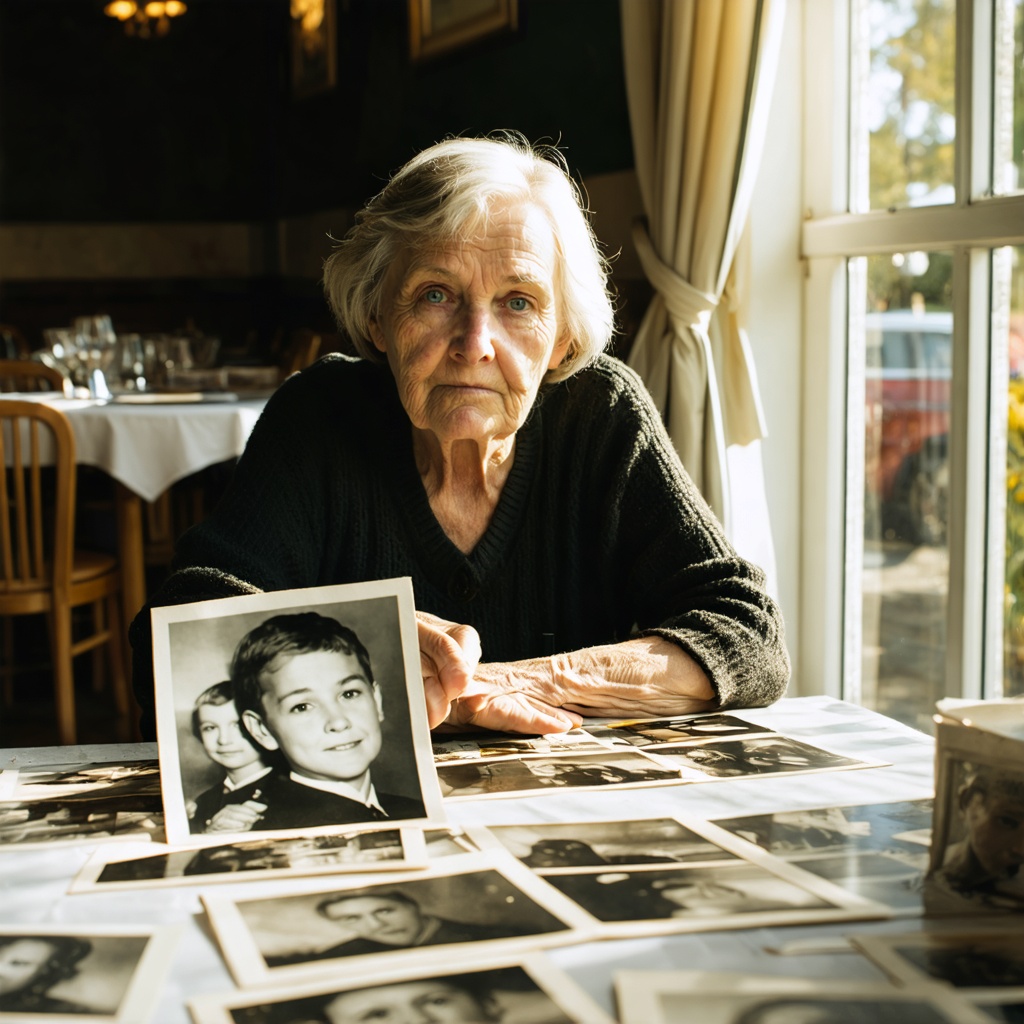 Image by RM AI
Regrets and Explanations
Steven's face crumpled at my question, his age suddenly more apparent in the sagging of his features. "I didn't give up easily," he insisted, his voice stronger now.
"I hired a lawyer to look into my rights, but in those days, fathers had few legal options, especially when the mother had remarried." He described making attempts to see me throughout my childhood—sending birthday cards that were returned, driving by my elementary school hoping to catch a glimpse of me at recess, even approaching Mom once in a grocery store when I was about seven. "She threatened to call the police if I didn't leave you both alone," he said.
"She said you were happy, that Bill was a good father, and that my presence would only confuse and hurt you." I tried to imagine my mother being so fierce, so protective, and found I could picture it easily. She had always been a mama bear where I was concerned.
"After a while," Steven continued, "I convinced myself she was right—that disrupting your life would be selfish. But I never stopped thinking about you, wondering who you were becoming, hoping you were happy."
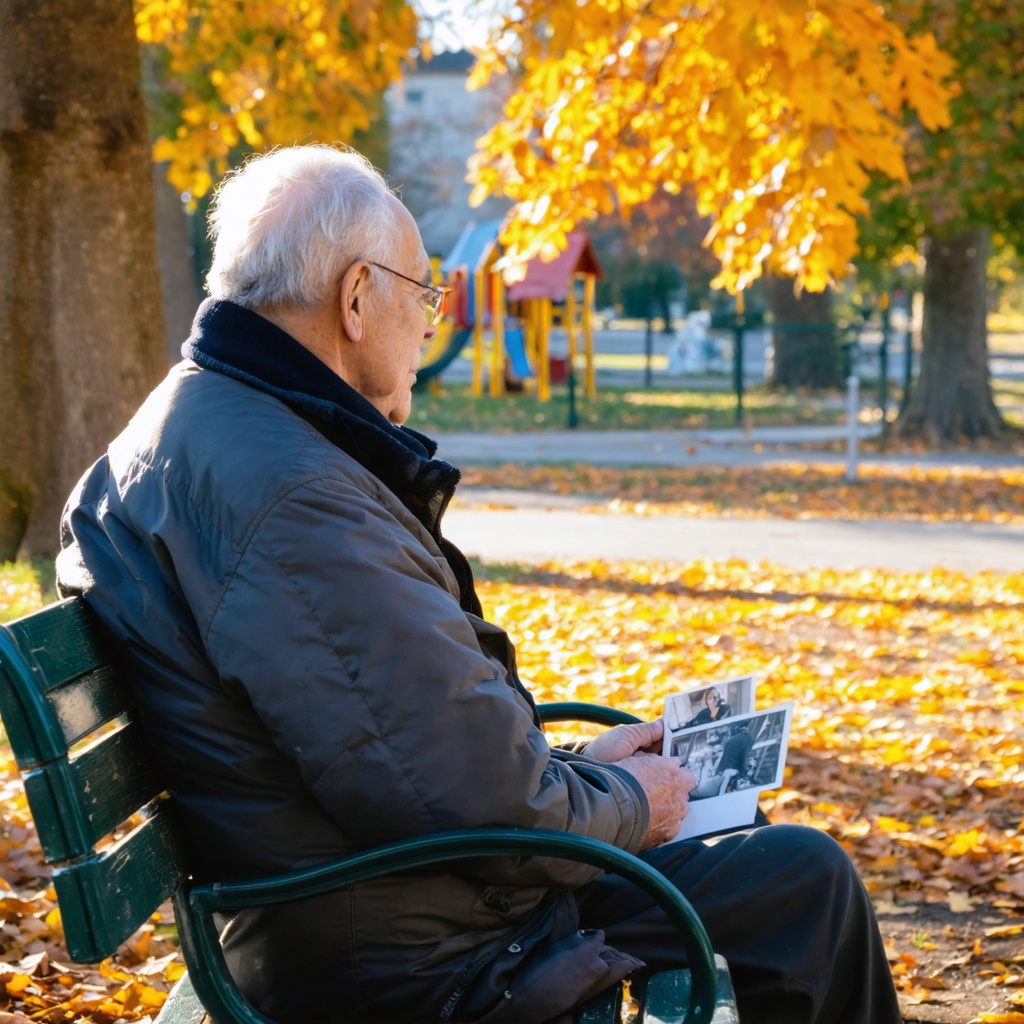 Image by RM AI
Building a Bridge
Our first meeting stretched from a planned hour into nearly three as we continued to fill in the blanks of our separate lives. Steven showed me more family photos, including several of his parents—my biological grandparents whom I'd never known existed.
I learned that my artistic abilities likely came from his side of the family, as his mother had been a respected local painter. I discovered that my inexplicable love of sailing, which had always puzzled my water-shy parents, was perhaps inherited from Steven, who had owned boats throughout his adult life.
"Would you like to meet your half-siblings?" he asked tentatively as our time together drew to a close. "Sarah lives nearby.
The boys visit every few months." I hesitated, feeling overwhelmed by how quickly my family tree was branching out in unexpected directions. "Maybe soon," I replied, not wanting to commit but not wanting to refuse either.
"This is all still very new." Steven nodded understandingly, reaching across the table to pat my hand. "We have time," he said, though we both knew at his age, time wasn't guaranteed.
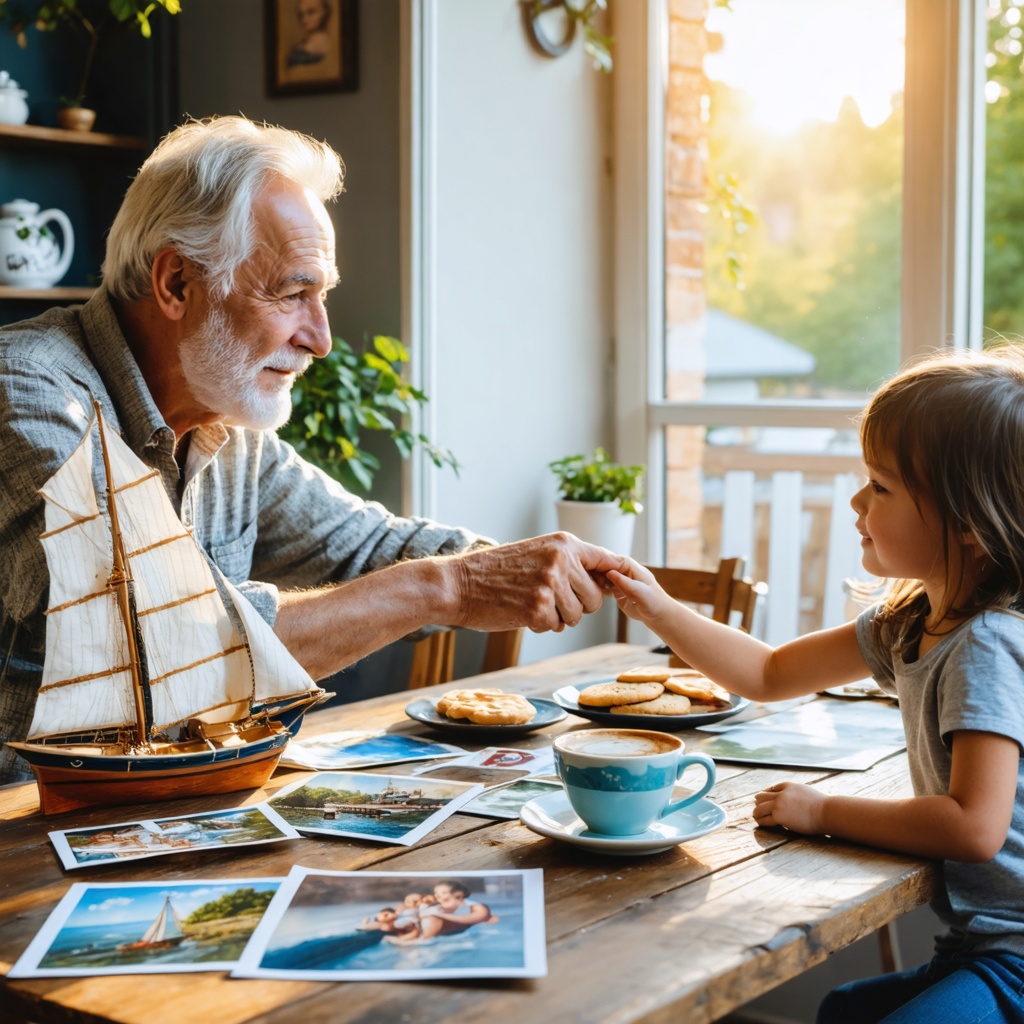 Image by RM AI
Telling Mom
Driving home from the café, I felt as though I was floating between two realities—the life I'd always known and this new dimension that had suddenly opened up. I found Mom in the backyard, carefully transplanting some of her beloved perennials into my garden beds.
"I met him," I said simply, sinking onto the bench beside her. She set down her trowel slowly, removing her gardening gloves with deliberate movements that told me she was buying time to compose her response.
"How was it?" she finally asked, her voice carefully neutral. I described the meeting in detail, watching her face for reactions.
She flinched when I mentioned Steven's claims about trying to contact us, her lips pressing into a thin line. "He was persistent," she acknowledged reluctantly.
"But you have to understand, Elizabeth. Bill had legally adopted you.
We were building a stable, loving home. Steven was a reminder of the worst time in my life, and I couldn't bear the thought of him disrupting our family or confusing you about who your father was."
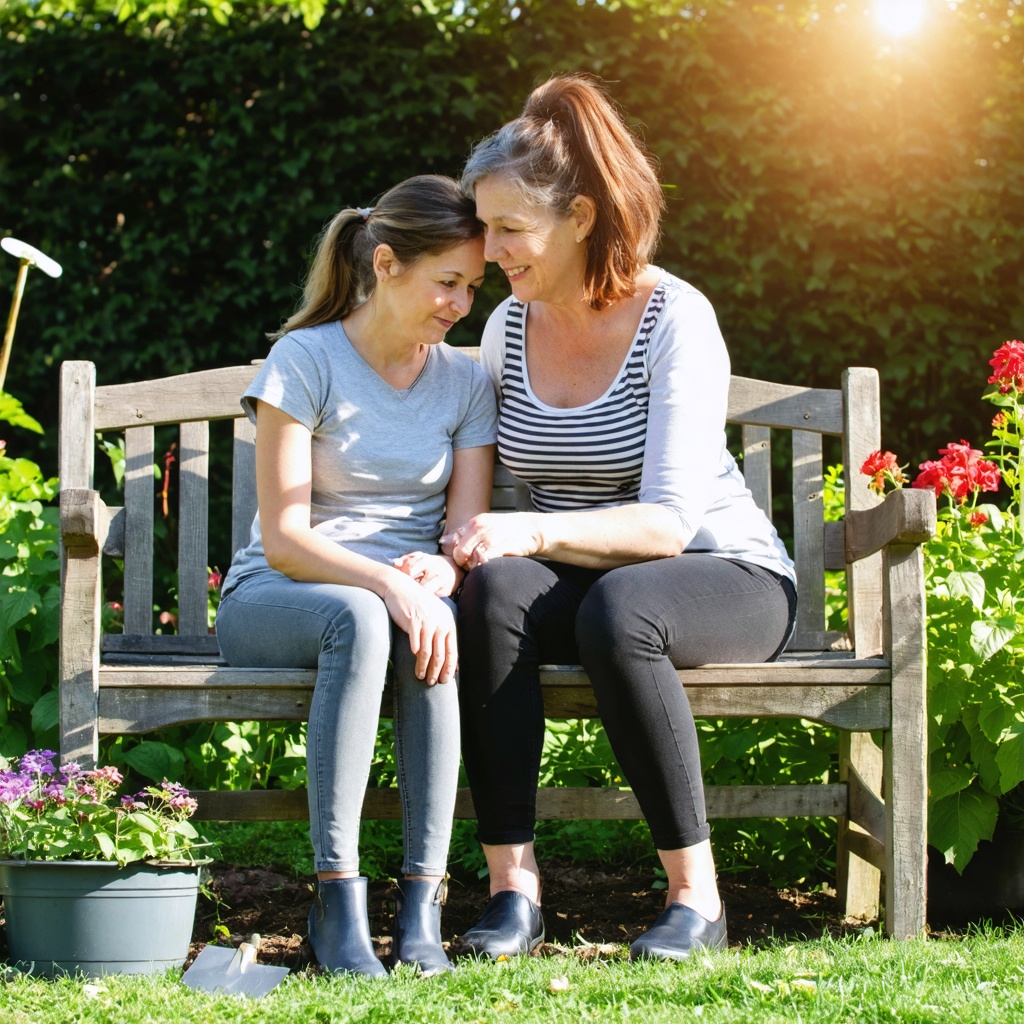 Image by RM AI
Understanding Different Perspectives
"But didn't I have a right to know?" I asked, the question that had been burning inside me since discovering the hidden album. Mom looked away, her hands fidgeting with the gardening gloves in her lap.
"Maybe," she conceded after a long pause. "But parenting doesn't come with a manual, sweetheart.
We make the best decisions we can with the information and emotions we have at the time." She turned back to me, her eyes pleading for understanding. "Bill was your father in every way that mattered.
He changed your diapers, soothed your nightmares, taught you to drive. Steven was just...biology." I understood her perspective, even sympathized with the difficult position she'd been in as a young mother.
But I also felt the weight of the choices that had been made for me without my knowledge or consent. "I'm going to keep seeing him," I told her firmly.
"I need to know this part of myself." Mom nodded slowly, resignation and a hint of fear in her expression. "I understand.
Just...be careful with your heart, Elizabeth. And remember who was there for you all along."
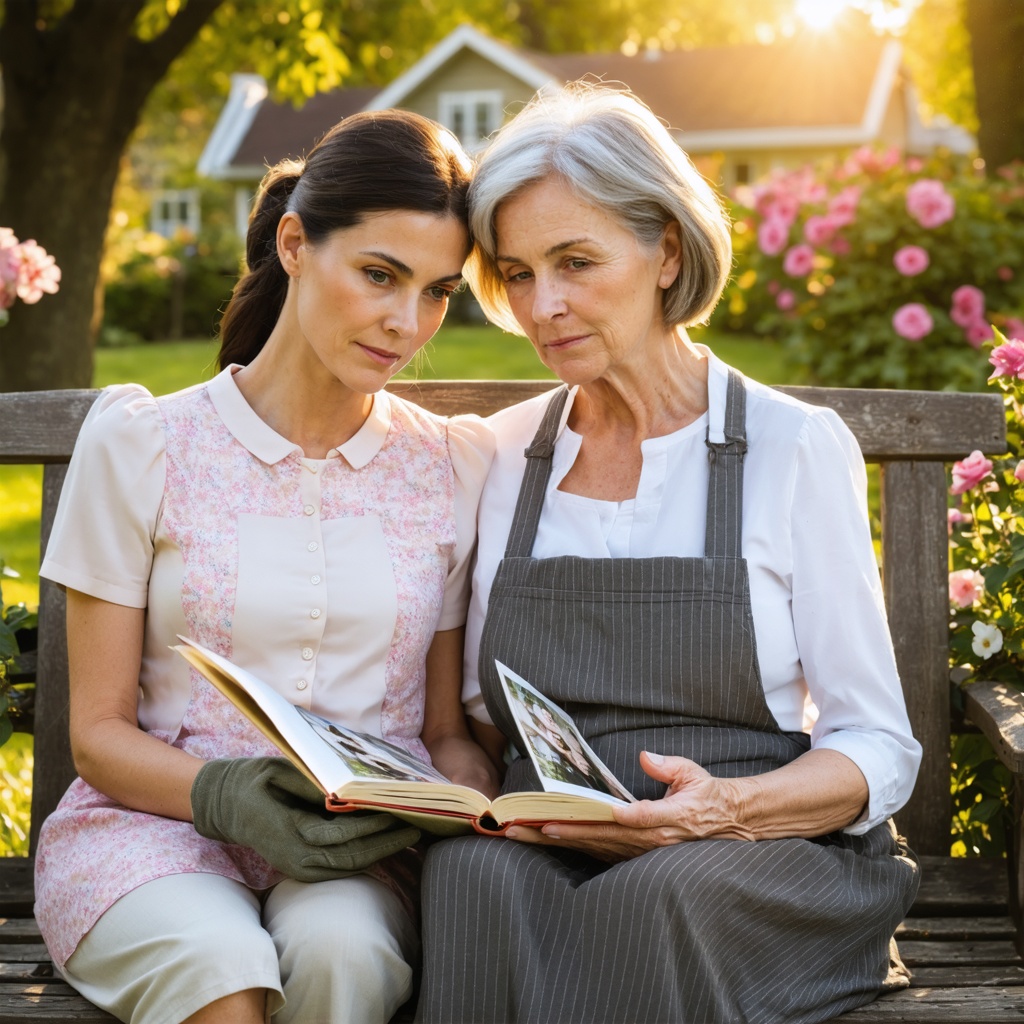 Image by RM AI
Building a Relationship
Over the next few months, Steven and I established a routine of weekly coffee meetings that gradually expanded to include lunches, visits to museums, and eventually, dinners with my husband and children. My teenage sons were initially skeptical about this great-grandfather who had appeared out of nowhere, but Steven won them over with stories of his time as a merchant marine and his collection of antique fishing lures.
My husband, always my steadfast support, observed these developing relationships with cautious optimism. "Just because he's in your life now doesn't erase Bill's importance," he reminded me one night as we lay in bed discussing the situation.
"You're not betraying anyone by getting to know Steven." His words eased the guilt I sometimes felt, especially when Mom would grow quiet during discussions of my visits with Steven. I was learning to hold two truths simultaneously:
Bill was my dad in all the ways that shaped me as a person, and Steven was my biological father whose genetic legacy I carried. Both relationships could matter without diminishing the other.
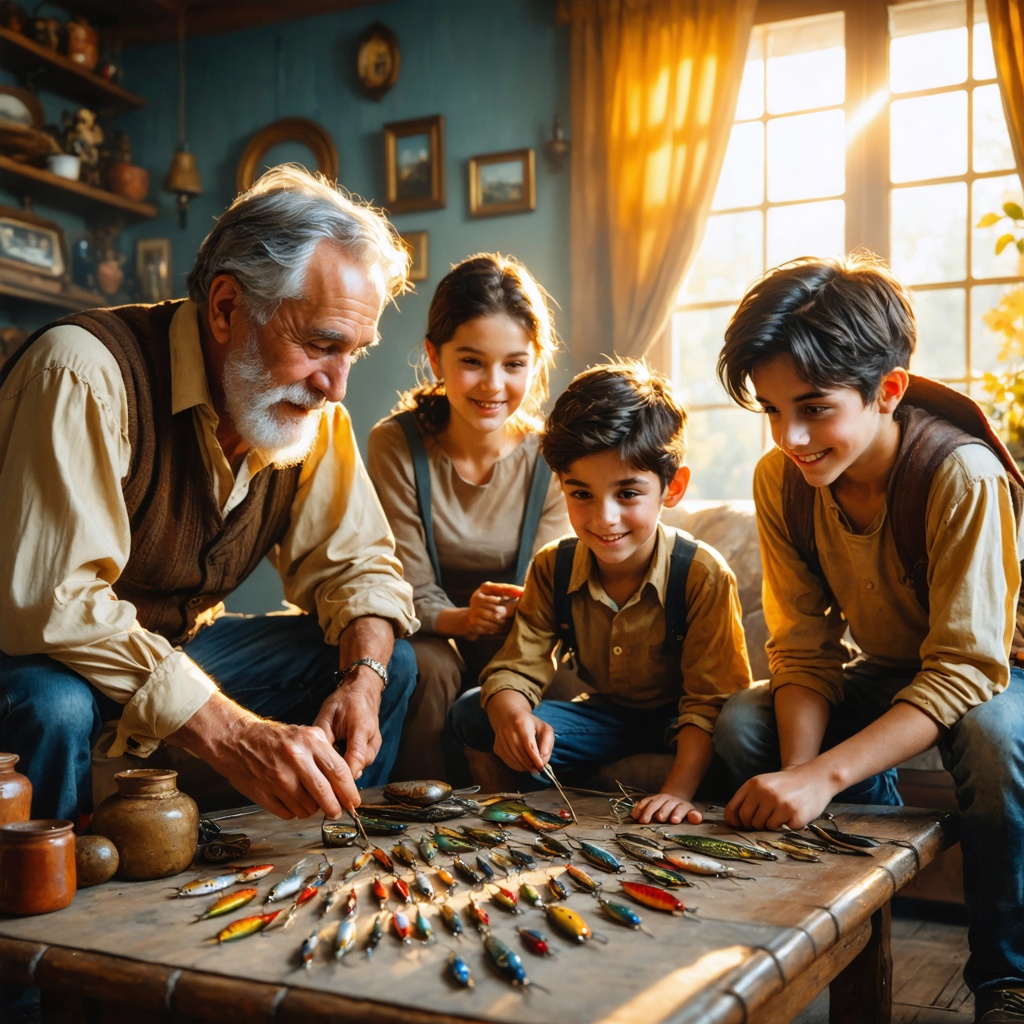 Image by RM AI
Meeting the Extended Family
Three months after our first meeting, I finally agreed to meet my half-siblings. Steven hosted a small gathering at his apartment in the retirement community, nervously fussing over refreshments and seating arrangements like a teenager preparing for a first date.
Sarah arrived first, a confident woman in her forties with Steven's eyes and a warm smile that immediately put me at ease. "I've been bugging Dad to introduce us since he told us about you," she admitted, hugging me without hesitation.
"I always wanted a sister growing up." The brothers arrived together—James flying in from Boston, Michael driving from a few hours away. They were more reserved than Sarah but friendly, studying me with obvious curiosity.
"It's like looking at Dad's old photos," James commented, glancing between Steven and me. "The resemblance is uncanny." We spent the afternoon sharing stories, comparing experiences, and discovering surprising similarities despite our separate upbringings.
They had questions about Bill, about my childhood, about how I felt discovering the truth so late in life.
 Image by RM AI
Unexpected Connections
What struck me most about meeting my half-siblings was not our differences but our similarities. James had the same nervous habit of tapping his fingers in a specific pattern that I'd done since childhood.
Michael shared my irrational dislike of celery and tendency to sneeze in bright sunlight. Sarah and I both collected vintage postcards, a hobby neither of us could explain the origin of.
"Nature versus nurture playing out right before our eyes," James observed with professional interest, his medical background evident in how he analyzed our shared traits. As the afternoon progressed, I found myself relaxing into this new extended family, laughing at their inside jokes and gradually sharing more of my own life stories.
When Sarah pulled out her phone to show me pictures of her children—my nieces and nephews—I felt a strange sense of recognition, as if pieces of a puzzle I hadn't known was incomplete were finally falling into place. "We should get a family picture," Steven suggested, his eyes bright with emotion.
"All my children together for the first time."
 Image by RM AI
Healing Old Wounds
The family photograph became a treasured possession for both Steven and me—a tangible symbol of our belated connection. I kept it on my desk at work, occasionally glancing at it during difficult days and drawing strength from this expanded sense of identity.
Mom noticed it when she came to my office to meet me for lunch one day, picking up the frame with trembling hands. "You all look happy," she said quietly, studying the smiling faces.
I held my breath, waiting for signs of hurt or anger, but instead, she surprised me. "I'm glad you found each other," she continued, setting the photo down carefully.
"I was wrong to keep you apart for so long." This simple acknowledgment, offered without prompting, felt like a gift. Later that evening, Mom did something even more unexpected.
She called Steven herself, arranging to meet him for coffee without me present. "There are things we need to say to each other," she explained when I expressed surprise.
"Apologies that are fifty years overdue on both sides."
 Image by RM AI
Time Running Short
Six months into our newfound relationship, Steven's health began to decline rapidly. What started as occasional fatigue progressed to more frequent hospital visits as his heart weakened.
"Congestive heart failure," James explained to me in doctor mode, though his voice betrayed his emotional investment. "At his age, there are limited treatment options." I began visiting Steven daily, often bringing Mom along as their own relationship had evolved into a tentative friendship built on shared memories and mutual forgiveness.
We would sit in his apartment, looking through old photographs or simply talking about everyday things—the weather, politics, my children's activities. Sometimes Steven would doze off mid-conversation, his body betraying his desire to remain engaged.
During one such visit, he woke suddenly from a nap and reached for my hand with surprising strength. "I need you to know," he said urgently, "that not being in your life was my greatest regret.
I thought of you every single day." His eyes, so like my own, filled with tears. "But finding you now, at the end of my life, has been my greatest joy."
 Image by RM AI
Final Days
Steven was moved to hospice care three weeks later, his condition deteriorating despite the best medical interventions. My half-siblings and I established an informal rotation, ensuring someone was always with him.
During my shifts, I often read to him from his favorite poetry collections or simply sat holding his hand as he drifted in and out of consciousness. On what would turn out to be his final lucid day, he asked for all his children to gather together.
"I never expected to have this," he whispered, looking around at the four of us crowded around his bed. "All my children together." He asked us to promise to stay connected after he was gone, to not let his passing sever the bonds we'd begun to form.
"Family is precious," he said, his voice barely audible. "Don't waste time on regrets like I did." That evening, after the others had left, I stayed behind, something telling me to remain.
Steven slipped away peacefully just after midnight, his hand in mine, our time together brief but meaningful. In those final moments, I felt not only grief but profound gratitude for the chance to know him, however briefly.
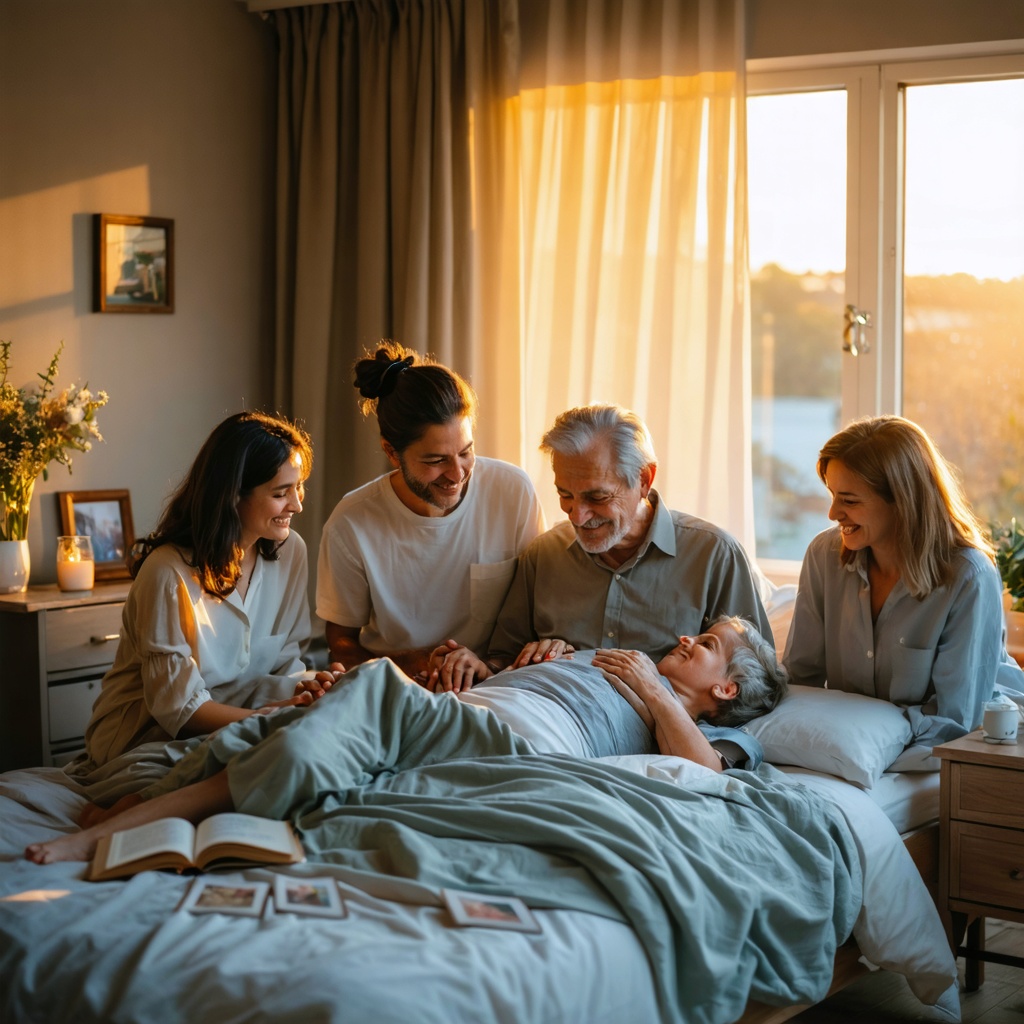 Image by RM AI
Saying Goodbye
Steven's funeral was well-attended, a testament to the full life he'd lived despite his regrets. Former colleagues, neighbors from the retirement community, distant relatives, and friends gathered to share stories and offer condolences.
I sat in the front row between Sarah and Mom, an arrangement that would have seemed impossible just months earlier. When the minister invited family members to speak, I hadn't planned to say anything, feeling too new to this family to claim such a role.
But something compelled me to stand and make my way to the podium. "I only knew Steven Forman for eight months," I began, my voice shaking slightly.
"Most of you here knew him much longer. But in those eight months, I discovered not only my biological father but parts of myself I never understood before." I spoke about our coffee meetings, our discovered similarities, the way he'd embraced my children as his great-grandchildren without hesitation.
"He told me once that finding me at the end of his life was his greatest joy," I concluded, tears flowing freely now. "What he might not have realized is that finding him was an unexpected gift for me as well."
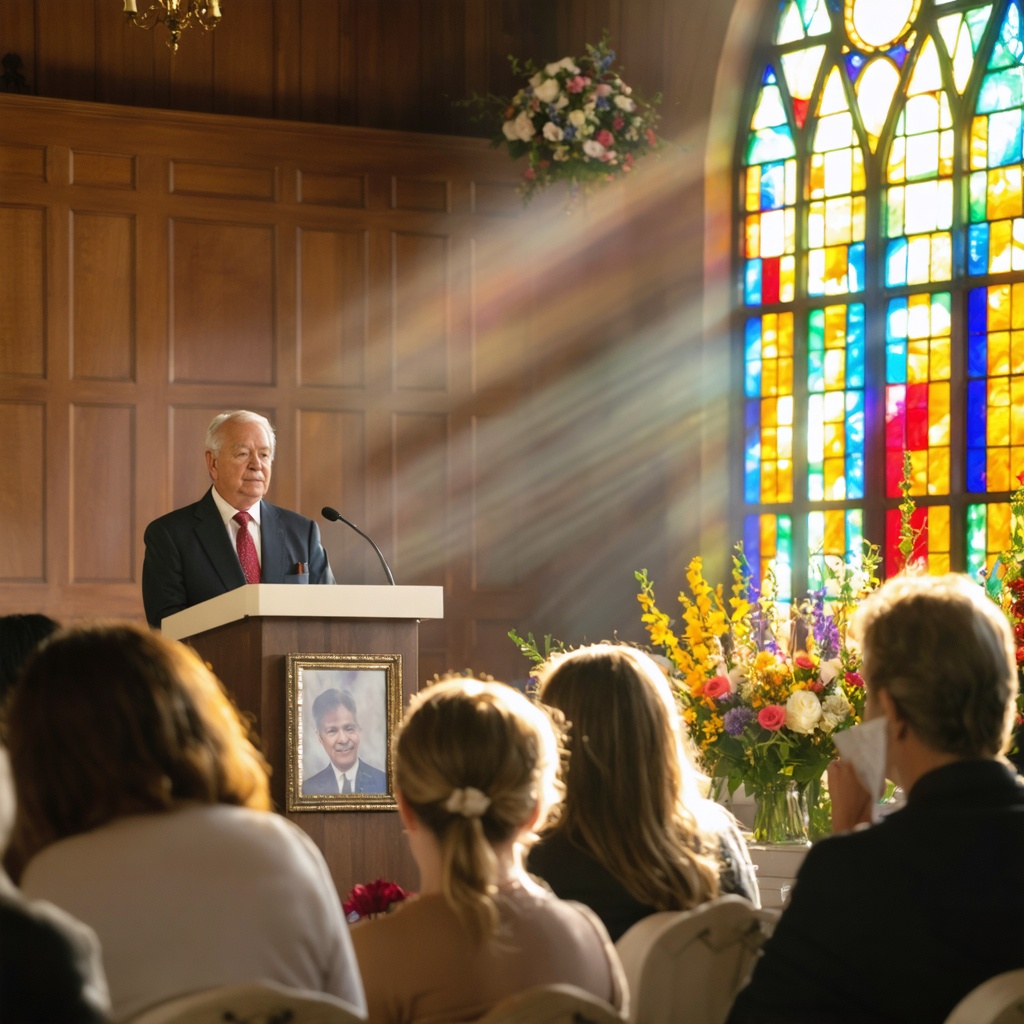 Image by RM AI
Inheritance of Truth
After the funeral, James handed me a sealed envelope. "Dad asked me to give you this," he explained.
"He wrote it during one of his better days in hospice." I waited until I was alone that evening to open it, sitting in my quiet backyard as twilight descended. Inside was a handwritten letter, the penmanship shaky but determined, covering several pages.
Steven had written down his life story for me—the parts I'd missed by not growing up with him. He described his childhood, his hopes and dreams as a young man, his deepest regrets, and the lessons he'd learned through his mistakes.
"I want you to know who I was," he wrote, "not just who I became at the end. I want you to understand the full truth of your heritage." Enclosed with the letter was a small velvet pouch containing his mother's wedding ring and a note explaining it had been passed down through generations.
"Now it belongs to you, my firstborn," he'd written. "Perhaps someday you'll give it to one of your sons for his bride, and a piece of our shared history will continue."
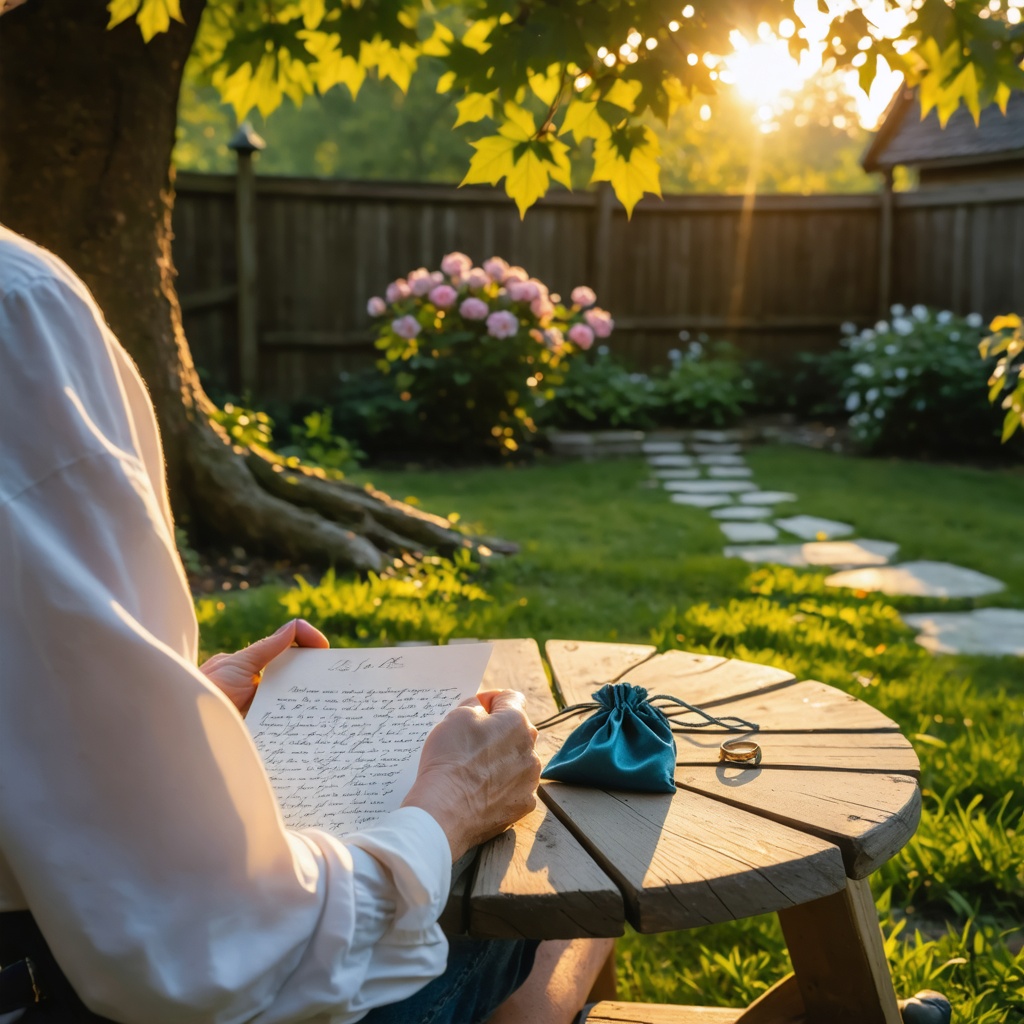 Image by RM AI
The Expanding Family
In the year following Steven's death, my relationship with my half-siblings deepened in ways that surprised all of us. What had begun as awkward meetings out of respect for our shared father evolved into genuine friendships.
Sarah's children began referring to me as "Aunt Elizabeth," while James consulted me on birthday gift ideas for his wife. Michael and I discovered a shared passion for hiking and began planning weekend excursions to nearby trails.
Mom, too, found herself embraced by this extended family, invited to holiday gatherings and treated with respect despite the complicated history. "It's strange," she commented after Thanksgiving dinner at Sarah's home, where she'd been seated in the place of honor beside the host.
"I spent decades trying to keep Steven out of our lives, and now his family has become part of ours." I squeezed her hand, understanding the complex emotions behind her words. "Life takes unexpected turns," I replied, thinking of the hidden photo album that had changed everything.
"Sometimes the detours lead us exactly where we need to be."
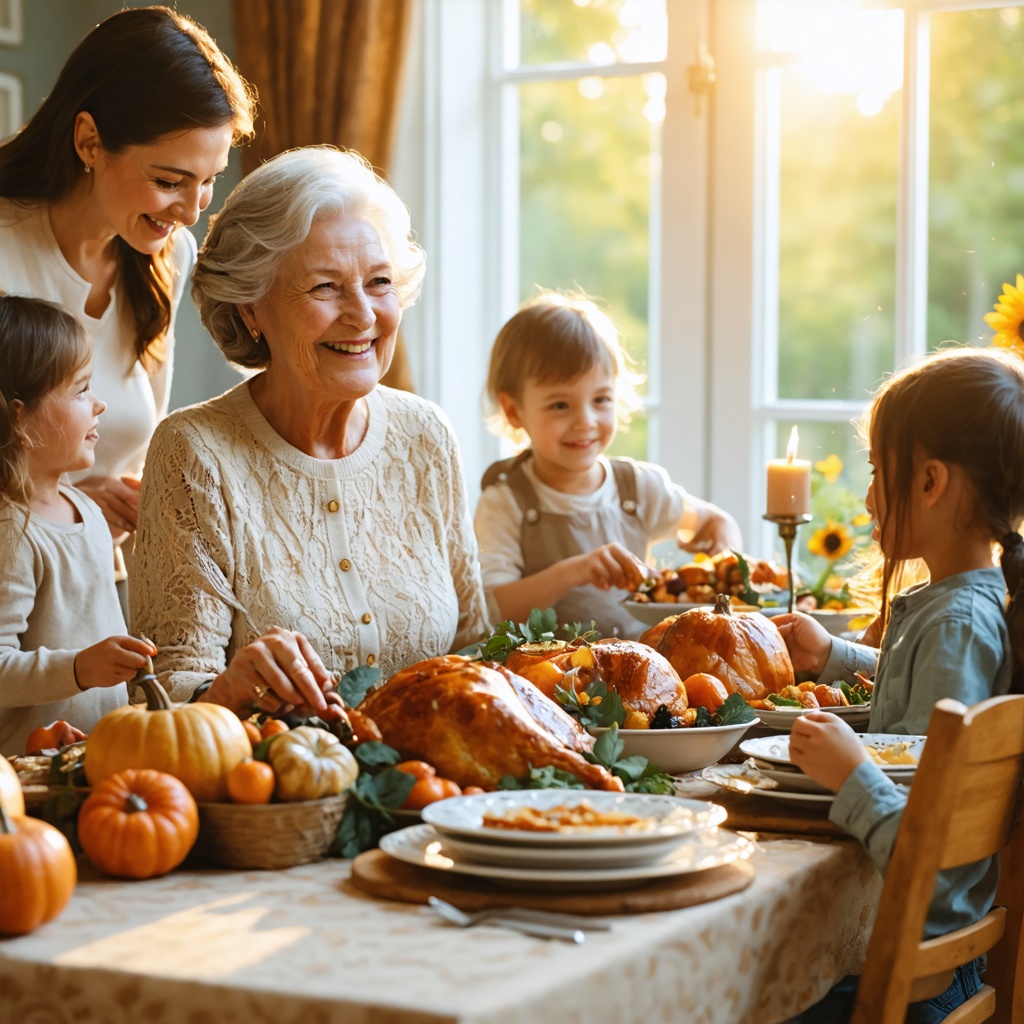 Image by RM AI
Reflections on Fatherhood
On the anniversary of Bill's death, I visited his grave as I did every year, bringing fresh flowers and spending time in quiet reflection. But this year felt different.
I found myself talking to him openly, telling him about Steven, about my half-siblings, about the complicated emotions I'd navigated over the past eighteen months. "I want you to know," I said aloud, my words carried away by the gentle cemetery breeze, "that knowing Steven hasn't diminished what you mean to me.
You're still my dad—the man who raised me, who shaped me, who loved me unconditionally." I traced his name on the headstone, remembering his laugh, his wisdom, his patience. "Biology isn't what makes a father," I continued.
"You proved that every day of my life." As I placed the flowers in the cemetery vase, I felt a sense of peace wash over me. I had been fortunate enough to experience two fathers' love—one throughout my childhood and one briefly at the end of his life.
Both relationships had value; both had helped complete the picture of who I was.
The Power of Truth
Two years after discovering the hidden photo album, Mom and I sat together on my porch swing, watching my teenage sons shoot hoops in the driveway. "Do you regret finding out about Steven?" she asked suddenly, breaking our comfortable silence.
I considered her question carefully, watching the boys who carried both Bill's influence and Steven's genetics in different ways. "No," I answered honestly.
"It was painful at first, and I wish I'd known sooner, but I don't regret learning the truth." Mom nodded, seeming to accept my answer. "And do you regret your decision?" I asked gently.
"Keeping him a secret all those years?" She sighed, her gaze distant as she watched her grandsons play. "I regret the deception," she said slowly.
"But at the time, I truly believed I was protecting our family—protecting you." She turned to me, her eyes seeking understanding. "We all did the best we could with the wisdom we had at the time." I squeezed her hand, recognizing the universal truth in her words.
Life rarely offers perfect choices, only imperfect ones made with imperfect information and complicated emotions.
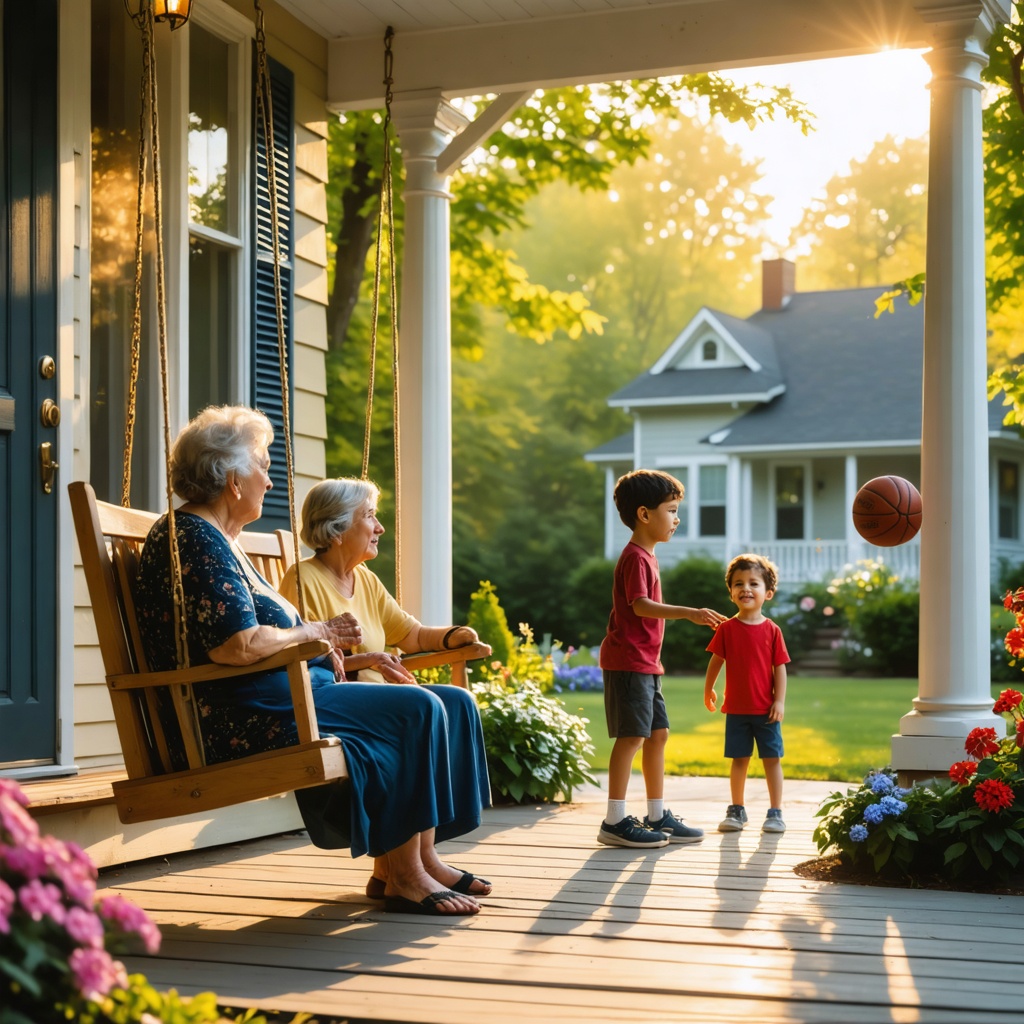 Image by RM AI
The Album Completed
That evening, I pulled out the leather-bound photo album that had started this journey—the one I'd found hidden in Mom's closet two years earlier. The photos of young Steven and pregnant Mom were still there, but now the album held so much more.
I had added pictures from our coffee meetings, the family gathering at Steven's apartment, candid shots from his final days, and formal portraits from his funeral. The last page held the group photo from the memorial service—all four of Steven's children standing together with Mom, my husband, and my sons.
The album that had once ended abruptly with a lonely pregnant woman on a park bench now told a complete story—one with heartbreak and separation but also reconciliation and newfound connections. As I closed the album, I realized that while we can't change the past, we can choose how we integrate it into our present.
The truth, however delayed, had ultimately brought healing rather than destruction. My family hadn't been diminished by discovering Steven;
it had been expanded, enriched by new relationships and a fuller understanding of my own identity.
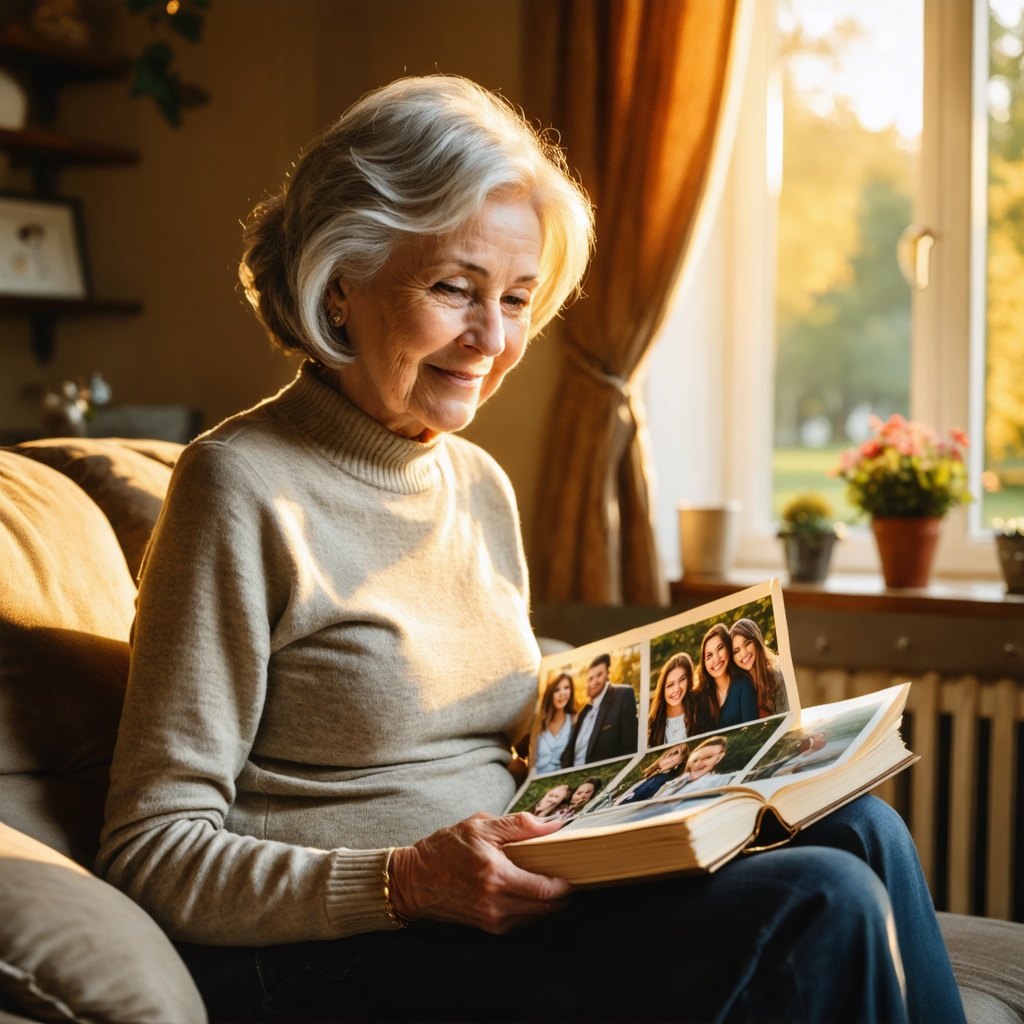 Image by RM AI
Legacy of Love
Years have passed since that fateful day when I found the hidden photo album while helping Mom pack for her move. My sons are now in college, pursuing their own paths with characteristics inherited from both Bill and Steven—Bill's work ethic, Steven's creative thinking, and countless other traits blended together in unique combinations.
Mom still lives with us, though her health continues to decline gradually. My relationships with Sarah, James, and Michael have become as natural as if we'd grown up together, our children now cousins who gather for holidays and summer vacations.
Sometimes I wonder how different my life might have been if Steven had been part of it from the beginning, or if I'd discovered the truth earlier. But such speculation serves little purpose.
What matters is that when the truth finally emerged, we all chose connection over resentment, understanding over judgment. In the end, I learned that family isn't defined solely by biology or legal documents but by love, commitment, and the daily choice to remain present in each other's lives.
Both my fathers taught me that lesson in their own ways.
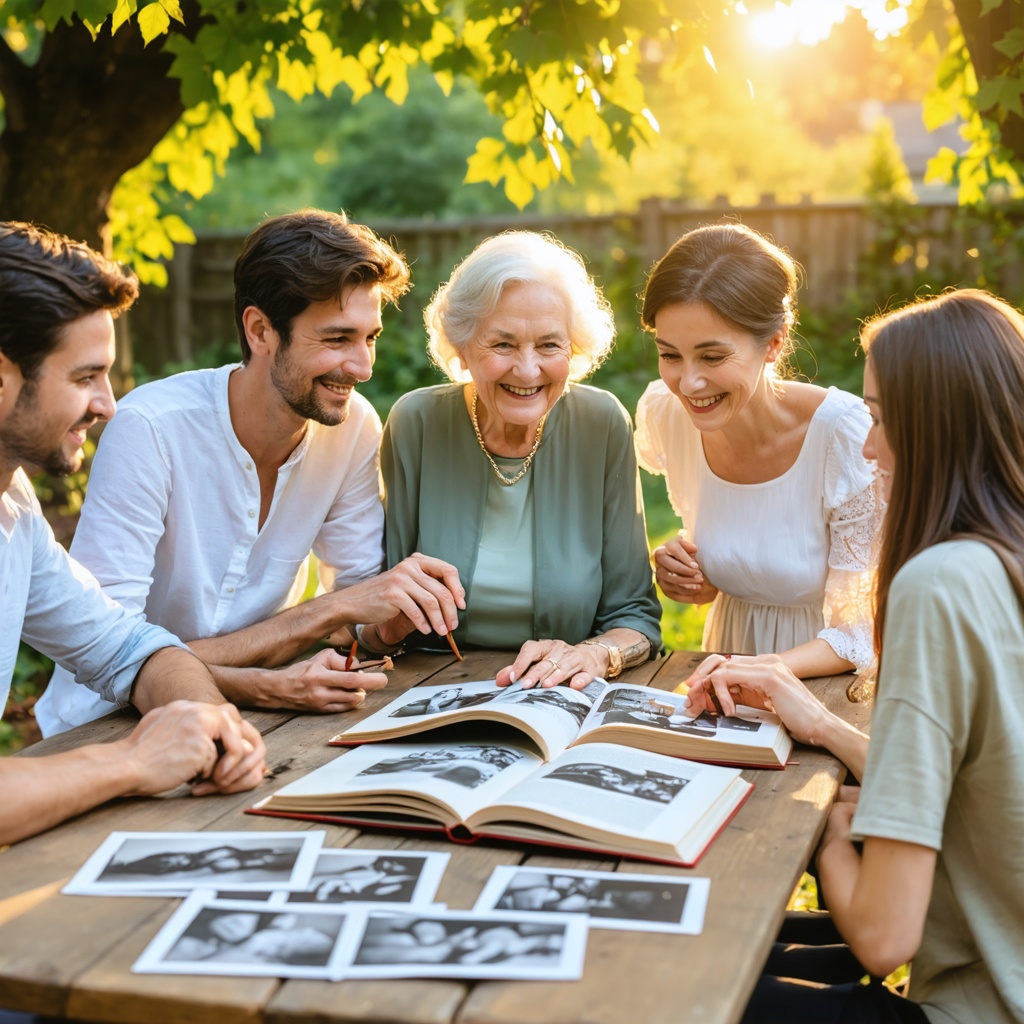 Image by RM AI
I Took a DNA Test for Fun — What I Discovered Shattered Everything I Knew About My Family
The Unwanted Gift That Changed Everything
I never thought much about my ancestry or family history. Growing up, I was just another kid in a loving family with two parents who seemed to adore me and, later, my younger siblings who came along.
Our family photos showed the same nose passed down through generations, the same crinkle around the eyes when we smiled. I had my dad's height and my mom's curly hair—or so everyone said.
So when I received one of those DNA testing kits during a gift exchange at work, I tossed it into my closet without much thought. What was the point?
I already knew who I was: just another Smith from Ohio with the predictable mix of European ancestry that made up most of middle America.
Little did I know that this forgotten gift would soon unravel the carefully constructed reality I had lived in for twenty-eight years.
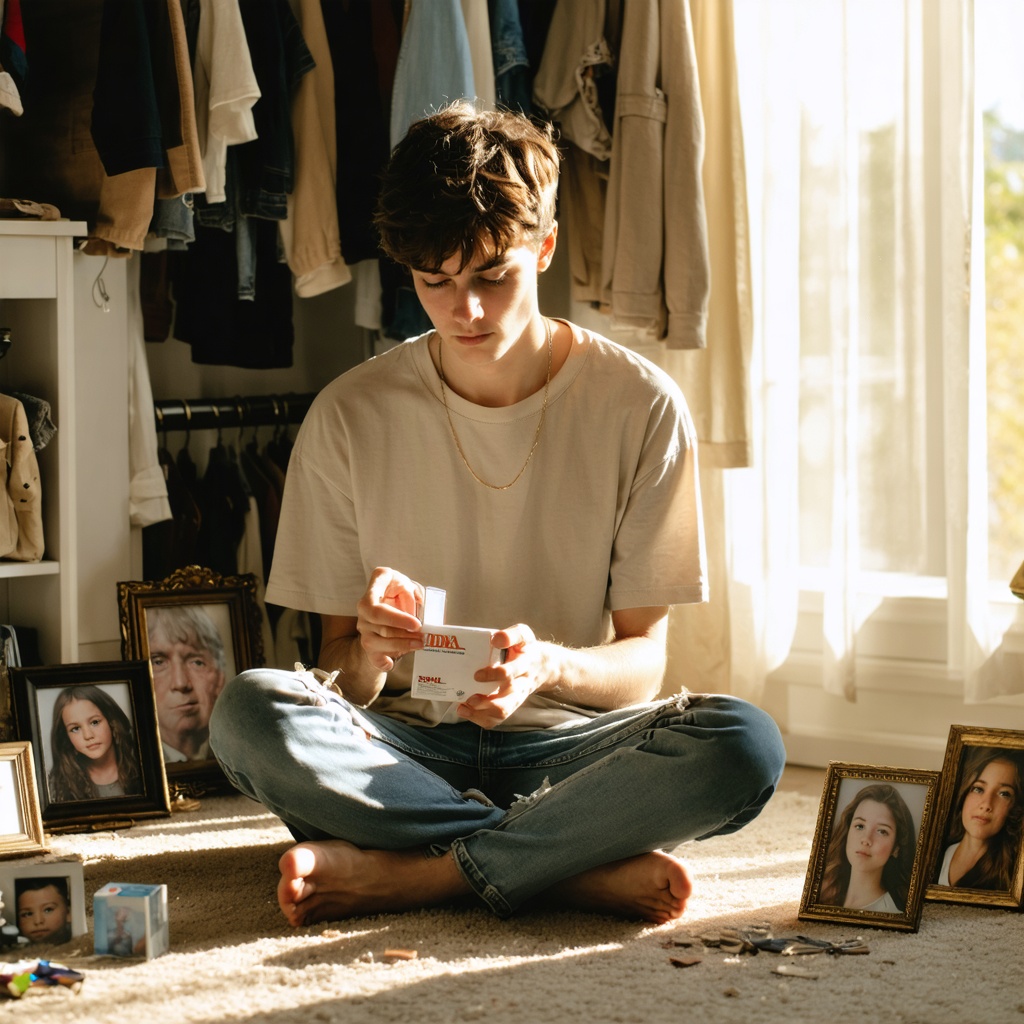 Image by RM AI
Boredom Leads to Life-Altering Discoveries
Six months later, on a particularly uneventful Sunday afternoon, I found myself scrolling mindlessly through social media, fighting the familiar weekend boredom that settles in when you've already binged all your shows and cleaned your apartment twice. Rain tapped against my windows, eliminating any possibility of outdoor activities.
While reorganizing my closet out of sheer desperation for something to do, I rediscovered the DNA kit, still in its cheerful packaging with promises of discovering your 'true self' emblazoned across the front. I laughed at the marketing—as if some spit in a tube could tell me anything about myself that I didn't already know.
On a whim, I decided to finally open it. What harm could come from confirming what I already knew?
I followed the instructions, spat into the little tube, sealed it up, and sent it off, promptly forgetting about it as life moved on. I had no idea I had just set in motion a series of events that would completely shatter the foundation of my identity.
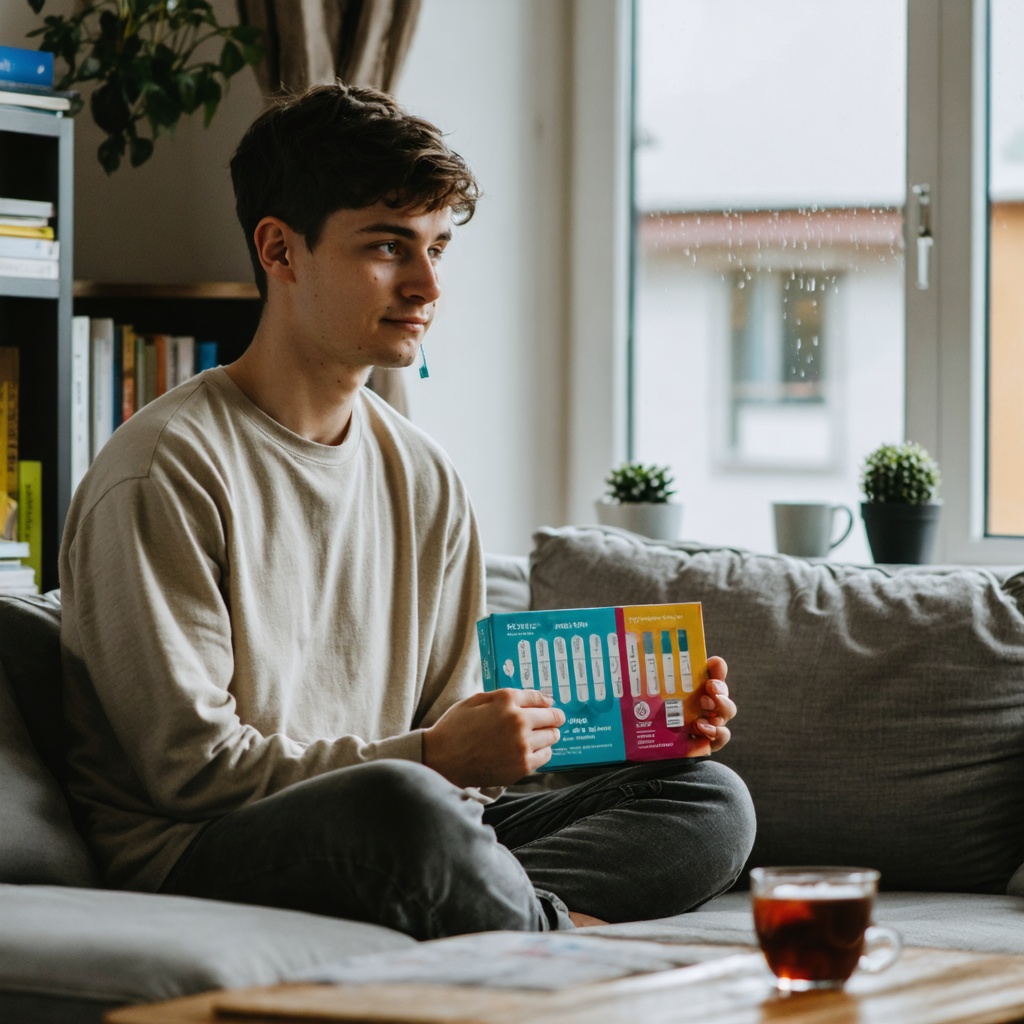 Image by RM AI
The Email That Changed Everything
Weeks later, I was in the middle of a particularly boring conference call when my phone buzzed with an email notification. 'Your DNA Results Are Ready!' the subject line announced with far too many exclamation points.
I opened it immediately, grateful for any distraction from the droning voice discussing quarterly projections. As I clicked through to view my results, I expected to see the predictable breakdown:
Mostly European, perhaps with a small percentage of something unexpected to make for interesting dinner conversation. Instead, what loaded on my screen made no sense at all.
According to this report, I was predominantly East Asian with significant South Asian markers. There wasn't a trace of the Northern European ancestry that should have dominated my genetic makeup based on my family history.
I stared at the colorful pie chart, waiting for my brain to make sense of what I was seeing. This had to be a mix-up—someone else's results sent to my account.
It was the only explanation that made any logical sense.
 Image by RM AI
Surely This Must Be a Mistake
I laughed it off initially, taking screenshots to share with friends about the ridiculous error this company had made. How could they mess up something so basic?
I imagined my actual results sitting in someone else's inbox, probably causing just as much confusion. I drafted a polite but firm email to customer service, explaining that they had clearly sent me the wrong results and requesting that they correct the error.
I even attached a family photo as evidence—me standing between my very obviously Caucasian parents at my college graduation. The response came back surprisingly quickly, within hours rather than the days I had expected.
'We understand your confusion,' the email began professionally, 'but we assure you, based on the sample you provided, these findings are correct. Our testing procedures include multiple verification steps to prevent sample mix-ups.' They went on to explain their quality control process in technical detail, as if scientific jargon would somehow make me accept results that were clearly impossible.
 Image by RM AI
Denial Gives Way to Doubt
I read the email three times, my initial amusement fading with each pass. Something cold and unsettling began to form in the pit of my stomach.
I found myself studying my own features in my phone's reflection—features I had always attributed to my parents. Was my nose really shaped like my father's?
Did I actually have my mother's eyes, or had I just convinced myself of these similarities after years of hearing relatives comment on them at family gatherings? I shook my head, trying to dislodge these ridiculous thoughts.
There had to be a logical explanation. Maybe the test was flawed.
Maybe the company's database was skewed. I decided to call my mom—she would laugh about this with me, maybe suggest I try a different company just to prove how wrong these results were.
I dialed her number, already rehearsing the funny way I would tell this story. The phone rang three times before she picked up, her familiar voice instantly comforting.
'Mom, you won't believe this crazy mix-up,' I began, forcing a laugh that sounded hollow even to my own ears.
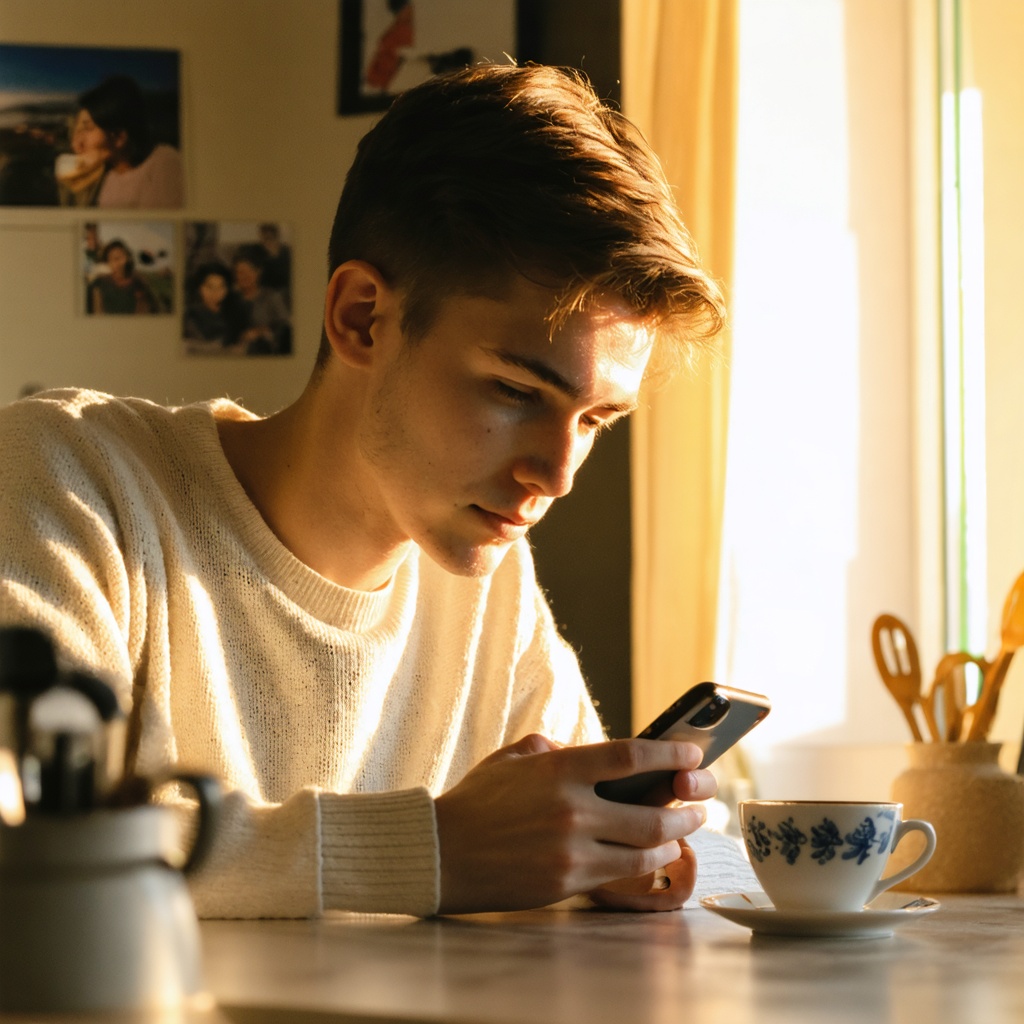 Image by RM AI
The Silence That Said Everything
I explained about the DNA test and the ridiculous results, waiting for her to join in my disbelief. But instead of the immediate laughter or indignation I expected, there was only silence on the other end of the line.
A silence so profound and heavy that it seemed to stretch across the miles between us and wrap around my chest, making it difficult to breathe. 'Mom?' I prompted, my voice suddenly small and uncertain.
I could hear her breathing, slightly uneven, and in the background, the muffled sound of what might have been my father asking a question. 'Are you there?' I asked, a new note of panic creeping into my voice.
Something was wrong. Very wrong.
The silence continued for what felt like an eternity but was probably only seconds. When she finally spoke, her voice was different—tight and controlled in a way I had rarely heard before.
'There's something I need to tell you,' she said quietly. 'Something your father and I should have told you a long time ago.' In that moment, before she had even explained, I knew.
Some deep, instinctive part of me recognized that everything was about to change.
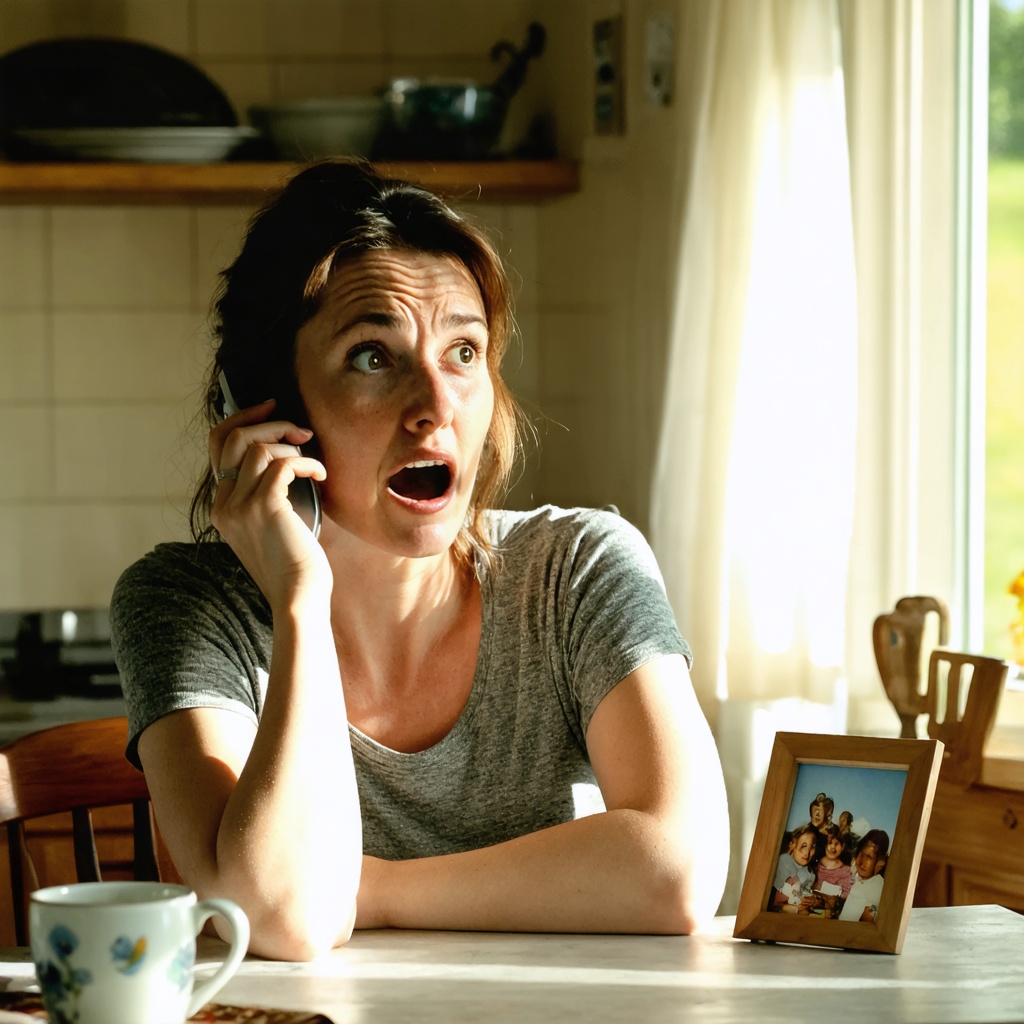 Image by RM AI
The Truth Comes Crashing Down
My mother's voice trembled as she began to speak, each word carefully chosen as if she had rehearsed this conversation many times in her head. 'You were three days old when you came into our lives,' she said, and I felt the room tilt around me.
I sank onto my couch, gripping the phone so tightly my knuckles turned white. She continued, her words washing over me in waves that I could barely process.
I was left at a fire station in the middle of the night, wrapped in a blanket with no note, no explanation—just a tiny baby abandoned in the cold. My father—the man I had called Dad my entire life—was the firefighter on duty who found me.
He and my mother had been trying to have children for years without success. They had just begun considering adoption when I literally appeared on their doorstep.
It seemed like fate, she said. They fell in love with me instantly.
The words kept coming, but they seemed distant now, as if she were speaking from the bottom of a well. Something about emergency foster care that became permanent adoption.
Something about how they had always planned to tell me but could never find the right time.
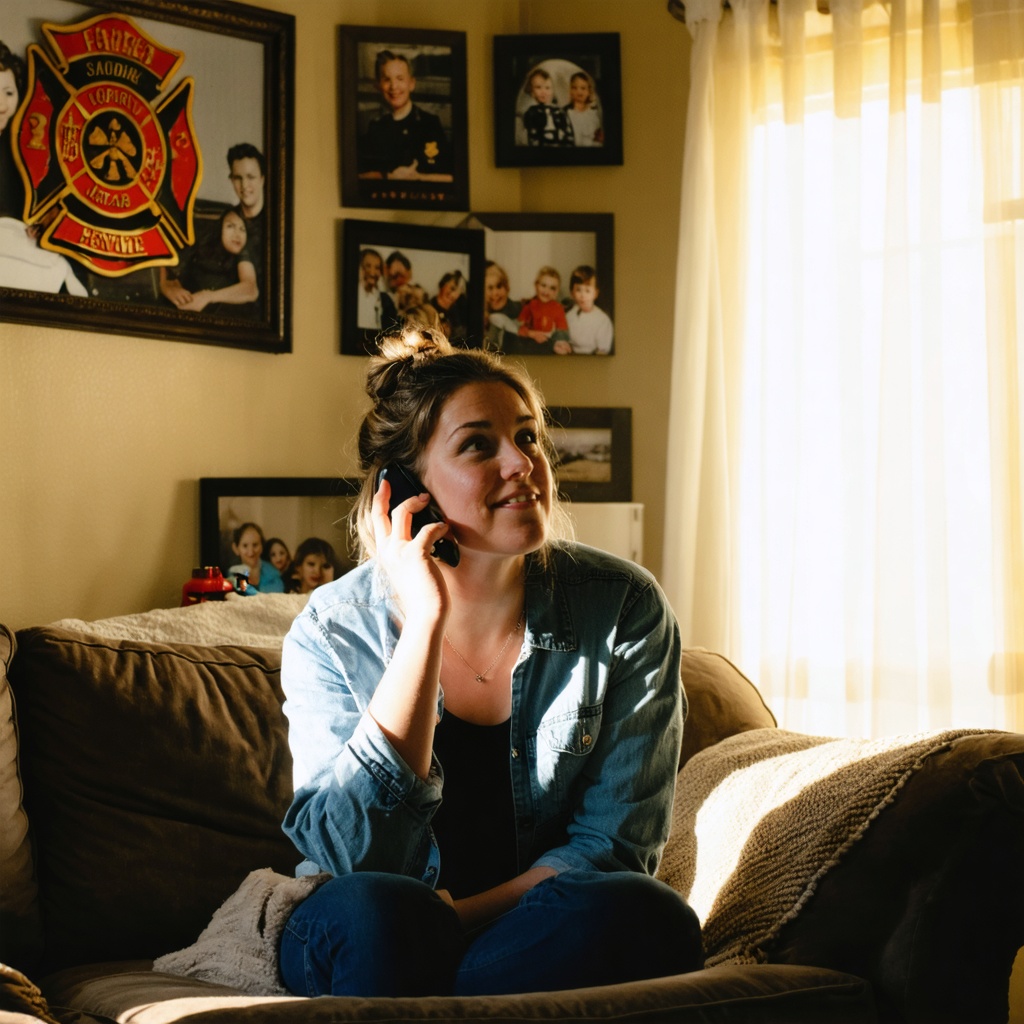 Image by RM AI
A Lifetime of Unintentional Deception
As my mother continued her explanation, fragments of memories began to rearrange themselves in my mind. The family photo albums that mysteriously had no pictures of my birth or my mother pregnant with me.
The jokes about how I must have gotten my musical ability from a distant relative since neither of my parents could carry a tune. The strange comments from my grandmother about how I was their 'miracle baby.' It all made sense now, in the most painful way possible.
'When your brother and sister were born a few years later,' my mother was saying, 'you all looked so much alike. You have the same mannerisms, the same smile.
People always commented on how strong the family resemblance was. After a while, it just seemed...
unnecessary to explain. You were ours in every way that mattered.' Her voice broke on these last words, and I could hear that she was crying now.
I should have felt something—anger, betrayal, grief—but instead, there was only numbness, as if my emotions had short-circuited from overload. 'Why are you telling me now?' I finally managed to ask, my own voice sounding strange and distant to my ears.
 Image by RM AI
The Weight of Good Intentions
My mother's answer came through her tears, a mixture of regret and justification that I would come to recognize in the difficult conversations that followed. 'We thought the truth would only do more harm than good,' she admitted.
'You were so happy, so secure in who you were. We didn't want to disrupt that or make you feel different from your siblings.' She paused, and I could almost see her wiping away tears with the back of her hand, the way she always did when upset.
'But I've always wondered if we made the right choice. There were so many times I almost told you...' Her voice trailed off, leaving the sentence unfinished.
I sat in my apartment, surrounded by photos of family vacations and holiday gatherings—moments that now felt like scenes from someone else's life. The silence stretched between us again, filled with twenty-eight years of unspoken truths.
I had a thousand questions, but they were all tangled together in my mind, impossible to separate into coherent thoughts. Who was I really?
Where did I come from? Why was I abandoned?
And perhaps most troubling: if this fundamental truth about my existence had been hidden from me, what else didn't I know?
 Image by RM AI
The Stranger in the Mirror
After hanging up with my mother, I walked to the bathroom in a daze and stood before the mirror, studying my reflection with new eyes. The face looking back at me was suddenly unfamiliar—a collection of features that belonged to unknown people, genetic strangers who had contributed to my existence and then disappeared.
I traced the shape of my eyes, the curve of my cheekbones, searching for clues to my origins. According to the DNA test, I was predominantly East Asian—likely Chinese or Korean—with South Asian ancestry as well.
I had always identified as white because that's what my family was, what my community was. I had never questioned it, never had reason to.
Now, I wondered how I had never seen what should have been obvious. Had I been so eager to belong that I had blinded myself to the truth?
Or had I simply accepted the reality presented to me, the way children do? I splashed cold water on my face, hoping the shock would somehow reset my brain, make this all make sense.
But when I looked up again, dripping water onto the counter, nothing had changed. I was still the same person I had always been, except now I understood that person was a stranger.
 Image by RM AI
The Questions That Haunt the Night
Sleep eluded me that night as questions circled endlessly in my mind. Who were my biological parents?
Were they still alive? Did I have siblings somewhere—people who shared my DNA, my actual heritage?
What circumstances had led them to leave a newborn at a fire station in the middle of the night? Had it been an act of desperation or abandonment?
I created countless scenarios in my head: young parents overwhelmed and unable to care for a child;
a mother in crisis with no support; immigrants afraid of deportation;
a family facing financial ruin. Each possibility led to more questions, more scenarios, more imagined faces that might share my features.
Around 3 AM, I found myself scrolling through the DNA testing website again, this time exploring a feature I had overlooked before—the option to connect with genetic relatives who had also taken the test. My finger hovered over the button that would opt me in to this service.
Did I want to know? Was I ready to potentially connect with biological family members who might not even know I existed?
What would that mean for my relationship with the family who had raised me, loved me, and in their own misguided way, tried to protect me from exactly this kind of identity crisis?
 Image by RM AI
The Morning After Revelation
Morning arrived with no answers, just the harsh reality that I needed to somehow continue with normal life while processing this seismic shift in my understanding of myself. I called in sick to work, unable to imagine sitting through meetings and making small talk as if my entire world hadn't just been upended.
My phone buzzed repeatedly with texts from my parents—both of them now, checking in, asking if I was okay, if I wanted to talk more. I couldn't bring myself to respond yet.
What was there to say? Thank you for loving me?
I'm angry you lied? I don't know who I am anymore?
All of these feelings swirled together, impossible to separate or express coherently. Instead, I made coffee and sat by my window, watching strangers pass by on the street below.
How many of them, I wondered, were carrying secrets about their identities? How many families held truths that could shatter someone's sense of self?
The world looked different now, as if the revelation about my own life had pulled back a curtain on the complexity of human experience. Nothing was as simple or straightforward as it appeared—not family, not identity, not even the story of how we come into this world.
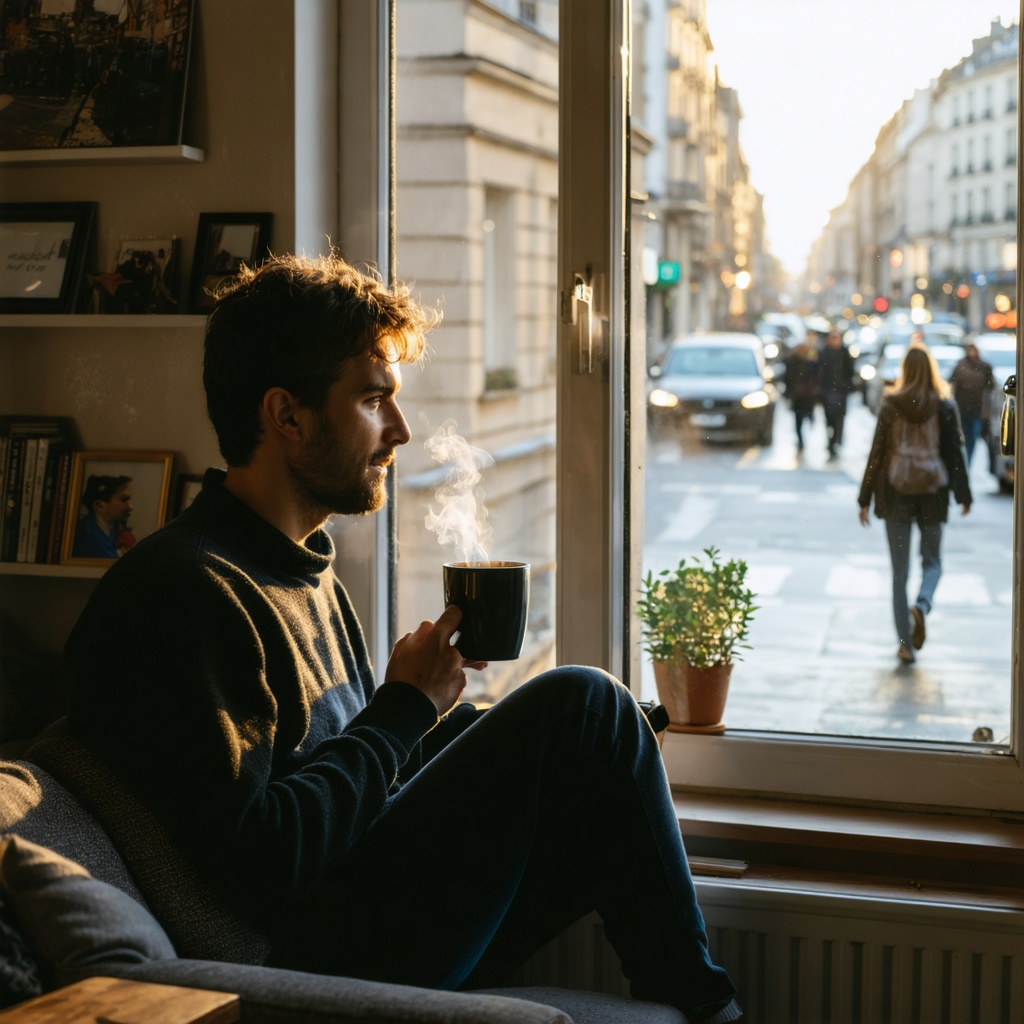 Image by RM AI
The Siblings Who Never Knew
By mid-afternoon, I had gathered enough emotional strength to call my younger brother and sister. They deserved to hear this from me rather than from our parents.
My brother answered on the second ring, his voice cheerful and oblivious to the bomb I was about to drop on our shared reality. 'Hey, what's up?' he asked, and for a moment I almost lost my nerve.
How do you tell someone that the sibling relationship they've never questioned is built on a foundation of half-truths? I took a deep breath and just said it, as gently as I could.
The silence that followed was different from my mother's—not guilty or fearful, but genuinely shocked. 'That's...
that's not possible,' he finally said. 'We look alike.
Everyone always says so.' My sister's reaction, when I conference-called her in, was similar: disbelief followed by confusion, then a flood of questions I couldn't answer.
They had never known, had never been part of the deception. In their minds, I was simply their older sibling, the one who had taught them to ride bikes and helped with homework and teased them mercilessly as all good siblings do.
The realization that they had been kept in the dark too was strangely comforting—we were all processing this new reality together.
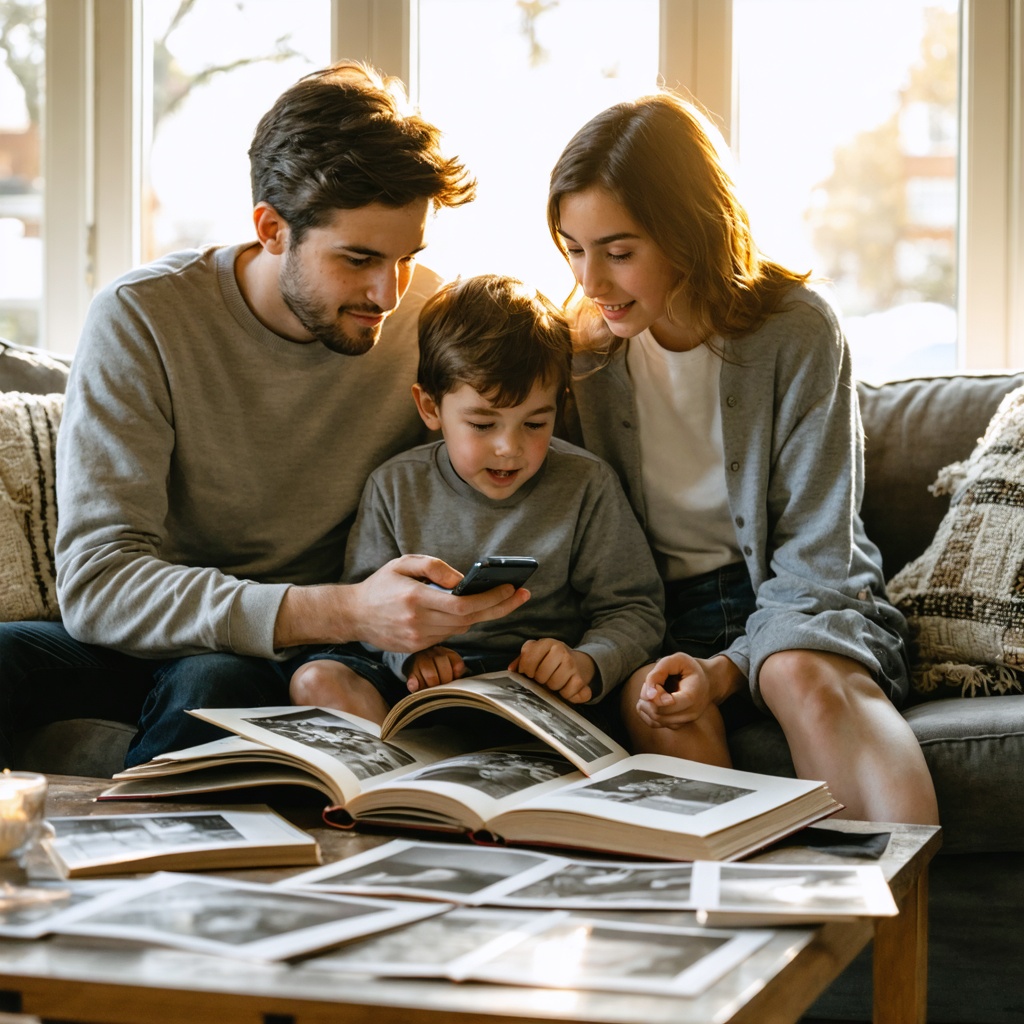 Image by RM AI
The Family Meeting That Couldn't Wait
My parents suggested we wait until the weekend for a family meeting, but I couldn't bear the thought of days passing with this unresolved tension hanging between us. I needed answers now, not carefully prepared explanations after they'd had time to decide what to tell me and what to continue hiding.
So that evening, I drove the forty minutes to my childhood home, the familiar route now feeling like a journey into unknown territory. My siblings had insisted on being there too, united in our need for the complete truth.
Walking up the driveway where I had learned to ride a bike, past the tree I had fallen from and broken my arm at age nine, through the front door I had slammed during countless teenage arguments—it all felt surreal now, like visiting a movie set of my life rather than the actual place where I had grown up. My parents were waiting in the living room, looking smaller and older than I remembered, their faces etched with worry and regret.
The family photos that lined the walls seemed to watch us accusingly as we all sat down, the weight of unspoken truths making the air heavy and difficult to breathe.
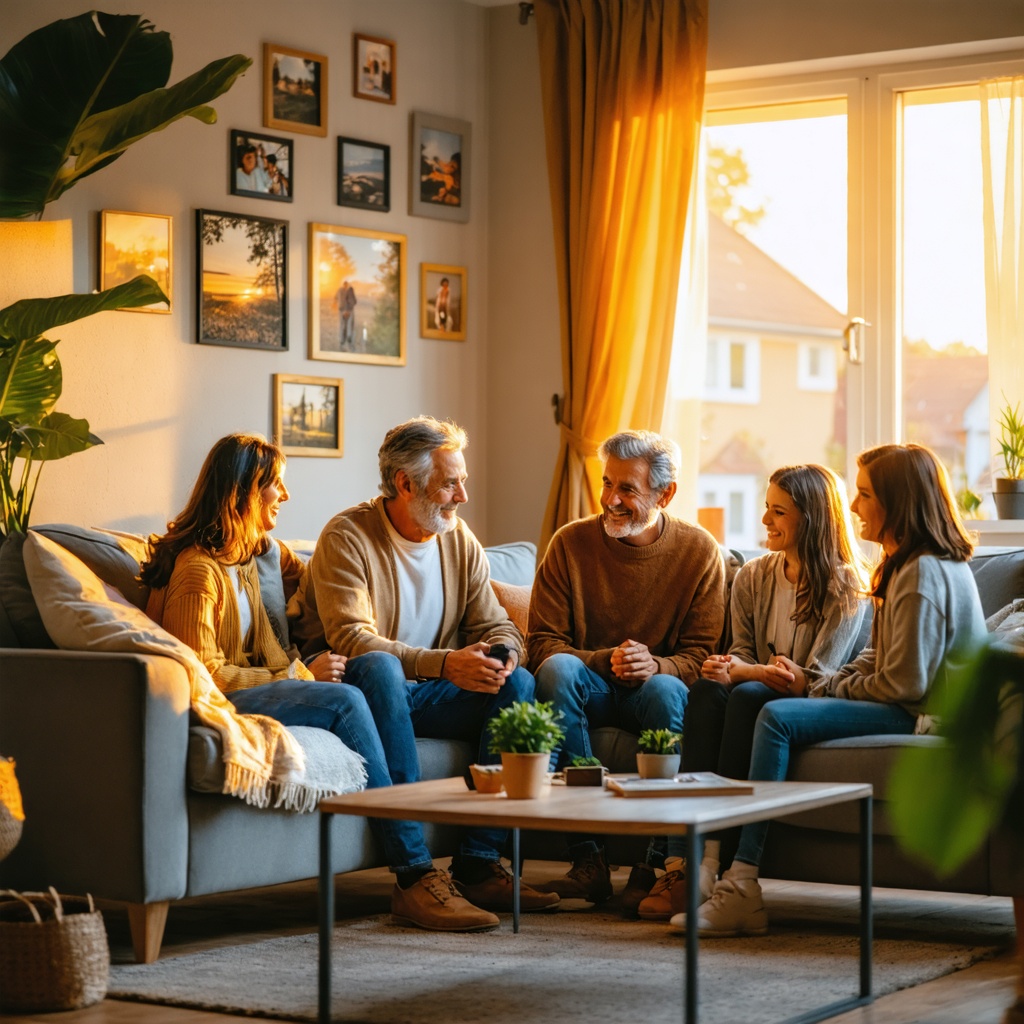 Image by RM AI
The Full Story Finally Emerges
My father—I still couldn't think of him any other way despite everything—was the one who finally broke the tense silence. His voice, usually so confident and steady, wavered as he began to tell the story from the beginning.
It was a cold February night, he explained, when the station's alarm system indicated that someone had opened the external safe haven door where people could legally surrender infants. He was the first to respond, expecting to find the usual—a baby with a note, perhaps some medical information.
Instead, he found me: a tiny three-day-old infant with no information at all, not even a name.
I was healthy but hungry, with a full head of dark hair and what he described as 'the most serious expression I'd ever seen on a baby.' He and the other firefighters had cared for me until social services arrived, but something about me had already worked its way into his heart. 'I called your mother from the station,' he said, his eyes fixed on some point in the past.
'I told her I had found our baby. She thought I was crazy, but she came down anyway.
And when she held you...' He looked at my mother, who nodded through her tears. 'We just knew,' she finished for him.
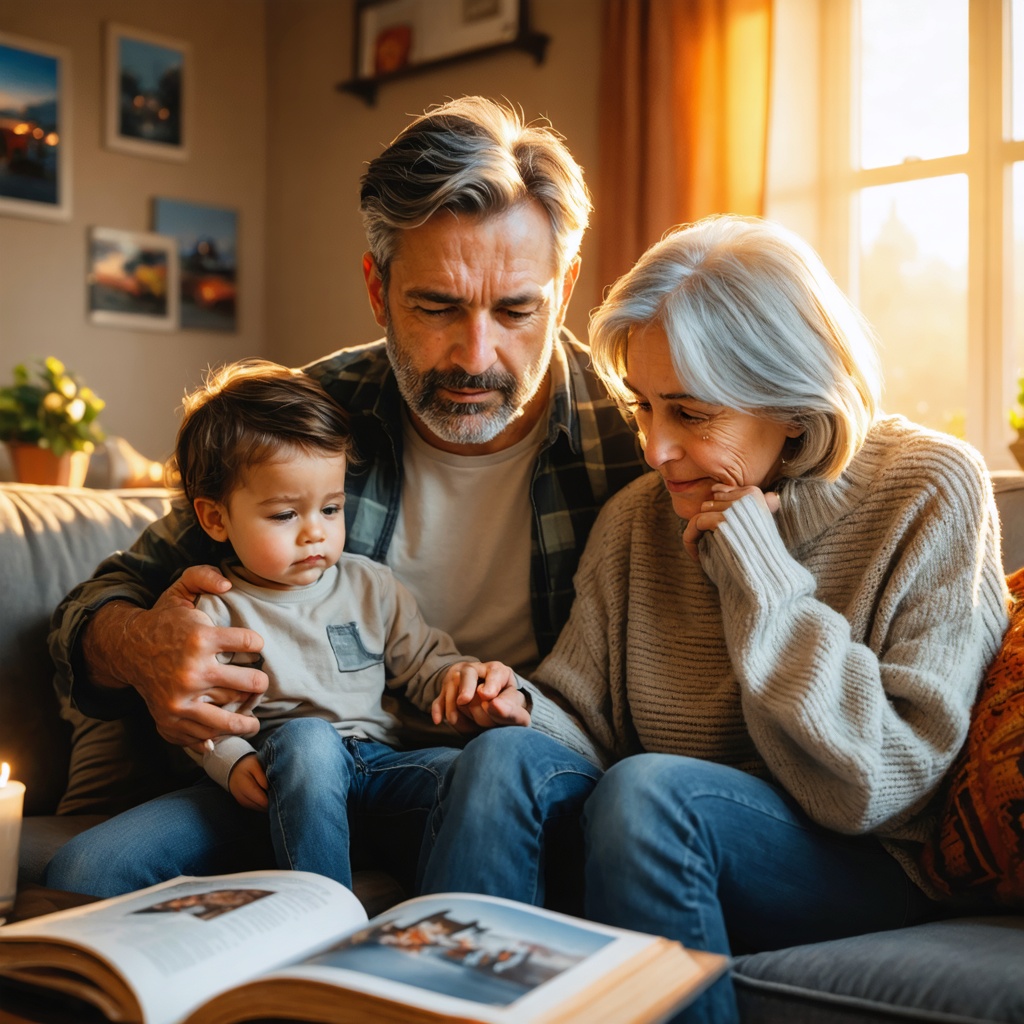 Image by RM AI
The Legal Gray Areas of Love
What followed was a complicated story of emergency foster care, expedited adoption proceedings, and what my parents euphemistically called 'administrative shortcuts.' My father's position as a respected firefighter and my mother's connections through her work at the county clerk's office had apparently smoothed a path that might otherwise have been much more difficult. There were forms that were processed unusually quickly, background checks that were given priority, home studies that were conducted by friendly social workers.
'We were afraid,' my mother admitted, 'that if we didn't move quickly, you would be placed in the system and we might lose you.' I listened with growing unease, realizing that my adoption might not have followed all the proper legal channels. Had corners been cut?
Rules bent? The implications were troubling, raising questions about whether someone had been looking for me, whether proper efforts had been made to locate my biological family before I was placed for adoption.
My siblings exchanged glances, clearly thinking the same thing. Our parents had always been so strict about following rules, about honesty and integrity.
This revelation about administrative shortcuts and expedited processes showed a side of them we had never seen—people willing to bend rules and leverage connections when it served their purposes.
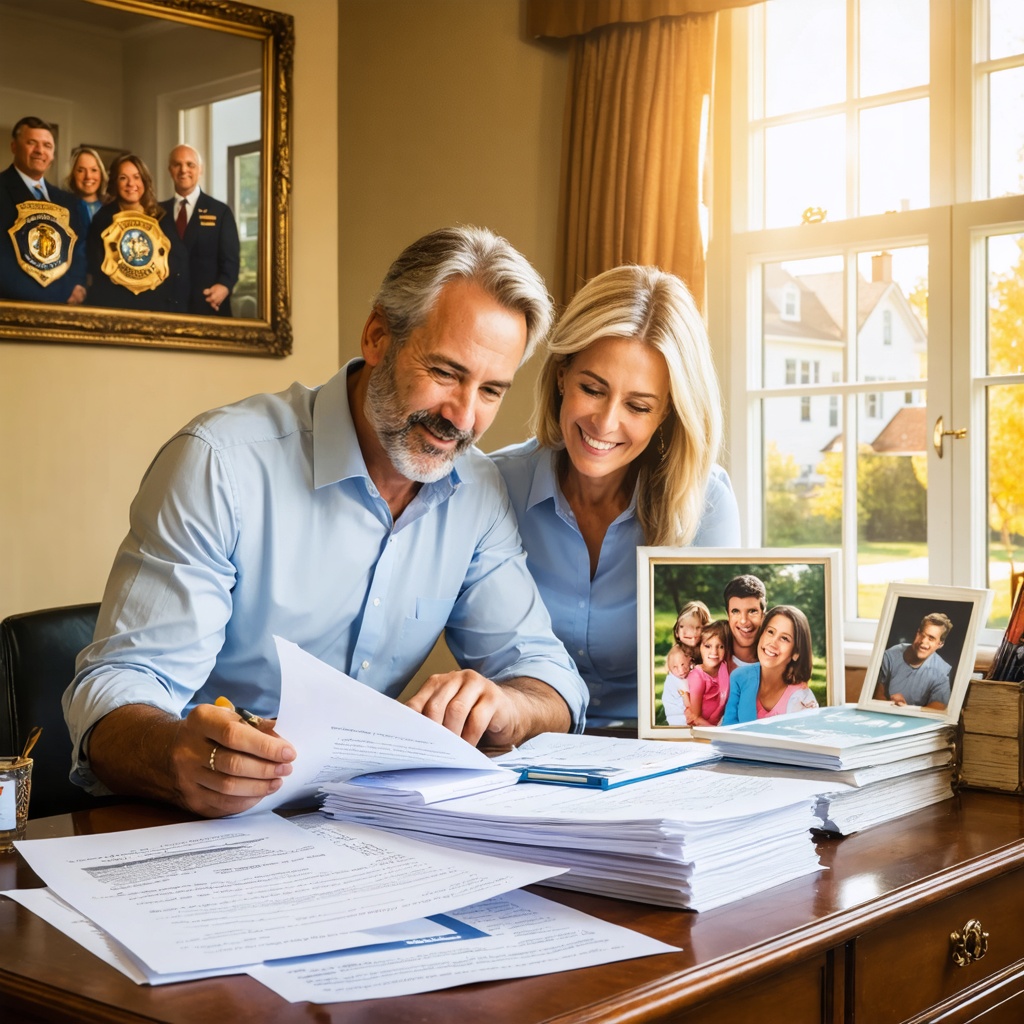 Image by RM AI
The Birth Certificate Revelation
My mother left the room briefly and returned with a folder I had never seen before. From it, she withdrew my original birth certificate—not the amended one I had used all my life, but the first one, created before my adoption was finalized.
The space for 'Mother's Name' and 'Father's Name' were both blank, with 'Unknown' typed neatly in their place. My time of birth was listed as 'Approximately 2:00 AM' and my date of birth had been estimated by the hospital staff who had examined me after I was found.
Even my name—the name I had answered to my entire life—wasn't there. Instead, I was listed simply as 'Baby Doe.' I stared at this document, this official record of my earliest existence, and felt a profound sense of emptiness.
I had begun as a blank slate, a human being with no history, no context, no name. My entire identity had been assigned to me after the fact, created by the people sitting across from me now.
They had given me a name, a birthday celebration (one day off from the estimated date, I now realized), a family history, a sense of belonging. They had filled in all the blanks with their love and care, but also with their fiction.
I looked up from the birth certificate to find all of them watching me anxiously, waiting for my reaction.
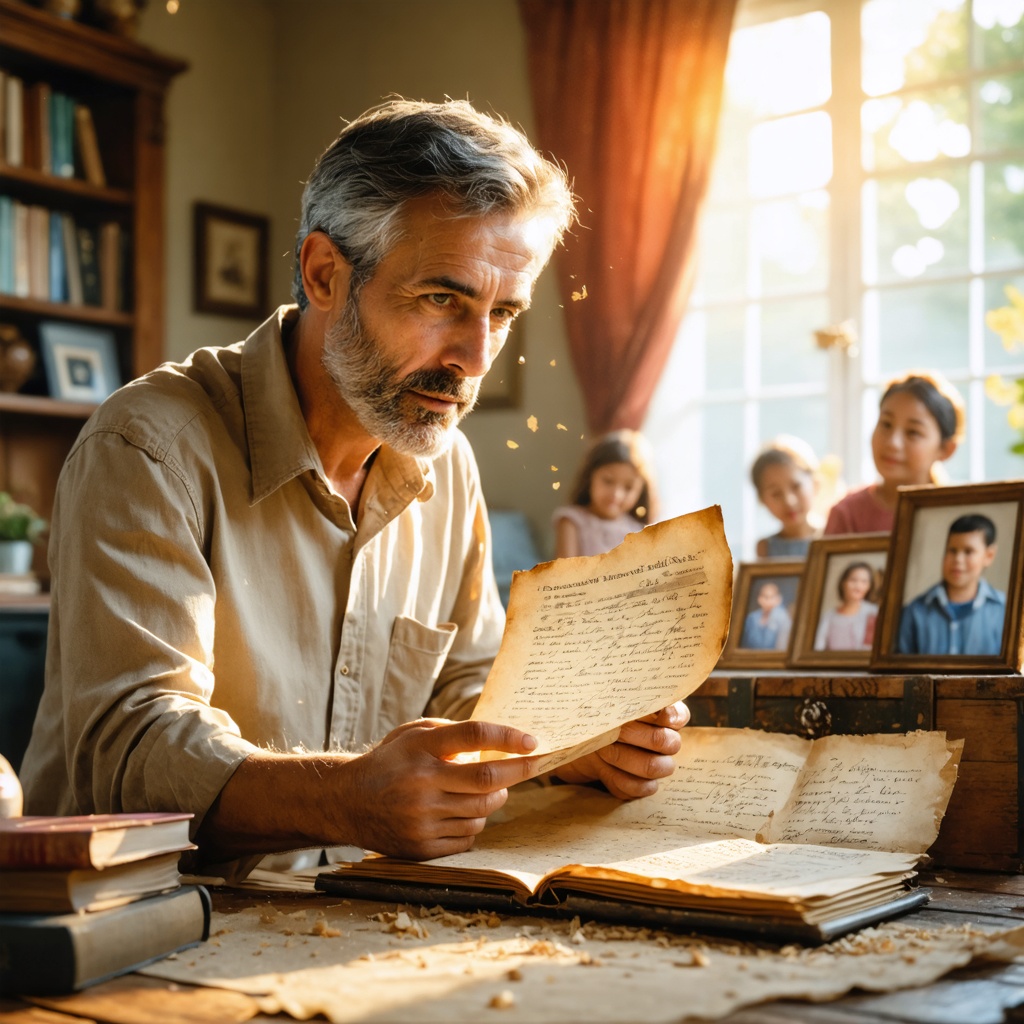 Image by RM AI
The Search for Biological Origins Begins
In the days that followed that difficult family meeting, I found myself drawn deeper into the mystery of my origins. The DNA test had provided some broad strokes—my ethnic background, some distant genetic cousins (fourth or fifth removed, none who seemed to know anything about a baby given up in the early 1990s)—but the specifics remained elusive.
I requested my full adoption file from the county, only to discover that as a safe haven baby, there was very little information to be had. No names, no medical history, not even a description of whoever had left me at the fire station.
The security camera that might have captured something had been broken that night—a coincidence that now seemed suspicious given everything else I had learned. Had someone known about the camera?
Had they chosen that particular fire station for a reason? I found myself studying the faces of Asian people I passed on the street, wondering if any of them might be related to me.
I downloaded every DNA matching app available, uploaded my results everywhere I could, hoping for a closer match than the distant cousins I had found so far. Each night I fell asleep scrolling through forums for adoptees searching for biological families, reading success stories and heartbreaks alike.
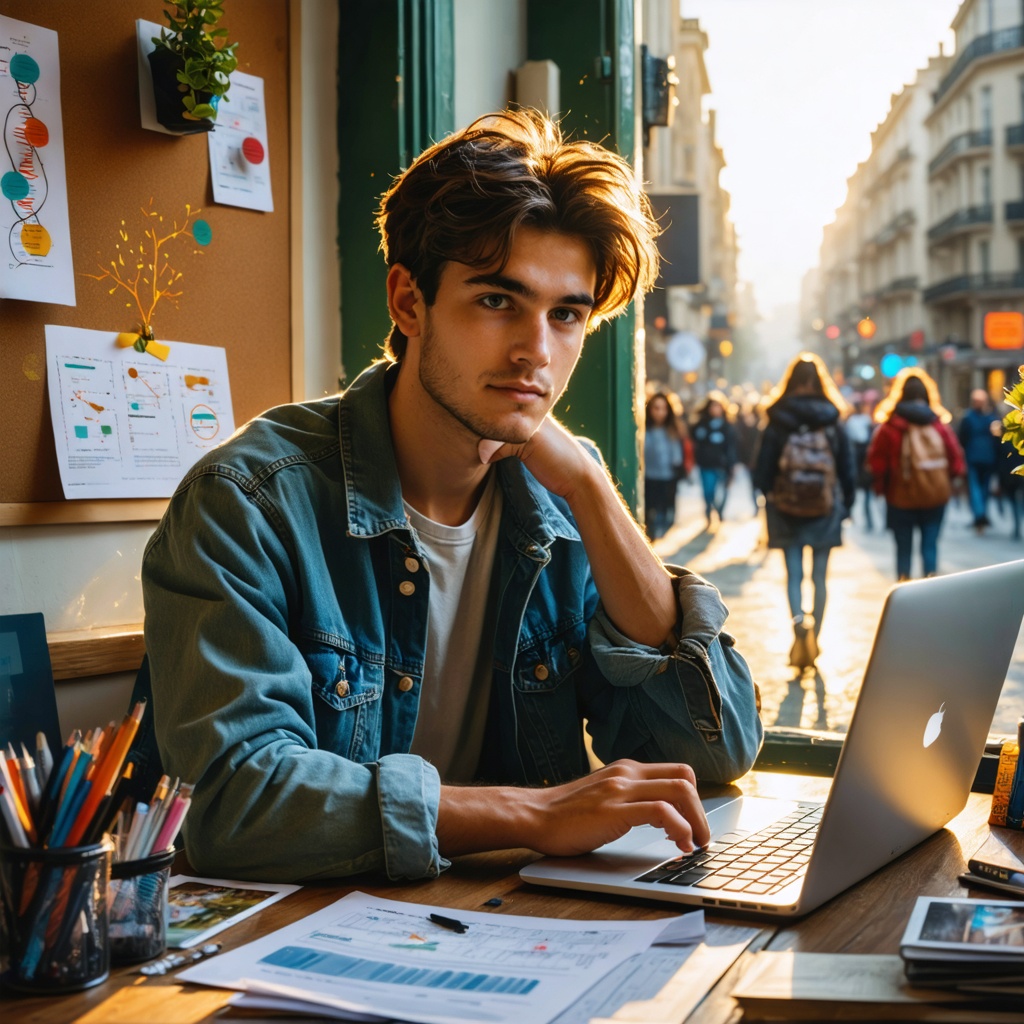 Image by RM AI
The Unexpected Support System
What surprised me most during those first few weeks of searching was the unexpected support system that emerged around me. My siblings, after their initial shock, became my most dedicated research assistants.
My brother, always the tech-savvy one, helped me navigate the various DNA databases and ancestry forums. My sister, with her meticulous attention to detail, created spreadsheets tracking every possible lead and connection.
Even my parents, despite their obvious fear that finding my biological family might somehow diminish my connection to them, provided what information they could about the circumstances of my discovery. Friends I hadn't expected to understand became pillars of support—listening without judgment, offering perspectives I hadn't considered, accompanying me to adoption support group meetings when I couldn't face going alone.
My roommate from college, whose mother was Korean, invited me to a Lunar New Year celebration with her family, my first tentative step toward exploring the culture that might be part of my heritage. Colleagues brought books about transracial adoption and identity formation, sharing their own complicated family stories.
It seemed that once I began speaking openly about my situation, hidden complexities in other people's lives came to light as well.
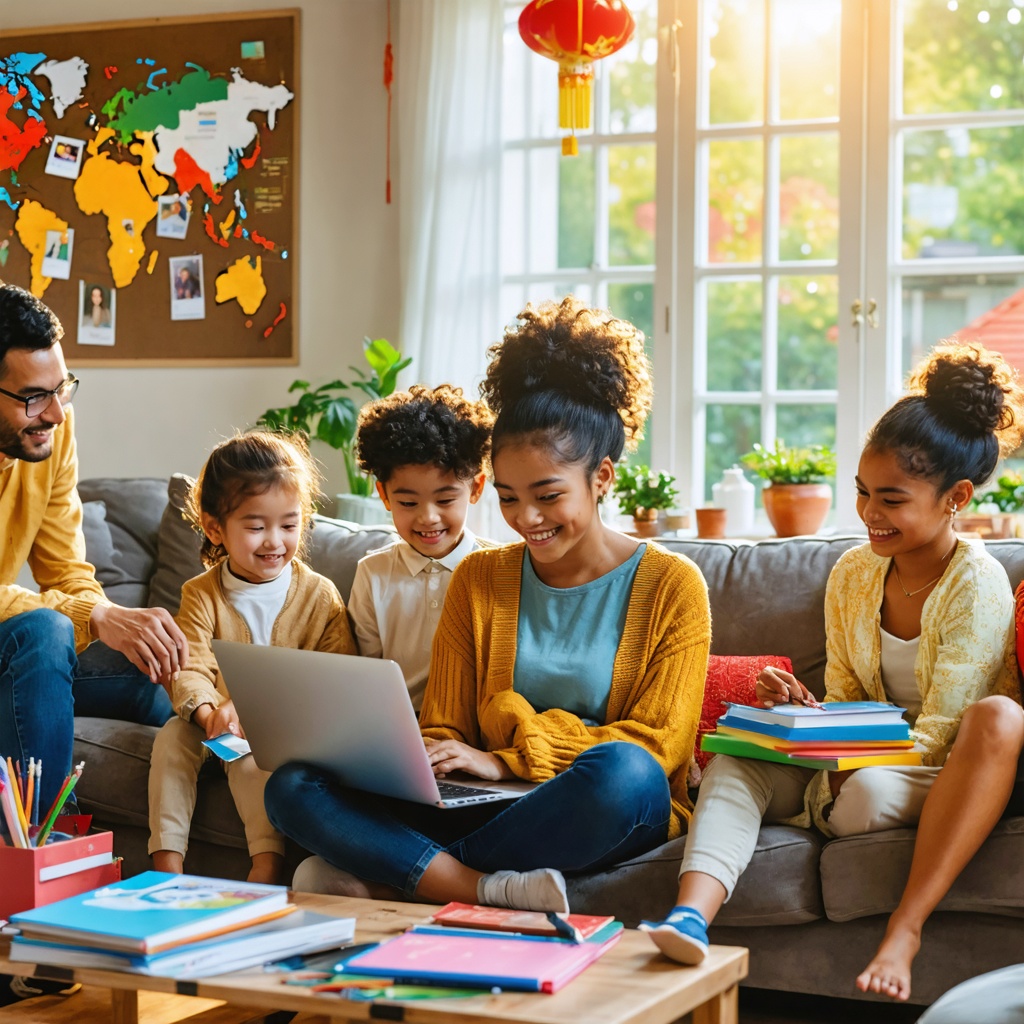 Image by RM AI
The First Solid Lead
The breakthrough came almost two months after I first received my DNA results, through a connection I had almost overlooked. A woman named Elena had appeared in my 'possible relatives' list on one of the DNA sites, estimated as a second or third cousin.
I had messaged her immediately, but weeks had passed with no response, and I had nearly forgotten about her among the dozens of other distant matches I was pursuing. Then, on an ordinary Tuesday evening as I was making dinner, my phone chimed with a notification.
'I think I might know who your birth mother is,' Elena's message began, and my heart nearly stopped. I abandoned the half-chopped vegetables on my cutting board and sank into a chair, hands shaking as I read the rest of her message.
Elena explained that her aunt—her mother's sister—had disappeared for several months in the early 1990s. When she returned, she was different—depressed, withdrawn, never quite the same.
The family suspected she had been pregnant and given up the baby, but no one ever spoke of it directly. The timing matched.
The location matched. And most convincingly, Elena's aunt was Chinese-American, married at the time to a man of Indian descent—a genetic combination that would explain my DNA results perfectly.
I stared at my phone, hardly daring to breathe. After weeks of searching, could this really be it?
Could this woman—this stranger whose name I now knew was Mei Lin—be my birth mother?
 Image by RM AI
The Ethical Dilemma of Truth
Elena's revelation presented me with an ethical dilemma I hadn't fully prepared for. I now had a name, and with some basic internet searching, I quickly found Mei Lin's current address and phone number.
She lived less than a hundred miles away—close enough that I could drive there in a morning. I could show up on her doorstep today if I wanted to.
But should I? According to Elena, Mei Lin had never spoken about having a baby, never acknowledged that period of her life even to her closest family members.
Her marriage had ended shortly after her mysterious absence, and she had never remarried or had other children. She lived quietly, taught piano lessons from her home, and kept largely to herself.
Would my sudden appearance in her life be an act of healing or of violence? Would I be fulfilling my own need for answers at the expense of her carefully constructed peace?
I called my adoptive mother that night, needing her perspective despite the complicated feelings still swirling between us. 'If it were you,' I asked her, 'if a child you had given up appeared at your door thirty years later, would you want to know them?' There was a long pause before she answered, her voice thoughtful.
'I would want to know you were okay,' she said finally. 'But I would be terrified of what you might think of me, of the choices I had made.'
 Image by RM AI
The Letter That Took Days to Write
After much consideration and advice from both family and the adoption support group I had joined, I decided to write to Mei Lin rather than appear unannounced. This approach would give her space to process the information and decide whether she wanted contact with me.
But what does one say in such a letter? How do you introduce yourself to the woman who gave you life and then disappeared from it?
I wrote draft after draft, each attempt feeling either too emotional or too detached, too demanding or too apologetic. I wanted to convey that I wasn't angry, that I understood there must have been compelling reasons for her choice, that I didn't expect anything from her—but also that I desperately wanted to know my story, to understand where I came from, to see if my hands looked like hers or if we shared the same laugh.
After five days of writing and rewriting, I finally produced a letter that felt right. It was simple, honest, and left the door open for whatever level of contact she might be comfortable with.
I included my phone number, email address, and a recent photo of myself. I also enclosed a copy of the firefighter's report from the night I was found—the only official documentation of our connection.
Before I could lose my nerve, I addressed the envelope, affixed a stamp, and walked to the mailbox at the end of my street. As I dropped the letter into the slot, I felt a strange mixture of terror and relief.
The next move was hers.
 Image by RM AI
The Longest Week of Waiting
The week after I mailed the letter to Mei Lin was the longest of my life. Every phone call, every email notification, every knock at the door sent my heart racing.
I imagined countless scenarios: a tearful phone call where she explained everything;
a letter asking me never to contact her again; a surprise visit where we would recognize each other instantly despite never having met as adults.
I tried to prepare myself for all possibilities, including the very real chance that she might simply never respond at all. To distract myself, I threw myself into researching Chinese and Indian culture, watching documentaries, reading books, cooking traditional dishes from both cuisines.
It felt important somehow to connect with these heritages that were suddenly part of my identity, even if I had no lived experience of them. My siblings joined me for an impromptu 'cultural exploration dinner' where we attempted to make dumplings from scratch and failed spectacularly, ending up with misshapen lumps that tasted delicious despite their appearance.
In these moments of laughter and discovery, I found myself thinking that regardless of what happened with Mei Lin, this journey had already changed me in ways I couldn't have anticipated. I was expanding my understanding of myself, creating a new identity that incorporated both my biological origins and the family that had raised me.
 Image by RM AI
The Phone Call That Changed Everything Again
The call came on a rainy Thursday evening, from a number I didn't recognize. I almost didn't answer, assuming it was yet another telemarketer, but some instinct made me pick up at the last moment.
'Hello?' I said, distracted, still half-focused on the TV show I had been watching. There was a pause, and then a woman's voice—soft, slightly accented, hesitant.
'Is this...' she began, and then said my name, the name my adoptive parents had given me. 'Yes,' I replied, suddenly alert, my heart pounding so loudly I was sure she could hear it through the phone.
Another pause, longer this time. I waited, hardly breathing.
'This is Mei Lin,' she finally said. 'I received your letter.' The world seemed to stop in that moment.
After all the searching, all the wondering, all the imagining, here she was—the woman who had carried me, given birth to me, and then left me at a fire station in the middle of the night. My birth mother.
The missing piece of my story. I gripped the phone tighter, searching for words that wouldn't come.
What do you say in such an unprecedented moment? How do you begin a conversation thirty years delayed?
'Thank you for calling,' I managed finally, my voice barely above a whisper. 'I wasn't sure if you would.'
 Image by RM AI
The Voice from the Past
Mei Lin's voice was nothing like I had imagined, yet somehow exactly right—gentle but with an underlying strength, carefully controlled as if she was working hard to keep her emotions in check. 'Your letter was...
unexpected,' she said, each word measured. 'I have thought about you every day for thirty years, but I never thought I would hear from you.' This simple admission—that she had thought of me, remembered me, carried me in her mind all this time—brought tears to my eyes.
Whatever her reasons for leaving me, I had not been forgotten. We spoke cautiously at first, exchanging basic information.
She asked about my life, my education, my work. I told her about growing up in Ohio, about my adoptive parents and siblings, about my current job in marketing.
I carefully avoided any questions that might seem accusatory or demanding, focusing instead on establishing some tentative connection. She volunteered little about herself beyond confirming what Elena had told me—that she taught piano, lived alone, had no other children.
As the conversation progressed, however, I could sense her gradually relaxing, her responses becoming less guarded. When I mentioned my recent attempts at cooking Chinese food, she laughed—a warm, musical sound that resonated through the phone line.
'Perhaps I could teach you properly someday,' she said, and in that tentative offer of a future meeting, I felt a door opening between us.
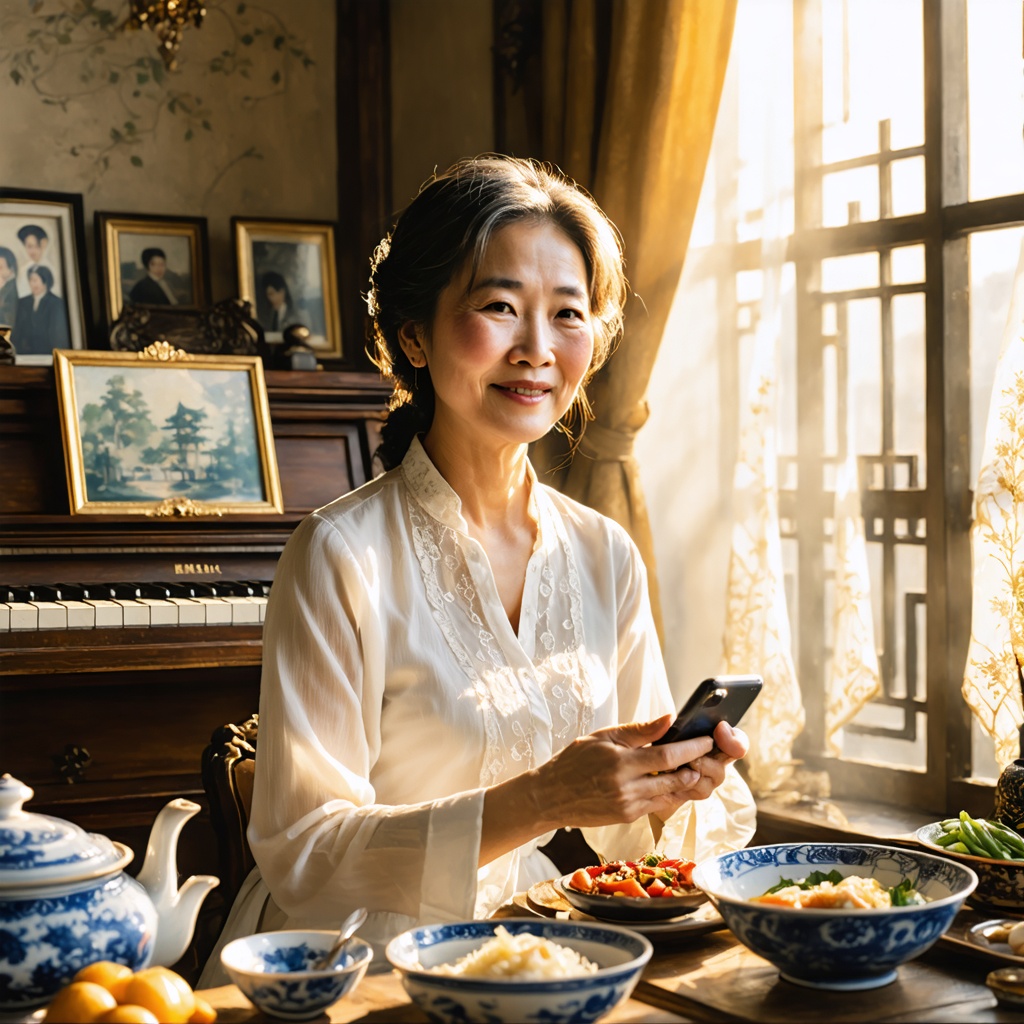 Image by RM AI
The Story Behind the Abandonment
It wasn't until our third phone conversation, nearly two weeks after the first, that Mei Lin finally felt ready to tell me the story of my birth and why she had left me at the fire station. 'I was twenty-two,' she began, her voice taking on a distant quality as she traveled back in time.
'I had come to America for college and met your father—Arjun—in my sophomore year. We fell in love quickly, too quickly.
My parents in China were traditional, disapproved of me dating outside our culture. His family in India felt the same.
But we were young, stubborn, in love.' They had married in secret during their senior year, planning to tell their families once they were established in careers and could prove they had made the right choice. But then Mei Lin had become pregnant—with me—before they were financially stable.
'We were so happy at first,' she said softly. 'Arjun was working two jobs to save money.
I had just started graduate school. We thought we could make it work.' Her voice caught, and I heard her take a deep breath before continuing.
What she told me next explained everything: when she was seven months pregnant, Arjun was killed in a car accident, leaving her alone, grieving, and about to become a single mother in a country where she had no family support.
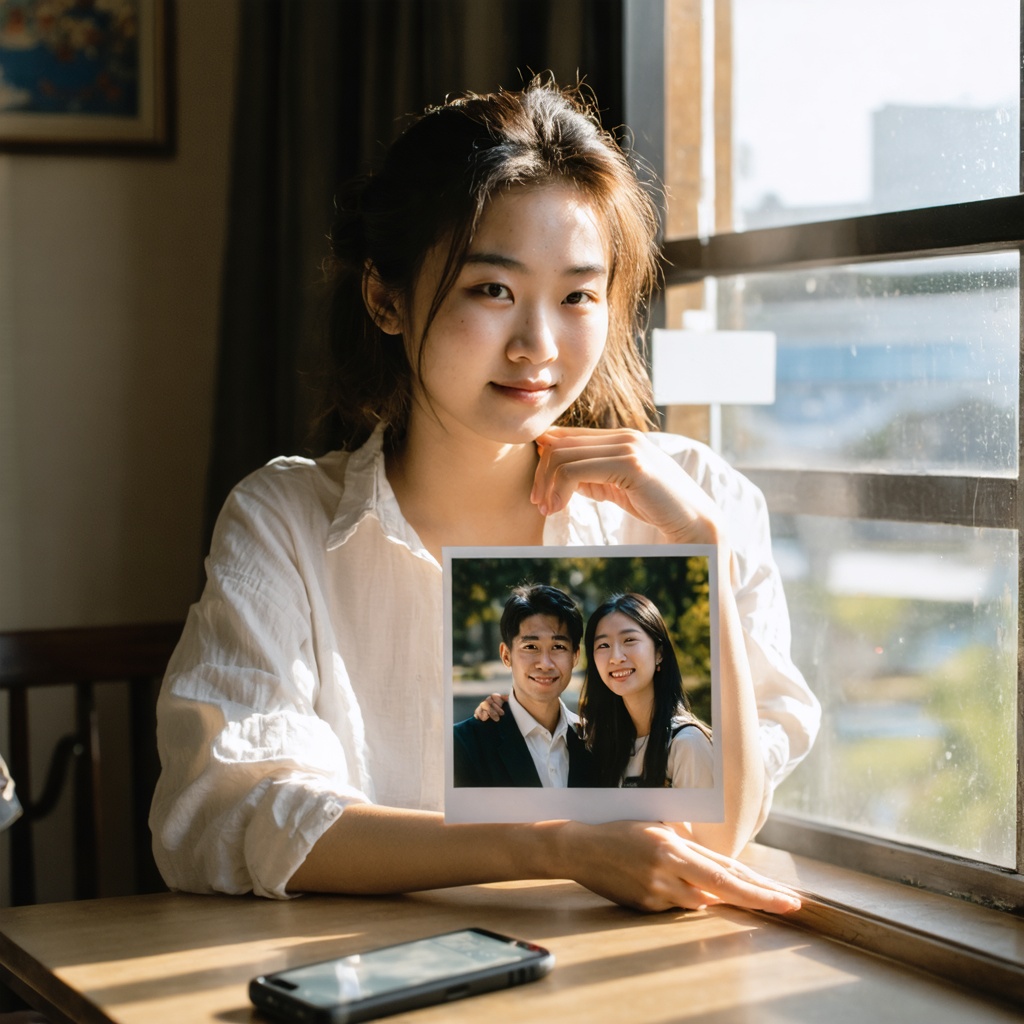 Image by RM AI
The Impossible Choice
Mei Lin's voice grew even quieter as she described the weeks following Arjun's death. She had been devastated, unable to eat or sleep, terrified about the future.
Her student visa was expiring, her parents were pressuring her to return to China, and Arjun's family—who hadn't even known about their marriage—wanted nothing to do with her. 'When you were born,' she said, 'you looked so much like him.
His eyes, his smile. It broke my heart every time I looked at you.' She had tried for three days to care for me alone in the tiny apartment she and Arjun had shared, but overwhelmed by grief, isolation, and postpartum depression, she had reached a breaking point.
'I knew I couldn't give you what you needed,' she explained, her voice thick with tears. 'I was afraid I would hurt you or myself.
I had read about safe haven laws, that firefighters would make sure you found a good home.' The night she left me at the fire station was cold and clear, she remembered. She had wrapped me in Arjun's favorite sweater, kissed my forehead one last time, and placed me in the safe haven box.
'I stood across the street and watched until someone came for you,' she admitted. 'I saw the firefighter pick you up, saw how carefully he held you.
I told myself you would be better off, that someone would love you properly.' After that night, she had spiraled further into depression, eventually being hospitalized briefly before her visa situation forced her return to China.
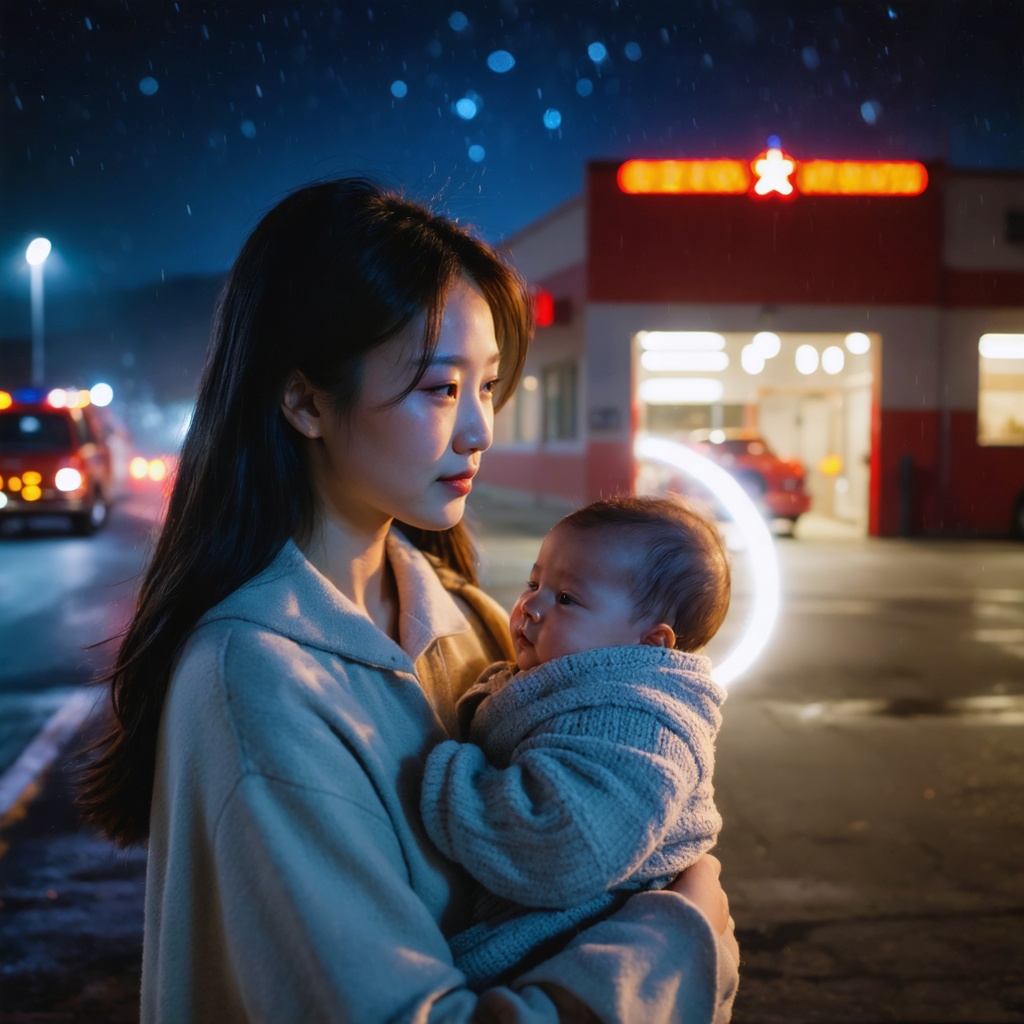 Image by RM AI
The Return and the Silent Years
Mei Lin explained that she had spent five years in China, living with her parents, trying to rebuild her life. She never told them about me or about Arjun's death, allowing them to believe her depression was simply from academic pressure and culture shock.
'In our culture, these things—unmarried pregnancy, giving up a child—bring great shame,' she explained. 'I couldn't bear to disappoint them further.' Eventually, she had managed to return to the United States on a work visa, settling in a different state but gradually making her way back to the area where she had left me.
'I think I always hoped I might see you somehow,' she confessed. 'In a store, on the street.
I would look at children your age and wonder if they were you.' She had never remarried, never had other children. Teaching piano had become her life, her students filling some of the emptiness she carried.
'I told myself you were happy, that you had a family who loved you,' she said. 'But I always wondered if I had made the right choice.' I listened to her story with tears streaming down my face, finally understanding the circumstances that had led to that night at the fire station.
There had been no malice in her actions, no casual abandonment—only a young woman in impossible circumstances, making the hardest decision of her life out of what she believed was love.
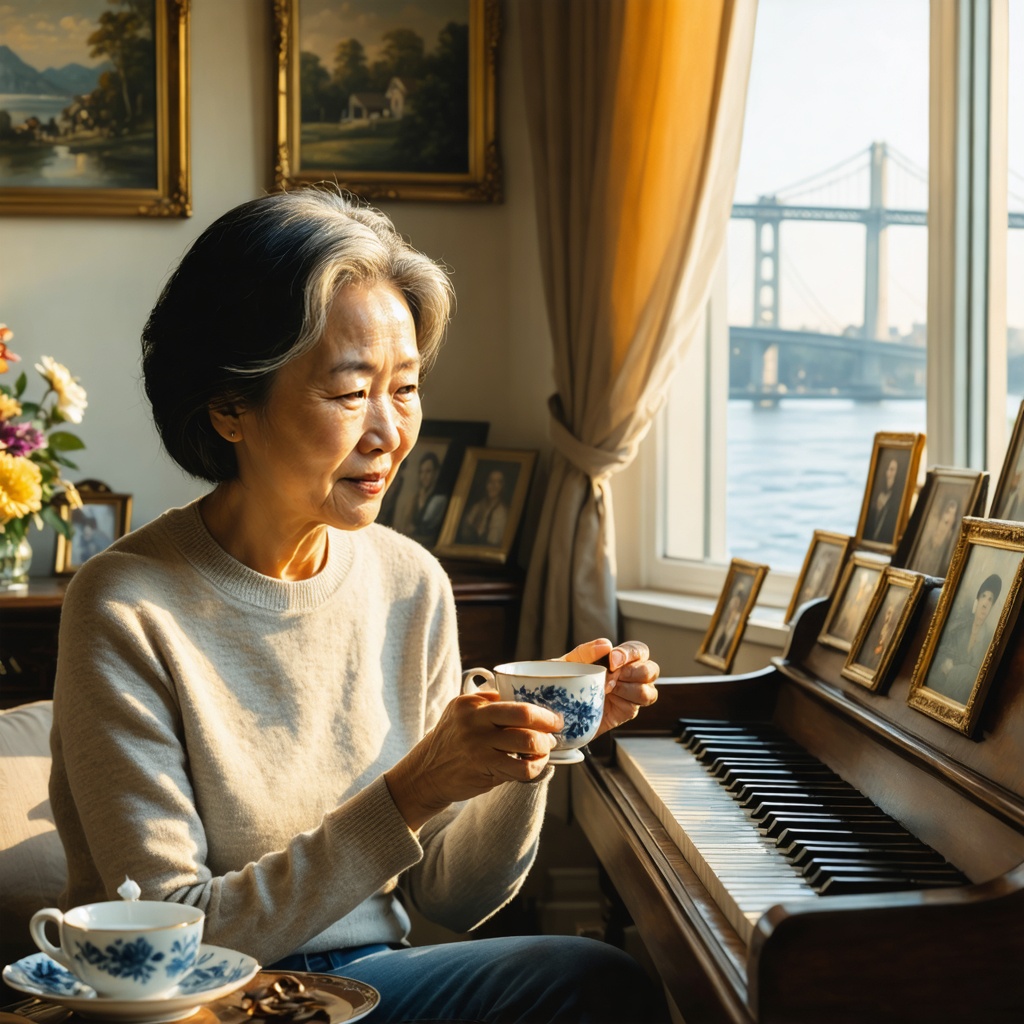 Image by RM AI
The Question of Forgiveness
As Mei Lin's story unfolded, I found myself confronting complex emotions I hadn't anticipated. There was sadness for the young woman she had been, grief for the father I would never know, and a strange sense of relief at finally understanding the circumstances of my beginning.
But was there anger? Did I resent her for the choice she had made?
I searched my heart and found that I couldn't blame her. In her position—alone, grieving, without support—I might have made the same impossible choice.
'I want you to know,' I told her when she had finished speaking, my voice steady despite my tears, 'that I had a good life. The family that adopted me—they loved me completely.' I told her about my childhood, about learning to ride a bike in our driveway, about family vacations to the lake each summer, about my father teaching me to change a tire and my mother helping with science fair projects.
I wanted her to know that her sacrifice had achieved what she hoped—I had been safe, loved, given opportunities. 'You don't have to forgive me,' she said softly.
'I've never forgiven myself.' But forgiveness, I was discovering, wasn't a simple yes or no proposition. It was a process, a journey we would navigate together if she was willing.
'I'd like to meet you,' I said finally. 'In person.
If you're comfortable with that.'
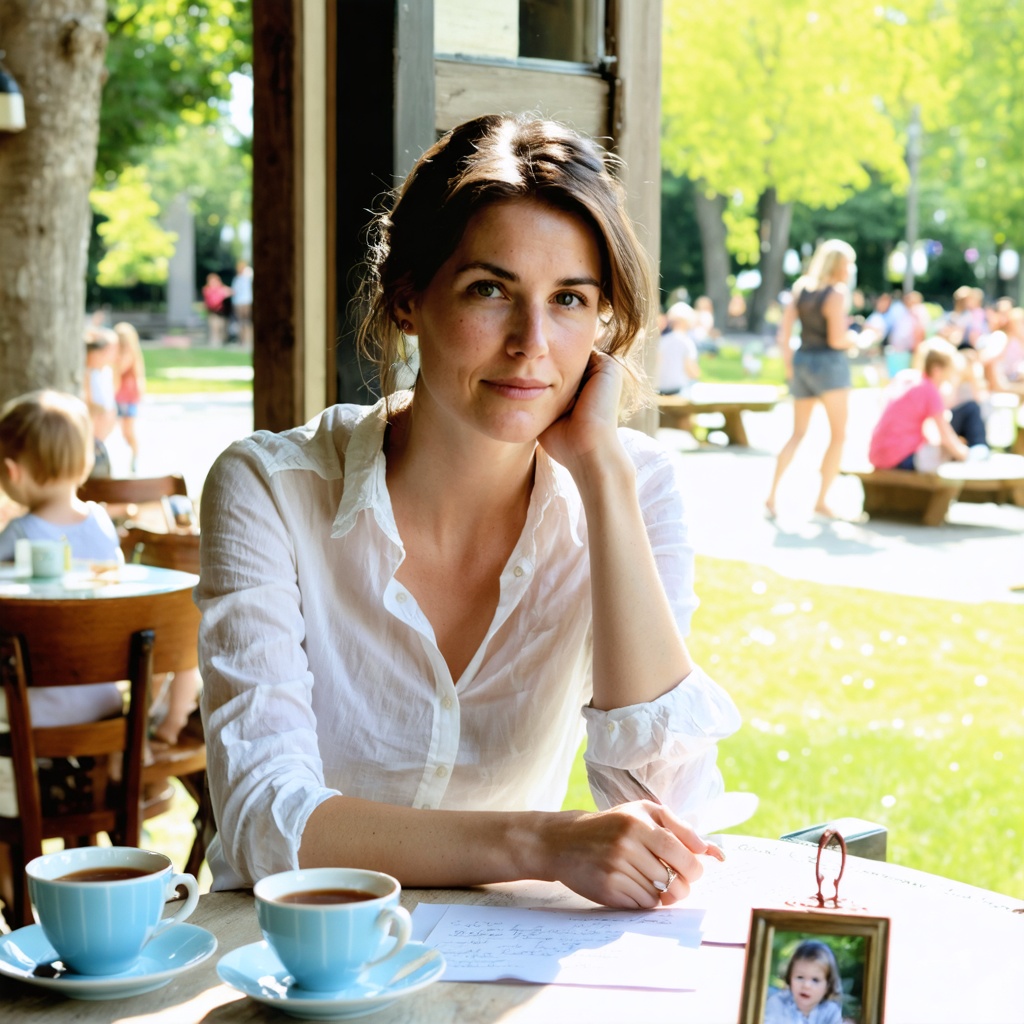 Image by RM AI
The Meeting at the Café
We agreed to meet at a small café halfway between our homes, on a Sunday afternoon two weeks later. Those fourteen days felt both endless and too short—I was desperate to see her, yet terrified of the reality of coming face to face with my birth mother.
What if we had nothing to say to each other? What if the connection I felt over the phone didn't translate to real life?
What if I looked nothing like her and everything like the father I would never meet? I changed my outfit four times the morning of our meeting, ridiculous as that seems now.
I wanted to look nice but not like I was trying too hard, to seem put-together but not unapproachable. I arrived twenty minutes early and chose a table in the corner, away from the windows, where we would have some privacy.
And then I waited, my hands wrapped around a cooling cup of tea, my eyes fixed on the door. When she walked in exactly on time, I knew her immediately.
It wasn't just that she matched the photos I had found online—it was something deeper, more instinctive. She paused just inside the door, scanning the café, and when our eyes met across the room, something electric passed between us.
Recognition. Connection.
The undeniable pull of shared DNA. She was smaller than I had imagined, delicate almost, with the same high cheekbones I saw every day in my mirror.
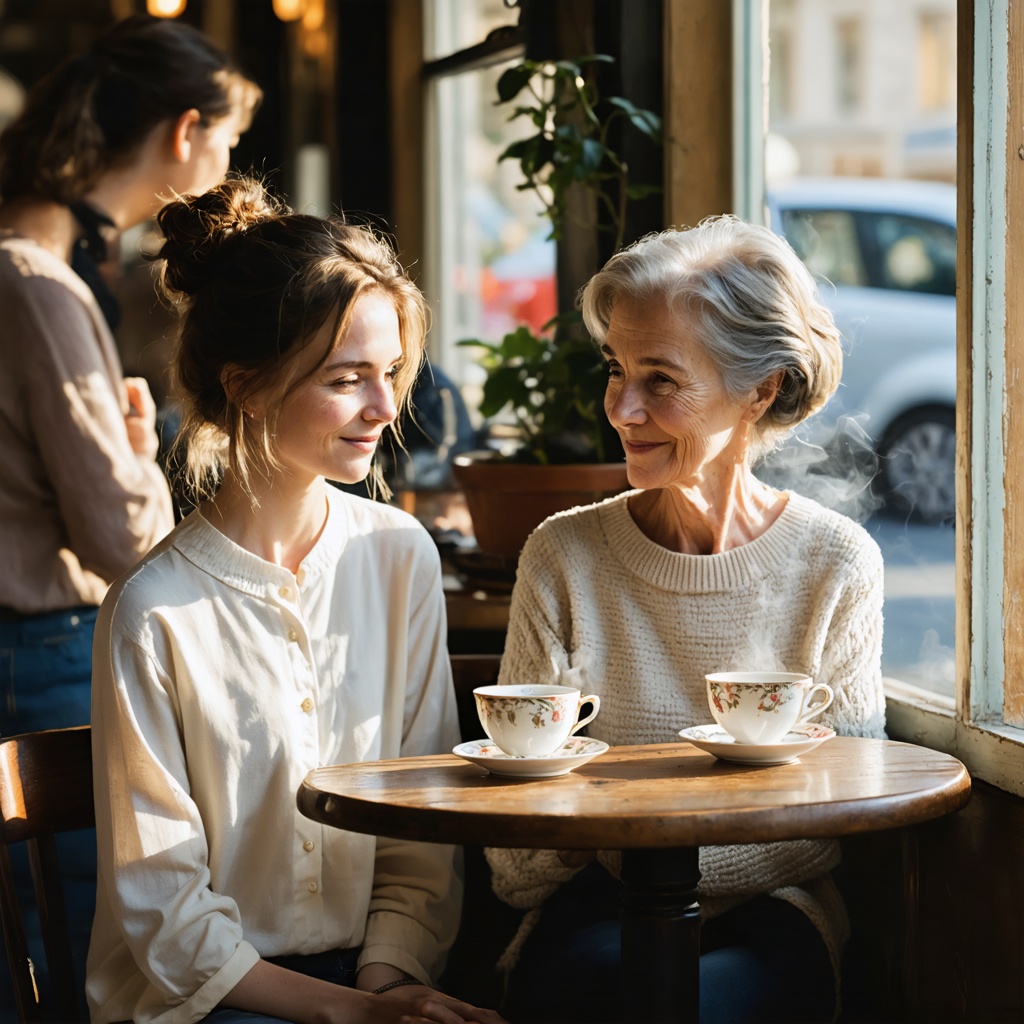 Image by RM AI
The Awkward First Moments
Those first moments were awkward in the way that only truly momentous occasions can be. We both stood as she approached the table, uncertain whether to shake hands, hug, or simply nod in acknowledgment.
'You look like him,' were her first words, spoken softly as she studied my face. 'Your father.
Especially around the eyes.' I hadn't expected this immediate reference to my biological father, and it caught me off guard. I had seen no photos of him, had no mental image to compare myself to.
'I have pictures,' she added quickly, seeming to read my thoughts. 'I brought them, if you want to see.' She gestured to the large purse she carried.
We sat down across from each other, the small café table both a barrier and a bridge between us. A waitress approached, breaking the tension momentarily as we ordered—green tea for Mei Lin, a refill for me.
When the waitress left, silence fell again. I had rehearsed this moment countless times in my mind, prepared questions and comments, but now that she was here, flesh and blood across from me, all my careful preparations evaporated.
'Thank you for coming,' I said finally, the words inadequate but sincere. She nodded, her hands clasped tightly on the table.
'I almost didn't,' she admitted. 'I was afraid.
But then I thought—I've missed thirty years already. I couldn't miss this chance too.'
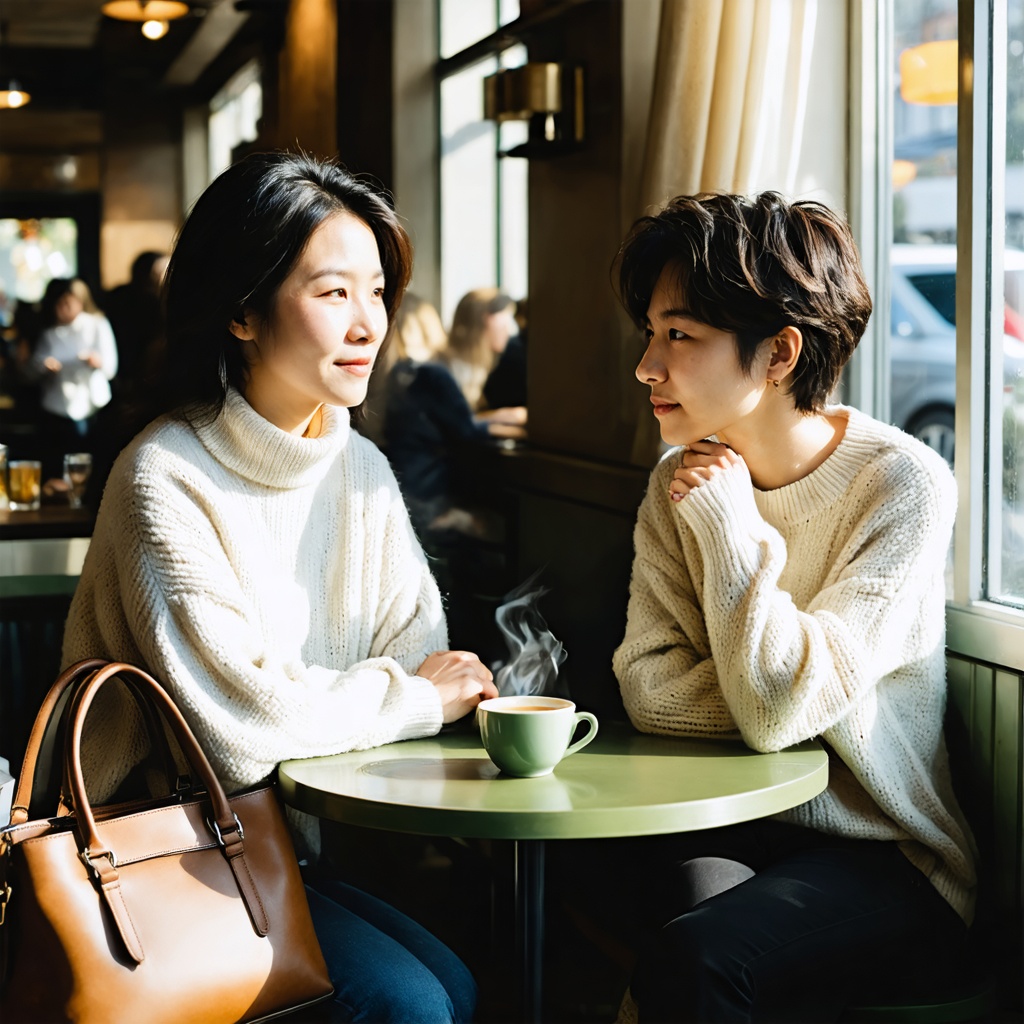 Image by RM AI
The Photos That Bridged Time
After our tea arrived, Mei Lin reached into her purse and withdrew a small photo album, its cover faded and corners worn from years of handling. 'These are the only pictures I have of your father,' she explained, sliding it across the table to me.
'And there are a few of us together, and...' she hesitated, 'two of you, as a newborn.' My hands trembled slightly as I opened the album. The first photo showed a young man with warm brown skin, laughing at the camera, his eyes crinkled at the corners exactly the way mine did when I smiled.
Arjun. My father.
I stared at his image, drinking in every detail—the shape of his nose, the set of his shoulders, the way his hair curled slightly at his temples. The resemblance between us was unmistakable, especially around the eyes and mouth.
I turned the page to find a photo of him with a young Mei Lin, his arm around her shoulders, both of them beaming at the camera in front of what looked like a college building. They looked so young, so happy, so unaware of the tragedy that awaited them.
Page after page revealed glimpses of their brief life together—picnics in the park, study sessions in the library, a small wedding ceremony with no guests, just the two of them and what appeared to be a justice of the peace.
 Image by RM AI
The Baby I Once Was
Near the end of the album, I found the photos Mei Lin had mentioned—two Polaroids of a newborn, clearly taken in a hospital. In the first, I was wrapped in a standard hospital blanket, eyes closed, face still puffy from birth.
In the second, I was being held—just a glimpse of hands visible, which I realized must be Arjun's, taken during the brief time he had to be a father before his death. 'He was so proud,' Mei Lin said softly, watching me study the photos.
'He talked to you constantly, even before you were born. He had such plans for you—music lessons, science camps, trips to India to meet his family someday.' Her voice caught on these last words.
'He would have been a wonderful father.' I looked up from the photos to find her wiping away tears. Without thinking, I reached across the table and took her hand.
It was the first time we had touched as adults, and the contact sent a strange current through me—a sense of connection that transcended the years of separation. 'Thank you for keeping these,' I said.
'For sharing them with me.' She nodded, unable to speak for a moment. When she did, her words surprised me.
'I have copies,' she said. 'These are for you to keep.
They've always been yours.'
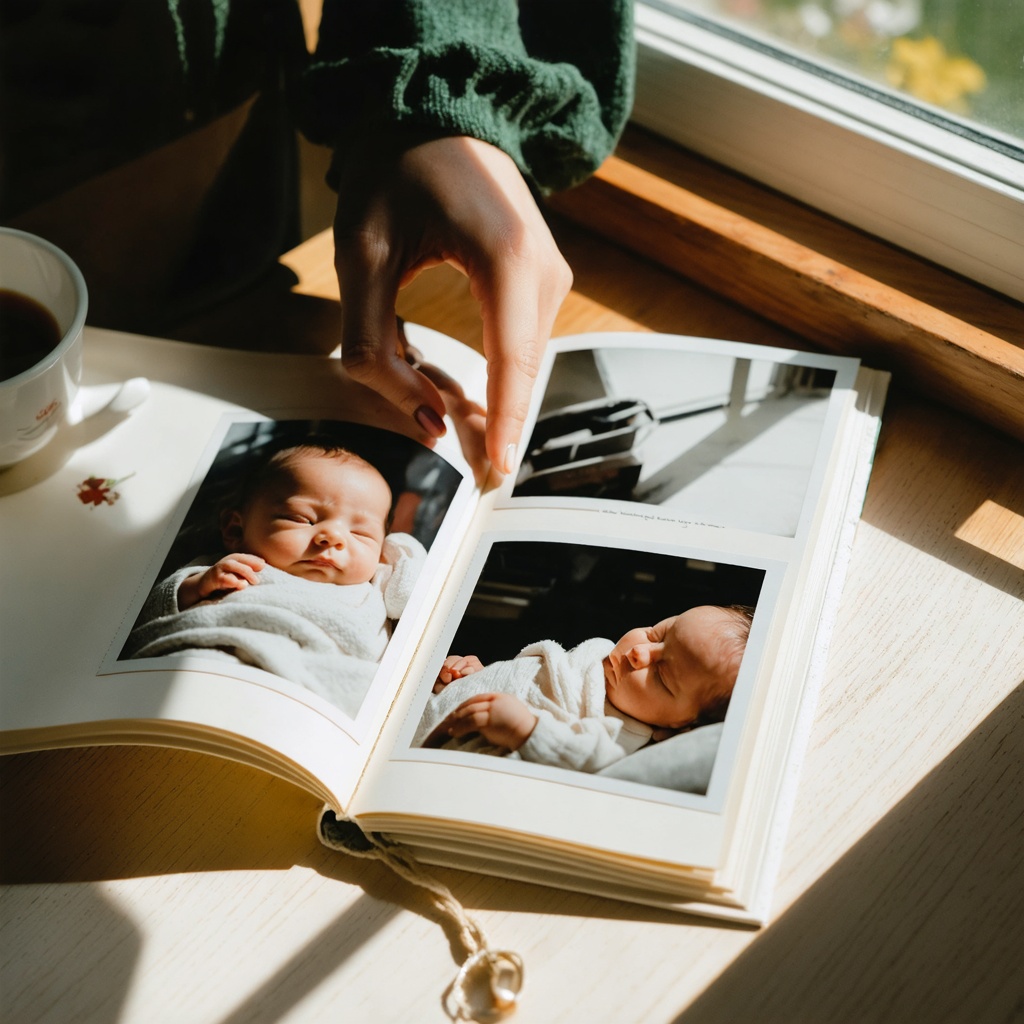 Image by RM AI
The Stories That Filled the Gaps
Over the next few hours, as our tea grew cold and was replaced, then grew cold again, Mei Lin filled in the gaps of my origin story. She told me about meeting Arjun in an economics class, about their first date at a campus coffee shop, about how he had proposed with a ring made from a twisted paper clip because he couldn't afford a real one yet.
She described his voice, his laugh, his passion for mathematics and music. 'He played the violin,' she said, smiling at the memory.
'Not very well, but with great enthusiasm.' She told me about their tiny apartment, how they had prepared for my arrival by converting a closet into a nursery, painting it yellow because they had decided not to find out if I was a boy or girl. She spoke of the night she went into labor, how scared she had been going to the hospital alone, how the nurses had been kind but couldn't replace the partner she had lost.
And she told me about those three days after bringing me home, her desperate attempts to care for me while drowning in grief and exhaustion. 'You wouldn't stop crying,' she remembered.
'Nothing I did helped. I couldn't sleep, couldn't eat.
I started to have thoughts that frightened me—that maybe I should join Arjun, that we would both be better off...' She had recognized, even in her despair, that she was a danger to herself and possibly to me. The fire station had seemed like the only safe option.
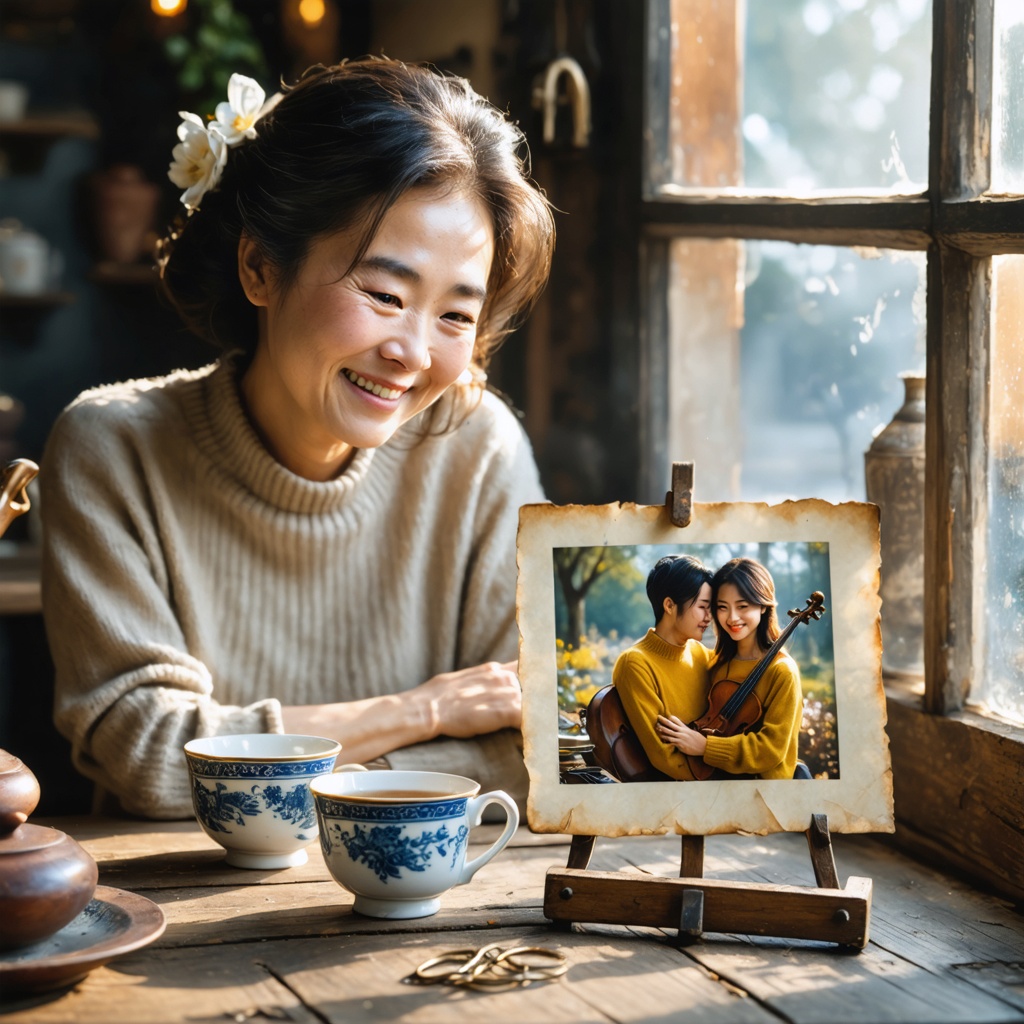 Image by RM AI
The Unexpected Connection
What surprised me most about our meeting was how comfortable it felt once the initial awkwardness passed. There was an ease between us that defied the thirty years of separation, a sense of familiarity that couldn't be explained by our brief phone conversations.
I recognized my own gestures in her hands as she spoke, noticed that we both had the same habit of tucking hair behind our ear when thinking. When she laughed at something I said, I heard echoes of my own laugh.
These small similarities—these genetic echoes—were both unsettling and profoundly comforting. They answered questions I hadn't even known to ask about myself.
Why did I love spicy food when no one else in my adoptive family could tolerate it? Mei Lin explained that in her hometown in China, every dish was laden with chili peppers.
Why had music always come so naturally to me despite my adoptive parents' complete lack of musical ability? Arjun's mother had been a classical Indian vocalist.
Why did I hate the cold so intensely? Both my biological parents had grown up in warm climates.
Each revelation was a small piece of the puzzle of myself, filling in gaps I hadn't fully recognized were there. As our conversation continued, I found myself thinking of my adoptive parents with a rush of gratitude.
They had given me a foundation of love and security that made this exploration possible. I wasn't searching because something was missing;
I was expanding because I was secure enough to do so.
 Image by RM AI
The Question of What Comes Next
As afternoon stretched into early evening, the café beginning to fill with the dinner crowd, we finally addressed the question that had been hovering unspoken between us: what happened next?
Was this a one-time meeting, a chance to satisfy curiosity and find closure? Or was it the beginning of some new kind of relationship?
Neither of us had a clear answer. 'I don't want to intrude on your life,' Mei Lin said carefully.
'You have a family, a mother who raised you. I don't want to complicate things.' I understood her concern.
My relationship with my adoptive parents was still healing from the revelation of their decades-long deception. Adding a birth mother to the mix would certainly complicate matters further.
And yet, sitting across from this woman who had given me life, who shared my DNA, who could tell me about the father I would never meet, I couldn't imagine simply walking away and never seeing her again. 'Maybe we could start slowly,' I suggested.
'Emails, phone calls. Another meeting in a few weeks.' She nodded, relief evident in her expression.
'I would like that,' she said. 'Very much.' As we prepared to leave, gathering our things and settling the bill, she hesitated, then asked the question that clearly weighed on her mind:
'Will you tell them—your parents—about meeting me?'
 Image by RM AI
The Two Mothers Dilemma
The question of how to integrate Mei Lin into my life—and how my adoptive parents would react to her presence—weighed heavily on me in the days following our meeting. I had told my siblings about the planned meeting, but not my parents.
Part of me feared their reaction, worried they might see my desire to know Mei Lin as some kind of betrayal or rejection. Another part simply wanted to process the experience myself before sharing it.
But as the days passed, I realized I couldn't—and didn't want to—keep this significant development from them. They deserved to know, and more importantly, I needed their support as I navigated this new territory.
I invited them over for dinner the following weekend, cooking my mother's favorite lasagna as a small peace offering for the conversation to come. As we sat around my dining table, the familiar family dynamic both comforting and strange in light of all we now knew, I carefully explained about finding Mei Lin, our phone conversations, and our recent meeting.
I showed them the photo album she had given me, including the pictures of me as a newborn. My mother's hands trembled slightly as she turned the pages, seeing for the first time images of the baby she had adopted before she knew me.
My father was quiet, his expression unreadable as he studied the photos of Arjun—the man whose death had, in a tragic way, made possible his becoming my father.
 Image by RM AI
The Unexpected Reaction
I had prepared myself for jealousy, hurt, perhaps even anger from my adoptive parents. What I hadn't anticipated was their reaction when I finished speaking.
My mother reached across the table and took my hand, her eyes filled not with resentment but with a complex mixture of emotions I couldn't quite decipher. 'I've always wondered about her,' she said quietly.
'The woman who gave birth to you. I used to imagine what she was like, why she left you at the fire station.
Sometimes I would look at you sleeping as a child and think about her—if she was thinking of you too, if she regretted her choice.' She squeezed my hand gently. 'I'm glad she's okay.
I'm glad you found each other.' My father cleared his throat, clearly emotional but trying to maintain his composure. 'You know,' he said, his voice rougher than usual, 'that night at the fire station—when I found you—I always felt like it wasn't just chance.
Like I was meant to be the one on duty.' He looked down at the photos of Arjun again. 'Maybe he was watching out for you somehow, making sure you found your way to us.' It was such an uncharacteristically spiritual statement from my practical, no-nonsense father that it brought tears to my eyes.
In that moment, I realized that my fear had been unfounded. My parents' love was big enough, secure enough, to make room for this new dimension of my identity.
 Image by RM AI
The Proposal That Changed Everything
What my mother said next stunned me completely. 'I'd like to meet her,' she announced, looking from me to my father and back again.
'If she's willing, and if you're comfortable with it. I'd like to thank her.' My father nodded in agreement, though I could see the idea made him nervous.
'We owe her a debt we can never repay,' he said simply. I sat back in my chair, trying to process this unexpected turn.
My adoptive mother wanted to meet my birth mother. The woman who had raised me wanted to meet the woman who had given me life.
It seemed impossible, surreal—and yet somehow right. These two women, connected through me, each holding different pieces of my story, my identity.
Could they really meet? What would they say to each other?
Would it bring healing or open new wounds? I thought about Mei Lin, her guilt and regret, her thirty years of wondering if she had made the right choice.
And I thought about my mother, her decades of love and care, her recent confession of the deception that had shadowed our relationship. Both women had made difficult choices.
Both had acted out of what they believed was love. 'I'll ask her,' I said finally.
'But I think... I think she might like that.'
 Image by RM AI
The Meeting of the Mothers
The meeting between my two mothers took place three weeks later, in the neutral territory of a quiet restaurant I had carefully selected for its private corner tables and calm atmosphere. I arrived first, heart pounding with anxiety about what was to come.
My adoptive parents arrived next—my mother nervous but determined, my father protective at her side. When Mei Lin walked in, I saw her falter slightly at the sight of them, her composure briefly slipping to reveal the enormity of this moment for her.
I made the introductions, my voice steadier than I felt, watching as these two women—these two mothers—regarded each other across an impossible divide of time and circumstance. The initial conversation was stilted, formal, everyone hyperaware of the extraordinary situation.
But then my adoptive mother reached into her purse and pulled out a small photo album—different from the one Mei Lin had given me, but similar in its worn edges and well-handled appearance. 'I thought you might like to see these,' she said, sliding it across the table.
'The years you missed.' Mei Lin's hands trembled as she opened the album to find photos of me as a toddler, a school child, a teenager—the chronology of a life she had not been part of. My first day of kindergarten, soccer games, birthday parties, high school graduation.
The visual evidence of a childhood well-loved.
 Image by RM AI
The Healing Power of Truth
As Mei Lin turned the pages of the photo album, my adoptive mother began to narrate the stories behind the images. The time I had insisted on wearing my Superman costume to picture day in second grade.
The science fair project that had gone spectacularly wrong, resulting in foam all over the kitchen. My brief, disastrous attempt at learning the trumpet.
With each story, the tension in the air dissipated slightly, replaced by something warmer, more genuine. My father joined in occasionally, adding details or gentle corrections to my mother's recollections.
I watched Mei Lin's face as she absorbed these glimpses of the life she had missed—saw her smile at the happy moments, her eyes grow sad at others. When she reached the end of the album—a photo of my college graduation—she looked up at my adoptive mother with tears in her eyes.
'Thank you,' she said simply. 'For everything you gave him that I couldn't.' My mother reached across the table then, in a gesture that surprised us all, and took Mei Lin's hand.
'Thank you,' she replied, 'for the gift of him.' It was a moment of such raw honesty, such genuine connection between these two women who had shaped my life in such different ways, that I felt something shift and settle within me—some piece of my fractured identity finding its proper place at last. The truth, it seemed, had the power to heal after all.
 Image by RM AI
The New Normal
In the months that followed that remarkable meeting, we all began to find our way toward a new kind of family configuration—one that had room for both my birth mother and the parents who had raised me. It wasn't always easy or comfortable.
There were awkward moments, missteps, times when old insecurities flared. My adoptive mother occasionally struggled with feelings of inadequacy when confronted with the genetic connections I shared with Mei Lin.
Mei Lin sometimes withdrew, afraid of overstepping boundaries or disrupting the family dynamic. My father watched it all with quiet concern, protective of my mother's feelings while genuinely wanting to honor my need for connection with my biological heritage.
And I found myself in the strange position of mediator, trying to balance everyone's needs and emotions while still processing my own complex feelings about my dual identity. But there were beautiful moments too.
Mei Lin teaching me to make dumplings in my kitchen, the recipe passed down through generations of her family. My adoptive mother sharing embarrassing stories from my childhood that made us all laugh until we cried.
My father and Mei Lin discovering a shared love of jazz music, exchanging recommendations and debating the merits of different musicians. Slowly, cautiously, we were creating something new—a blended family built not on traditional bonds but on honesty, respect, and the shared love of me.
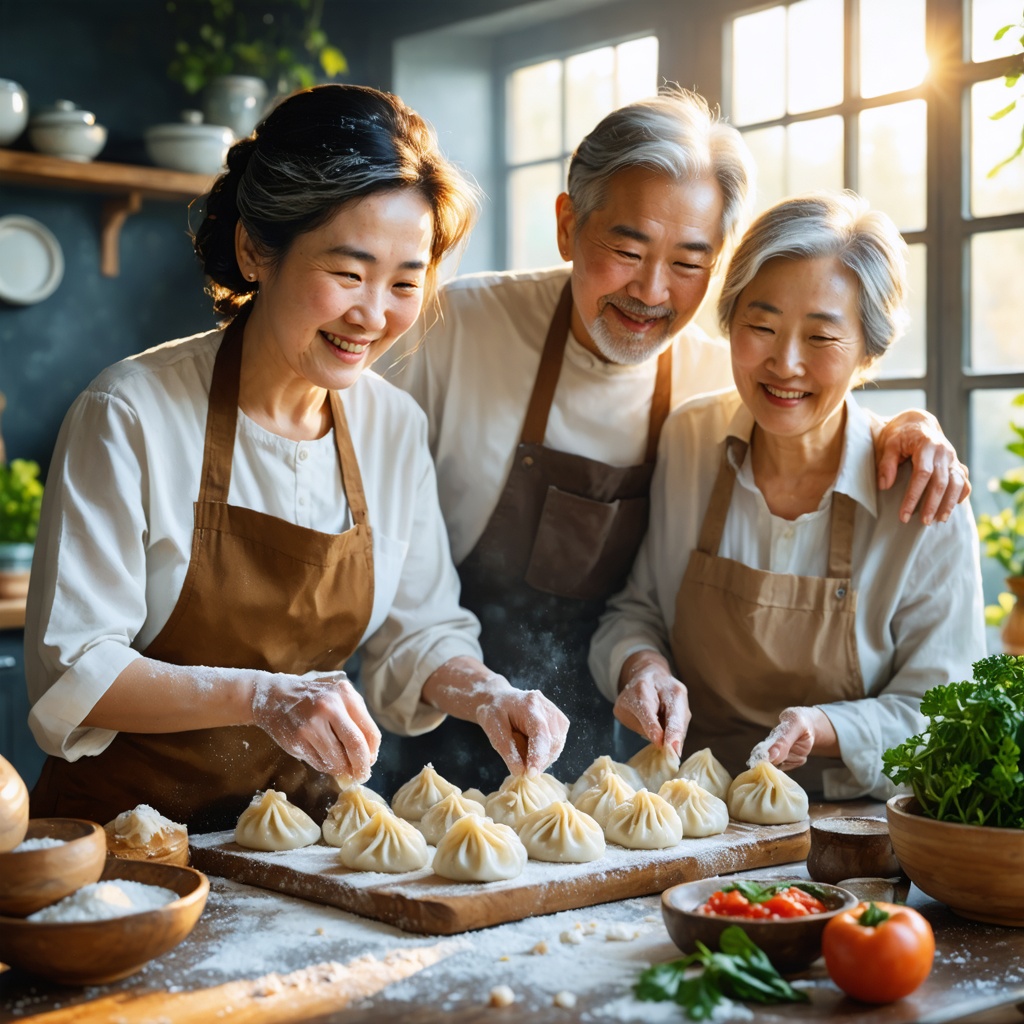 Image by RM AI
The Search for Arjun's Family
As my relationship with Mei Lin deepened, I found myself increasingly curious about my father's side of the family. Arjun had been an only child, Mei Lin explained, but his parents were still alive as far as she knew, living in Mumbai.
They had never known about their son's marriage or about my existence. After his death, Mei Lin had been too overwhelmed by grief and her own precarious situation to contact them.
'I was afraid,' she admitted. 'Afraid they would blame me for his death somehow, or reject you because I wasn't Indian.
And later, after I had given you up, what right did I have to tell them about a grandchild they would never know?' But now, with my encouragement, she agreed to help me try to find them. We had little to go on—Arjun's full name, his parents' names as they had been thirty years ago, and the neighborhood in Mumbai where they had lived.
But in the age of social media and global connectivity, it proved enough. After weeks of searching, sending messages that went unanswered, and following tenuous connections, I received an email from a woman named Priya who identified herself as Arjun's cousin.
'My uncle and aunt have spoken of their son with grief every day for thirty years,' she wrote. 'To learn he had a child—that a part of him lives on—would be both shocking and perhaps the greatest gift they could receive in their old age.'
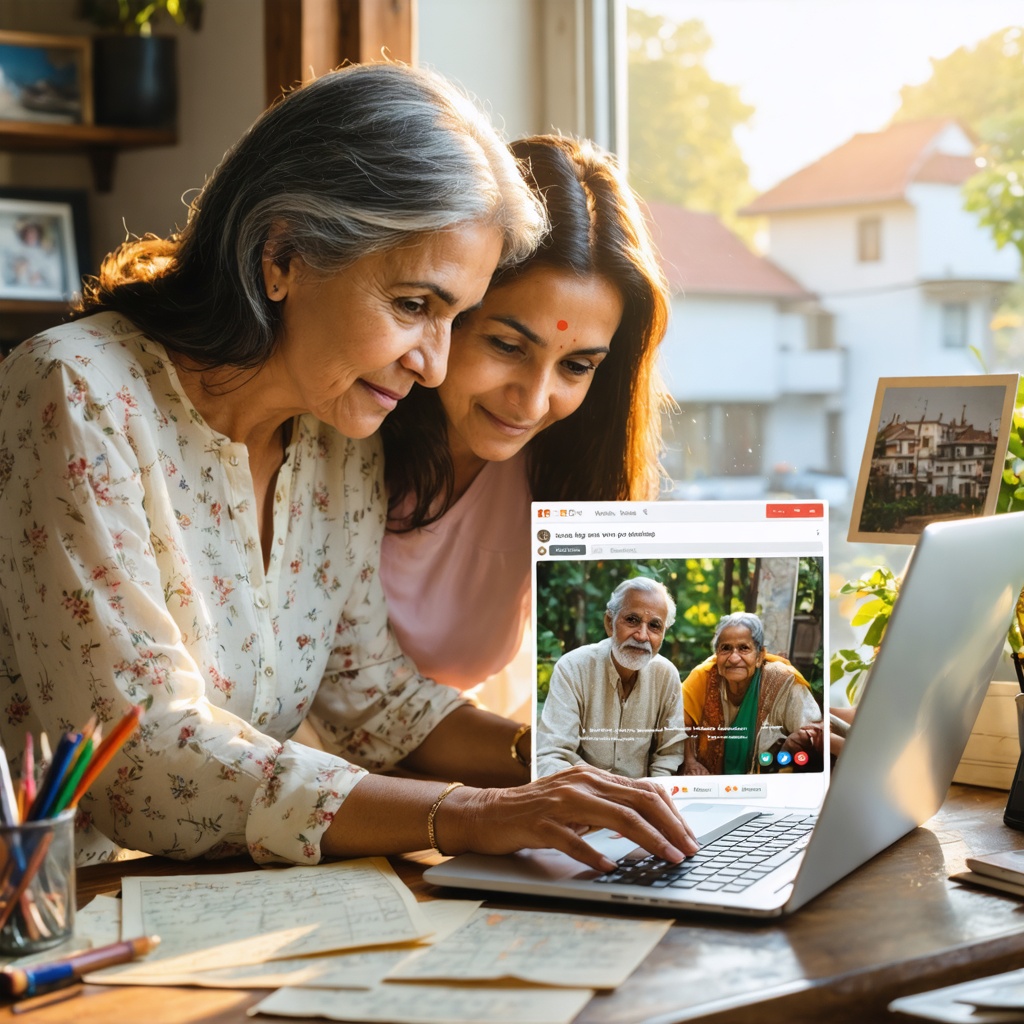 Image by RM AI
The Video Call Across Oceans
The first meeting with my paternal grandparents took place via video call, with Priya acting as both translator and emotional buffer. Mei Lin sat beside me, nervous but determined to face this connection to her past.
When the call connected and I saw their faces for the first time—an elderly couple sitting close together on a sofa, their expressions a mixture of disbelief and cautious hope—I felt an immediate jolt of recognition. My grandfather had the same eyes as me, the same eyes as Arjun in the photos.
My grandmother's smile, when it finally came, was startlingly familiar—I had seen it in my own mirror countless times. They spoke rapidly in Hindi to Priya, their gaze never leaving my face.
'They say you look just like him,' Priya translated. 'They cannot believe they have a grandson.' Through Priya, they asked questions about my life, my education, my work.
They wanted to know everything, to fill in the thirty years of absence. When Mei Lin introduced herself, there was a moment of tension—these parents who had lost their only son now face to face with the woman who had married him in secret.
But then my grandmother said something that made Mei Lin's eyes fill with tears. 'She says she can see that you loved him,' Priya translated.
'And that is all that matters now.' By the end of the call, tentative plans had been made for a visit. My grandparents wanted to meet me in person, to welcome me into the family I had never known existed.
Another piece of my identity, another branch of my story, was opening before me.
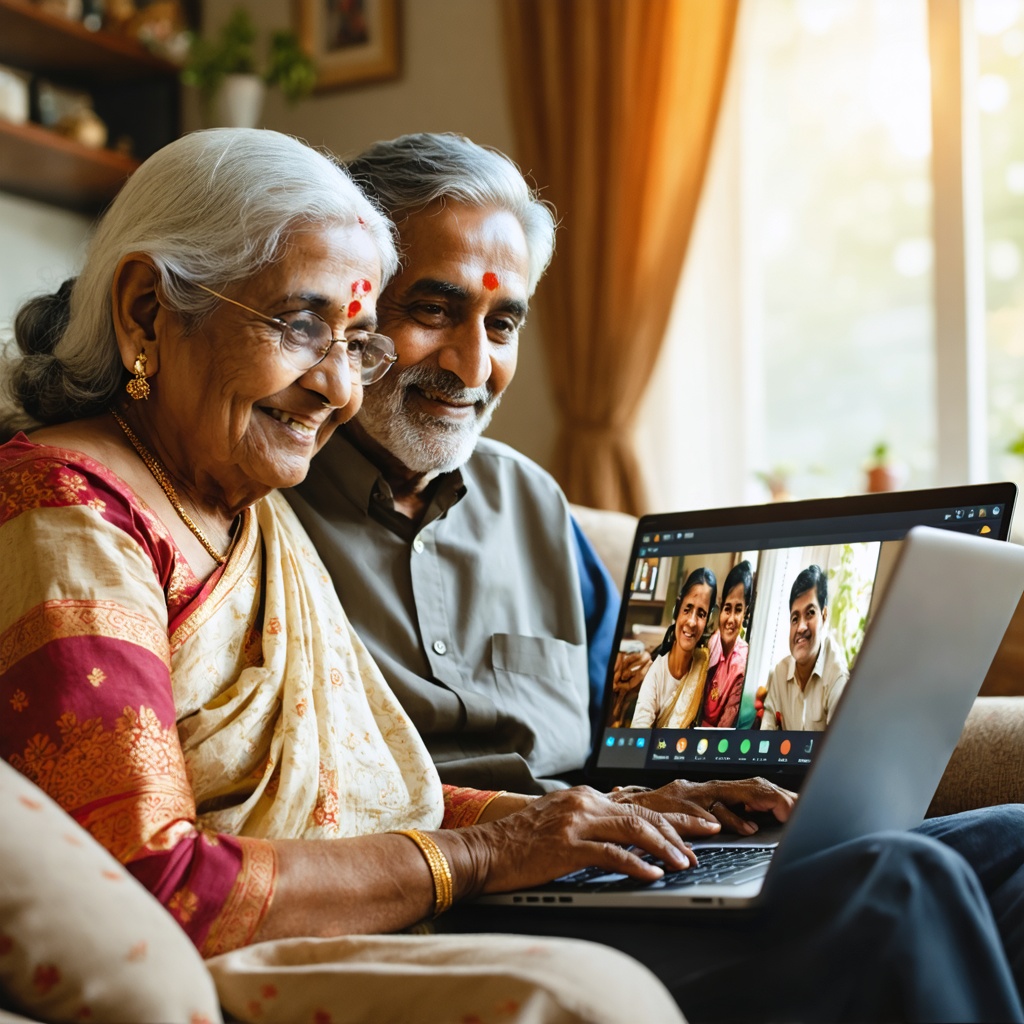 Image by RM AI
The Unexpected Gift of Truth
As I reflect now on the journey that began with that forgotten DNA test, I'm struck by how differently things might have turned out. If I hadn't been bored that rainy Sunday.
If I had thrown the test away instead of taking it. If I had accepted the company's assurances that there was no mistake.
If my mother had continued to insist that I was biologically hers. So many points where the truth might have remained buried, where I might have continued living with only half my story.
Instead, I find myself in this unexpected place—with two mothers who have found a way to share me without diminishing each other's importance in my life. With grandparents across the ocean who see their lost son in my face.
With siblings who have embraced the complexity of our family with open hearts. The truth was painful, yes.
It shattered the narrative I had believed about myself for twenty-eight years. It forced my adoptive parents to confront the consequences of their well-intentioned deception.
It reopened wounds for Mei Lin that had never fully healed. But from that pain has come a fullness, a richness to my life and identity that I could never have imagined.
I am the child of Mei Lin and Arjun, born of their brief, tragic love story. I am the son of the parents who chose me, who raised me, who shaped me into the person I am today.
I am the grandson of people I am only just beginning to know. I am the product of multiple cultures, multiple histories, multiple loves.
The truth, it turns out, was not something to be feared but the greatest gift I could have received—the gift of my complete self.
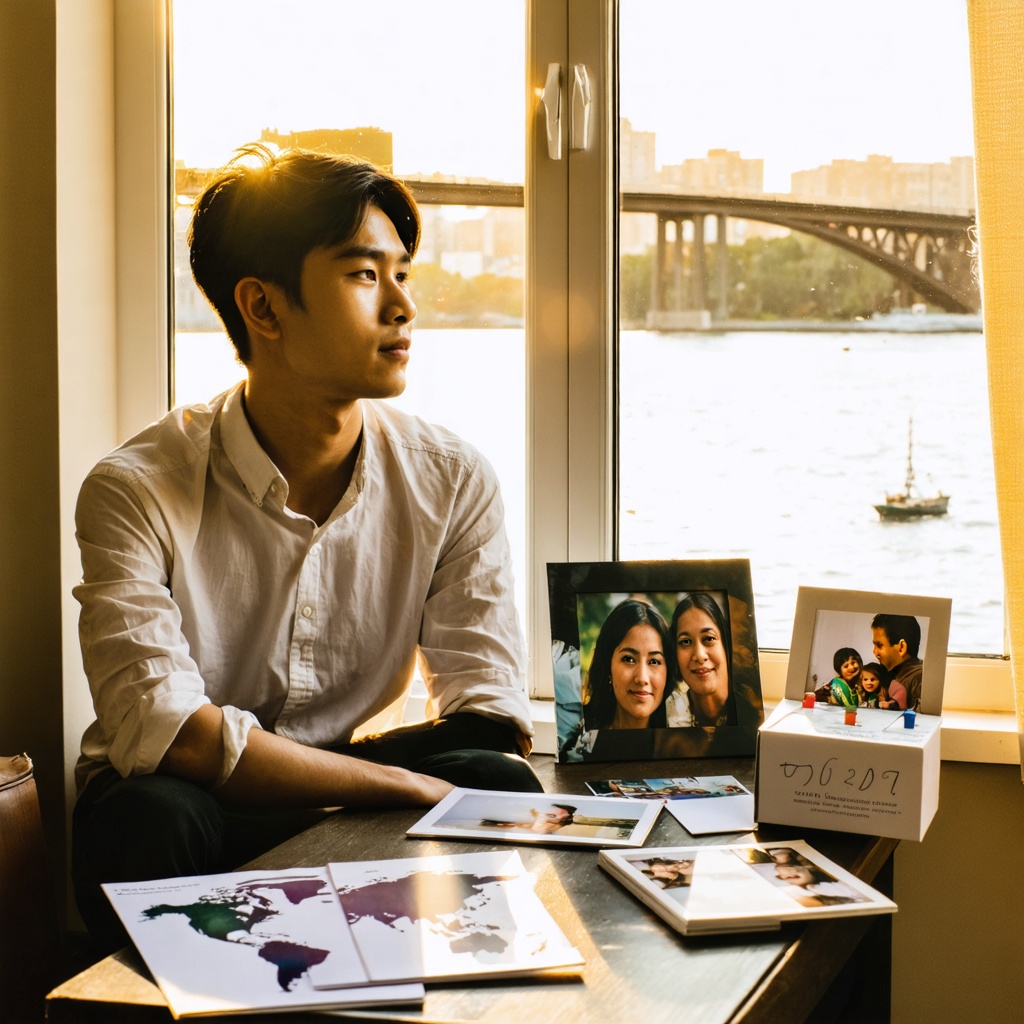 Image by RM AI