I Refused to Sell My Family's Montana Ranch to a Corporate Giant—Then They Cut Off My Cattle's Water Supply and I Discovered My Ex-Husband's Ultimate Betrayal
I Refused to Sell My Family's Montana Ranch to a Corporate Giant—Then They Cut Off My Cattle's Water Supply and I Discovered My Ex-Husband's Ultimate Betrayal
The Weight of a Century
My great-grandfather drove the first fence post into this ground in 1890, and I've been thinking about that a lot lately — the sheer stubbornness it took to look at a Montana winter and decide to stay. I was out in the north pasture before sunrise, the way I am most mornings, watching the herd move slow and easy through the frost-stiff grass. A hundred and thirty-four years of family history under my boots. You don't take that lightly. My grandfather built the main barn with timber he hauled himself. My mother kept the books through two droughts and a beef price collapse that broke half the ranches in the county. And now it's mine — three hundred and twelve acres, sixty-eight head of Angus, and more fence line than one person can reasonably maintain alone. I checked the water troughs, counted the cattle by habit, noted which ones were moving slow. The mountains were still dark against a sky going pale pink at the edges. Steam rose off the herd's backs in the cold. There's a particular kind of quiet that belongs only to this hour, on this land, and I've never found anything else that comes close to it. By the time the sun cleared the ridge, my hands were numb and my coffee was cold, and I didn't care about either one.
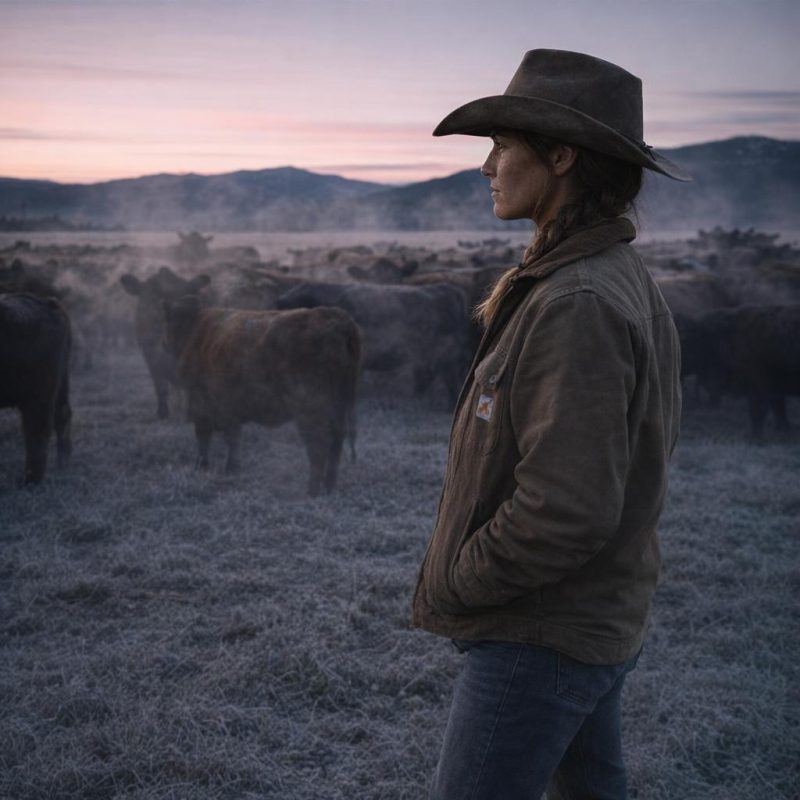 Image by RM AI
Marcus and the Old Ways
Marcus showed up at four-fifty in the morning, same as always, same battered Carhartt jacket he'd been wearing since before I took over the operation. He knew my grandfather. He taught me how to read weather in the color of a winter sky, how to tell a sick cow from a tired one, how to fix a fence post in frozen ground without losing your temper or your fingers. Thirty-eight years he's worked this land, and he moves through it like he belongs to it the same way I do. We walked the east fence line together while the light came up, checking for breaks where the elk had pushed through during the night. Found two spots that needed wire and spent the better part of an hour on our knees in the cold fixing them. Marcus doesn't talk much when he's working, which suits me fine. But on the walk back, he mentioned that the Hendersons hadn't been around much this winter. Said the Kowalski place had been quiet too, and the Morrison spread up on the ridge. He said it the way you'd mention the weather — just a thing he'd noticed, nothing more. I didn't think much of it at the time. Ranchers go quiet in winter. It happens. But Marcus said three of them, and something about the number sat in the back of my mind the rest of the morning.
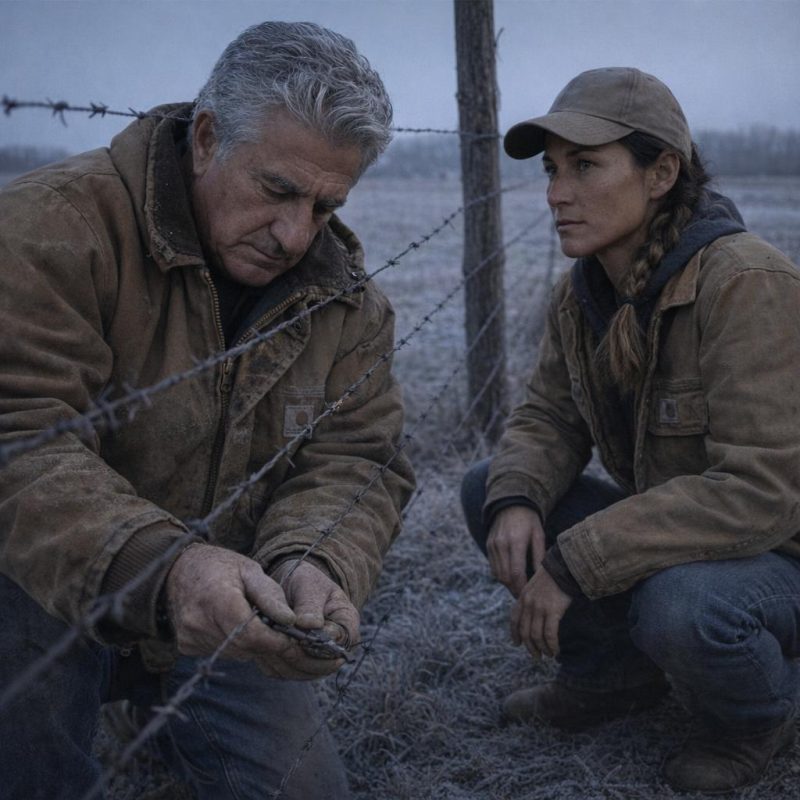 Image by RM AI
Margins and Markets
I spent the afternoon at the kitchen table with the ranch's ledgers spread out in front of me, which is never a pleasant way to pass a few hours. The numbers weren't catastrophic, but they weren't comfortable either. Cattle prices had dropped again — third consecutive quarter — and the cost of feed, fuel, and equipment repairs kept climbing in the opposite direction. I went through every line item twice, the way my mother taught me, looking for anything I could trim without cutting into the operation itself. Postponed the new water pump for the south pasture. Pushed back the truck service another month. Decided the barn roof could hold one more winter if I patched the two worst sections myself. I've done this kind of math before. Every rancher in Montana has. You learn to read the margins the way you read the land — looking for where you can hold on and where you have to let go. What I wouldn't do was sell. That thought didn't even make it to the table. This ranch has survived worse than a soft cattle market, and so have the people who ran it before me. I closed the ledger as the light outside went flat and grey, and sat for a moment with the understanding that this year would ask more of me than last year had, and that I'd find a way to give it.
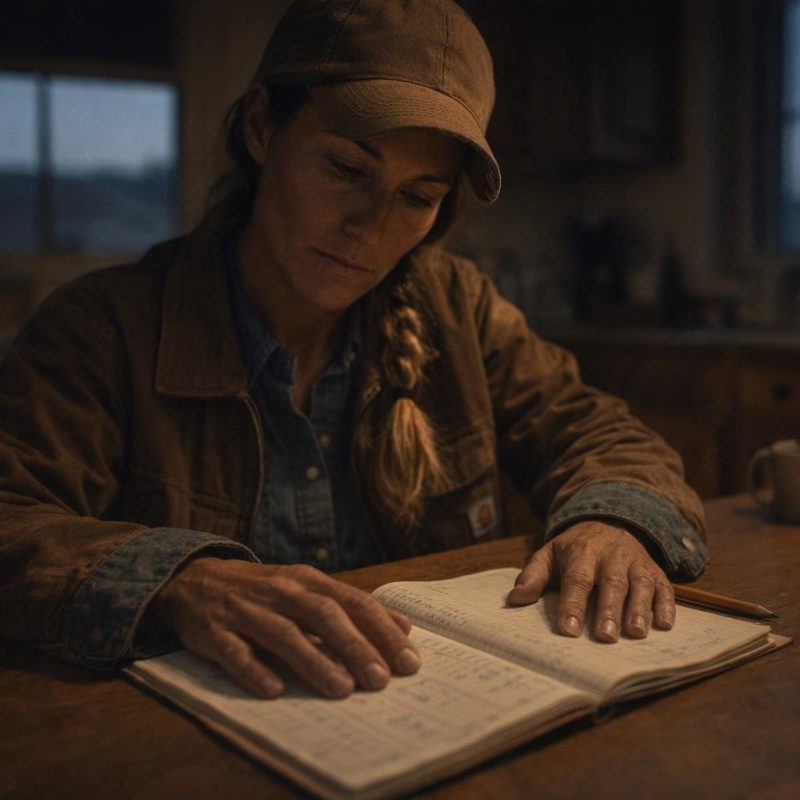 Image by RM AI
Empty Driveways
I drove into Millhaven on Thursday for feed and a few supplies, taking the long route past the Morrison place out of habit more than anything else. I almost missed it at first — the sign was gone. Just the two wooden posts left standing at the end of the driveway, the crossbeam bare. The Morrison family had ranched that land since before I was born. I slowed down and looked. The equipment yard was empty. No trucks, no machinery, no dogs running the fence line. The house windows had that flat, unoccupied look that's hard to describe but impossible to mistake. I kept driving, but I kept thinking about it. At the feed store, I mentioned it to the clerk — a woman named Patty who's worked there longer than I've been buying supplies. She said the Morrisons had sold in November. Said the Hendersons were gone too, and the Kowalski place had changed hands right before Christmas. She didn't know much more than that, just that it had happened fast and quiet, the way things do when people are ready to be done. On the drive home, I passed two more properties that had that same stillness about them — driveways empty, gates closed, no sign of the ordinary mess that comes with a working ranch. Whatever had been alive in those places had packed up and left, and the land just sat there, waiting for something new to claim it.
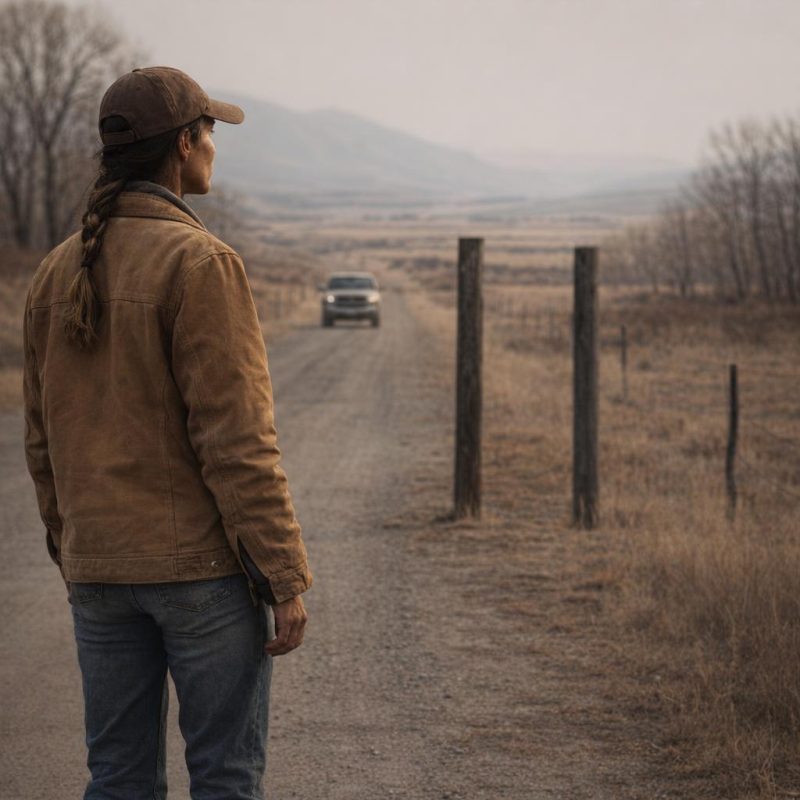 Image by RM AI
The Name Everyone's Whispering
I was loading fifty-pound bags of mineral supplement into the truck bed when I heard them — two men talking in the narrow aisle between the shelving units, voices low but not low enough. I didn't recognize either of them, but I recognized the posture: ranchers, both of them, the kind who've been at it long enough to carry the work in their shoulders. One of them said the name Apex Cattle Holdings, and I went still without meaning to. I'd never heard it before, but the way he said it — careful, like he was handling something he wasn't sure about — made me pay attention. The other man asked how the offer had come in, and the first one said through a lawyer, very official, very polite. Said they'd done their homework, knew the acreage, knew the water access, knew the debt load. I set down the bag I was holding and pretended to check my list. They talked for another minute or two about consolidation, about corporate operations moving into the valley, about how the numbers had changed in the last year. Then the first man said it quietly, almost to himself — that Apex had made him an offer he couldn't afford to refuse.
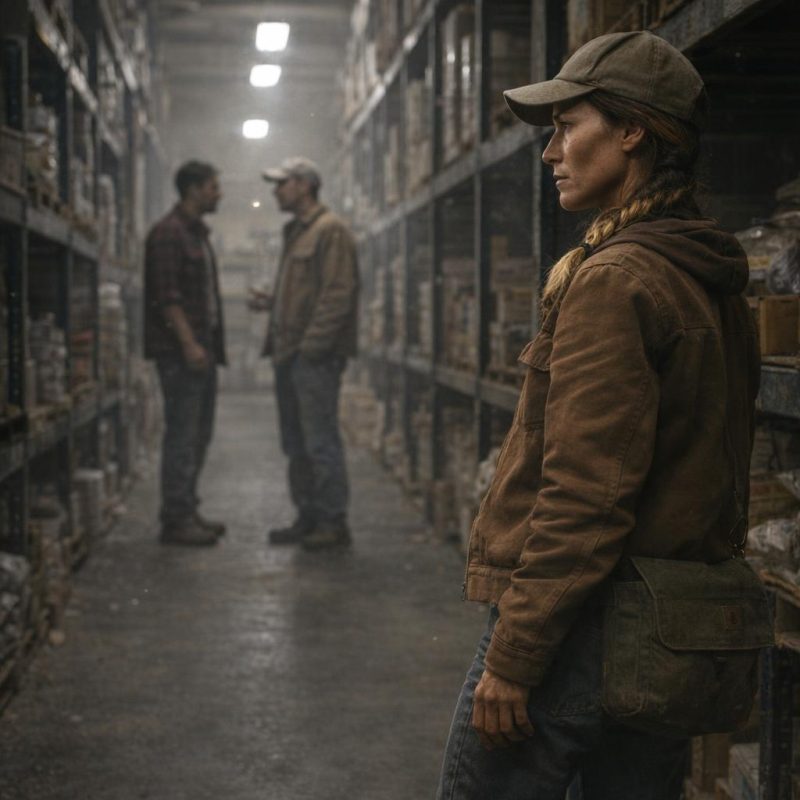 Image by RM AI
Men in Clean Boots
They came on a Tuesday, which felt deliberate somehow — midweek, like a business appointment. Black SUV, out-of-state plates, and two men in suits that had never seen a fence post. Their boots were spotless. I noticed that right away. You can tell a lot about a person by whether their boots have ever touched real ground. They introduced themselves at the porch steps — polite, practiced, the kind of smooth that comes from doing this more than once. One of them handed me a business card: Apex Cattle Holdings, Regional Acquisitions. I invited them in because my mother raised me to be civil, and because I wanted to hear what they had to say. They sat at my kitchen table and talked about opportunity and legacy and the challenges facing independent ranchers in today's market. They weren't wrong about the challenges. I'll give them that. Then they slid a folder across the table and let the number on the first page do the talking. It was more money than this ranch had seen in three generations combined. I kept my face neutral and my hands flat on the table. I asked a few questions. They answered smoothly, with the ease of people who had answered the same questions before. When one of them reached for his briefcase to pull out additional materials, the folder he'd set aside fell half-open, and I could see my ranch's name printed across a property assessment sheet inside it — filled out well before they ever knocked on my door.
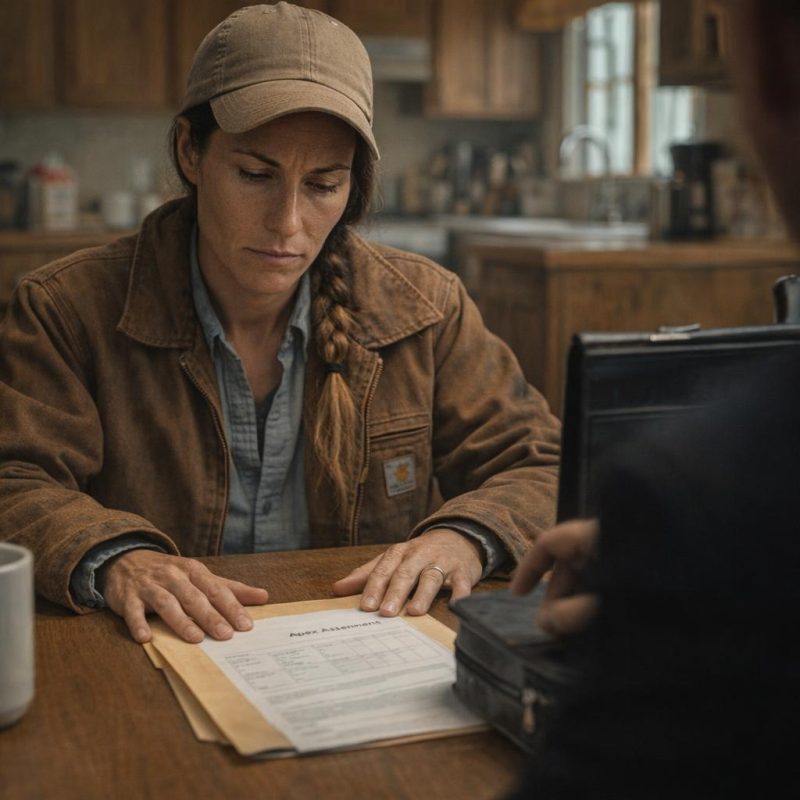 Image by RM AI
Not for Sale
I let them finish their pitch. I owed them that much, I suppose, and I wanted to be sure I understood exactly what they were offering before I said no. The number was real. I won't pretend it wasn't. Sitting there looking at it, I could see what it would mean — no more tight winters, no more deferred repairs, no more doing the math at the kitchen table at midnight hoping it comes out even. I could see all of that clearly. And then I thought about my grandfather's hands on that timber, and my mother's voice on the phone during the drought year telling me we were going to be fine, and the way the light hits the north pasture at dawn when the frost is still on the grass. I slid the folder back across the table. I told them I appreciated them making the trip, and that the offer was generous, and that my family's land wasn't for sale. Not at that number, not at any number. I said it plainly, without apology, the way you state a fact. One of them tried once more — mentioned flexibility, mentioned future conversations, mentioned that circumstances change. I told him mine wouldn't. There was a pause, the kind that fills a room. Then the lead representative picked up his briefcase, clicked it shut, and the smile he'd been wearing since he walked through my door was gone.
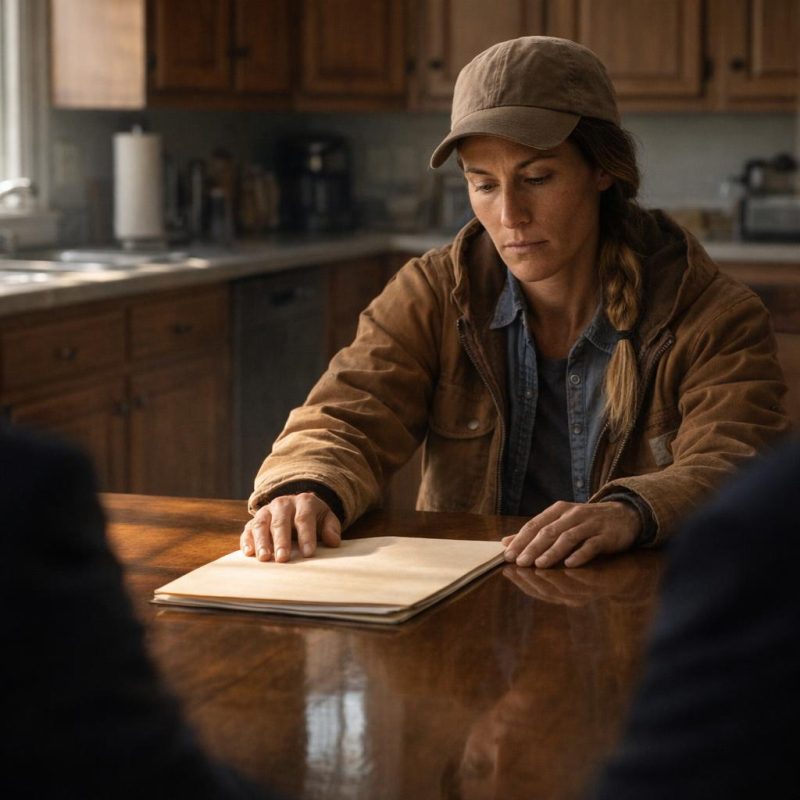 Image by RM AI
The Silence After
I stood on the porch and watched the black SUV roll down the driveway and disappear where the road bends behind the cottonwoods. Then I stood there a while longer, not quite ready to go back inside. The number was still sitting in my head, the way a loud sound stays in your ears after the source is gone. I didn't regret saying no. I want to be clear about that. But I'd be lying if I said I wasn't aware of what I'd just turned down, and what it might mean to turn it down. The lead representative's last words before he stood up had been polite enough on the surface — something about hoping I'd reconsider, about how the valley was changing whether anyone wanted it to or not. It was the kind of thing you could take two ways. I thought about the Morrison sign posts standing empty at the end of that driveway. I thought about the other ranchers who'd taken the offer, and whether they'd felt relief or loss or some complicated mixture of both. The cattle were moving in the south pasture, unbothered, the way cattle always are. The mountains hadn't changed. The land was exactly what it had always been. But the quiet that settled over the ranch as the afternoon light faded felt different from the quiet I'd woken up to that morning — heavier, like something had shifted just beneath the surface of it.
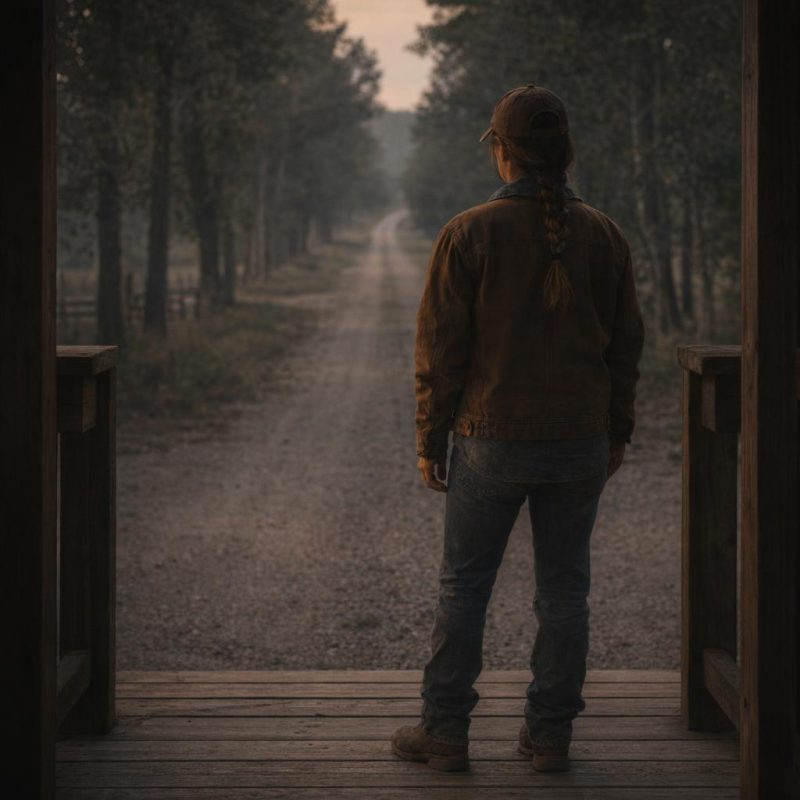 Image by RM AI
Watching the Boundaries
The day after I turned Apex down, I started paying attention to the road in a way I never had before. It runs along the eastern boundary for about a mile before it curves north, and I know every truck that uses it — neighbors, the feed supplier, the occasional hunter who takes the long way around. So when an unfamiliar black pickup rolled past at about ten miles an hour on Tuesday morning, I noticed. When a white SUV with no markings did the same thing Wednesday afternoon, I wrote down the time. Marcus spotted one from the upper pasture on Thursday — said it sat idling at the corner post for a good five minutes before it moved on. He came down to the barn that evening and we stood there comparing notes, and neither of us said what we were both thinking. We didn't need to. I started keeping a notepad on the kitchen windowsill, logging descriptions and times. Plates were always too far away to read clearly, which I suspected wasn't an accident. The vehicles never crossed the line. They never stopped long enough to give me a reason to call anyone. They just moved slowly along the edge of what was mine, like they were taking measurements. Marcus said it reminded him of something, but he couldn't quite place what. I could. It felt like being sized up.
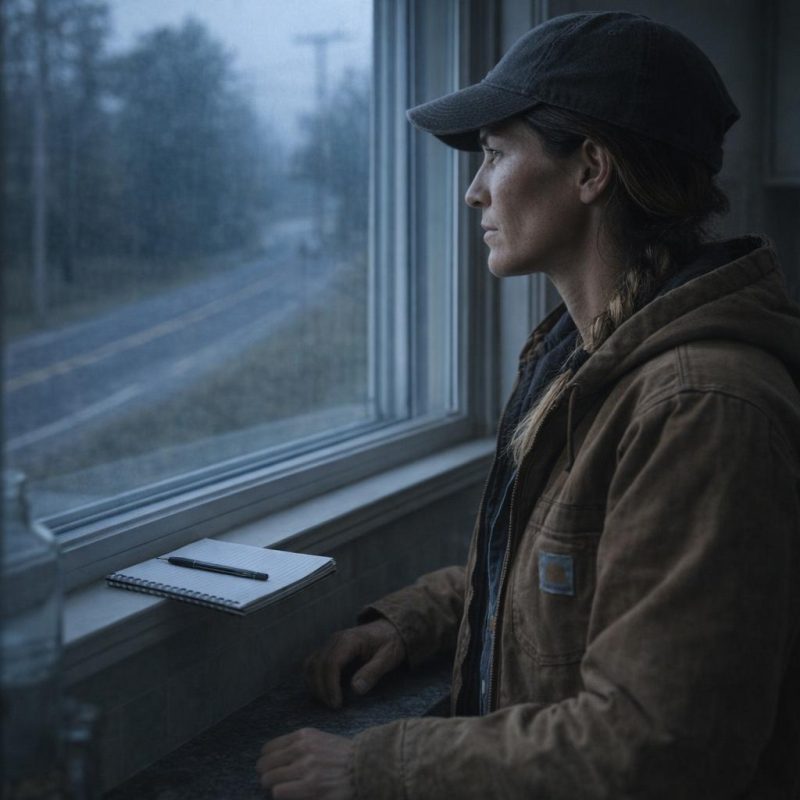 Image by RM AI
The Northern Ridge
The radio crackled just after seven in the morning, Marcus's voice tight in a way I hadn't heard from him in years. He said to come to the northern ridge. He said to come now. I didn't ask questions. I grabbed my jacket and drove the truck up the two-track as fast as the ruts would allow, and I could see him standing at the fence line before I even got the door open. I knew something was wrong by the set of his shoulders. I climbed out and walked toward him, and then I stopped walking because I could see it. A fence. Not the old wire we'd patched a hundred times — something new and heavy and deliberate, steel posts sunk deep, barbed wire strung tight in four rows, running east to west across the entire ridge as far as I could see in both directions. Marcus pulled his hat off and held it against his chest. He said they must have worked through the night. The cattle path that my grandfather's cattle had used, and his father's cattle before that, the path that led down to the river bend where the herd had watered every summer for as long as anyone could remember — it was gone. Blocked solid. I walked to the nearest post and put my hand on the wire and looked north toward where the water was, and I couldn't see the river anymore.
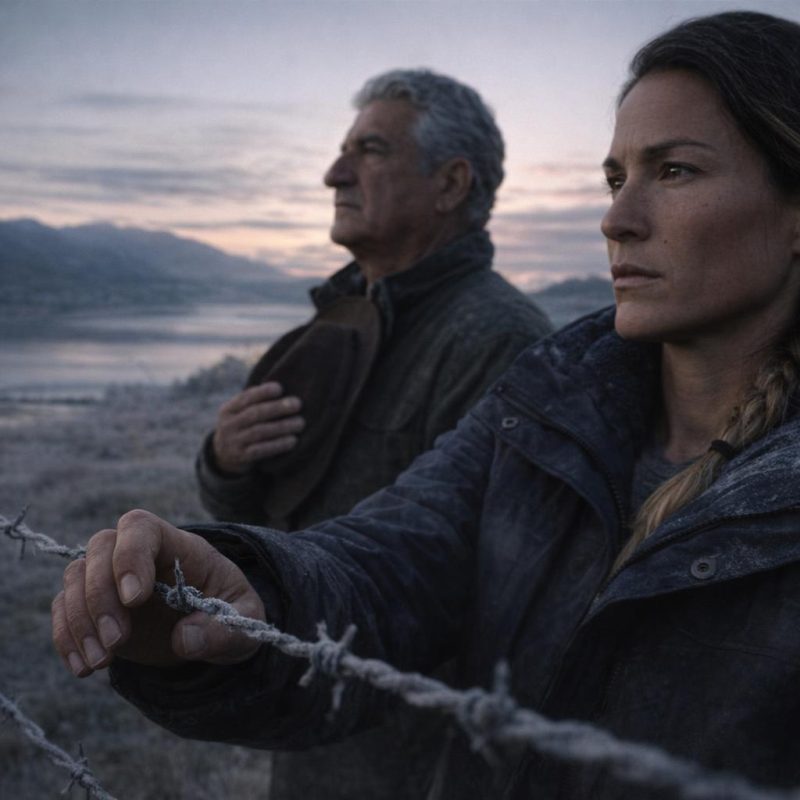 Image by RM AI
Measuring the Damage
We walked the full length of it that morning, Marcus on one side of me and silence on the other. I counted posts. I don't know why — there was nothing useful in the number — but I counted them anyway, the way you do something methodical when your mind is trying to stay ahead of what your gut already knows. The fence ran nearly three-quarters of a mile. Every gap, every low spot, every place where the old wire had sagged enough for cattle to push through over the years — all of it sealed. Marcus pointed out the construction quality without me asking. Whoever put this up knew what they were doing. The posts were set in concrete. I crouched down and looked at the base of one and thought about how long that must have taken, and how many people, and how they'd managed it without anyone seeing them until it was already done. We talked about the creek on the south end of the property. Marcus said what I already knew — that it runs thin by July, and with the herd at its current size, it wouldn't last us through August. I stood at the last post on the western end and looked back across the ridge. The mountains were the same. The sky was the same. But something essential had been taken out of the landscape, and I felt the absence of it settle into me like cold water.
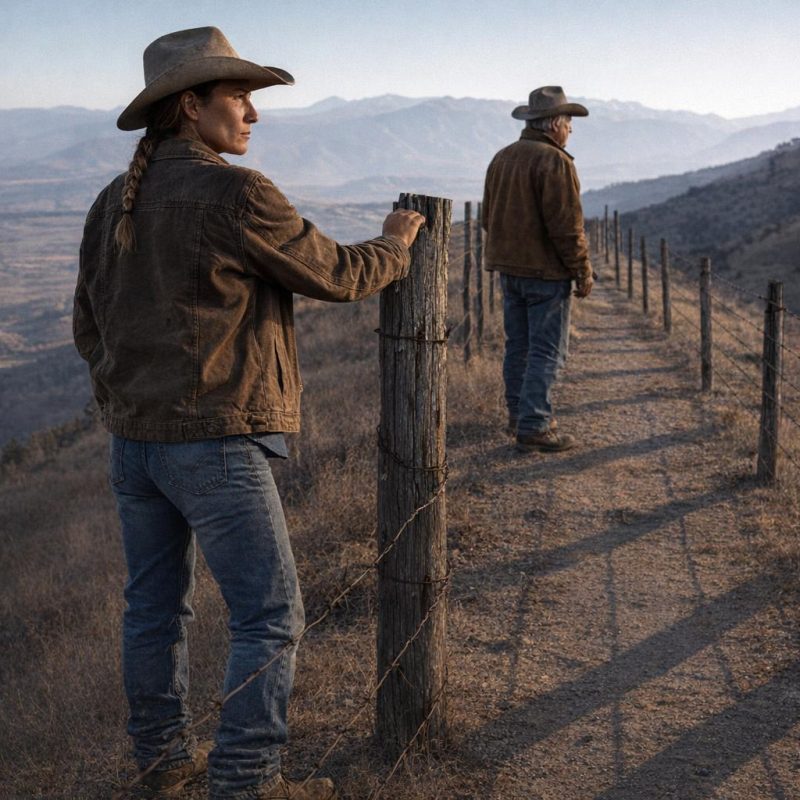 Image by RM AI
Summer Approaching
I sat at the kitchen table that night with a legal pad and a calculator and I did the math three times because I kept hoping I'd made an error. I hadn't. The south creek at full flow could support maybe sixty head through a dry summer. I was running two hundred and forty. The stock tanks would buy me a week, maybe ten days if I rationed carefully and the temperature stayed reasonable. But the forecast I'd pulled up on my phone showed a high-pressure system building over the region, and the long-range outlook had July running four to six degrees above average. I wrote the numbers down in a column and stared at them. I thought about calling someone, but I wasn't sure who. The sheriff had already made his sympathies clear enough. My neighbors were dealing with their own pressures. I got up and stood at the kitchen window and looked out at the dark where the pasture was, where I knew the herd was settled for the night, two hundred and forty animals that had no idea what was coming. My great-grandmother had kept a cattle operation on this land through the drought of 1934. My grandmother had held it through the hard winters of the sixties. I sat back down and put my pen to the paper again. I wasn't going to be the one who lost it. But the weight of all those lives depending on water I could no longer reach pressed down on me in the quiet of that kitchen like something physical.
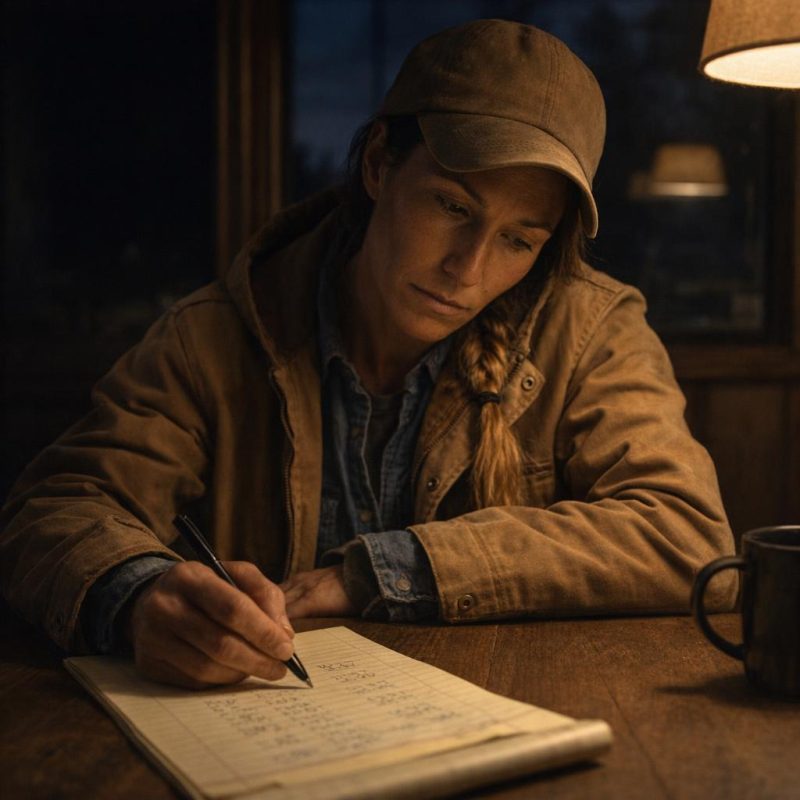 Image by RM AI
Marcus Remembers
Marcus was already at the fence line when I got there the next morning, coffee thermos in hand, studying the posts like they might tell him something new. We stood together for a while without talking, the way you do when there's nothing left to say about the obvious thing. Then he started talking about my great-grandfather, which surprised me. He said he remembered my grandmother mentioning the original homestead filing, back when Marcus was still a young man working for my grandfather. Said the family had come into this valley in the 1890s and filed under the federal homestead acts, and that the original grants had been specific — not just the land, but the water. He said in those days, when a man filed a homestead claim in Montana, sometimes the deed language covered the riverbed itself, not just the access to it. I'd never heard that before. I asked him if he was sure and he said he wasn't sure of anything, that it was old family talk and he could be misremembering. But he said it was worth looking at the original documents before I did anything else. He tapped the fence post with one knuckle, like he was making a point to it rather than to me. Then he looked at me and said that if my great-grandfather had filed what he thought he'd filed, the question of who owned that riverbed might not be as settled as Apex seemed to think it was.
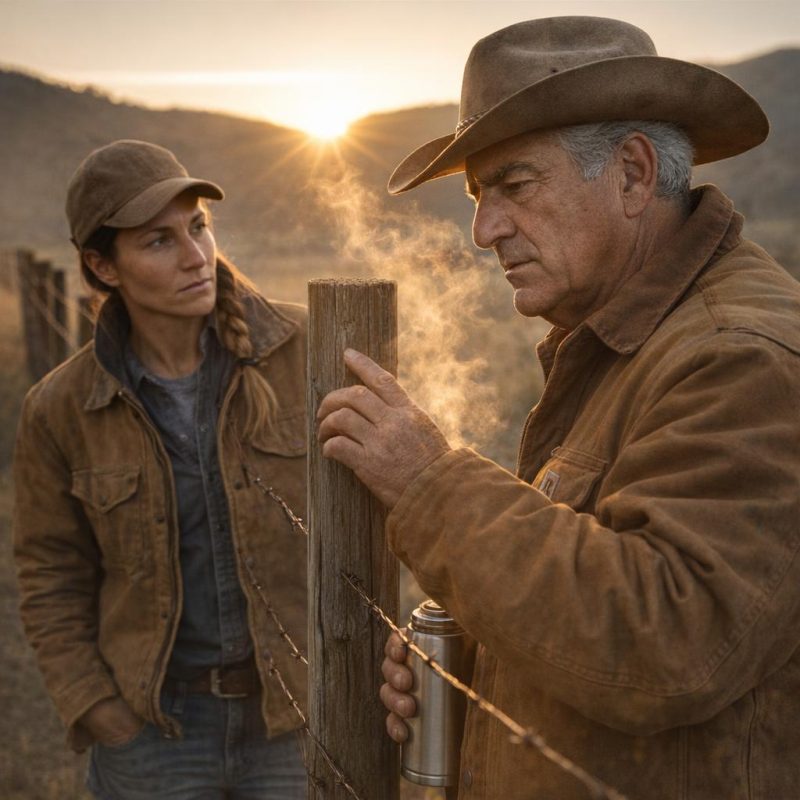 Image by RM AI
The County Archives
I drove to the county courthouse the next morning before I'd fully talked myself into it, which is sometimes the only way I can make myself do things I'm dreading. The building smelled like old carpet and copy toner, and the woman at the front desk looked at me the way county clerks look at people who come in without an appointment and ask for something complicated. I told her I needed land deeds from the 1890s, Harper family, original homestead grants. She typed something, looked at her screen, typed something else. Then she told me that records that old weren't digitized. I said I figured as much. She said they were in the basement. She said it like a warning. She came around the desk and led me to a stairwell I wouldn't have found on my own, and we went down one flight into a room that smelled like dust and old paper and something faintly metallic, the smell of documents that haven't been touched in a long time. She pulled the chain on an overhead light. The room ran the full length of the building, filing cabinets standing in rows, each one labeled with ranges of years in faded marker. She pointed toward the far end of the room where the oldest cabinets stood, their metal surfaces gone dull with age, and told me that was where I'd want to start.
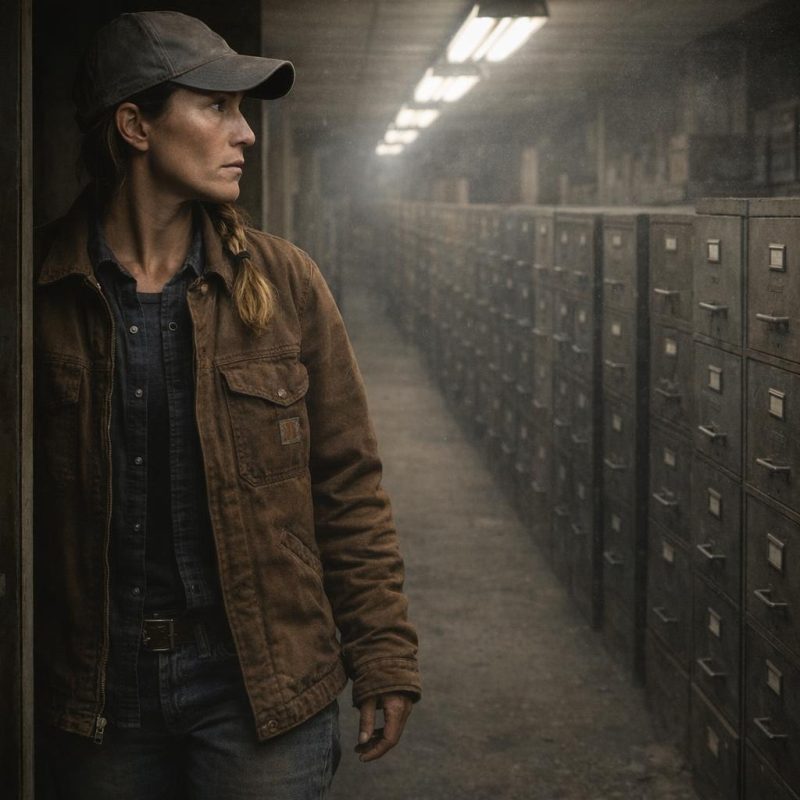 Image by RM AI
Dust and Determination
I was down there for seven hours the first day. I brought a notepad and two pens and I went through every drawer in the 1888 through 1895 range, pulling folders, unfolding documents that hadn't been opened in decades, trying to read handwriting that ranged from careful copperplate to something that looked like it had been written during an earthquake. My eyes ached by noon. I developed a system around two in the afternoon — scan for the word Harper first, then check the date, then read the full document if both matched. It helped, but not enough. Most of what I found was other families, other claims, boundary disputes that had been settled before my grandmother was born. I found a deed for a man named Elias Pruitt that took me twenty minutes to read and turned out to be completely irrelevant. I found a water dispute from 1891 that made me hopeful for about thirty seconds before I confirmed it had nothing to do with our land. By five o'clock my back hurt and the overhead light was giving me a headache and I was starting to wonder if Marcus had been working from a memory that was more feeling than fact. Then I pulled a folder from the back of the 1892 drawer and unfolded a county register page, and near the bottom, in ink that had faded to the color of old tea, I found the Harper name next to a notation that read: water claims, northern tributary, filed and recorded.
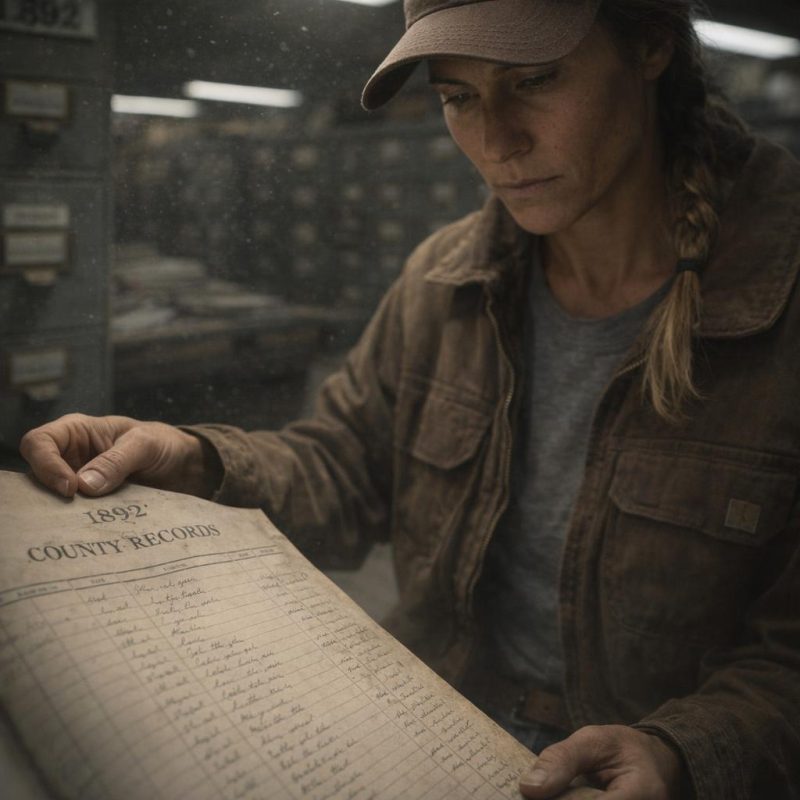 Image by RM AI
Piecing Together History
I came back the next morning with better reading glasses and a thermos of strong coffee and I stayed until the clerk locked up. The county register entry from the day before was my anchor point, and I worked outward from it, cross-referencing the claim number against the property map ledgers stored in the wide flat drawers along the north wall. The maps were hand-drawn, some of them, ink lines on paper that had gone soft with age, and I had to handle them carefully. But the boundaries were there. I could trace them. My great-grandfather's original claim ran further north than the current deed described — further north, and specifically along the river corridor. I found a homestead grant document from 1893 that referenced the water claim by number, and then a survey notation from 1897 that placed the Harper family's northern boundary at the river's edge. I photographed everything with my phone, made handwritten notes of document numbers and dates, built a cross-reference list that covered four pages of my notepad. I didn't have a lawyer's understanding of what any of it meant in a modern court. But I could see the shape of something — documents connecting to documents, dates aligning, a chain of recorded claims that started with my great-grandfather and ran forward through time. I sat in that basement room with the papers spread around me, and for the first time in days, the thing taking shape in my hands felt like it might actually hold weight.
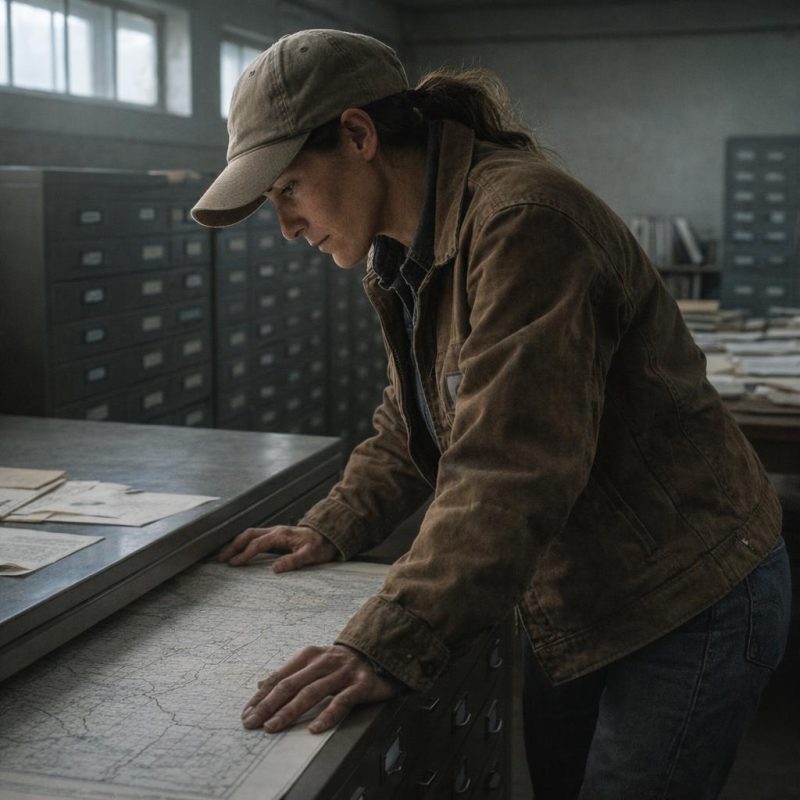 Image by RM AI
The Third Day
By the third morning I was running on coffee and stubbornness and not much else. My eyes ached from reading faded ink under bad fluorescent light, and my notepad was nearly full. I had worked through most of the filing cabinets along the east wall, and I was starting to wonder if the document I needed had been lost or destroyed or simply never recorded the way I hoped. I gave myself one more hour. I started on a cabinet I had skipped earlier — the one shoved into the corner behind the door, the one that looked like nobody had touched it in decades. The folders inside were out of order, misfiled, some of them stuffed with documents that belonged in entirely different sections. I almost missed it. It was tucked inside a folder labeled 1903 Miscellaneous, which is why it had been sitting there untouched. I pulled it out carefully, the paper stiff but clean, barely yellowed, as if it had been protected by the misfiling itself. The handwriting was formal and deliberate. The date at the top read 1890. My great-grandfather's name was on it. And below his name, in plain legal language, was a description of the property boundary that ran directly along the mountain riverbed — not beside it, not adjacent to it, but including it, the riverbed itself, deeded to the Harper family in full.
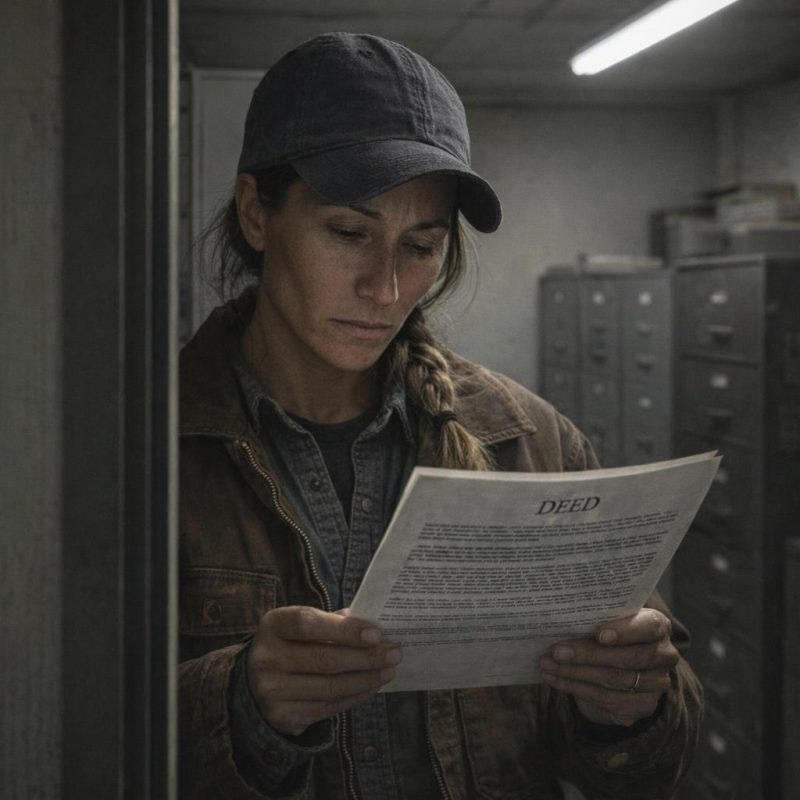 Image by RM AI
Building the Case
I spent the next morning at the county clerk's counter with a stack of documents and a very patient clerk named Doris who had worked there for thirty years and knew exactly which certification stamps went where. I had the 1890 deed, the 1893 homestead grant, the 1897 survey notation, and every cross-reference document I had photographed and noted over three days. Doris certified each one. I watched her press the seal into the paper and felt something settle in my chest each time. Back at the truck, I organized everything into a manila folder I had labeled in block letters across the tab: HARPER WATER RIGHTS — ORIGINAL CLAIM. I arranged the documents in chronological order, oldest first, with a handwritten index on top listing each item by date and document number. I read through the index twice, checking it against my notepad. Everything was there. The chain ran clean from 1890 forward — claim, grant, survey, deed, each one referencing the next, each one on record with the county. I had spent three days in a basement room with bad lighting and older coffee than I usually drink, and what I had built was a paper trail that started with my great-grandfather's signature and ended with Apex's fence posts sitting on land they had no legal right to touch. I closed the folder and set it on the passenger seat beside me, and the afternoon light came through the windshield and lay across it like it belonged there.
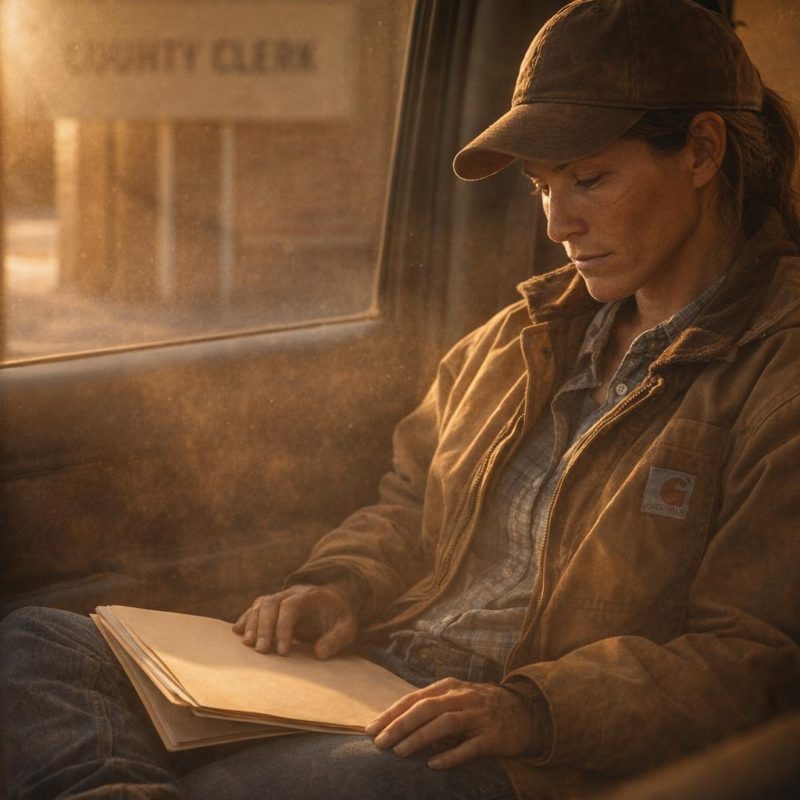 Image by RM AI
The Ride to Apex
I saddled Reckoning before first light, while the air still had that cold edge that bites through a jacket. Marcus watched me from the barn door without saying much. He knew where I was going. I had the folder tucked inside my saddlebag, wrapped in a piece of oilcloth to keep it dry, and I had my good boots on and my jaw set. The ride across the north pasture took about forty minutes at an easy pace. I let Reckoning set the rhythm and I watched the land move past me — the grass still brown from the dry stretch, the fence lines my grandfather had strung, the ridge to the west that caught the first color of morning. I had ridden this ground my whole life. My father had ridden it before me, and his mother before him, and her father before her, all the way back to the man whose name was on that 1890 deed. Apex's trailer came into view when I crested the low rise above the river corridor — a long silver rectangle that looked like it had been dropped there from another world, all clean angles and corporate logo on the side. I pulled Reckoning to a walk. The folder was in my saddlebag. The documents were certified and in order. Every hoofbeat on that last stretch of ground felt like it carried the weight of everything I was riding toward.
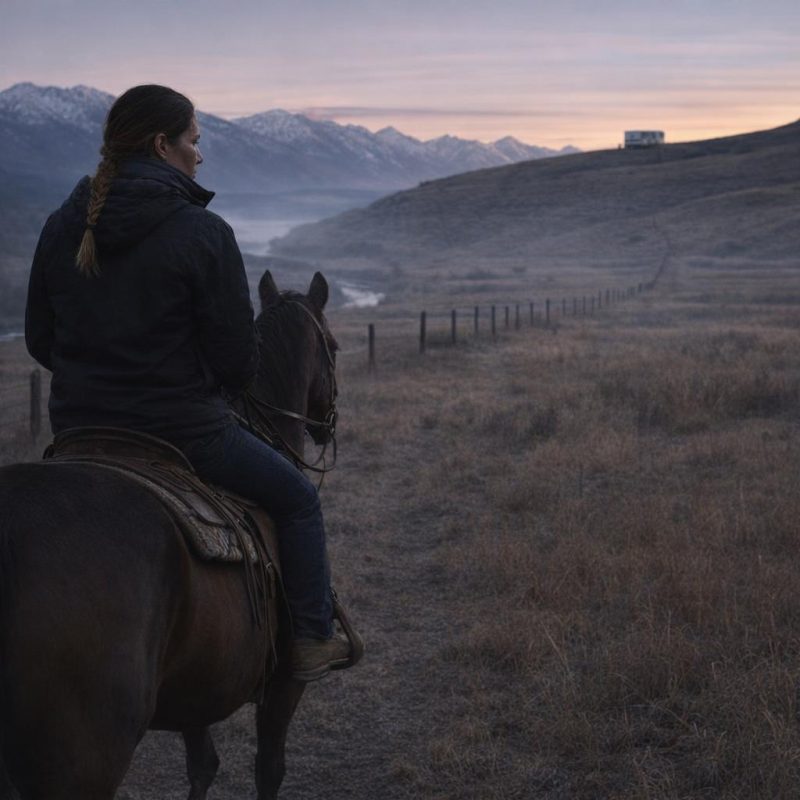 Image by RM AI
Garrett's Office
The inside of that trailer was not what I expected. I had pictured something functional — folding tables, laptops, the kind of temporary setup you see at a job site. What I walked into looked like a real office. Dark wood panels on the walls, a proper desk, framed maps of the county behind it. The air smelled like expensive coffee and something faintly chemical, like new carpet. A young woman at a front desk looked up when I came in and asked if I had an appointment. I told her I didn't need one. She picked up a phone. I stood there in my barn coat and good boots and waited, and about two minutes later a door at the back of the trailer opened and Garrett Voss walked out. I had seen his name on the Apex correspondence. Seeing him in person was something else. He was tall, dark-haired, wearing a suit that probably cost more than my truck payment. His watch caught the light when he moved. He looked at me the way people look at something they have already categorized and filed away — not rude, exactly, just efficient. He said my name and extended his hand and smiled like we were meeting at a chamber of commerce luncheon. I shook it. His grip was firm and dry and told me nothing. He gestured toward the door at the back of the trailer and said, please, come in, and then he gestured toward a chair across from his desk with complete calm.
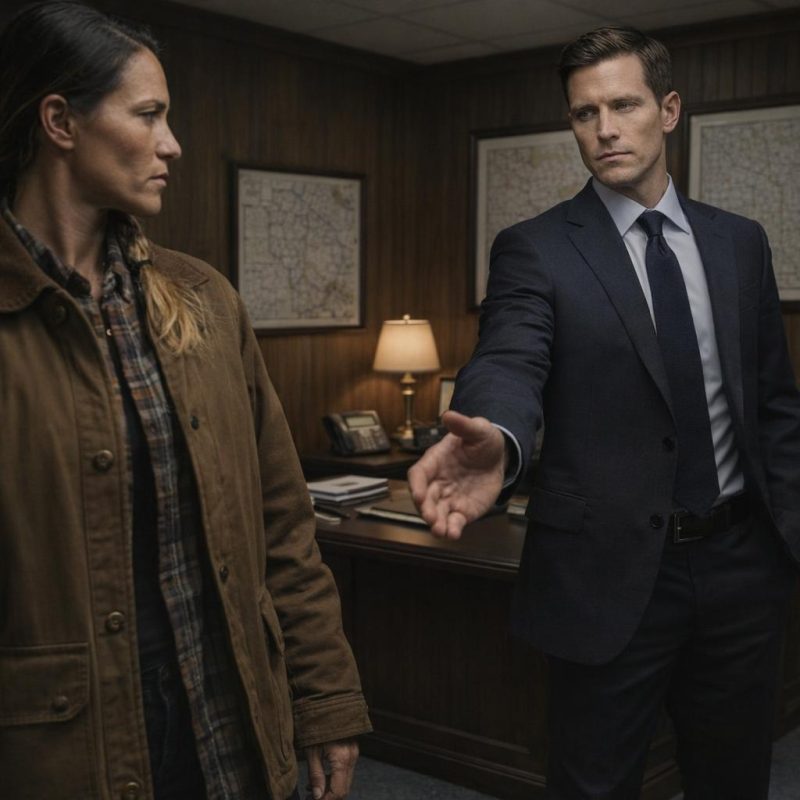 Image by RM AI
Armed with History
I sat down across from him and did not take off my coat. The chair was leather, the kind that costs more than it should, and I felt the contrast of it against my worn jacket without letting it bother me much. Garrett settled into his chair on the other side of the desk and folded his hands and waited. He had the patience of someone who was used to letting other people go first. I reached into my bag and pulled out the folder. I set it on my knee, not on his desk — not yet. The folder was thick, the tab label visible, the oilcloth still faintly creased from the saddlebag. I had spent three days building what was inside it. I had driven to the county seat twice, stood at a clerk's counter while a woman named Doris pressed certification seals into paper that was older than anyone in this room. I had cross-referenced claim numbers against hand-drawn maps and traced a chain of ownership that ran unbroken from 1890 to the present day. Garrett watched me without speaking. His expression was attentive and neutral, the way a man looks when he has been trained to look interested. I rested my hand on the folder and felt the quiet certainty of it settle into my bones — the weight of a hundred and thirty years of documented fact, sitting right there in my lap, ready.
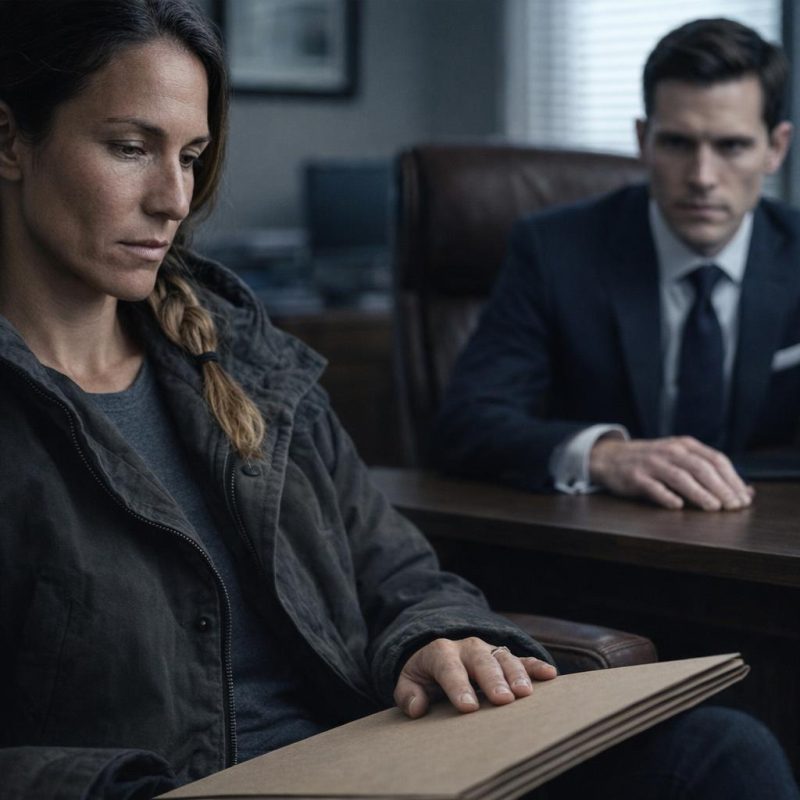 Image by RM AI
The Weight of Paper
I opened the folder and walked him through it from the beginning. I told him about my great-grandfather filing the original homestead claim in 1890, about the grant document from 1893, about the survey notation from 1897 that placed the Harper family's northern boundary at the river's edge — not near it, at it. I told him the 1890 deed described the riverbed itself as part of the Harper claim, in plain language, on a document that had been sitting in the county archives for a hundred and thirty years. I laid each certified copy on his desk as I named it, in order, oldest first. I told him that Apex's fencing sat on land my family had owned since before Montana was a state, and that every post they had driven into that ground constituted illegal trespass. I told him I wanted the fences removed. I watched his face the whole time I was talking. I was looking for the thing I expected to see — some flicker of concern, a tightening around the eyes, the small physical tells that come when a person hears something unsettling. I didn't find them. He sat with his hands folded on the desk and his eyes on me and he listened without interrupting, without shifting in his chair, without so much as glancing at the documents I had placed in front of him. His expression was still and professional and gave me nothing at all.
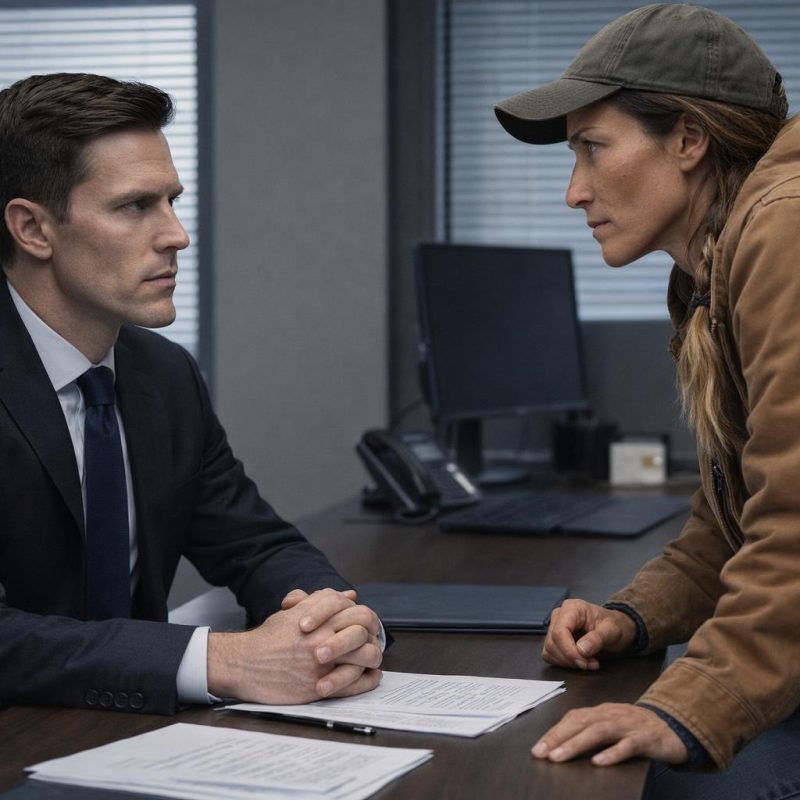 Image by RM AI
The Deed on His Desk
I had held the 1890 deed back until last, and when I was done talking I set it on his desk with more force than I intended. The sound of it landing was sharp in that quiet room. I told him that was the original deed, certified copy, and that it proved beyond any reasonable argument that the Harper family owned the riverbed itself — not the land beside it, the riverbed — and that Apex had no legal right to fence it, block it, or restrict my cattle's access to it in any way. I told him I wanted the fences down by the end of the week or I would be filing for an emergency injunction. I sat back and waited. He looked down at the deed. It was a brief look, unhurried, the way you glance at something you have already seen before. Then he looked back up at me, and the expression on his face was not what I had prepared for. It was not alarm. It was not the careful blankness of a man trying to hide his reaction. It was something closer to amusement — not a smile exactly, but the shape of one, sitting just behind his eyes, like he was watching a hand play out that he had already seen the end of.
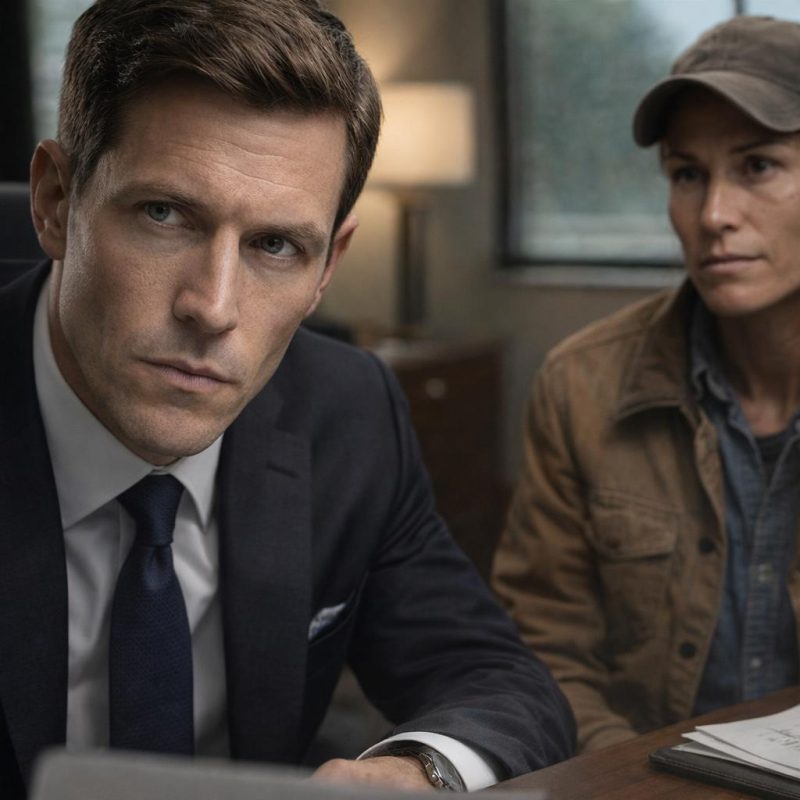 Image by RM AI
The Smirk
He picked up the deed and held it for a moment, turning it slightly in his hands the way you handle something you find mildly interesting. Then he set it back down on the desk between us, carefully, almost gently, and leaned back in his chair. He crossed one leg over the other and rested his hands on the arms of the chair and looked at me with the kind of ease that doesn't come from arrogance alone — it comes from knowing something you don't. I kept my face steady. I had ridden forty minutes across my own land with a folder full of certified documents to sit in this chair, and I was not going to let his body language shake me before he had said a single word in response. But something was wrong. I could feel it the way you feel a change in weather before the clouds arrive — a pressure shift, a stillness in the air. He had not looked at my documents the way a man looks at a problem. He had looked at them the way a man looks at something that no longer applies. He held my gaze for a moment, and then he turned in his chair and reached for the safe mounted on the wall behind his desk.
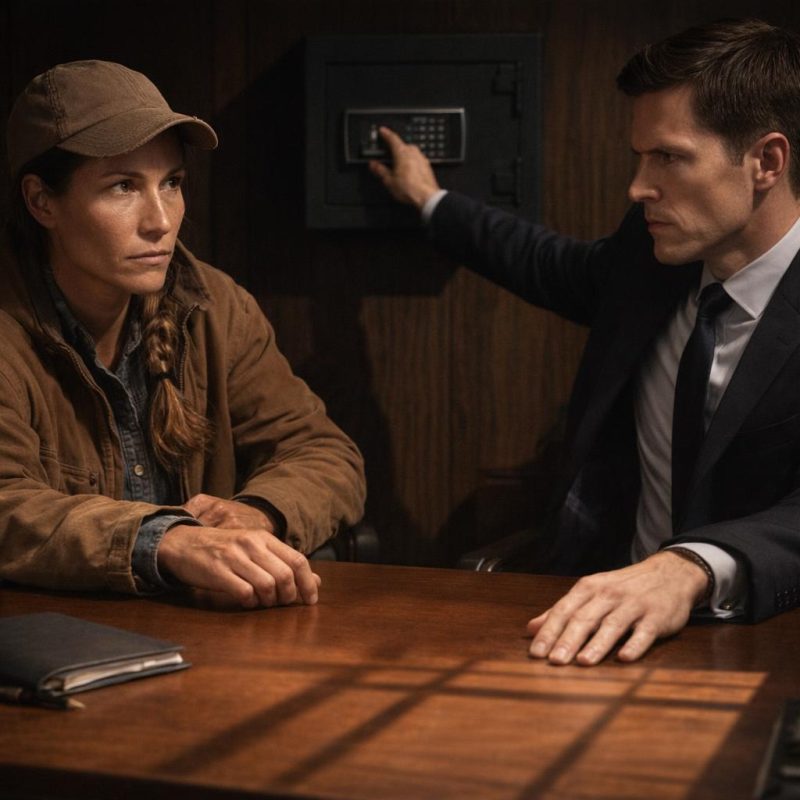 Image by RM AI
From the Safe
He didn't open the safe the way a man opens something he's proud of. He opened it the way a man opens something he's already won with. The dial turned, the door swung, and he reached inside without looking — like he'd done it a hundred times and knew exactly where his hand was going. I sat very still. My folder of certified documents was still on the desk between us, and I had the sudden, cold feeling that it was about to become irrelevant. He pulled out a single document, maybe eight or ten pages, bound with a metal clip at the top left corner. He set it on the desk the same way he'd set my deed down — carefully, without drama, like a man who doesn't need drama because the facts are already doing the work for him. I could see from where I sat that it was professionally formatted. Heavy paper stock. A gold embossed seal near the top. Multiple signature blocks at the bottom of what looked like the final page. Official. Thorough. The kind of document that doesn't get produced in a hurry. He folded his hands on the desk and watched me look at it, and said nothing at all.
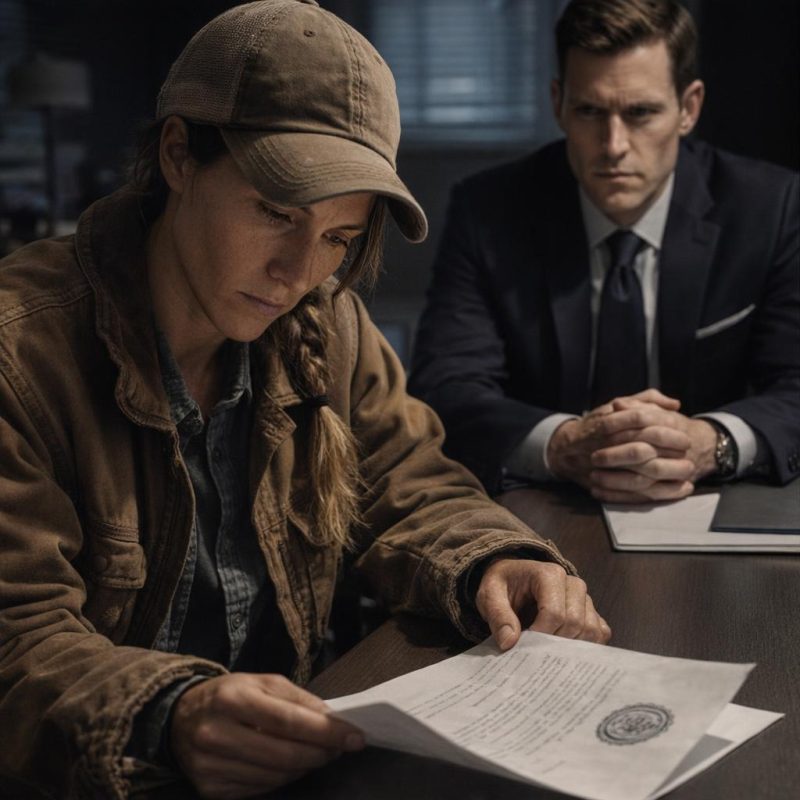 Image by RM AI
Reading the Header
He slid it toward me without a word, and I leaned forward and read the header. Water Rights Purchase Agreement. I read it twice because the first time didn't fully land. I knew what water rights were the way most ranchers know — you need them, you have them, they come with the land. That's what I had always believed. That's what my father had believed, and his mother before him. The land and the water were one thing. You didn't separate them any more than you'd separate a man from his lungs. But the language at the top of that document said something different. It said that water rights were a distinct legal property interest, transferable independent of surface ownership. I didn't know all the legal terms, but I understood enough. Apex wasn't claiming my land. They were claiming something underneath it, something that ran through it, something my cattle needed to survive. I looked up at Garrett. He was watching me with that same settled patience, like a man who has already seen this exact moment play out and knows how it ends. I looked back down at the page. The land deed in my folder suddenly felt like a key to a door that no longer led anywhere useful.
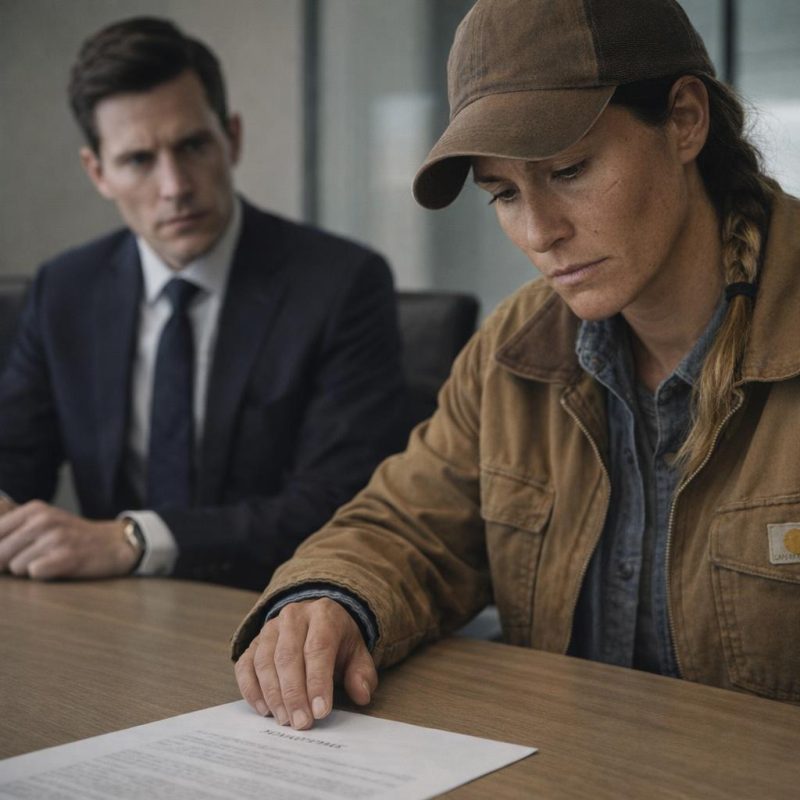 Image by RM AI
The Date
My eyes moved down the page, past the legal definitions and the property descriptions, looking for something I could push back against. Then I found the date. It was printed clearly in the header block, the way official documents always are — no ambiguity, no room for argument. Two years ago. I sat with that for a moment. Two years ago I was still fighting through the divorce, still trying to hold the ranch together with half a crew and a bank account that was bleeding out. Two years ago I hadn't yet driven to Helena to dig through the archive boxes. I hadn't found the 1890 deed. I hadn't known I needed to look. Garrett had been sitting on this document for two years while I was scrambling to understand what I even owned. The contract had a date, and the date was real, and two years of legal possession is not nothing. I knew that much without needing a lawyer to explain it. I set the page down carefully, the way you set something down when you don't trust your hands. The room felt quieter than it had a few minutes ago, and the weight of that date sat in the air between us like something neither of us needed to name.
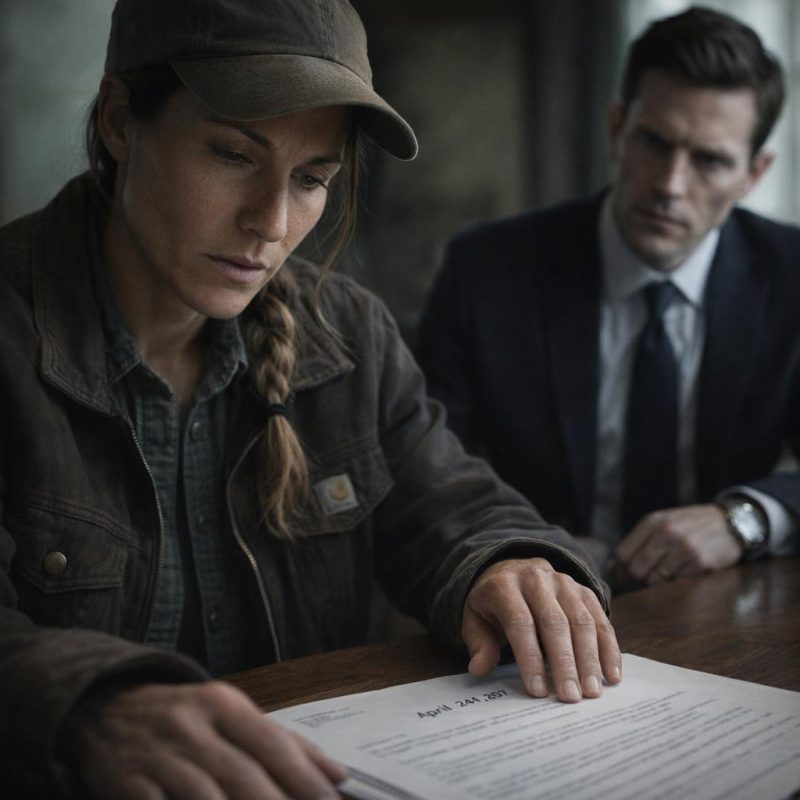 Image by RM AI
The Contract
Garrett reached across and slid the contract the rest of the way toward me. "Read it," he said. "Take your time." There was nothing generous in the offer. I picked it up and started from the top, reading slowly, the way you read something when you know you can't afford to miss a word. The legal language was dense — defined terms, cross-references, exhibit attachments — but I worked through it. The property description matched my land. The water source was identified as the tributary running along the eastern boundary, the same one my cattle had used every summer for as long as I could remember. The agreement outlined exclusive rights to divert, use, and restrict access to that water source. Exclusive. I kept reading. The terms were clean. The representations and warranties section was thorough. Whoever had drafted this had not done it cheaply or carelessly. I turned to the financial terms page and ran my finger down the column until I found the purchase price listed in bold type at the center of the page, and the number stopped me cold — two hundred thousand dollars.
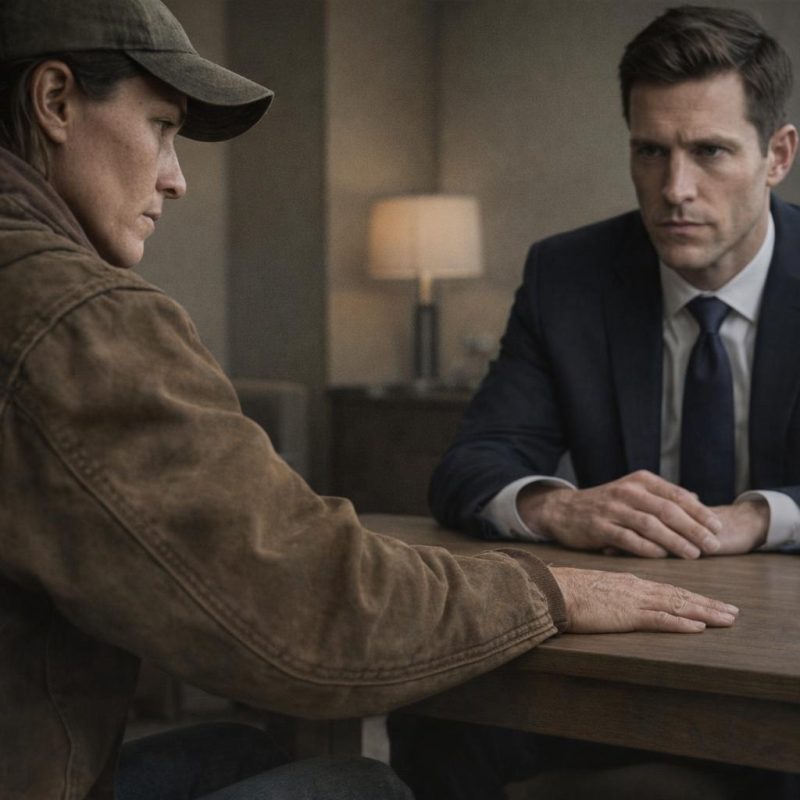 Image by RM AI
Legal Language
I set the page down and went back to the beginning, reading slower this time, trying to understand the legal framework rather than just the facts. The contract cited Montana water law statutes I had never heard of. It explained that in Montana, water rights are governed under the prior appropriation doctrine — first in time, first in right — and that those rights can be held, sold, and transferred entirely separately from the land they were historically associated with. I had always assumed the river was mine because the land was mine. That's not how the law saw it. The law saw the water as its own thing, with its own chain of title, its own deed, its own history. My 1890 land deed proved I owned the surface. It said nothing about the water running beneath and beside it. I thought about my cattle standing at a fence line they couldn't cross, thirsty in the July heat. I thought about the fence posts Apex had driven into ground my family had worked for over a century. And I understood, sitting in that chair with the contract in my hands, that owning the land without owning the water was like owning a house with no roof — technically yours, and completely unlivable.
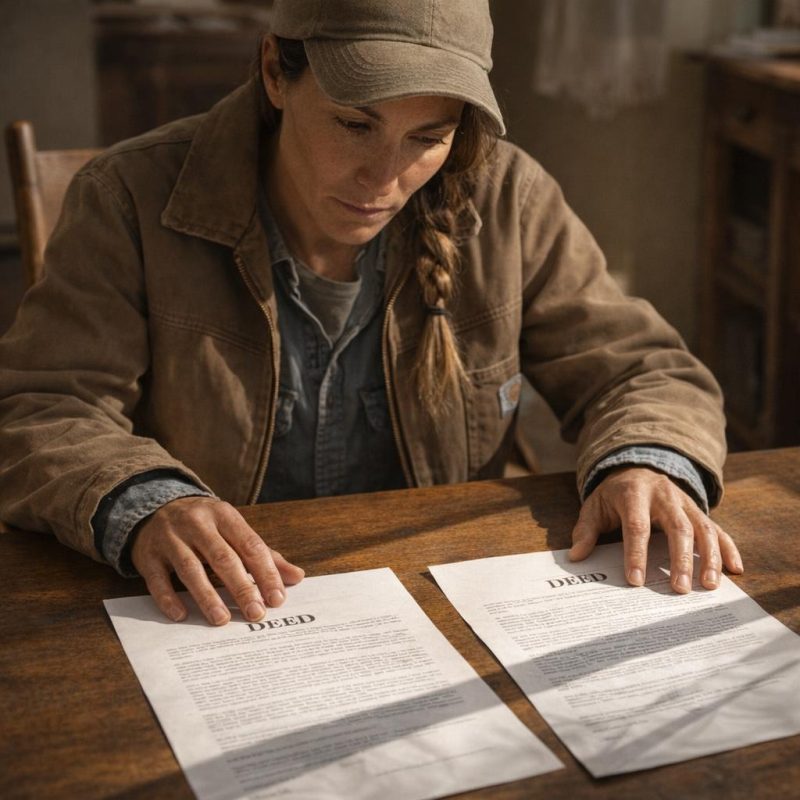 Image by RM AI
The Question
I set the contract down on the desk and looked up at Garrett. My hands were steadier than I expected them to be. "Who signed this?" I asked. "Who sold you my family's water rights?" He didn't answer right away. He leaned back in his chair and let the question sit there between us, and I had the feeling he had been waiting for me to ask it — that this was the part of the conversation he had been moving toward since I walked through his door. I held his gaze and didn't fill the silence. I had learned a long time ago that the person who speaks first in a silence like that is the one who loses ground. I thought about who could have had legal standing to sell. You couldn't sell what you didn't own, and you couldn't own what wasn't in your name. During the divorce, the property had been in both our names for a period — that was just how the legal process worked. I hadn't thought much about it at the time. I had been focused on keeping the ranch, not on cataloguing every right attached to it. I looked at Garrett and waited, and the silence between us stretched taut and thin, like a wire pulled past what it was built to hold.
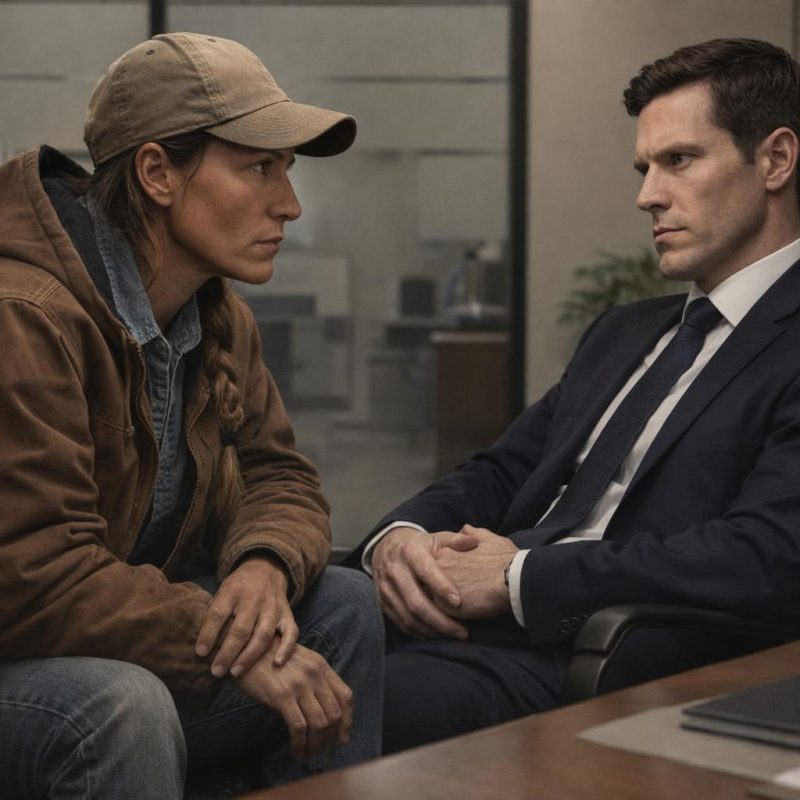 Image by RM AI
Garrett Explains
He leaned forward and set his elbows on the desk. "Water rights are a separate legal instrument," he said. "They don't transfer automatically with a land deed. They have to be conveyed independently, and they can be sold by anyone who holds a legal interest in them." He said it the way you explain something to someone you've already beaten. "The seller had full legal authority at the time of the transaction. The title was clear. The sale was properly recorded with the state." I watched his face. He wasn't rushing. He wasn't nervous. He had the ease of a man reading from a script he wrote himself. "The transaction was completed during a period when the property title was held jointly," he said. "During the divorce proceedings." Something moved through my chest — not quite a thought, more like a door swinging open onto a room I hadn't known was there. During the divorce. Joint title. Someone with legal standing. I started running the timeline in my head, and the numbers lined up in a way that made my stomach drop. I hadn't finalized the title transfer until the settlement was complete. The ranch had been in two names for a stretch of months. Garrett looked at me steadily and said the seller's name had been on the property title at the time of signing.
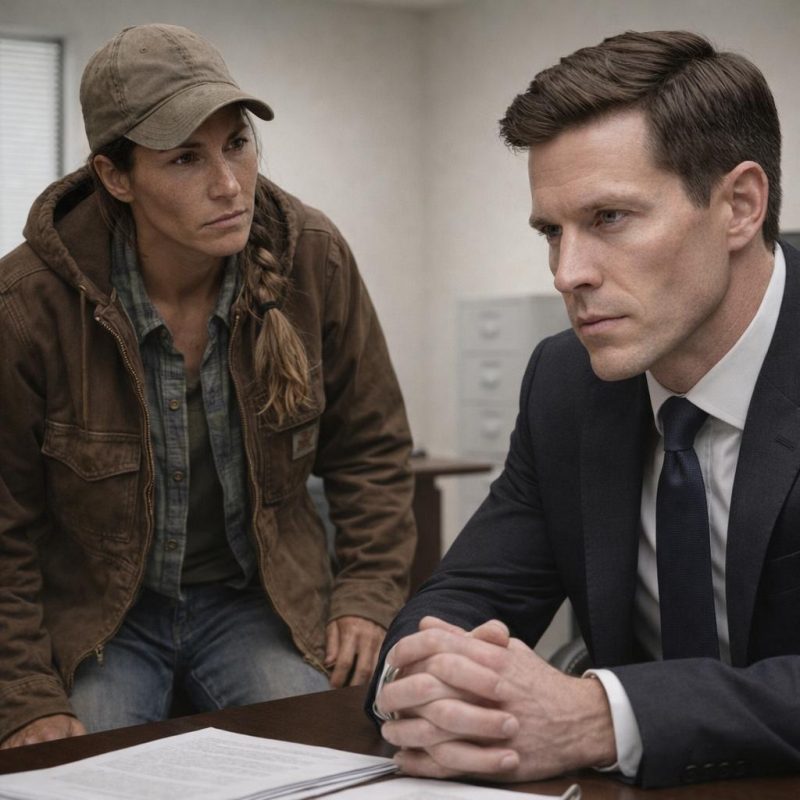 Image by RM AI
The Signature Line
I pulled the contract across the desk toward me and turned to the final page. I told myself I needed to see it. I needed to see the name printed there, official and undeniable, before I let myself believe any of this was real. The signature block was at the bottom, formatted the way legal documents always are — a line for the signature above, a printed name below, a date to the right. I looked at the printed name first, but my eyes had already gone to the signature above it, the way your eyes sometimes find what they're looking for before your brain has finished asking the question. The handwriting was angular and left-leaning, with a particular way of looping the capital letters that I had seen on birthday cards and on the back of checks and on a note left on the kitchen counter more mornings than I could count. I knew that handwriting before I read the name beneath it.
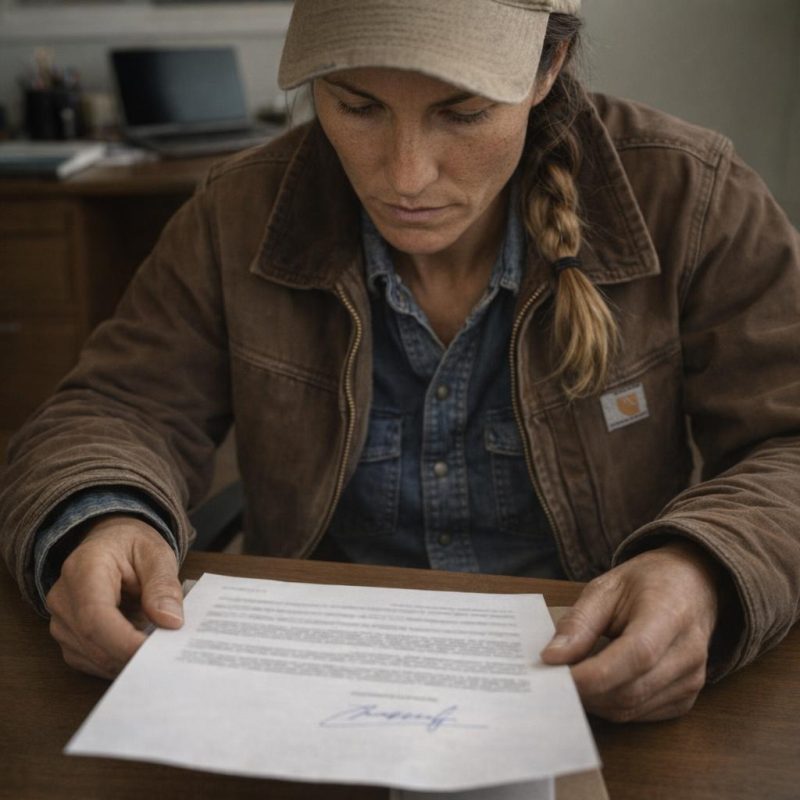 Image by RM AI
Travis Bowman
Travis Bowman. The name was printed in clean block letters beneath that angular, left-leaning signature I would have known anywhere. I sat there staring at it long enough that the letters started to blur at the edges. My ex-husband. His name on the seller's line of a water rights contract. I set the page down on Garrett's desk because my hands had started to shake and I didn't want him to see it. Garrett didn't say anything right away. He let the silence do its work. When I finally looked up at him, his expression was exactly what I expected. Composed. Patient. Like a man who had nowhere else to be. I asked him how much. I don't know why that was the first question out of my mouth, but it was. Maybe because the number would make it real in a way the signature hadn't quite managed yet. Garrett straightened the cuff of his jacket and told me Travis Bowman had sold the water rights to Apex Land Holdings for two hundred thousand dollars.
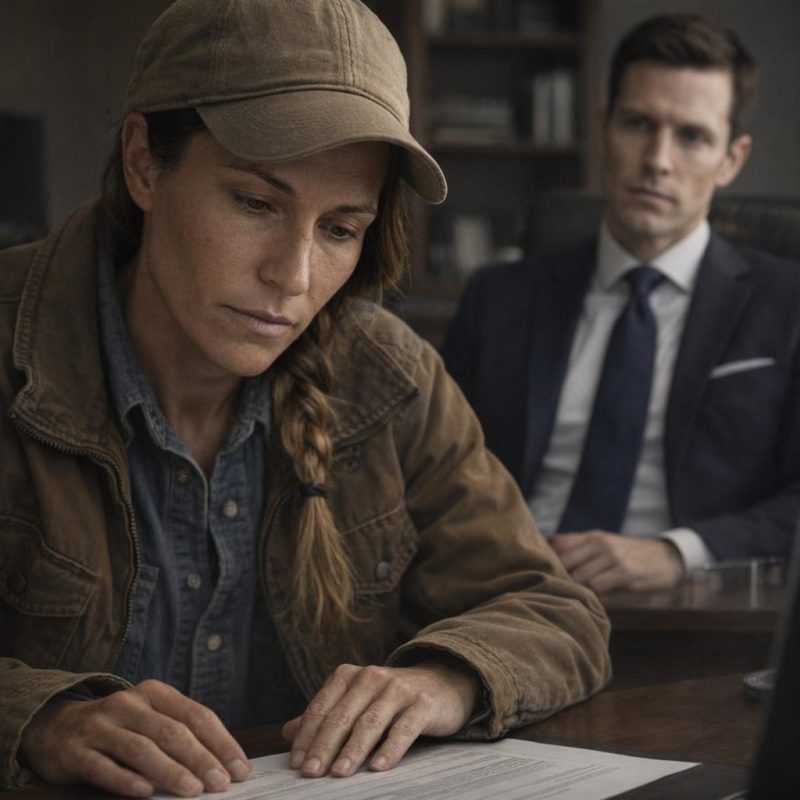 Image by RM AI
The Divorce
Two hundred thousand dollars. I kept turning that number over in my mind while Garrett's office hummed with the quiet of the air conditioning and the distant sound of equipment running somewhere outside. Two years ago, when Travis and I were in the middle of the ugliest stretch of our divorce, I had been so consumed with keeping the ranch operational that I hadn't tracked every piece of paper that crossed my desk. The lawyers were handling the asset division. I was handling the cattle, the fencing, the hay contracts, the payroll. I trusted the process because I didn't have the bandwidth to do anything else. Travis had been difficult throughout — dragging his feet on signatures, disputing things that weren't worth disputing, making the whole proceeding take twice as long as it should have. I remembered thinking at the time that he was just being spiteful. That was Travis. He made everything harder than it needed to be. But then the papers were finalized, and within two weeks he was gone. No forwarding address. No goodbye. Just gone, the way water disappears into dry ground. I had told myself he was embarrassed. That he couldn't face what he'd done to our marriage. Now I sat in a corporate trailer on the edge of my own land, and the money he'd left with had a name and a number attached to it.
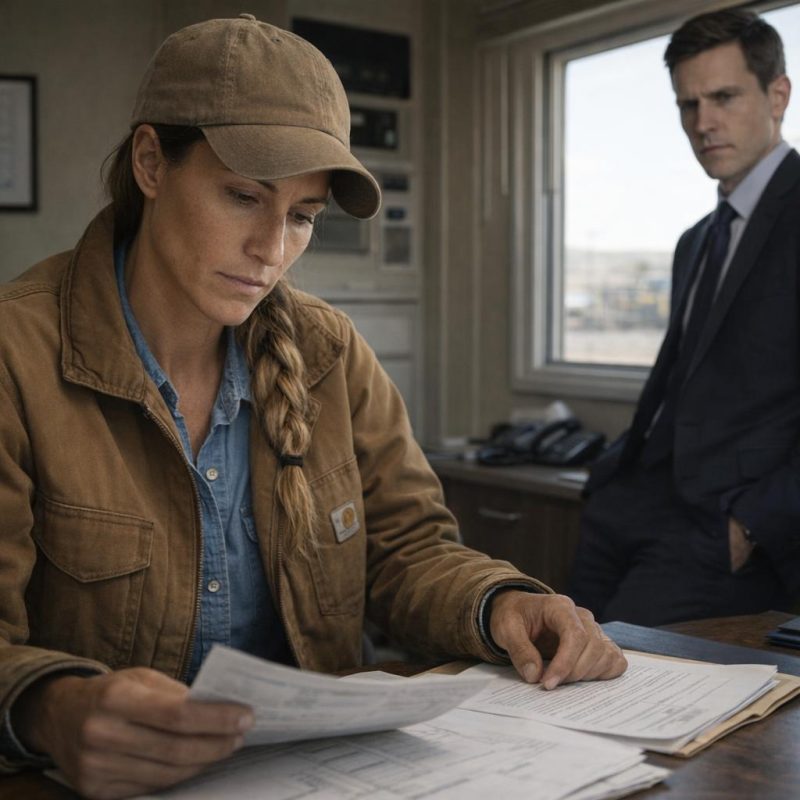 Image by RM AI
Before He Left
I pulled the contract back across the desk toward me. I needed to see the date. Garrett watched me without moving, his hands folded in his lap, and I hated how still he was while everything inside me was coming apart. I found the execution date near the top of the signature page — a standard line, the kind you'd overlook if you weren't looking for it. I read it twice. Then I read it a third time. I asked Garrett, my voice coming out flatter than I intended, whether this date was correct. He said it was. He said his legal team had verified the timeline thoroughly before the transaction closed. Three days. Travis had signed this contract three days before our divorce was finalized. Three days before the ink was dry on the papers that ended our marriage, he had walked into some lawyer's office and put his name on a document selling the water rights to my family's river. While we were still legally married. While he still had the legal standing to do it. I pressed my finger against the date on the page — the paper was cool and slightly slick under my fingertip — and the number stared back at me, fixed and permanent and impossible to argue with.
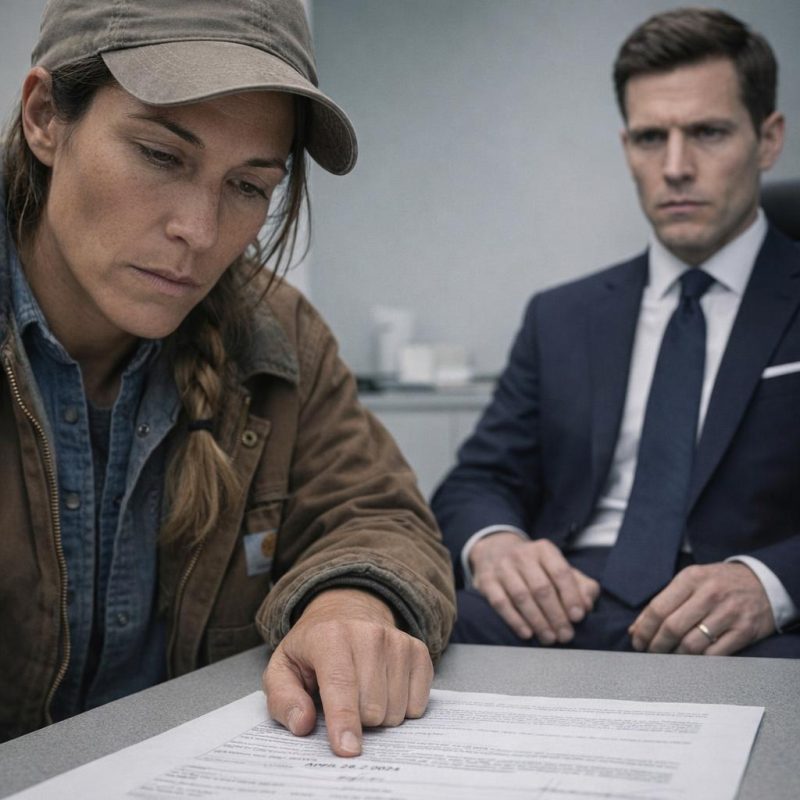 Image by RM AI
The Truth Lands
I sat back in the chair and let my hands fall into my lap. The contract was still on the desk between us, but I stopped looking at it. There wasn't anything left in it I needed to see. Travis had signed away the water rights while we were still married, which meant he had the legal authority to do it. Community property. Shared assets. The lawyers had divided everything else — the equipment, the savings account, the truck he'd driven into the ground — but somewhere in that chaos, the water rights had slipped through. Three days before the divorce closed. Two weeks later, he was across a state line with two hundred thousand dollars and no forwarding address. My family had ranched that land since 1890. My great-great-grandmother had hauled water from that river by hand during a drought that killed half the cattle in the county. My grandfather had rebuilt the irrigation channels after a flood took them out in 1962. And Travis — a man I had brought onto this land, a man I had trusted with everything I had — had sold the rights to that water to a corporation for the price of a decent truck and a clean exit. The hollow feeling in my chest didn't have a name. It just sat there, wide and still.
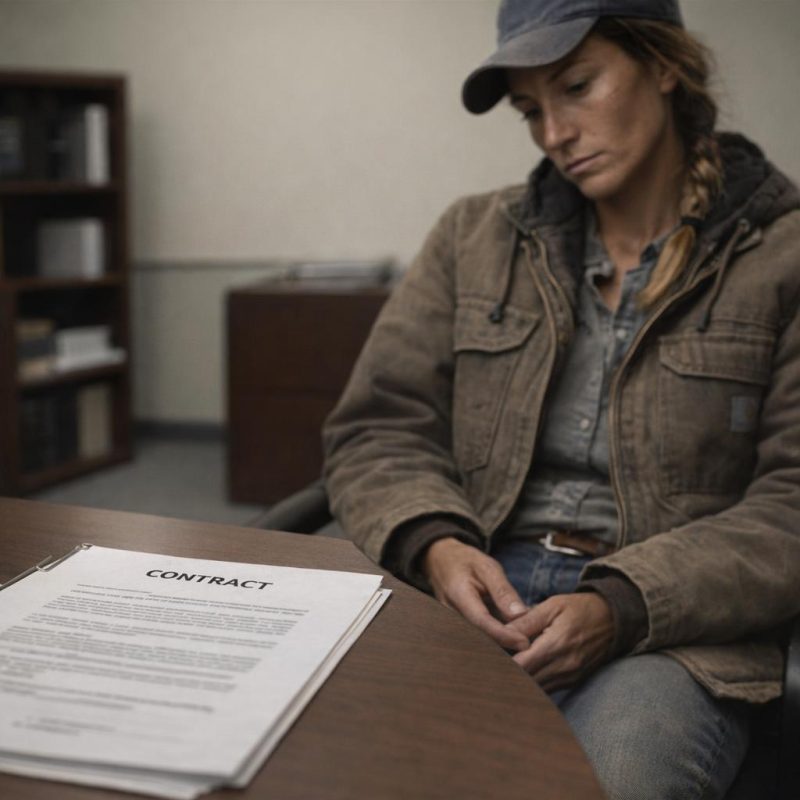 Image by RM AI
Garrett's Explanation
Garrett gave me a moment. I'll say that much for him — he didn't rush it. When he finally spoke, his voice was measured and even, the kind of tone you'd use to explain a billing error to a customer you didn't particularly like but still needed to handle professionally. He said he understood I had a strong historical claim to the land itself. He said the 1890 deed was a legitimate document and that Apex had no dispute with my ownership of the acreage. Then he said the word but, and everything after it landed like a stone dropped into still water. But land ownership and water rights were separate legal instruments in Montana. They had been since the prior appropriation doctrine was codified in state law. The water rights attached to the mountain river had been sold as a standalone asset, legally and cleanly, and Apex held the title to them outright. My deed proved I owned the ground my cattle stood on. It did not give my cattle the right to drink from the river that ran along its edge. The fencing Apex had installed was within their legal rights as the water rights holder. My cattle had no legal access to that water. He said it without raising his voice, without any particular satisfaction that I could point to — just a flat, final statement of fact, like a door closing on a room I hadn't known I was standing in.
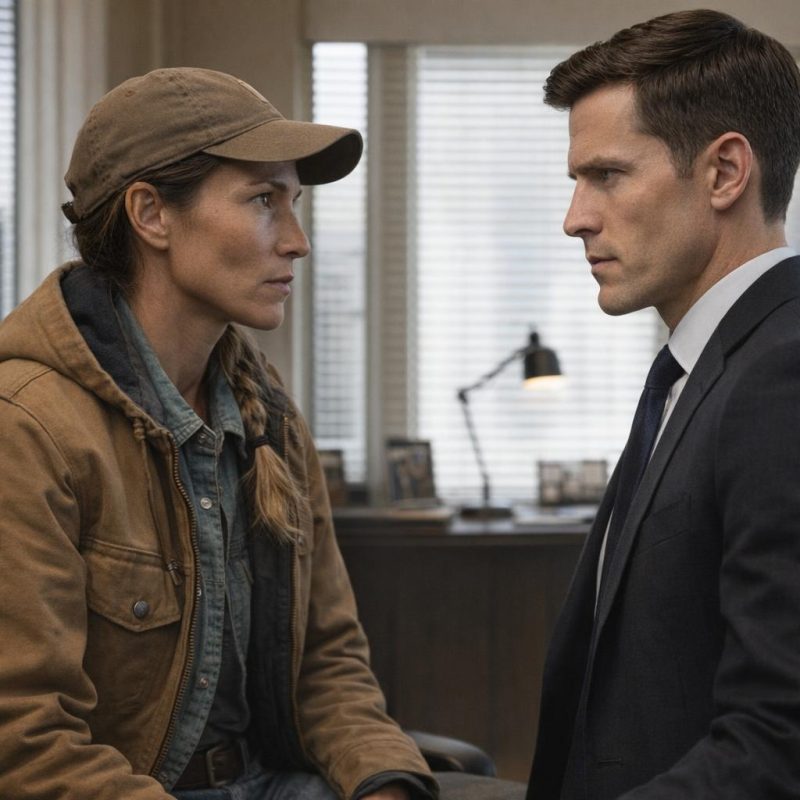 Image by RM AI
Leaving the Trailer
I stood up. I didn't trust myself to say anything useful, so I didn't say much. I gathered the 1890 deed and the other documents I'd brought — the survey maps, the historical water usage records, the photographs of the original irrigation channels — and I stacked them into a neat pile because my hands needed something to do. They felt like evidence of a case I no longer had. I tucked them under my arm and pushed my chair back from the desk. Garrett stood as well, which struck me as an odd courtesy given the circumstances. I walked toward the door of the trailer without looking back at him. My boots were loud on the metal floor. I had my hand on the door handle when he spoke. His voice was the same measured, professional tone he'd used throughout — no edge to it, no gloating, just a man wrapping up a business meeting. He said he hoped I'd take some time to reconsider their buyout offer, and that he'd hate to see my cattle start dying before I made a decision.
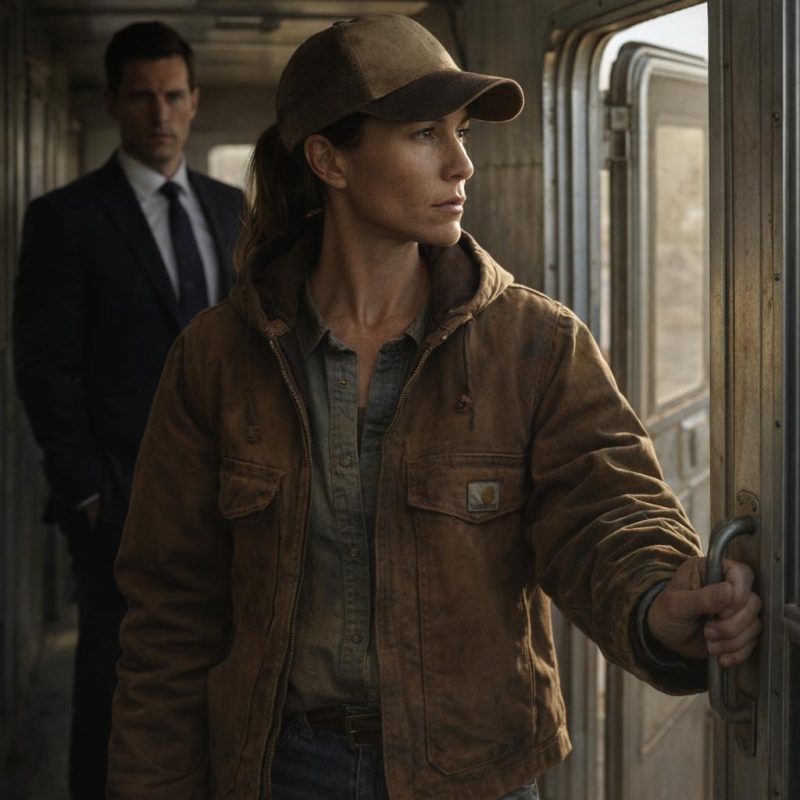 Image by RM AI
The Drive Home
The drive back took forty minutes. I know that road by feel — every curve, every cattle guard, every place where the asphalt buckles in the spring thaw — and I drove it without thinking about any of it. My hands were on the wheel and my eyes were on the road and my mind was somewhere else entirely. I kept going back to the same moment: Travis sitting across from me at the kitchen table during the worst months of the divorce, telling me he just wanted it to be over. That he didn't want anything from the ranch. That he knew how much it meant to me and he wasn't going to fight me for it. I had believed him. I had been grateful to him. I had told my lawyer he was being reasonable, that we could probably skip mediation. And three days before the papers were signed, he had been to someone else's office and put his name on a document that gutted the ranch as surely as if he'd set fire to the barn. Two hundred thousand dollars. A clean exit. A new life somewhere I couldn't reach him. The mountains were gold in the late afternoon light when I turned onto my road, and they looked exactly the same as they always had, and that felt wrong in a way I couldn't explain. The weight of it had settled somewhere deep, past the anger, past the shock, into something that just sat in my bones and stayed there.
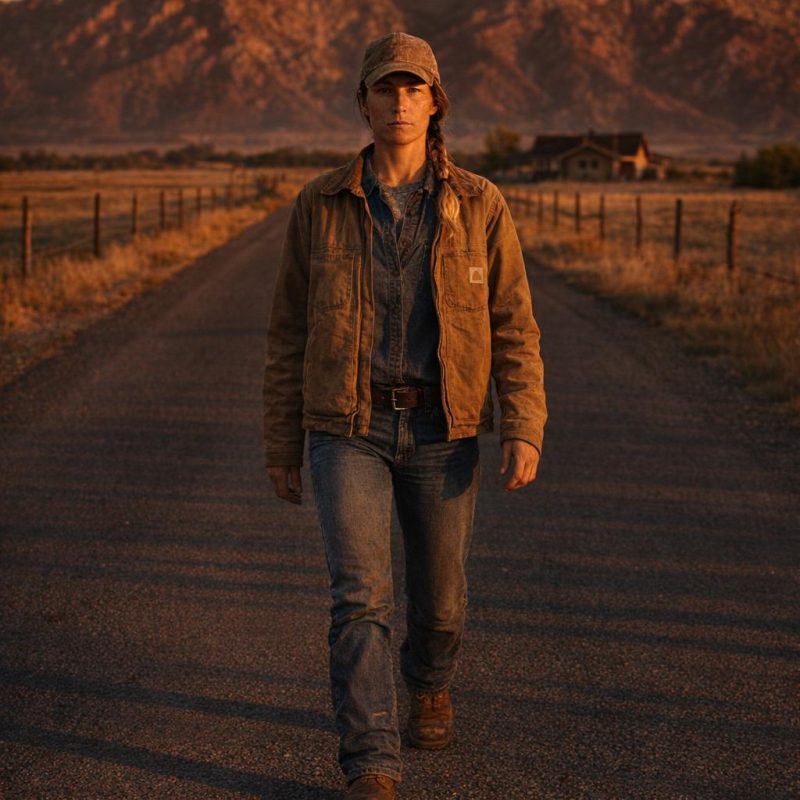 Image by RM AI
Night of Reckoning
I sat on the porch until the light was completely gone. Marcus had left a note on the door saying the cattle were restless and the water in the secondary tank was getting low. I folded the note and put it in my shirt pocket and sat down in the old wooden chair my father had built from pine he'd cut himself, and I looked north toward the ridge where Apex's fencing ran along the river. You could see the fence posts in the daylight. At night they were just a line of darkness against the sky, but I knew exactly where they were. I thought about my great-great-grandmother hauling water by hand. I thought about my grandfather rebuilding those irrigation channels after the flood. I thought about every person in my family who had looked at that same ridge and seen something worth protecting. Travis had sold the water. Garrett had the legal paperwork. Sheriff Wade wouldn't return my calls. My historical deed was, as of today, a very old piece of paper with no practical power behind it. All of that was true. I sat with it. I let it be true. And then, somewhere in the dark and the quiet, with the cattle shifting in the pasture below and the first stars coming out over the mountains, something in me stopped falling and held still.
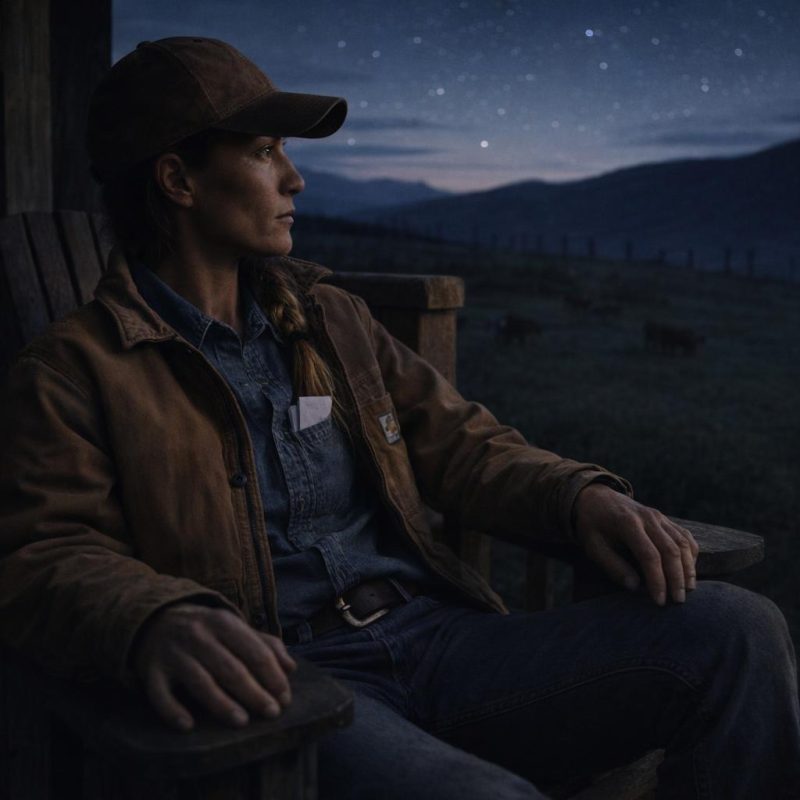 Image by RM AI
Useless Paper
I spread the 1890 deed across the kitchen table and smoothed the creases with my palm. The paper was fragile at the folds, brown at the edges, and it smelled like the cedar chest my grandmother had kept it in for forty years. My great-great-grandfather's signature was right there at the bottom, neat and deliberate, the ink faded to the color of old rust. It had meant everything yesterday. Today it meant I owned the land. Just the land. Not the water that ran through it, not the river that had fed it for a hundred and thirty years. Travis had sold the water. That was the part the deed couldn't fix. I'd spent weeks in that archive, pulling records, cross-referencing surveys, building what I thought was an airtight case. And all of it — every hour, every document, every careful note — came down to the same wall. Land ownership without water rights in cattle country is just a very expensive piece of dirt. The cattle still needed water today. Tomorrow. Every day after that. I didn't have a plan. I didn't have a lawyer. I didn't have money for one either. I sat there with my hands flat on the deed and the kitchen going dark around me, and then I reached for my phone.
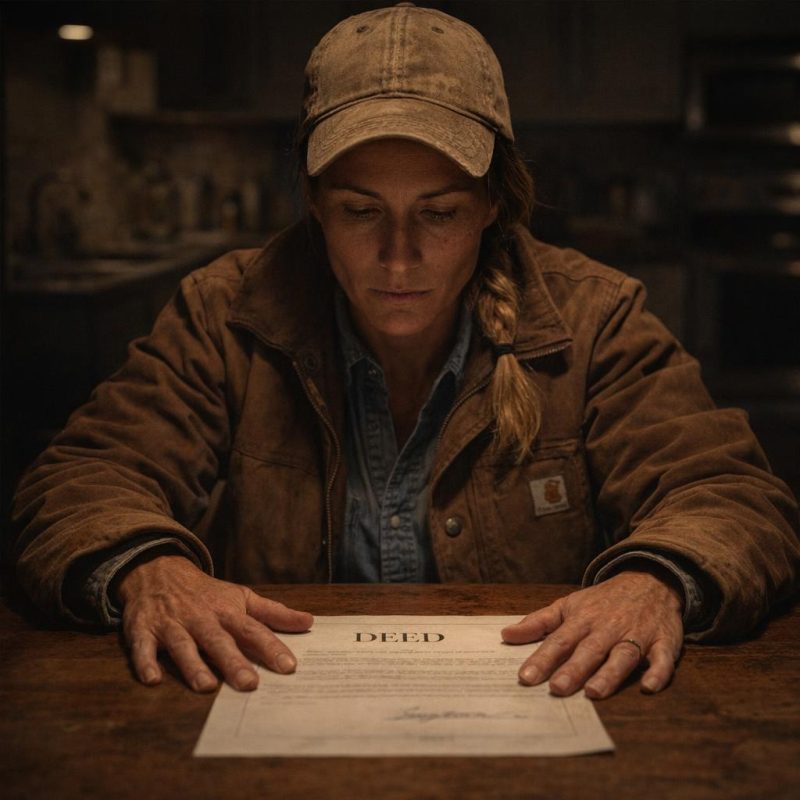 Image by RM AI
Morning Inspection
I was out the door before sunrise, boots on the wet grass, the sky just starting to go grey-pink over the eastern ridge. The herd had bunched up near the small creek that cut across the lower pasture — forty-three head pressed together along a stretch of bank that wasn't more than thirty feet wide. That was the first thing that felt wrong. They weren't grazing. They were just standing there, heads down, waiting. I walked the bank from the south end to the north and watched the water moving. It was moving. That was something. But it was low. Lower than it should have been for late spring, when snowmelt usually kept these smaller channels running full. I crouched down and put my hand in. Cold enough, clear enough. But the flow was weak. I could see the exposed rock on the far bank, pale and dry where the waterline had dropped. In a normal year that rock would be underwater until July. I stood up and looked at the herd and did the math in my head — forty-three cattle, summer heat coming in six weeks, and a creek running at maybe half its usual volume. The mountain river was fenced off. This creek was all they had. And the creek was running lower than it should be for this time of year.
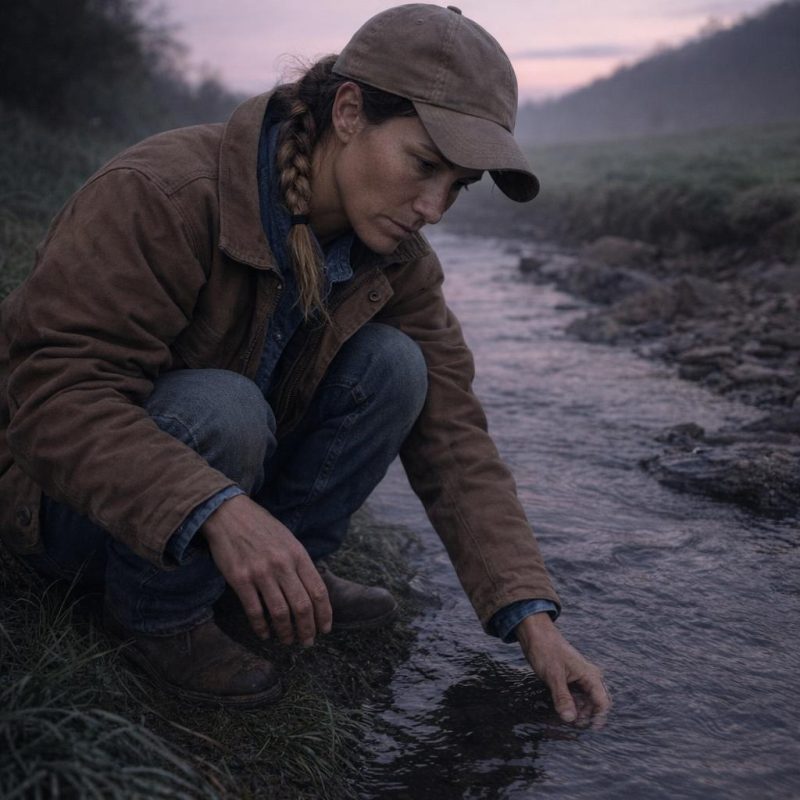 Image by RM AI
The Weight of Failure
I sat on the porch after dark with a cup of coffee that had gone cold in my hands. The mountains were just shapes against the sky. The cattle had settled, mostly, though I could hear one of the older cows moving restlessly in the lower pasture. My great-grandfather had filed that homestead claim in 1890 with nothing but a team of horses, a hand plow, and the kind of stubbornness that doesn't have a name anymore. He'd built the first structure on this land with timber he cut himself. His son had survived two droughts and a bank panic. My grandmother had held the place together through years when beef prices collapsed and the neighbors sold off one by one. Every one of them had looked at this land and decided it was worth whatever it cost to keep. And I had lost the thing that made it viable. Not through drought, not through market collapse, not through any of the honest disasters that had tested every generation before me. Travis had signed a document and taken a check and walked away, and I hadn't known until it was too late to stop it. The cattle needed water I couldn't guarantee. The summer was coming whether I was ready or not. I sat with the cold coffee and the dark mountains and the quiet weight of what it might mean to be the one who couldn't hold it.
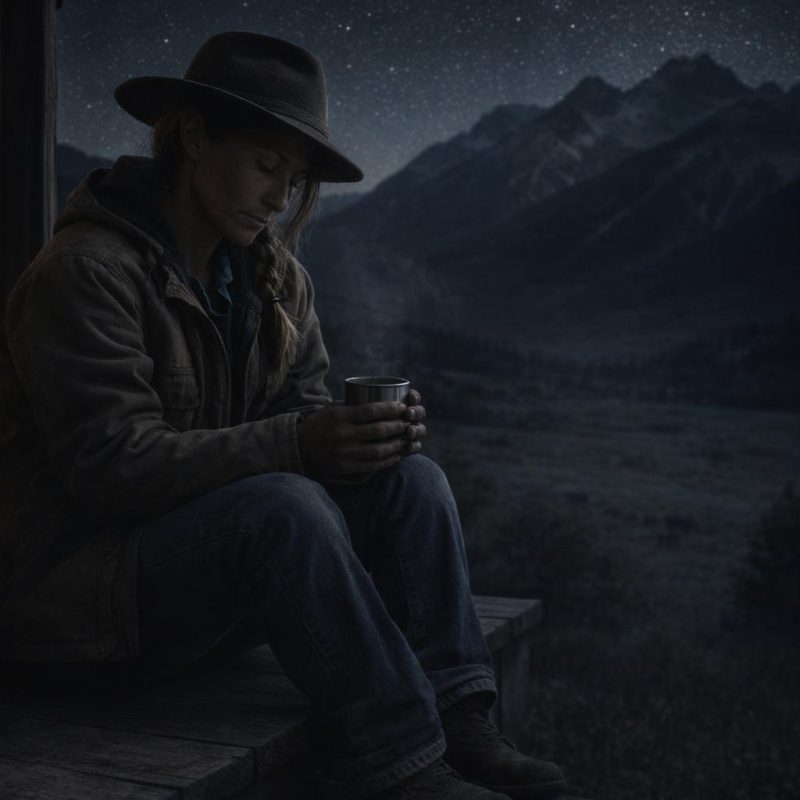 Image by RM AI
Refusing Surrender
I woke up at four-thirty and lay in the dark for about thirty seconds before I got up. I didn't sleep past the problem. That wasn't something I knew how to do. I made coffee and stood at the kitchen window and watched the pasture come out of the dark as the sky lightened, and I thought about what I actually had. I had the land. I had Marcus. I had forty-three cattle that were still on their feet. I had a creek that was low but still running. And I had the fact that Apex wanted this ranch badly enough to fence a river and buy off a county sheriff, which meant there was something here worth fighting for. The deed and the archive research hadn't worked. A lawyer I couldn't afford probably wouldn't work either, not fast enough to matter. But I wasn't out of moves. I didn't know yet what the next move was — I wasn't going to pretend I had a plan when I didn't. What I had was the decision not to hand them what they wanted. Travis had made his choice. Garrett had made his. I was going to make mine. I poured the coffee and walked to the door and pushed it open and stood in the cold morning air with the mountains going gold at the peaks, and something that had been loose in my chest since yesterday morning pulled tight and held.
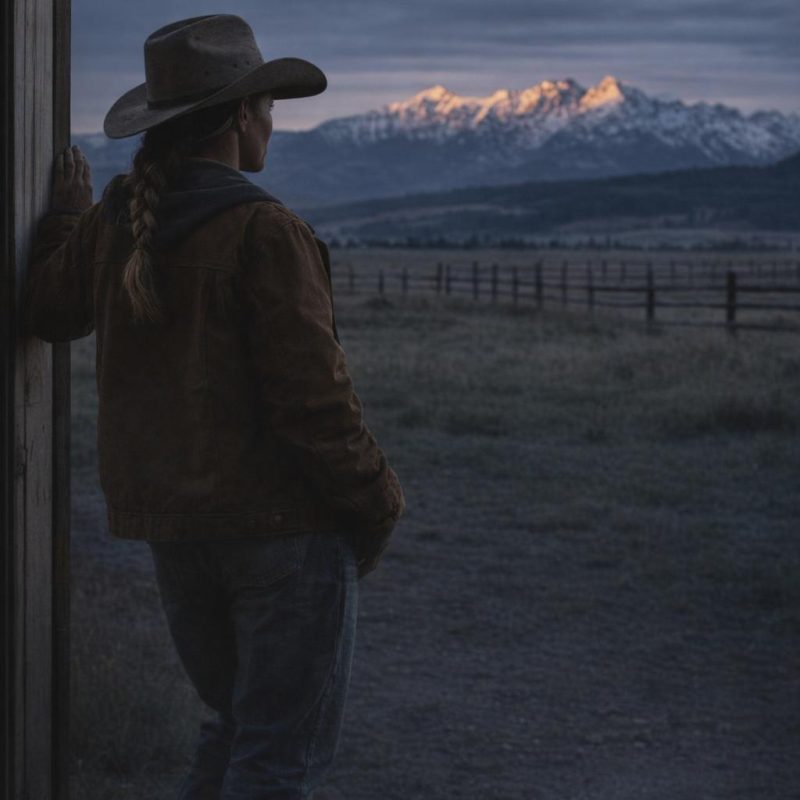 Image by RM AI
The Man Who Sold My Legacy
I pulled out the copy of the water rights transfer document I'd gotten from the county clerk and laid it next to the divorce decree on the kitchen table. The dates were right there. Travis had signed the water rights over to Apex Land Holdings on a Thursday. Our divorce finalized the following Monday. Three days. He had sold the rights three days before the marriage was legally over, which meant he still had standing as a co-owner of ranch assets. The payment record showed two hundred thousand dollars wired to an account in his name the same week. He had been gone from Montana before the ink was dry on the divorce papers — I'd thought at the time that was just Travis being Travis, running from consequences the way he always had. But he hadn't been running from consequences. He'd been leaving with his money. He had sat across from me in that mediator's office and talked about the cattle operation and the equipment values and the grazing leases, and the whole time the water rights transfer was already recorded at the county clerk's office. He'd sold the one thing that made this ranch survivable, taken the cash, and walked out of the state. I sat at that table with both documents in front of me and the full shape of it finally clear — every piece of it, the timing, the amount, the silence — laid out in plain sight.
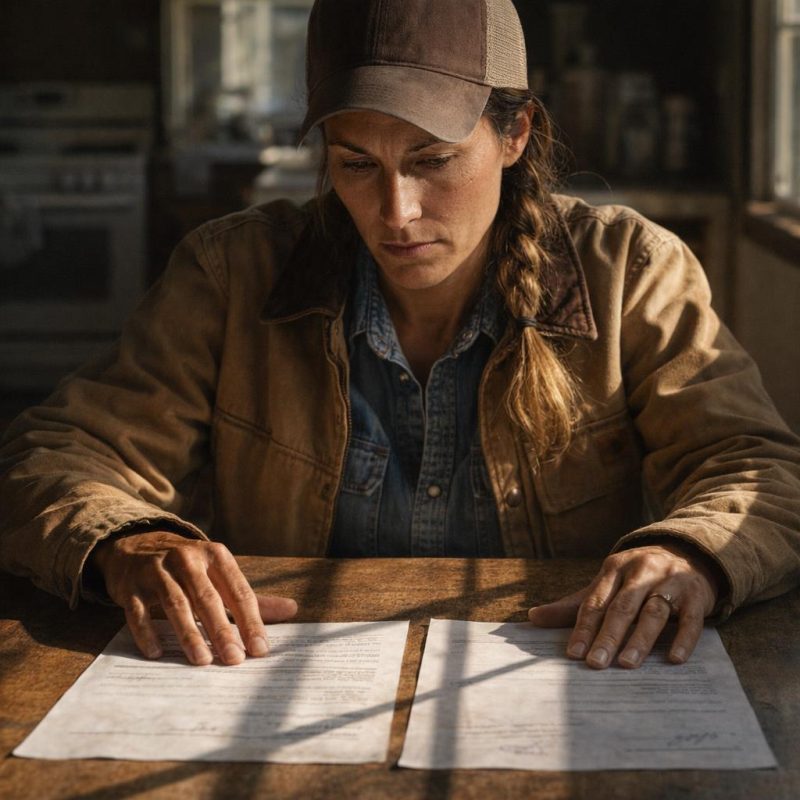 Image by RM AI
Sick Cattle
I was coming back from the equipment shed when I saw them — two of my Angus bulls, both of them down near the northern fence line, maybe thirty yards from the boundary posts Apex had put in. One was standing but his head was low and swinging in a way that wasn't right. The other was on his knees in the grass. I broke into a run. By the time I reached them I could see the grass around them was wet — they'd been vomiting, both of them, and recently. I got my hand on the standing bull's neck and felt the muscle tremoring under his hide. His eyes were glassy and he didn't react to my touch the way he should have. I checked his gums. Pale. I looked at the second bull, still on his knees, and he was breathing in short pulls, sides heaving. I'd seen cattle sick from dehydration before. I'd seen heat stress, I'd seen grass tetany, I'd seen the kind of slow decline that comes from poor nutrition. This wasn't any of those things. Dehydration doesn't drop a bull to his knees in a morning. It doesn't make them vomit. I stood up and looked toward the fence line and then back at my bulls, and both of them were stumbling and weak in a way that had nothing to do with thirst.
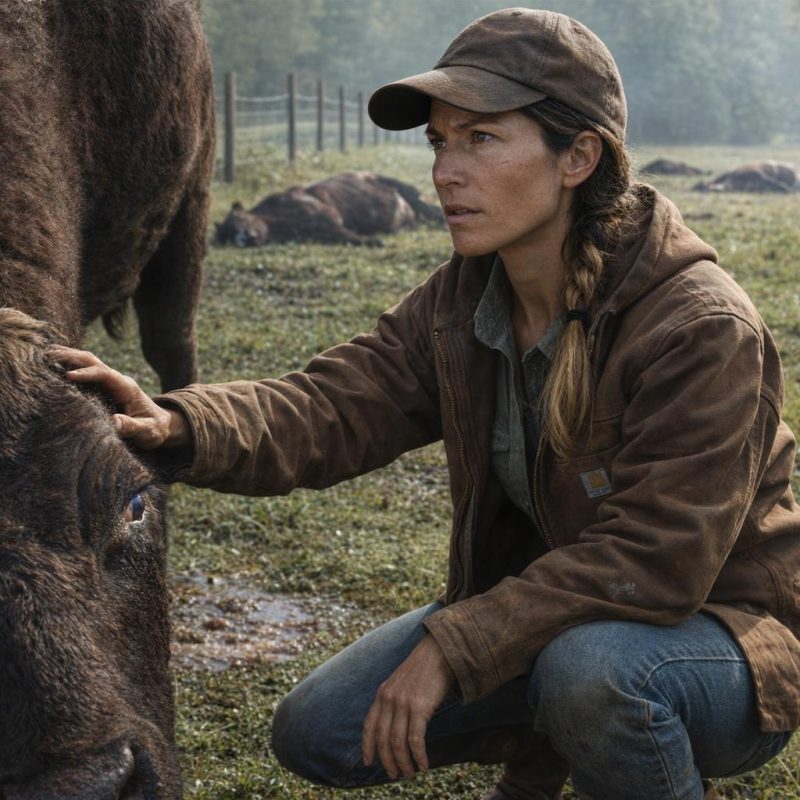 Image by RM AI
The Small Creek
I left the bulls with Marcus and told him to keep them away from the creek and call the large animal vet in Billings. Then I walked upstream. The creek entered my property from the north, coming down through a shallow draw that ran along the edge of the fence line before it opened into the lower pasture. I followed it on foot, staying close to the bank, moving slow. The water looked clear enough from a distance. Up close I watched it move over the rocks and checked the color and the smell every twenty feet or so. Nothing obvious in the first stretch. The banks were normal — mud, grass, a few willows leaning over the water the way they always did. I kept walking. The draw narrowed as I got closer to the boundary, the fence posts coming into view through the brush on my left. The sound of the water changed slightly as the channel tightened, running faster over a gravel bed. I crouched down twice and cupped water in my hand and looked at it in the light. Still clear. Still cold. I stood up and kept moving north, one careful yard at a time, watching the surface, watching the banks, watching for anything that didn't belong. The boundary was maybe forty feet ahead of me, the creek coming through a gap in the fence where the wire had been strung above the waterline.
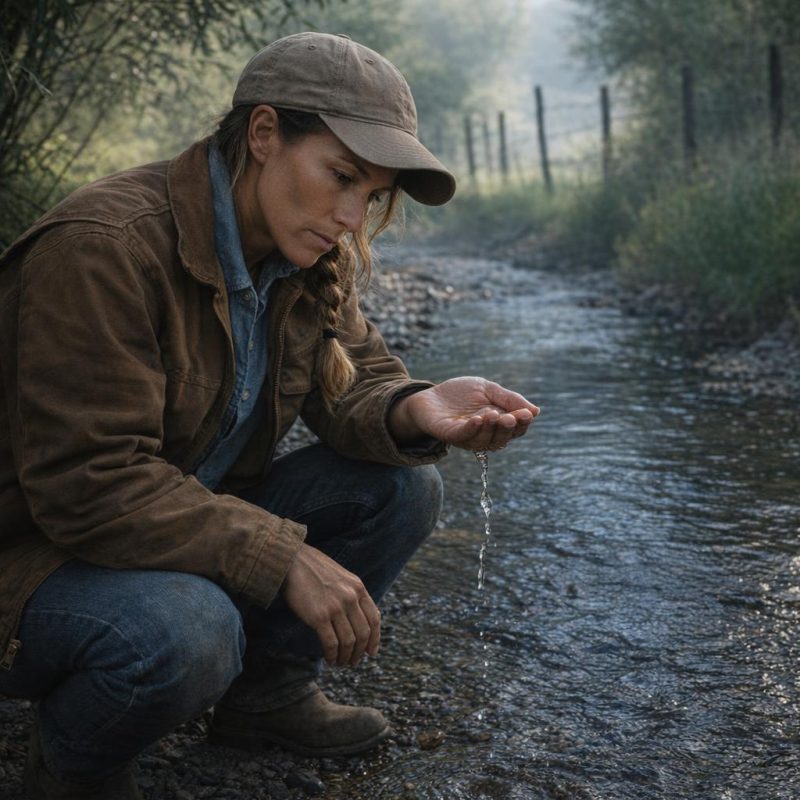 Image by RM AI
Chemical Sheen
I got to within ten feet of the fence line and crouched down at the bank where the creek came through. The water was moving faster here, channeled by the narrowing draw, and I leaned in close to look at the surface in the morning light. It was there. A thin film on the water, catching the light in a way that water doesn't catch light on its own — blues and greens and a faint copper color shifting as the current moved beneath it. I'd seen oil sheens on standing water before, in old stock tanks, in puddles near the fuel shed. This was the same thing, but it was moving with the creek, spreading as it came through the gap in the fence and hit the slower water on my side of the boundary. I put my hand near the surface without touching it and I could smell it — faint but unmistakable, something chemical underneath the cold mineral smell of the creek. I pulled my hand back. I looked upstream through the fence, past the wire, toward the draw on Apex's side where the water came from. I couldn't see anything from where I was standing. But the sheen was there, steady and continuous, the rainbow pattern of it spreading across the surface of the water that my cattle had been drinking all morning.
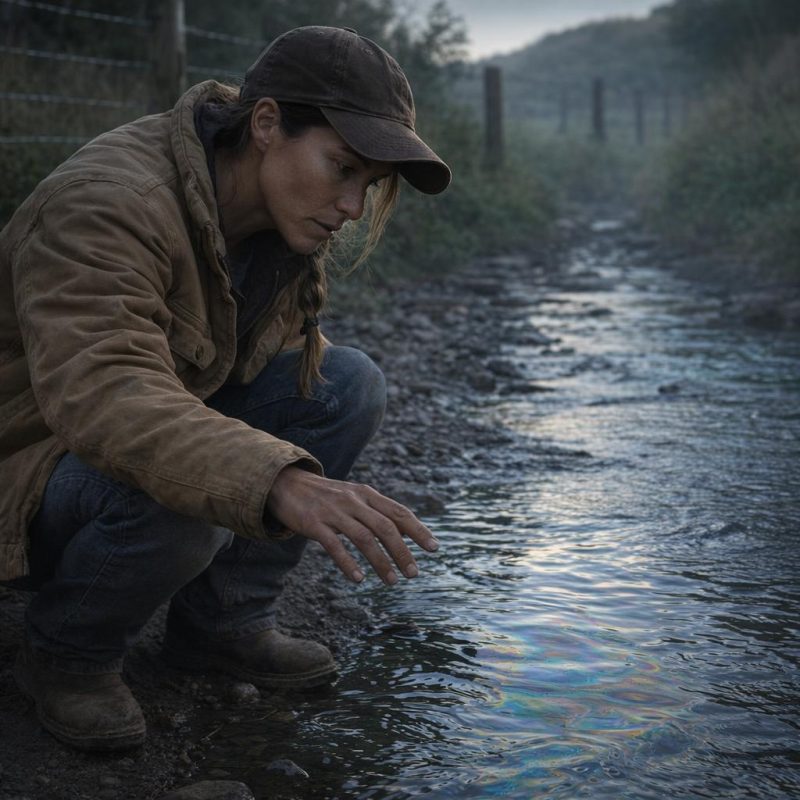 Image by RM AI
The Source
I stood there at the bank and let it settle over me — not as a suspicion, not as a maybe, but as a fact. This wasn't runoff. This wasn't an accident. You don't get a steady, continuous chemical sheen in a mountain creek from a leaky fuel drum or a careless spill. This was deliberate. Apex was dumping toxic drilling byproduct upstream and letting it flow straight onto my land, straight into the water my cattle drank every single morning. The sick bulls. The weight loss. The way the herd had been off for weeks and I'd been blaming drought stress and summer heat. It wasn't any of that. It was this — this thin, iridescent poison spreading across the surface of the water like it owned the place. They hadn't just tried to cut off my water access. When that didn't break me fast enough, they'd decided to poison what was left. Force a die-off. Force the kind of losses that would put me underwater on the operating loan before winter. I stood up slowly, my knees wet from the bank, and looked upstream through the fence toward the ridge where Apex's drilling operation sat. The sheen was coming from up there, steady and unbroken, flowing down through the draw and onto my land with every passing minute.
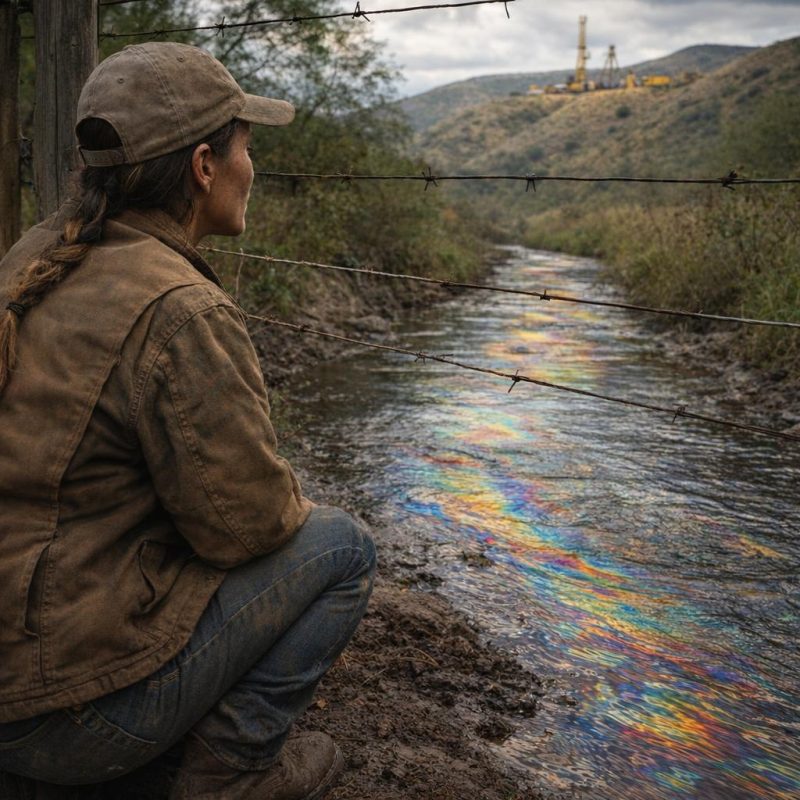 Image by RM AI
Bypassing the Sheriff
I drove into town with my jaw set and my hands tight on the wheel, and I thought about Sheriff Wade for exactly as long as it took me to picture his face — that soft, evasive look he got whenever Apex came up, the way he'd study the floor or find something urgent on his radio. Wade wasn't going to help me. He hadn't helped me when they blocked the creek access, hadn't helped me when their equipment tore up my fence line, and he sure as hell wasn't going to walk up that ridge and confront a billion-dollar corporation over a water sheen I'd photographed with my phone. I knew that before I even reached the county line. So I kept driving, past the sheriff's office without slowing down, and I pulled into the hardware store on the far end of Main Street. I bought sterile sample jars, heavy-duty zip-lock bags, a pair of nitrile gloves, and two motion-activated trail cameras still in the box. At the sporting goods store next door I picked up extra SD cards and a headlamp with a red-light setting. I loaded everything into the truck bed and sat in the cab for a minute, looking at the receipt. Nobody was coming to save this ranch. I pulled out of the lot and pointed the truck back toward home.
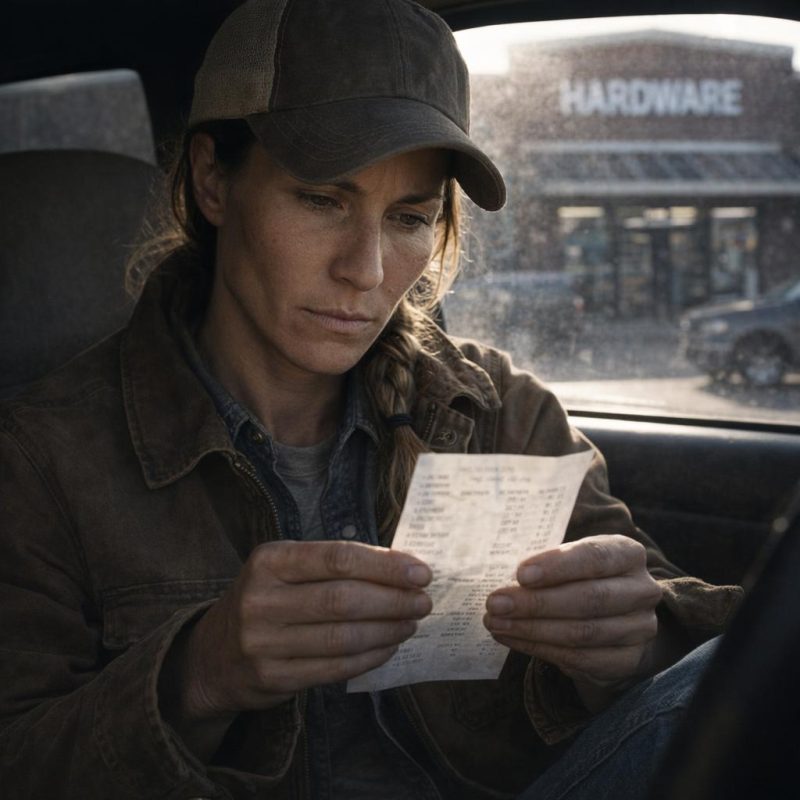 Image by RM AI
First Night
I went out the first night at two in the morning, when the security rotation I'd been watching from the fence line had its longest gap. I wore dark layers and left my phone in the truck — no screen glow, no signal ping. The sample jars and the headlamp went into a canvas pack on my back, and I crossed the fence at the low spot near the cottonwoods where the wire had been sagging since spring. I'd hunted these draws since I was twelve years old. I knew where the ground went soft, where the pine roots would hold my weight, where the ravine narrowed and the shadows pooled deepest. I moved slow. Slower than felt natural, slower than the urgency in my chest wanted me to move. Every few minutes I stopped and listened — wind in the upper branches, the creek below me, the distant idle of a generator somewhere up on the ridge. Once I heard boots on gravel, close enough that I pressed myself flat against a pine trunk and didn't breathe for a full thirty seconds. The footsteps moved away. I stayed where I was for another minute after the sound was gone. I didn't collect anything that first night. I just learned the ground, learned the gaps in their patrol, learned where I could move and where I couldn't. The cold settled into my bones on the walk back, and the fear and the adrenaline moved through me together, indistinguishable from each other.
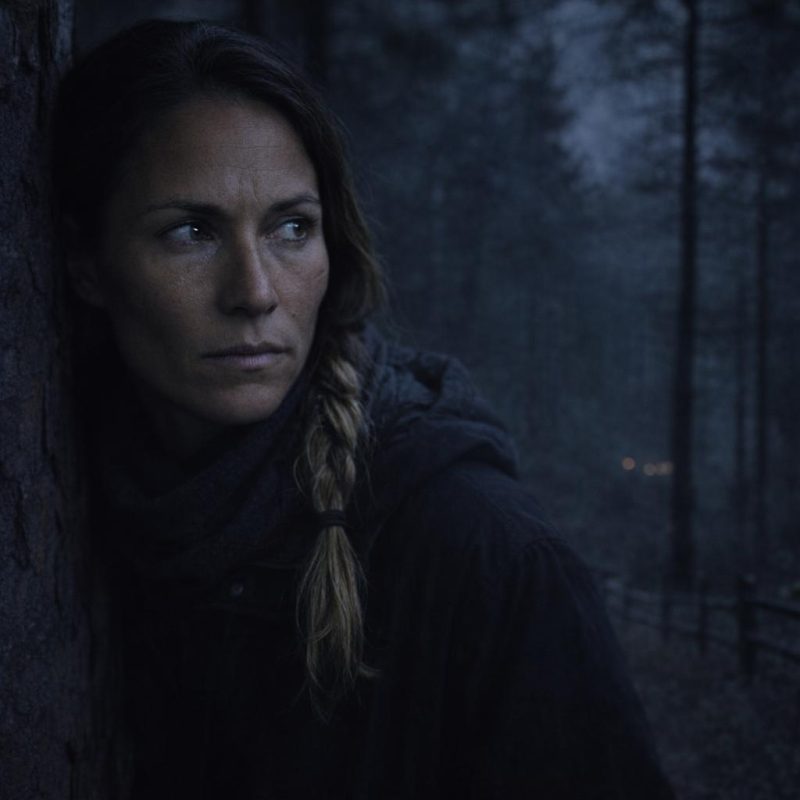 Image by RM AI
Water Samples
The second night I went in with a purpose. I knew the patrol gap, knew the soft ground near the upper bend, and I moved through the pines faster and quieter than the night before. I reached the creek upstream of my fence line just after three in the morning, where the water ran dark and fast through the narrow channel, and the sheen was there — thicker here, closer to the source, the chemical smell sharp enough to catch in the back of my throat. I pulled on the nitrile gloves and uncapped the first jar. I filled it at the surface, capped it, labeled it with a strip of waterproof tape — GPS coordinates I'd written out beforehand, the date, the time to the minute. Then I moved twenty yards upstream and did it again. Then again. Six jars total, each one from a different point along the contaminated stretch, each one labeled and sealed and tucked carefully into the padded section of the pack. I handled them like they were the most important things I'd ever touched, because they were. On the walk back I kept my pace steady and my breathing even, and I didn't let myself think about what would happen if I slipped and broke one. Back at the truck, I laid the jars out on the seat in a row and looked at them in the dim cab light — six small containers of water that could end a corporation's impunity, sitting quiet and still in the dark.
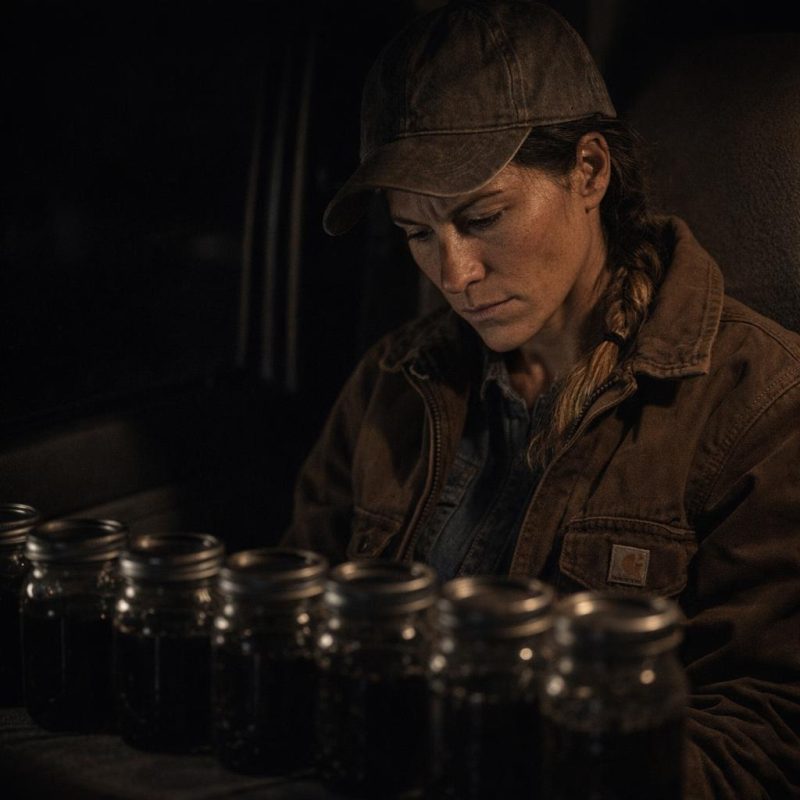 Image by RM AI
Setting the Cameras
The third night I brought the cameras. I'd spent the afternoon studying the terrain from memory, sketching out angles on a notepad at the kitchen table — where the trucks would have to come in, where the ravine opened up wide enough to back a vehicle to the bank, where the light from the ridge operation might catch a face or a license plate. I went in an hour earlier than the nights before, giving myself time to climb. The first camera went into the fork of a ponderosa pine about fifteen feet up, angled down toward the wide bend in the ravine where the bank was churned and muddy from heavy tires. I strapped it tight, checked the motion sensor arc, and covered the housing with a piece of burlap I'd cut to shape. The second camera went higher, on the opposite side of the draw, positioned to catch anything the first one missed. I configured both for night vision, thirty-second clips, continuous trigger. My hands were steady while I worked. That surprised me a little. When I climbed back down from the second tree and stood in the dark ravine looking up at where the cameras were hidden, I couldn't see either of them — just pine bark and shadow. Whatever happened up here from now on, something would be watching it, patient and still and recording, long after I'd walked back down the mountain.
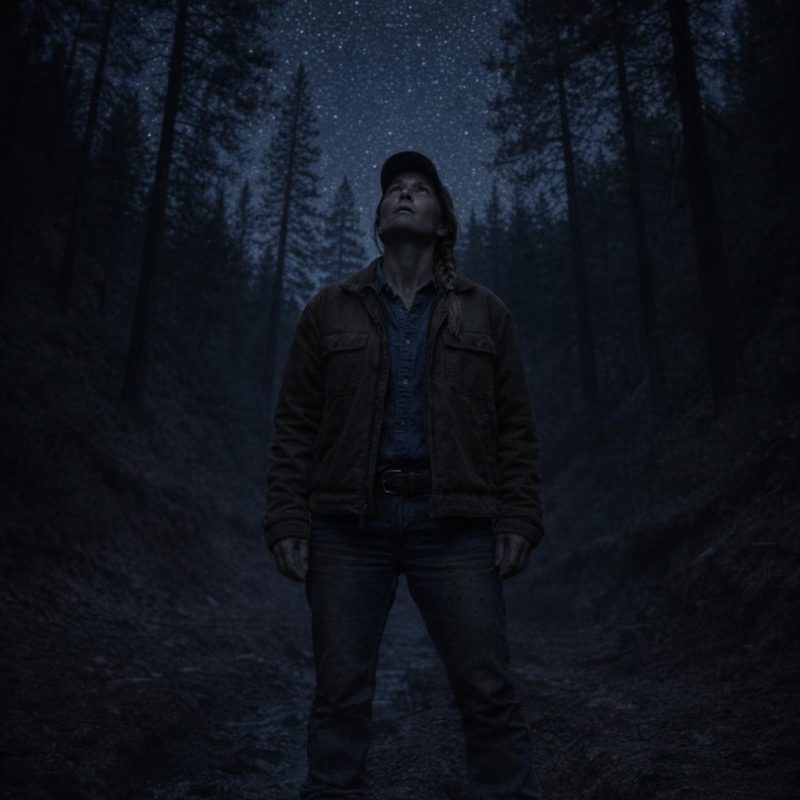 Image by RM AI
Four Nights of Waiting
The fourth night I pulled the SD cards and sat in the dark with my headlamp on red, scrolling through clip after clip on the small camera viewer. A mule deer at 11:47. A raccoon working the creek bank at 1:15. Wind moving the brush at 2:40, triggering the motion sensor on nothing. I went through every clip from both cameras twice, and there was nothing — no trucks, no lights, no activity anywhere near the ravine. I sat back against the pine trunk and let the disappointment settle. Maybe they'd changed their schedule. Maybe someone had spotted something and they'd gone quiet. I'd been out here four nights and I had water samples and burlap-covered cameras and a whole lot of wildlife footage, and I was starting to wonder how long I could keep this up before exhaustion or a security guard ended it for me. I packed the cards back in, reset the cameras, and started down the slope toward the fence line. That's when I saw them — at the edge of the ravine where the bank widened out, in the soft mud I'd been careful to walk around every night. Fresh tire tracks. Deep ones, the kind a heavy truck leaves when it's carrying real weight. They hadn't been there the night before.
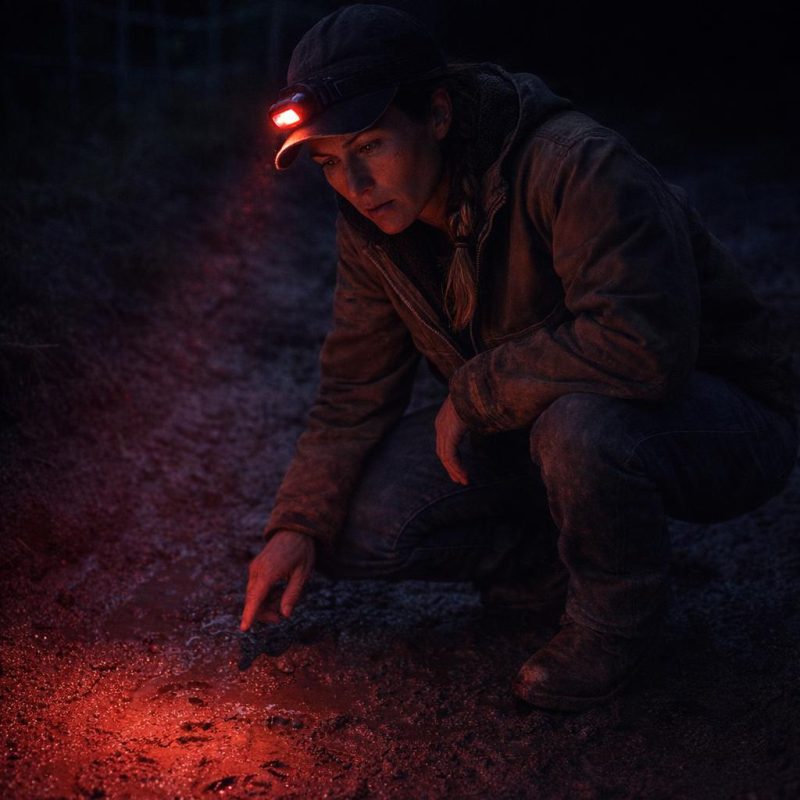 Image by RM AI
The Fifth Night
The fifth night I pulled the first SD card at half past midnight and my hands were shaking before I even got it into the viewer. The first clip was timestamped 11:22 PM — two sets of headlights coming down the ravine road, no markings on the trucks that I could make out, moving slow and deliberate toward the bank. I watched them back up to the water's edge. I watched the doors open. Three men climbed out, and one of them moved to the rear of the second truck and worked a valve or a lever — I couldn't tell exactly what from the camera angle — and then something started flowing. Even in the green-grey of the night vision I could see it wasn't water. It moved wrong, too thick, and where it hit the creek surface it spread in a way that water doesn't spread. The second camera had caught it from the other side of the draw, a wider angle, and you could see the whole operation clearly — the trucks, the men, the hose running from the tank to the bank, the chemical waste going directly into the mountain creek that fed my land. Time-stamped. GPS-tagged by the camera's internal logger. Clear and undeniable and exactly what I needed. I sat in the dark with the viewer in my lap and felt something loosen in my chest that had been wound tight for months.
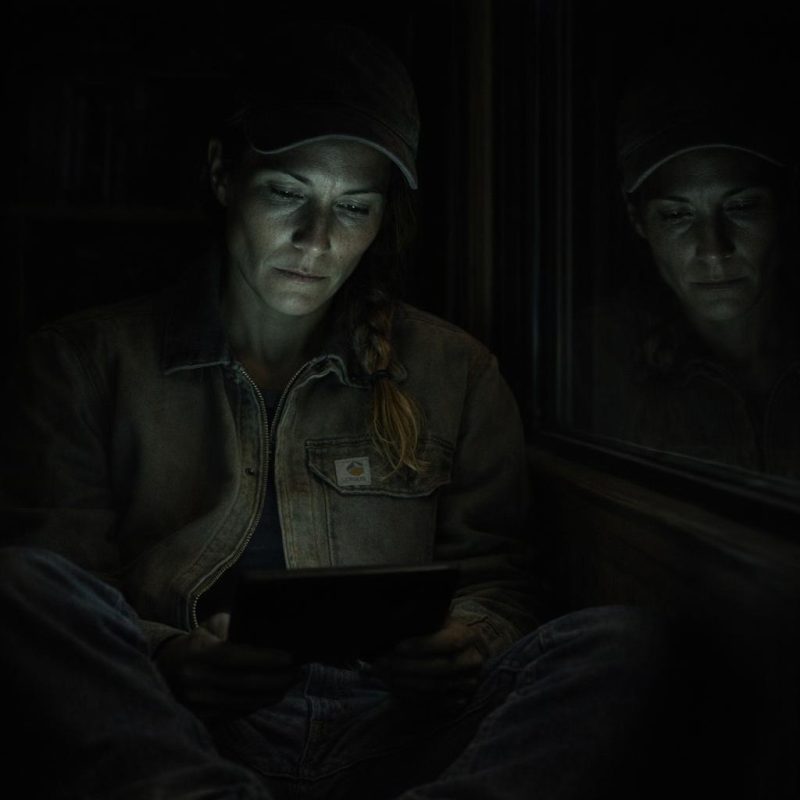 Image by RM AI
Garrett's Supervision
I didn't stop at the first clip. I went through every frame of the second camera's footage, slowing it down where the men moved near the truck beds, trying to get faces. Two of them kept their backs to the camera the whole time, working the equipment. The third one stood back from the bank, watching. He was positioned slightly uphill from the others, and the night vision caught him full-on when he turned to look back up the ravine road — checking, maybe, for headlights or company. I paused the clip. I zoomed in as far as the viewer would go. The resolution held. The face was clear. I knew that face. I'd sat across a conference table from it. I'd watched it smile the particular smile of a man who has never once believed he would face consequences for anything he decided to do. I sat in the pine needles on the cold Montana hillside with the camera viewer in my hands, and I stopped breathing for a moment. Then I pressed the zoom button one more time, and Garrett's face filled the screen — sharp and unmistakable in the green-white glow of the night vision, standing over the creek he'd been poisoning, watching his men work.
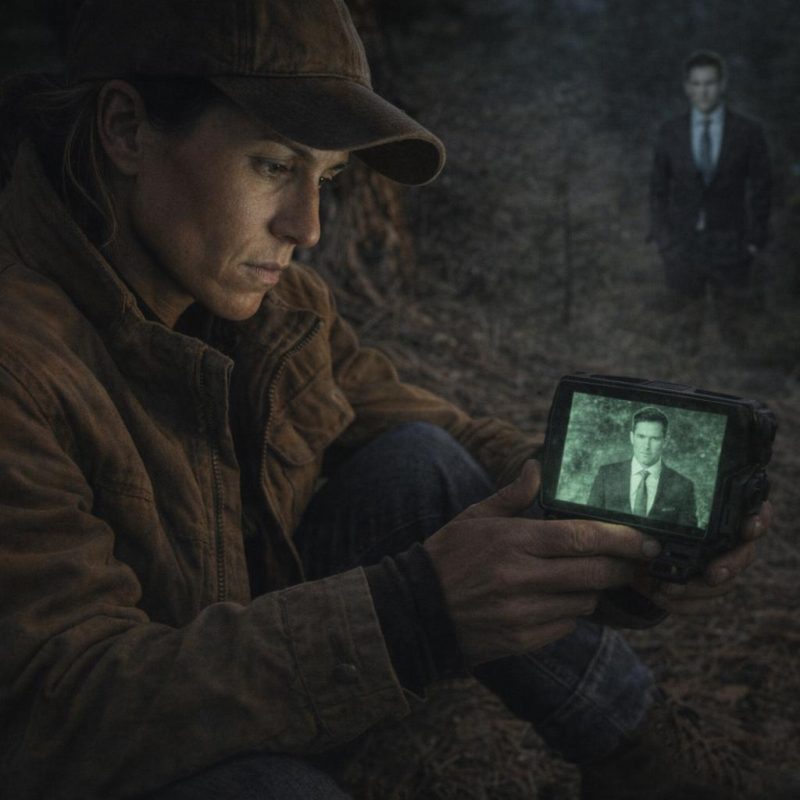 Image by RM AI
Federal Evidence
I came down off that hillside before first light and went straight to the kitchen table. My hands were steadier than I expected. I plugged the camera into my laptop, copied every file onto an encrypted drive, and then uploaded the footage through a secure transfer service I'd found after three hours of research the week before. The lab reports on the water samples were already printed and scanned — four independent tests, each one showing contamination levels that exceeded federal thresholds by a factor that made my stomach turn every time I read the numbers. I organized everything in order: the GPS coordinates of the dumping site, the time-stamped photographs, the lab reports, the video files. I wrote a cover letter that was two pages long and said exactly what had happened, in plain language, with dates. No emotion. Just facts. I addressed the package to the EPA's criminal enforcement division and the U.S. Attorney's office for the district of Montana, and I hit send. Then I sat there in the quiet of my kitchen and waited. Forty-seven minutes later, my inbox showed a new message — a formal acknowledgment from the federal environmental crimes unit confirming receipt of the evidence package and advising that the matter had been assigned to an active investigation team.
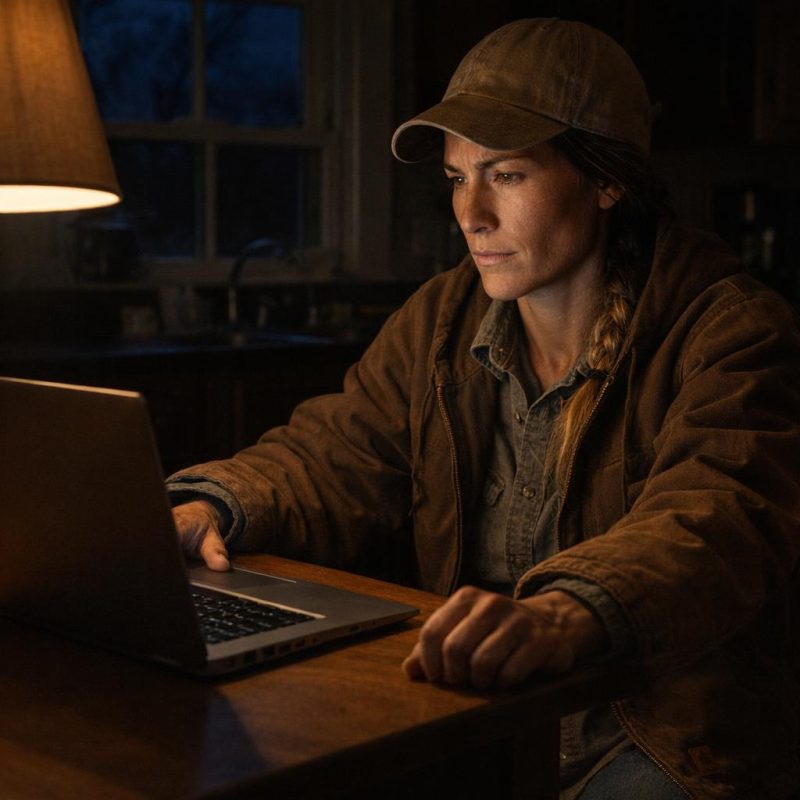 Image by RM AI
Federal Raid
I was already on the northern ridge when the sun broke the horizon. I'd barely slept. I had my coffee in a thermos and my father's old field binoculars around my neck, and I stood in the cold morning air watching the Apex site below. The unmarked vehicles came in a convoy — four of them, dark SUVs moving fast down the access road, followed by two larger trucks. They fanned out across the site before anyone down there had time to react. I could see figures in jackets with yellow lettering moving between the equipment trailers, and I could hear, faintly, the sound of voices carrying up the valley. The heavy machinery went quiet one piece at a time. Then I saw Garrett. He came out of the main site trailer in a suit jacket, no tie, and even from that distance I could read the posture — the stiffness, the way his arms came up and then stopped when the agents moved toward him. Two of them walked him to one of the SUVs. He didn't look up toward the ridge. The convoy sat in the early light with its doors open and its engines running, and the whole valley felt quieter than it had in months.
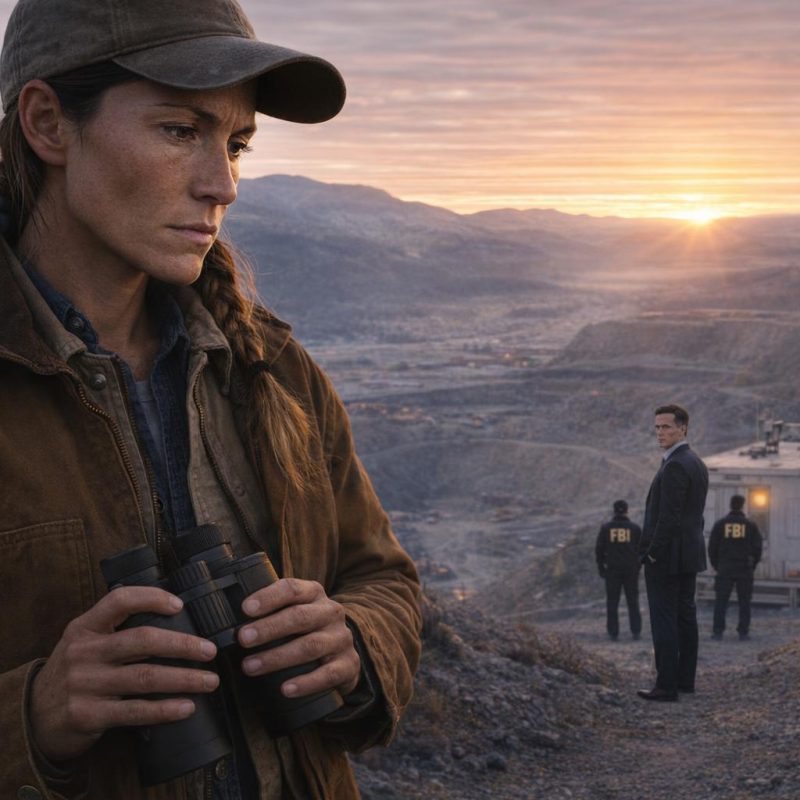 Image by RM AI
Settlement and Restoration
My lawyers filed the counter-suit the same week the federal indictment came down, and after that things moved faster than I'd ever seen a legal proceeding move. The indictment did most of the work. Apex's attorneys tried to negotiate twice, and both times my lawyers walked out of the room. I wasn't interested in quiet settlements with confidentiality clauses. I wanted it on record. The judge agreed. By the time it was over, the settlement figure had seven digits and covered every head of livestock I'd lost, every vet bill, every ruined season. Apex was ordered to surrender all land holdings adjacent to my property — parcels they'd spent two years assembling, gone in a single ruling. But the moment that stayed with me, the one I kept coming back to, was quieter than all of it. The judge looked down at the paperwork on Travis's water rights contract — the one my ex-spouse had signed over to Apex during our divorce without my knowledge — and declared it null and void on the grounds of fraud. I sat in that courtroom and felt something loosen in my chest that had been pulled tight for a very long time.
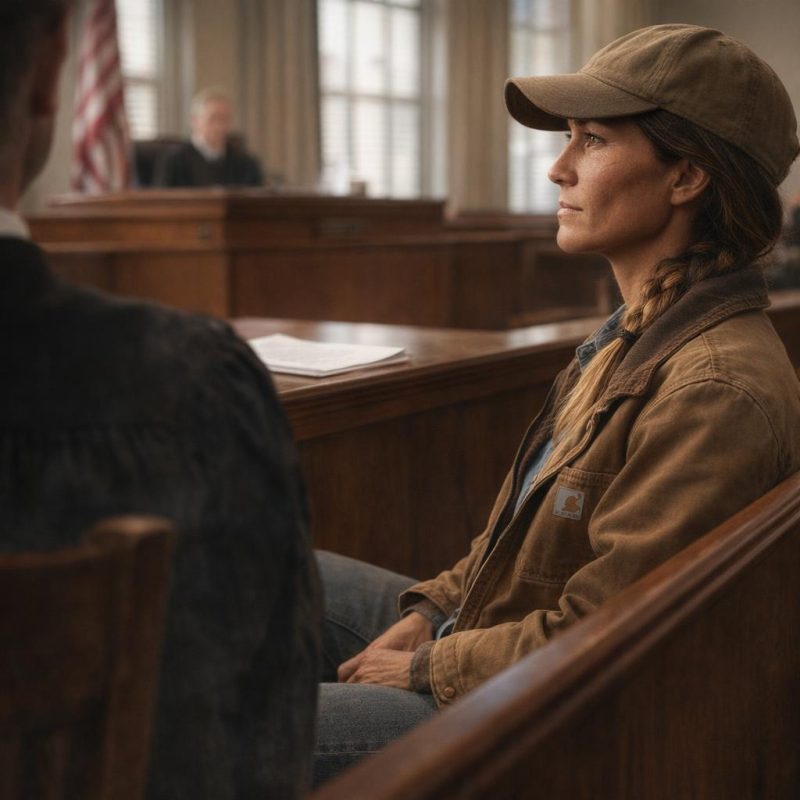 Image by RM AI
Legacy Secured
Marcus drove out to the northern ridge with me the morning the crew came to pull the last of the barbed wire. He didn't say much on the ride up, which was his way. He just sat in the passenger seat with his hat on his knee and watched the land go by. We stood together at the fence line and watched the crew work, pulling posts and rolling wire onto a flatbed until the whole stretch of ground that Apex had blocked off was open again. My cattle found the river on their own — I don't know how they always know, but they do. They moved through the gap in a loose group and walked straight down to the water. Marcus watched them drink and let out a long breath through his nose. I thought about my father standing on this same ridge, and his father before him, and the particular kind of quiet that settles over land that has been fought for and kept. The deed to the water rights, restored by court order and recorded with the county that same week, was folded in my jacket pocket.
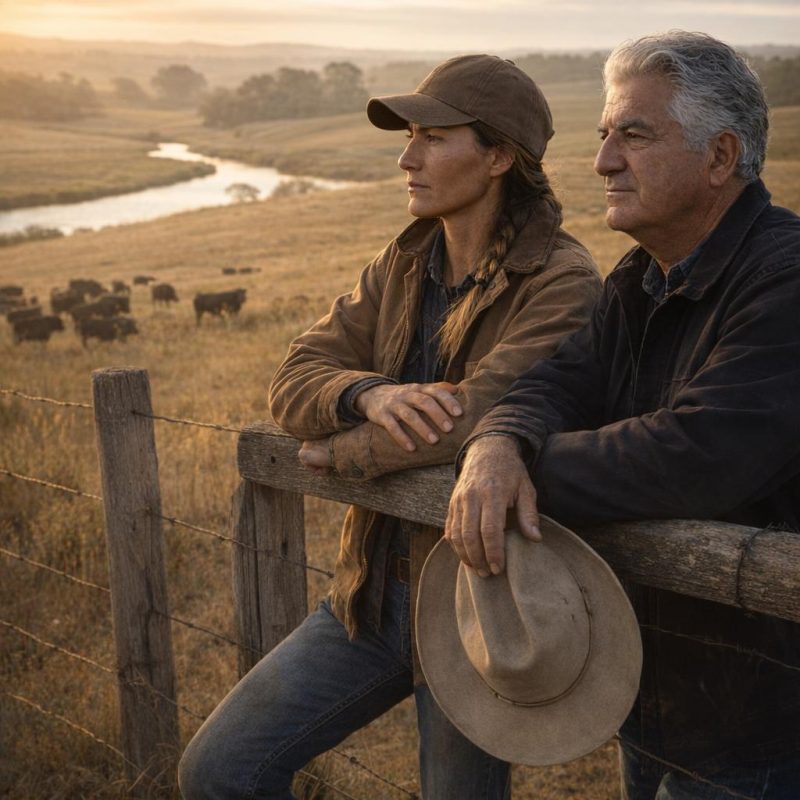 Image by RM AI