I Proved My Innocence Using Data From the Office Coffee Machine and Exposed a Multi-Million Dollar Corporate Conspiracy
I Proved My Innocence Using Data From the Office Coffee Machine and Exposed a Multi-Million Dollar Corporate Conspiracy
Three Years of Data and Determination
Three years is a long time to pour yourself into something, and I'd poured everything I had into this job. I joined the fintech firm fresh off a grueling two-year stint at a smaller analytics consultancy, and from my first week I treated every client account like it was the only one that mattered. The work was genuinely hard — not just long hours, though there were plenty of those, but technically demanding in ways that kept me sharp. Our client database alone held records for over four hundred institutional accounts, each with its own retention triggers, risk flags, and escalation protocols. I built custom dashboards to track churn indicators before they became problems. I ran predictive models on contract renewal windows. I documented everything, twice, because in fintech the audit trail is the job. By the end of year one I had the highest client retention rate in the department. By year three, that had become the expectation — mine and everyone else's. I wasn't the loudest person in the room, and I didn't need to be. The numbers made the argument for me, quarter after quarter, without fail. Sitting at my desk on a Tuesday evening, scrolling through the latest retention report with a cup of cold coffee at my elbow, I felt something I didn't often let myself feel at work — genuinely settled, like I had built something real and it was holding.
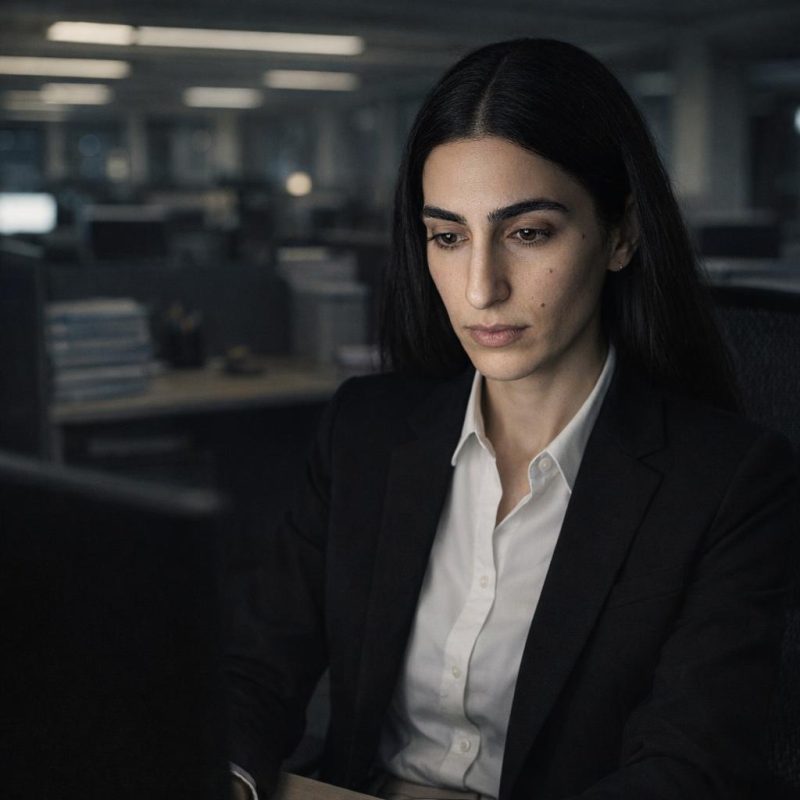 Image by RM AI
The Colleague Who Smiled Too Much
The office was open-plan, which meant you learned people's habits whether you wanted to or not. I knew who microwaved fish on Fridays, who took calls on speakerphone, and I knew that Julian ordered his espresso with a level of specificity that made the barista downstairs visibly tense. Double ristretto, forty-five milliliter yield, oat milk steamed to sixty-two degrees — he'd explained it to me once with complete sincerity, and I'd nodded along like that was a normal amount of information to share about a coffee order. Julian had been with the firm about eight months longer than me, and he was good at his job — genuinely good, the kind of analyst who could pull a complex reconciliation apart and reassemble it faster than most. We sat two rows apart and had always gotten along fine, the easy collegial way you do with someone you respect professionally without knowing much about them personally. That Thursday morning he stopped by my desk to ask about a data formatting issue, and we ended up talking for twenty minutes about API integration headaches. He was relaxed, funny even, gesturing with both hands the way he did when he got into a technical problem. Richard came down the hall mid-conversation, paused to tell us both that the Q2 client reports had impressed the executive floor, and moved on. I smiled and turned back to Julian — and his smile was already gone.
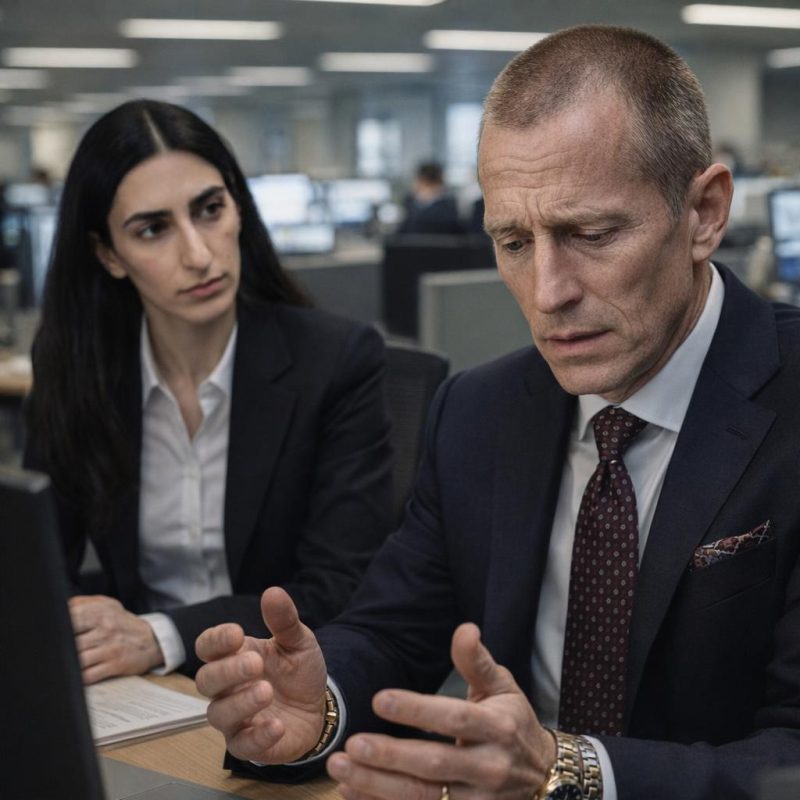 Image by RM AI
Victory Drinks and Quiet Wins
Devon was already at the corner table when I got downstairs, two cups on the table and a grin that told me he'd heard the numbers before I'd said a word. The ground-floor café was loud at midday — the espresso machine, the lunch crowd, someone's conference call bleeding through a laptop speaker — but we'd claimed that corner table enough times that it felt like ours. I dropped into the chair across from him and he slid one of the cups toward me. 'Ninety-four percent,' he said, like he was announcing a sports score. 'Do you understand how absurd that is? The department average is seventy-one.' I told him the migration had helped — moving the legacy client records onto the new database architecture had let me catch renewal flags I'd been missing for months. He waved that off. 'You built the flag system. You ran the migration. Don't undersell it.' Devon had just wrapped a solid quarter himself, a risk modeling project that had apparently saved the firm a meaningful amount on three mid-tier accounts, and we spent a while trading notes on what had worked and what hadn't. The culture here moved fast and didn't always stop to acknowledge the effort behind the results, which was fine — I hadn't come here for applause. But sitting across from someone who understood exactly what it had taken, who'd watched me work through the hard parts and still showed up with coffee already waiting, felt like more than enough.
 Image by RM AI
The Promotion That Went to Someone Else
Richard called the all-hands for ten o'clock on a Wednesday, which was unusual enough that people were already speculating in the kitchen before the meeting started. The main conference room filled up fast — all twelve of us from the senior analytics team, plus a few people from adjacent departments. Richard stood at the front with his hands in his pockets, which I'd learned meant he was about to say something he'd already decided and wasn't opening for discussion. He thanked everyone for a strong quarter, ran through a few operational updates, and then mentioned, almost in passing, that the senior team lead position had been filled. External candidate, strong background in institutional client management, starting in three weeks. There was a beat of silence before the room adjusted. I did the mental math without meaning to — this was the second time that role had been posted and filled without going to anyone already on the team. Devon caught my eye from across the table with a look that said he'd done the same math. The quarterly planning discussion that followed was thorough and unremarkable, and I took notes on my laptop the way I always did. Julian sat two seats down from me and didn't say anything for the rest of the meeting — not a question, not a comment, not even the small affirmations he usually offered when Richard made a point he agreed with. When the room started clearing out, I glanced toward his end of the table, and the quiet that had settled there felt heavier than the news itself.
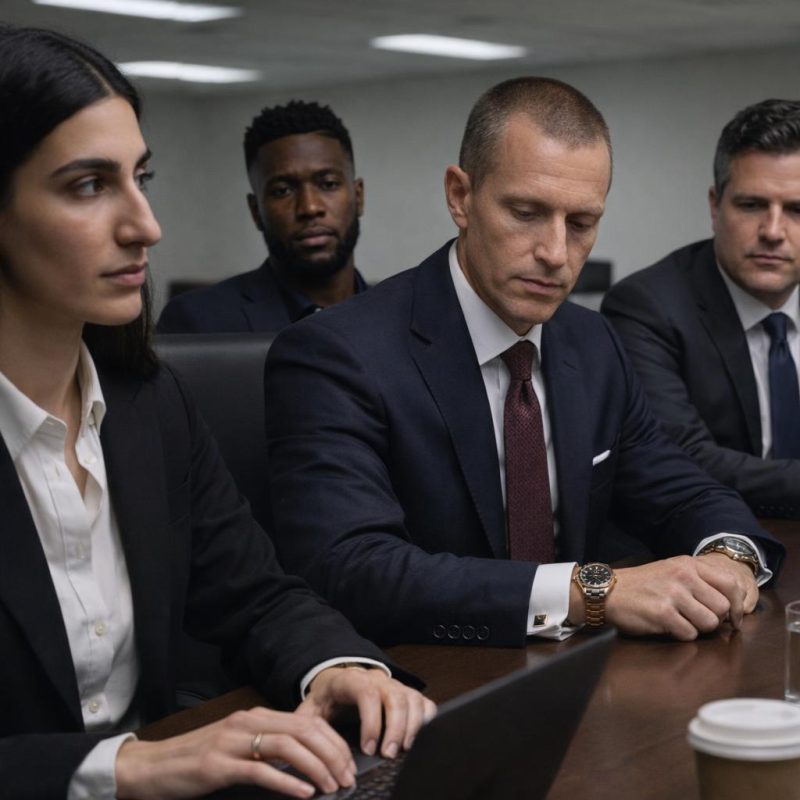 Image by RM AI
Morning Coffee and HR Conversations
I didn't go to my desk first thing that Thursday. Lila had sent a calendar invite the week before for a conversation about the leadership development track, and I'd been looking forward to it — the kind of meeting that felt like an investment rather than an obligation. Her office in HR was on the third floor, all natural light and tidy bookshelves, and she had a way of making a professional conversation feel genuinely unhurried. We went through the certification options for advanced data analytics leadership, and she walked me through the internal criteria the firm used when evaluating promotion readiness. It was more specific than I'd expected — weighted scoring across technical output, cross-functional collaboration, and what she called 'organizational visibility,' which was a polished way of saying that doing good work quietly wasn't always enough. She shared a few thoughts on work-life sustainability that I filed away honestly, because the last quarter had been a lot. The conversation stretched past the hour mark easily, the kind of discussion where you keep finding one more useful thread to pull. I was still thinking through something she'd said about sponsorship versus mentorship when my phone buzzed on the armrest of the chair. Then it buzzed again. I picked it up and looked at the screen — three messages from Richard, all marked urgent, sent within the last ten minutes.
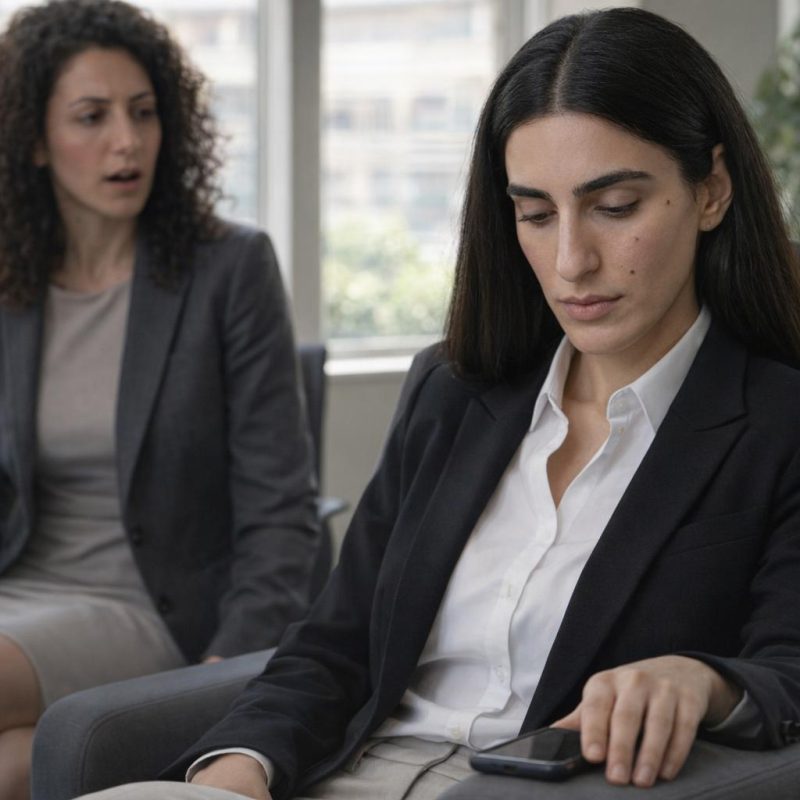 Image by RM AI
Late Night Database Maintenance
The quarterly audit was three days out, which meant Tuesday night was not optional. I stayed at my desk well past seven, working through the scheduled maintenance on the client database — the kind of methodical, unglamorous work that kept the whole system honest. I logged into the admin portal using my credentials, pulled up the integrity check queue, and started running validation scripts against the client account records one segment at a time. The process was documented, the same way I documented everything: timestamps, query logs, a running notes file I kept open in a second window. The office thinned out steadily around me. By eight-thirty the floor was mostly dark except for the pools of light over the few desks still occupied. I finished the integrity checks, ran the backup protocols, verified that all changes had written correctly to the system log, and cross-referenced the final record count against the previous week's snapshot. Everything matched. I saved the maintenance report, closed out the admin session, and logged off. I stretched my neck, packed my bag, and took one last look at the screen to confirm the logout had completed. The floor was quiet. I turned off my desk lamp and headed for the elevator, not thinking about much beyond getting home. Julian's desk, in the far corner of the office, still had its monitor on.
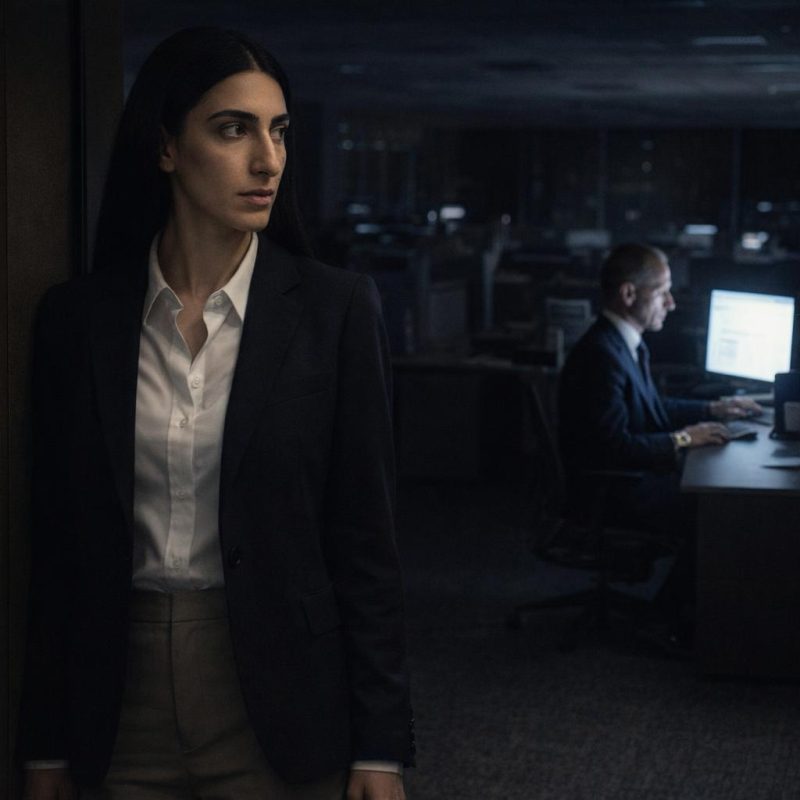 Image by RM AI
Quarterly Performance and Team Rankings
The quarterly review meeting ran the way it always did — Richard at the front, the performance dashboard projected on the wall behind him, everyone with their laptops open and their coffee going cold. He walked through the department metrics methodically, account by account, and I followed along on my own copy of the report. When he pulled up the senior analyst rankings, my name was at the top of the chart, which I'd expected based on the numbers I'd already seen, but there was still something slightly uncomfortable about seeing it displayed that large in a room full of colleagues. Richard didn't just note it in passing. He called out three specific accounts — the Meridian portfolio restructure, the Calloway renewal, and the cross-border compliance migration — and described the analytical work behind each one in enough detail that it was clear he'd actually read the documentation. Devon gave me a small nod from across the table, the kind that meant he was genuinely pleased and also slightly amused at my visible discomfort with the attention. A few colleagues offered polite applause, which I acknowledged with a nod and moved on from as quickly as I could. I glanced around the table the way you do when you want to make sure the room hasn't turned awkward, and my eyes landed on Julian. He was looking at the performance chart still projected on the wall, and his expression was something I didn't have a word for — not the face he wore in meetings, not the face he wore in the hallway.
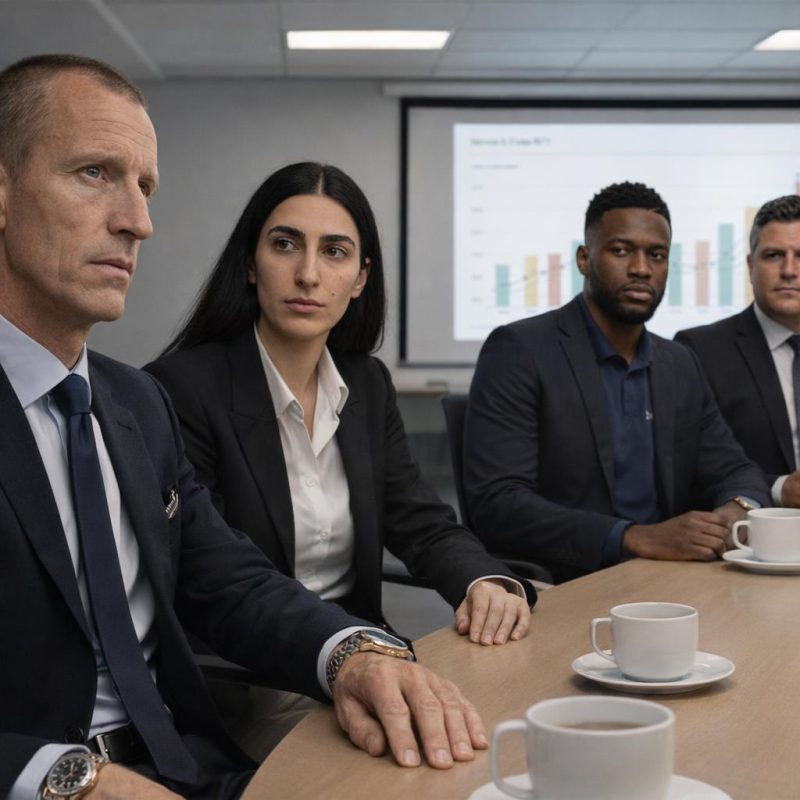 Image by RM AI
The Director's Rare Praise
I was back at my desk, pulling up my task queue for the afternoon, when I heard Richard's voice behind me. I turned and he was already close, hands in his jacket pockets, which usually meant he was in transit — but he stopped. He said the executive team had specifically flagged my client retention work during their Wednesday briefing, which I hadn't known, and that my approach to the database migration had come up as a model for how the firm should be handling similar transitions going forward. He used the word 'methodical' twice, which from Richard was high praise — he valued precision the way some people valued charisma. He mentioned that I should expect to be assigned to some higher-visibility projects in the coming quarter, the kind that got cross-departmental exposure. Devon was at the adjacent desk and I could see him in my peripheral vision, thumb pointed upward without looking up from his screen, which made it harder to keep a straight face. I thanked Richard, kept it brief and professional, and he moved on down the floor. I turned back to my monitor and sat with it for a moment — not the specific words he'd said, but the fact of it, the straightforward acknowledgment from someone who didn't hand those out casually. It was a small thing, maybe, but it landed with a weight that stayed.
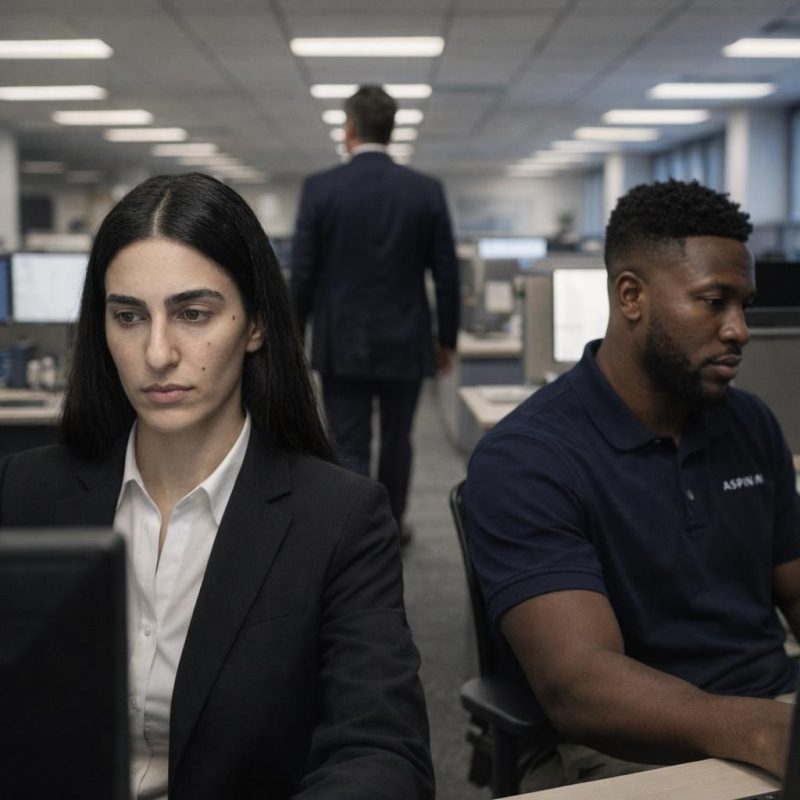 Image by RM AI
Executive Floor Cocktails and Power Dynamics
The quarterly networking event on the executive floor was the kind of thing I usually approached with a prepared list of talking points and a firm plan to leave by eight. The space had been rearranged — high-top tables, soft lighting, the kind of ambient hum that signals money without announcing it. Richard found me near the windows about twenty minutes in and steered me toward a small cluster of people with the practiced ease of someone who'd done it a thousand times. That was how I met Marcus Holloway. He was exactly what you'd expect from a senior finance executive — silver-haired, impeccably suited, the kind of physical presence that made a room feel slightly smaller. He shook my hand and asked, within the first two minutes, about the database migration work Richard had apparently mentioned to him already. His questions were specific. Not the polite, surface-level curiosity you get at these things, but the kind that suggested he'd actually read something, or been briefed. He asked about data integrity protocols, about how I'd handled the client-side transition, about what our retention metrics looked like post-migration. Devon joined us a few minutes later and the conversation broadened into industry trends, which helped. Marcus handed me his card before the group dispersed and said we should connect properly sometime. I thanked him and slipped the card into my jacket pocket. Walking back toward Devon, I couldn't quite name what I was feeling — not discomfort exactly, but something adjacent to it, the faint sense of having been examined rather than simply introduced.
 Image by RM AI
The Colleague Who Stopped Saying Good Morning
It took me about two weeks to consciously register what had been bothering me at a low level for longer than that. Julian had stopped saying good morning. Not in a dramatic way — there was no incident, no argument, no moment I could point to. He just gradually stopped. The small rituals that had defined our working relationship for two years — the brief exchange at the coffee station, the occasional eye-roll shared across the room during a long meeting — had quietly disappeared. He left team meetings the moment they ended, no lingering, no small talk. He ate lunch at his desk or somewhere else entirely. Devon mentioned it one afternoon without me bringing it up first, which confirmed I wasn't imagining it. He said Julian seemed withdrawn, like something was sitting on him. I told Devon I figured it was probably the promotion cycle — Julian had been passed over twice in the last year, and the recent visibility I'd been getting couldn't have made that easier. Devon didn't disagree, but he didn't look entirely convinced either. I thought about reaching out, sending a low-key message, but it felt like it might make things more awkward rather than less. I decided to give it space. The next morning I came in a few minutes after my usual time, set my bag down, and looked over at Julian's desk. His chair was empty, but his monitor was already on, a document open on the screen.
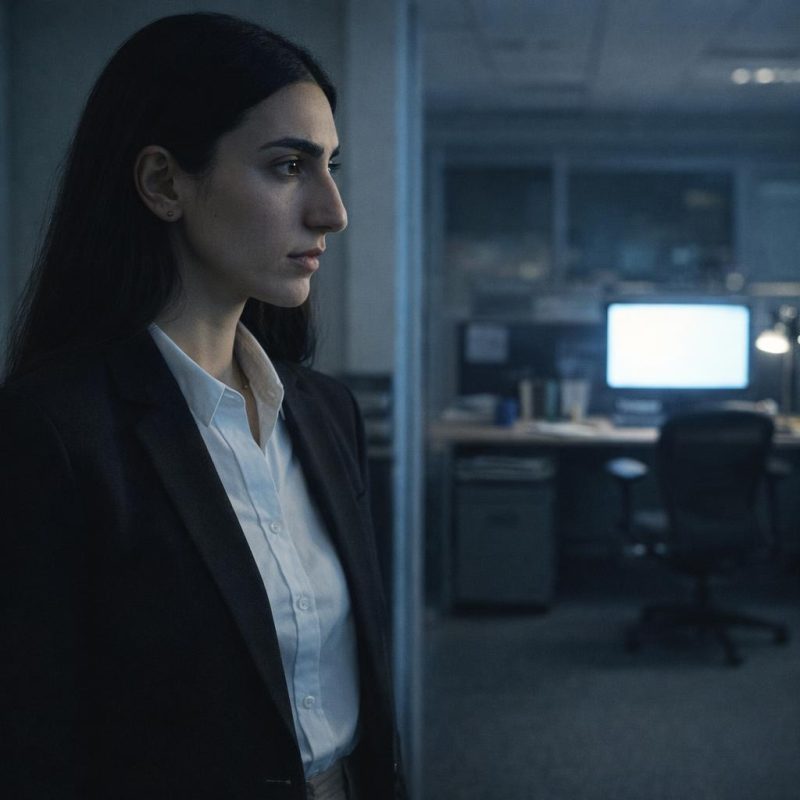 Image by RM AI
The Presentation That Froze
The client presentation was supposed to be one of the cleaner items on my calendar that week — quarterly projections for an account I knew well, slides I'd built myself, numbers I could have walked through from memory. I'd tested the deck the night before. I'd arrived early to set up. So when the screen froze twelve minutes before the meeting was scheduled to start, my first reaction was the specific, flat irritation of someone who had done everything right and was being penalized anyway. The laptop just stopped. Cursor unresponsive, display locked on a half-loaded slide, the kind of freeze that doesn't resolve itself if you wait. I tried the standard fixes — keyboard shortcuts, external display toggle, force-quit. Nothing. Richard was already in the room with the client and he stepped in smoothly, pivoting to a brief conversation about market conditions while I worked through a full restart. The system came back up in about five minutes. The presentation itself went fine after that — the client was gracious about the delay, said it happened to everyone, which was kind of them. Richard didn't say anything critical afterward, just gave me a look that was more sympathetic than pointed. But I sat with it on the train home that evening, replaying the moment the screen went dark. I had a clean record on client-facing work. That kind of small, visible stumble had a way of sticking in people's memories longer than it deserved.
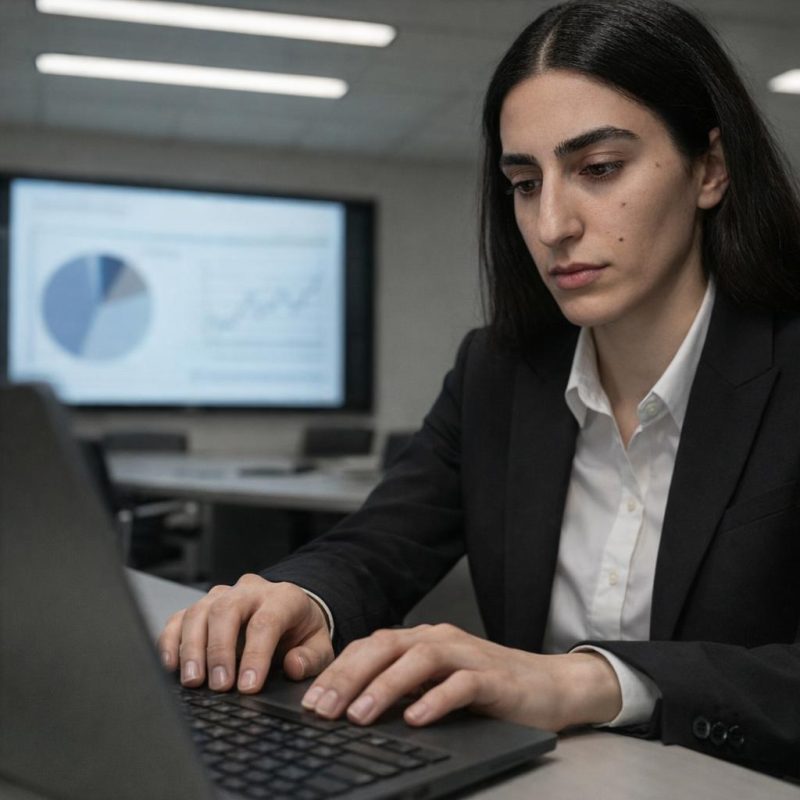 Image by RM AI
Files That Vanish and Reappear
The file had been there the previous afternoon — I was certain of it. A client analysis I'd spent the better part of a Tuesday building, saved to the shared drive folder I used for active projects, the same place I'd been saving work for two years. Wednesday morning it was gone. Not moved, not renamed as far as I could tell — just absent from the directory. I checked my local recent items, my desktop backup folder, the recycle bin. Devon came over when he saw me searching and we went through the network drives together, checking subfolders I hadn't touched in months. I started recreating it from my notes, which was tedious but manageable. Then, about twenty minutes into that process, Devon called over from his desk. The file had appeared in a subfolder two levels down from where I normally worked — a directory I used occasionally for archived material, not active files. I couldn't explain how it had gotten there. I told myself I'd probably dragged it by accident, some errant mouse movement I hadn't noticed. It was the most reasonable explanation. I opened the file to check it was intact, and out of habit I pulled up the properties panel to look at the modification log. The last edit timestamp showed my own user ID. The time listed was 11:47 PM — and I had left the office before six.
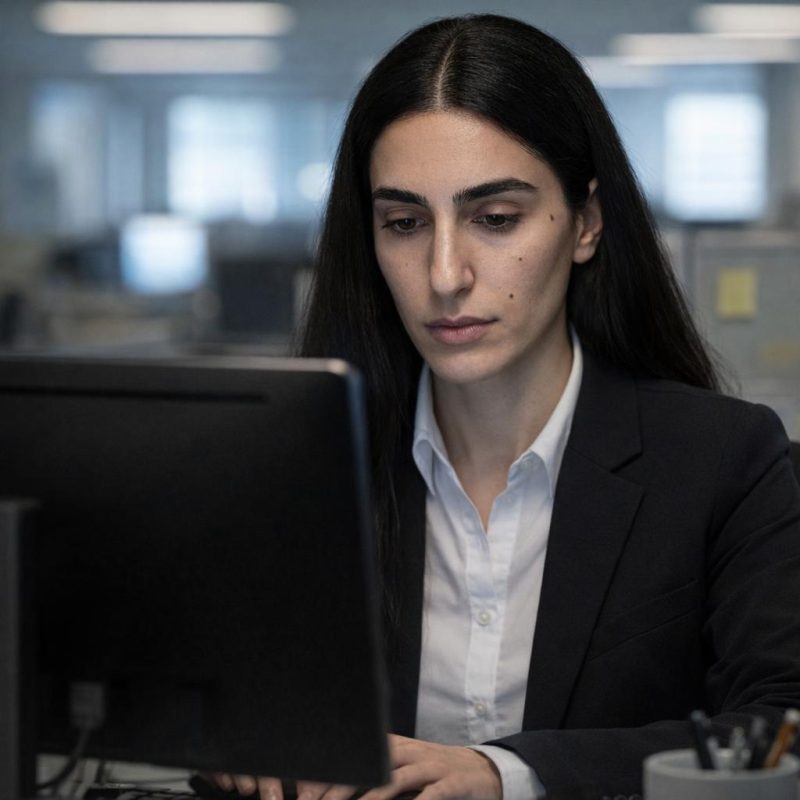 Image by RM AI
Three Strikes and a Pattern
The email lockout happened on a Thursday, three weeks after the presentation freeze and ten days after the file incident. I typed my password, got an incorrect credentials error, tried again, and was locked out on the second attempt — which meant someone or something had already used up the allowed tries before I sat down that morning. IT support reset my access within the hour and flagged it as a possible system sync issue, which was plausible enough. But I found myself at lunch telling Devon about all three incidents in sequence, and hearing them laid out that way — out loud, in order — made them feel different than they had individually. The presentation freeze I'd written off as bad luck. The file in the wrong folder I'd attributed to my own carelessness. The email lockout I'd been ready to blame on a server glitch. Devon listened without interrupting, then said quietly that it was a lot of technical problems for one person in a short window. I told him I was probably just noticing things more because I was already on edge. He didn't push it. But I went back to my desk and pulled up my calendar, marking the dates of each incident, and I sat there looking at the three entries. I decided I was going to start writing things down — dates, times, exactly what happened — just in case. I wasn't sure what I thought I was guarding against. The question sat with me the rest of the afternoon, unresolved and quietly uncomfortable.
 Image by RM AI
The Coffee Machine Ritual
I started arriving at the office earlier after the email incident, partly out of habit and partly because the quieter floor helped me think. That was how I first noticed Julian's routine. He was always already there when I came in, standing at the smart coffee machine in the breakroom — same spot, same posture, phone in hand, scrolling while his drink cycled through. The first time I clocked it I didn't think much of it. The second time I noticed he was standing in exactly the same position as the day before, facing the machine at the same slight angle. By the end of the week I was paying attention without meaning to. He arrived within the same narrow window every morning, spent somewhere between fourteen and sixteen minutes in that spot, and left without variation. I timed it twice, which I recognized even as I was doing it was a strange thing to do. There was nothing obviously unusual about a person having a consistent morning routine — plenty of people were creatures of habit, and Julian had always been methodical. I told myself I was reading into it because I'd been primed to notice things after the technical incidents, that I was pattern-matching where there was no pattern. I went back to my desk and opened my work queue. But the image stayed with me — Julian in the same spot, same angle, same unhurried stillness, morning after morning, not varying by so much as a minute.
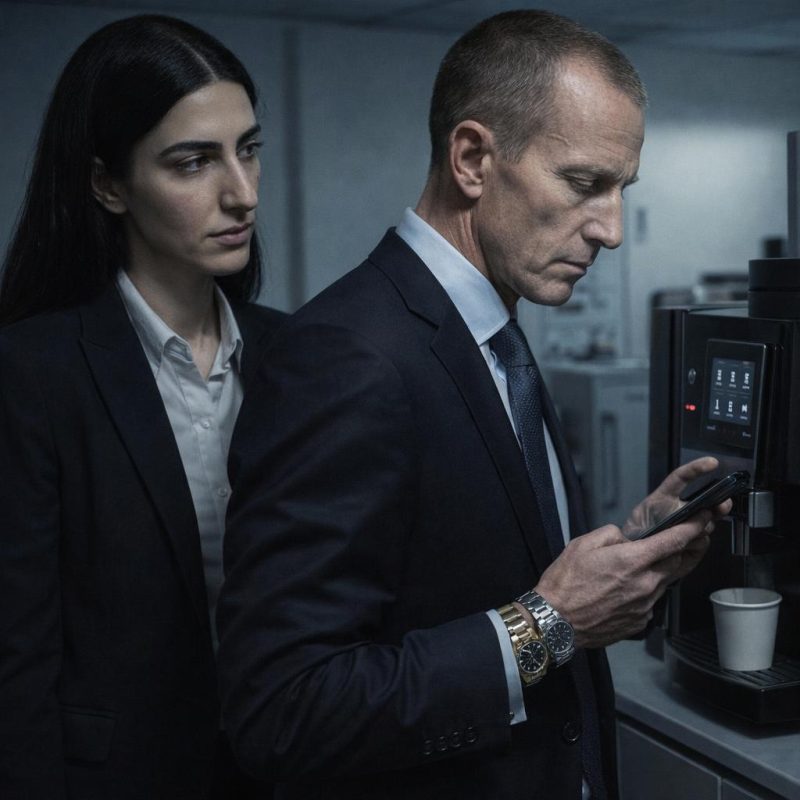 Image by RM AI
Devon's Quiet Warning
Devon pulled me aside near the end of the afternoon, away from the main floor, and said he wanted to mention something he'd been sitting on for a few days. He'd been working late on a deadline the previous week and had noticed Julian still at his desk well past seven, which wasn't unusual on its own, but Devon said it had happened three nights running. He'd also overheard something in the stairwell — Julian on his phone, voice low and clipped, the kind of tone that didn't match a casual call. Devon said he couldn't make out the words clearly but that Julian had sounded tense in a way that felt off, like he was managing something rather than just talking. I told Devon about the coffee machine routine, the precise timing of it, and watched his expression shift slightly. We went back and forth on whether we were both just primed to notice Julian because of the general weirdness of the past few weeks, or whether there was actually something there. Devon said he wasn't accusing Julian of anything, just that it felt worth mentioning. I agreed. We decided not to say anything to anyone — not without something more concrete. We were still standing there when I heard it: Julian's voice carrying up from the stairwell below us, low and tight, speaking in a register I didn't recognize from two years of working alongside him.
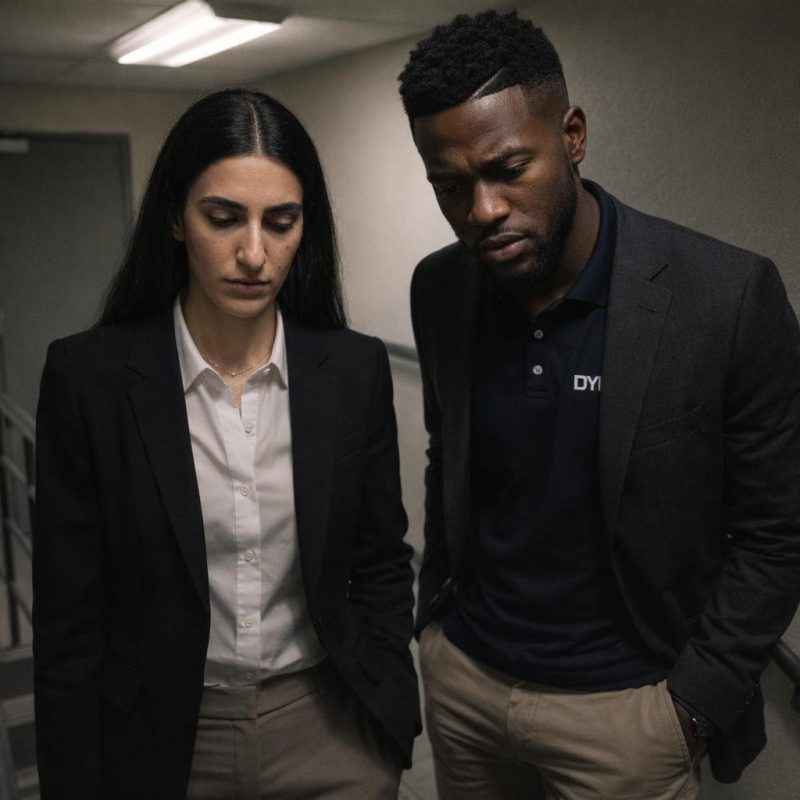 Image by RM AI
The Private Log of Strange Events
I opened a new document on my personal laptop that night, at the kitchen table, after dinner. I told myself it was just an exercise in clarity — that writing things down would help me figure out whether I was dealing with a pattern or just a rough few weeks. I listed the presentation freeze first, with the date and the specific behavior of the system. Then the missing file, the subfolder it appeared in, the timestamp on the modification log that didn't match my hours. Then the email lockout, the number of failed attempts already logged before I'd touched the keyboard. I added a section for behavioral observations — Julian's withdrawal, the coffee machine routine and its precise consistency, Devon's account of the late nights and the stairwell call. I included the dates where I had them and approximations where I didn't. When I read back through what I'd written, the document had a particular quality to it that I hadn't intended. It read like a log. Not notes — a log, with entries and timestamps and observed details organized by date. I added a header, then deleted it, then added it back. I encrypted the file using the personal cloud storage I kept separate from anything work-related and saved it there. I sat back and looked at the closed laptop. Somewhere between opening the document and saving it, I had started treating my own workplace like a crime scene.
 Image by RM AI
Overheard Complaints and Old Resentments
The afternoon had settled into that particular quiet that comes after the lunch rush clears out — keyboards clicking, phones on silent, the low hum of the HVAC doing most of the talking. I was working through a reconciliation report, the kind of tedious line-by-line work that requires just enough concentration to keep you from noticing much else. That's probably why Julian's voice cut through so clearly when it rose near the printer area. He wasn't shouting, exactly, but he wasn't trying to keep it down either. I caught fragments at first — something about the last review cycle, something about the criteria being inconsistently applied. I recognized the shape of the complaint before I could make out all the words. He'd been passed over twice now, and I knew that, but I'd never heard him talk about it with this particular edge. There was a flatness to his tone that felt different from the usual venting. The analyst he was talking to — I couldn't see who from my angle — said something I couldn't catch, and Julian's response came back sharper. I kept my eyes on my screen and told myself it wasn't my business. Then I heard my name, clear as anything, followed by a run of words that dropped just below audible.
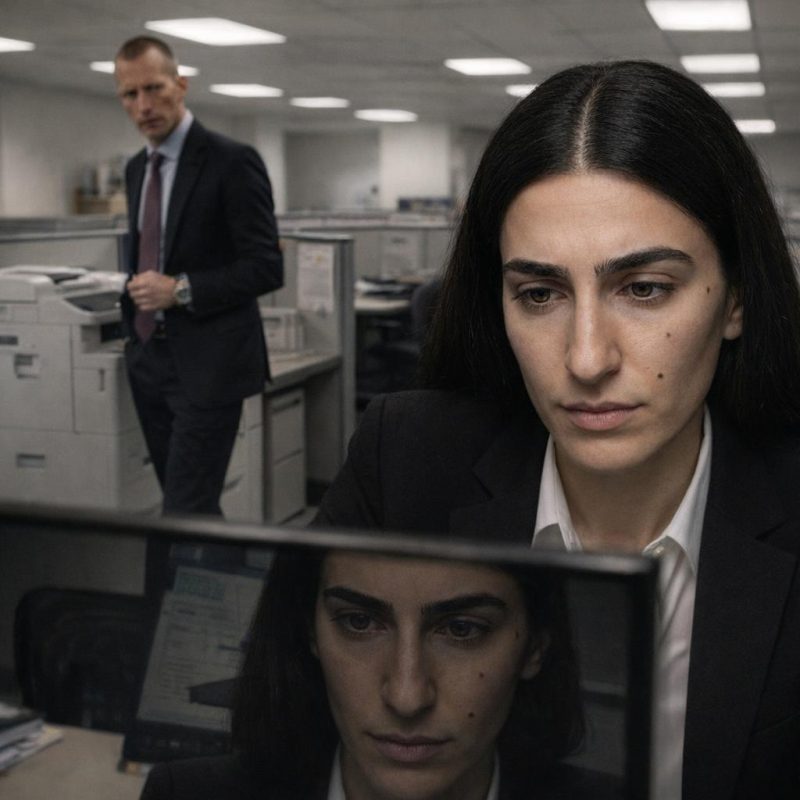 Image by RM AI
The Awkward Encounter Near the Servers
I didn't usually stay past seven, but the quarterly backup verification had flagged an incomplete sync and I wanted to clear it before morning. The hallway outside the server room was narrow and fluorescent-lit, the kind of corridor that feels emptier than it actually is after hours. I heard the door handle before I saw him — that particular metallic click of the server room latch releasing. Julian stepped out and stopped when he saw me. For a half-second neither of us said anything. He recovered first, which I noticed. 'Still here?' he said, and I said something like 'just finishing up,' and he nodded and mentioned a system update he'd been monitoring. It was a perfectly reasonable explanation. The words were fine. It was everything around the words that felt off — the slight over-precision of it, the way he didn't quite meet my eyes, the absence of the small talk he used to fill silences with automatically. We'd worked together for three years. There had been a time when running into each other after hours would have meant ten minutes of conversation and probably a shared complaint about the coffee. He said goodnight and walked toward the elevator without looking back. I stood in the hallway for a moment after he turned the corner, and what stayed with me wasn't suspicion exactly — it was just the strange hollowness of a conversation that used to be easy.
 Image by RM AI
The File That Disappeared Again
The audit request came in on a Tuesday, and the file it referenced — a client access log I'd compiled six weeks earlier — was simply gone. Not archived, not moved to a subfolder with an auto-generated timestamp. Gone. I checked the shared drive first, then the departmental backup folder, then the secondary archive we used for compliance documentation. Devon pulled up a chair and ran his own search while I went through mine, and we both came up empty. 'Could IT have purged it during the server migration?' he asked, and I said maybe, but I didn't think so — the migration had excluded active compliance files by protocol, and this one had been flagged as active. What made it worse was the specific nature of what was missing. This wasn't a draft or a working document. It was a finalized log containing security access records for three client accounts. The kind of file that doesn't disappear by accident. I filed a ticket with IT support and documented the search steps in my private log that evening, adding it to the entry from the previous incident. Two files now. Different types, different dates, different projects. I sat at my kitchen table after I'd closed the laptop, and I couldn't shake the feeling that whatever was happening, it wasn't random — that something about my work specifically kept ending up in the middle of it.
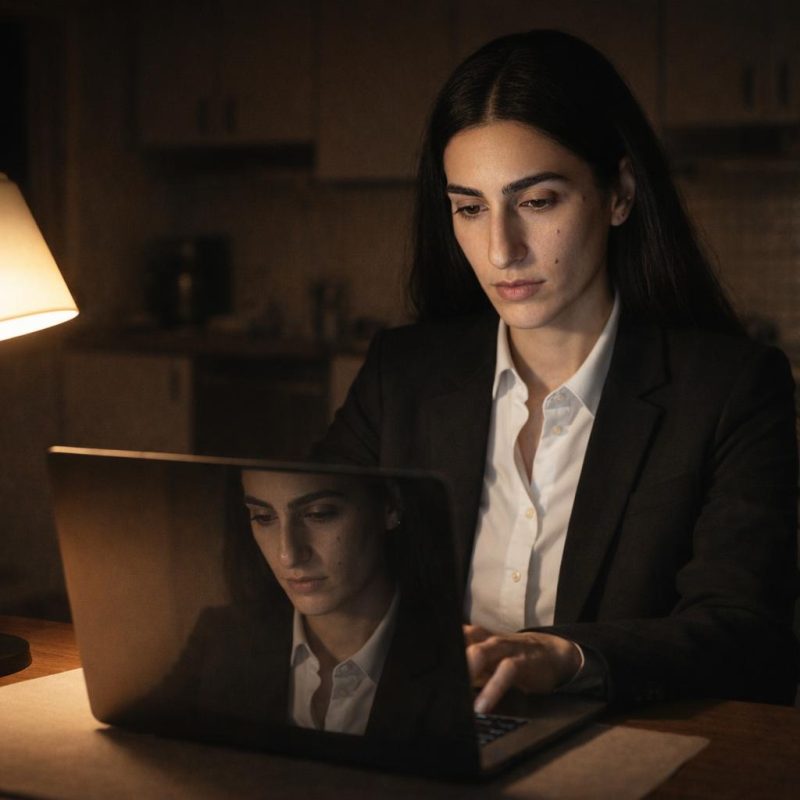 Image by RM AI
The Watcher Across the Office
It started as a low-grade awareness, the kind you can't quite locate — a sense of peripheral attention that didn't belong to the normal rhythm of the office. I'd catch a shift in my vision's edge and look up to find nothing conclusive, just the usual open-plan landscape of monitors and coffee cups and people doing their jobs. I tried to dismiss it. Devon stopped by my desk around two o'clock and asked if I was alright, and I told him I was fine, just distracted. He gave me the look he gives when he doesn't believe me but isn't going to push. 'You keep looking up,' he said. I told him I thought I was just tired. The feeling didn't go away. It had a specific quality to it — not the general ambient awareness of a busy office, but something more directional, like a fixed point somewhere behind my left shoulder. I gave myself a reason to turn around: I needed to check the time on the wall clock rather than my screen. I turned quickly, without telegraphing it. Julian was sitting at his desk across the open floor, and he was looking directly at me. Not glancing, not coincidentally facing my direction. Looking. And when I turned, he didn't look away.
 Image by RM AI
The Tension Before the Storm
I knew something was wrong before I'd made it ten steps past the entrance. The office had a particular sound on normal mornings — overlapping conversations, the coffee machine cycling, chairs scraping, the general productive noise of thirty people starting their day. That morning it was quieter than it should have been, and the quiet had a texture to it that I couldn't immediately name. A colleague near the door glanced at me and then looked down at her keyboard with a speed that felt deliberate. Two analysts by the window stopped talking when I walked past. I looked across the room for Devon and found him already watching me from his desk, his expression careful in a way that made my stomach tighten. He gave a small shake of his head — not a greeting, more like a warning I didn't have the context to read. Julian wasn't at his desk. I noticed that without meaning to, the way you notice an absence when you've been tracking a presence. The morning chatter that usually built to a low roar by nine was simply absent, replaced by the sound of fingers on keyboards and nothing else. I picked up my bag and walked toward my desk, and the dread that had been sitting at the edge of my awareness since I'd walked through the door settled into my chest like something with weight.
 Image by RM AI
Changing Passwords and Checking Logs
Tuesday evening I sat down at my home computer with a list and worked through it methodically. I changed my password for the main client portal first, then the internal reporting system, then the compliance database, then the shared drive access credentials — twelve accounts in total, each one updated to a randomized string I generated and stored in an encrypted password manager I kept entirely off the work network. Where two-factor authentication was available and I hadn't already enabled it, I turned it on. Then I pulled up my access logs for the past thirty days and went through them line by line, looking for login timestamps that didn't match my hours or locations I hadn't been. I found nothing that clearly didn't belong, which should have been reassuring and mostly wasn't. The absence of evidence wasn't the same as evidence of absence — I'd learned that much from the missing files. I added a note to my private log documenting what I'd done and when, including the specific systems and the date of each change. It took about two hours. When I finally closed the laptop and got ready for bed, I couldn't claim I felt safe exactly. But there was something in the act of doing something — of moving through a checklist and checking boxes — that sat differently than the helpless watching and waiting had. It wasn't certainty. It was just the small, quiet comfort of having taken action, even without fully understanding what I was acting against.
 Image by RM AI
Wednesday Evening and the Calm Before
Wednesday evening the office emptied out in the usual way — in waves, the first around five-thirty, the second around six-fifteen, until by seven it was just the hum of the servers and the cleaning crew working their way down the far corridor. I stayed to finish a quarterly client report that had been sitting half-done since Monday, the kind of work that requires uninterrupted concentration and never gets it during regular hours. I worked through the data analysis section first, then the projections, then the executive summary, which I always wrote last because it required knowing what the rest of the document actually said. Around eight I read back through the whole thing, made a few small corrections, and decided it was done. I saved it to the shared drive, then saved a backup copy to the departmental archive, then — out of a habit I'd developed recently — saved a third copy to my personal encrypted cloud storage. I locked my workstation, gathered my bag and jacket, and did a quick check of my desk the way I always did before leaving late: phone, badge, keys. The office was still and dim around me, the overhead lights on their motion sensors already cycling down in the sections where no one was moving. I took the elevator down, pushed through the lobby doors into the cool evening air, and walked to my car feeling tired in the specific satisfying way that comes from finishing something.
 Image by RM AI
Thursday Morning Arrival
I arrived at the office a few minutes past nine on Thursday, later than usual — I'd stopped for coffee on the way in, which I almost never did. The lobby felt normal. The elevator felt normal. It was the moment the floor doors opened that something registered as wrong, though I couldn't have said immediately what it was. The noise level was off. Not the quiet of the previous morning, but a different kind of tension — clusters of people talking in low voices that stopped or shifted when I walked past. Devon was near the entrance, which was unusual; he normally went straight to his desk. He moved toward me before I'd taken five steps onto the floor, and his expression was the kind that people wear when they're trying to figure out how much to say. 'Richard's been asking for you,' he said quietly. 'Since about nine.' I looked past him toward the center of the floor. Julian was standing near the water cooler, not working, just standing there with his arms crossed, watching the room. Colleagues I'd worked with for years were gathered in small groups near the windows and along the far wall, the way people cluster when something has happened and no one has been told what to do yet. Richard's office door was closed, and I could hear a voice from behind it — raised, though the words were indistinct. Then the door swung open and Richard stepped out, his face flushed and set in a way I hadn't seen since the Meridian account collapse two years ago.
 Image by RM AI
The Public Accusation
I heard him before I saw him clearly — that booming voice cutting across the floor noise like a blade. Richard was moving fast, faster than I'd ever seen him move, and his face was the color of a stop sign. People stepped out of his path without being asked. He came straight to my desk, and when his fists came down on the surface the impact made my monitor shake and my coffee cup rattle against its coaster. I actually flinched. The whole floor went silent in the space of about two seconds. 'The Hargrove client database,' he said, and his voice was low now, which was somehow worse than the shouting. 'Completely wiped. Nine-fourteen this morning. Your admin credentials, Natalie. Your login. Your access token.' I opened my mouth and nothing came out. He leaned forward over the desk, and I could see the vein at his temple. 'Do you have any idea what that account is worth? Do you have any idea what you've done?' Around me, fifty people had stopped pretending to work. I could feel every single one of them watching. I heard someone near the windows whisper something I couldn't make out. Richard straightened up, jaw tight, and said if I couldn't give him an explanation in the next sixty seconds, he would call security and have me walked out of the building before lunch.
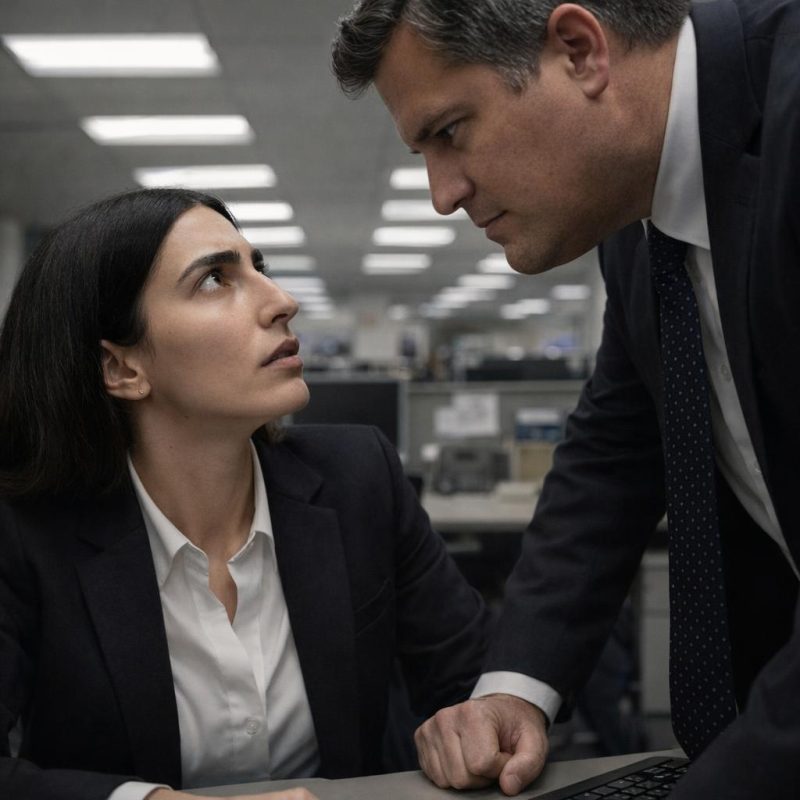 Image by RM AI
Fifty Pairs of Eyes
I stood there behind my desk and felt the weight of every pair of eyes in that room pressing down on me like something physical. Colleagues I'd eaten lunch with, people I'd stayed late with during quarter-end crunches, the new analyst who'd only started three weeks ago — all of them watching, waiting to see what I would do. Richard was still standing across from me, arms crossed now, his expression set hard. I could feel the heat in my face and the tightness in my throat that usually comes right before tears. I didn't cry. I don't know exactly why — maybe it was the sheer absurdity of the accusation, or maybe it was something that kicks in when the alternative is falling apart in front of fifty people. Whatever it was, something shifted. The panic didn't disappear, but it moved to the back of the room, and something cooler and quieter moved to the front. I caught Devon's face across the floor — he looked stricken, like he wanted to say something and couldn't. I gave him the smallest shake of my head. Then I started running through my morning, methodically, the way I'd run through a data discrepancy. I'd come in late. I'd stopped for coffee. I'd gone straight to HR before I even reached my desk. The timeline was there. I just needed to hold onto it. The clarity felt strange — almost cold — but it was the only thing I had.
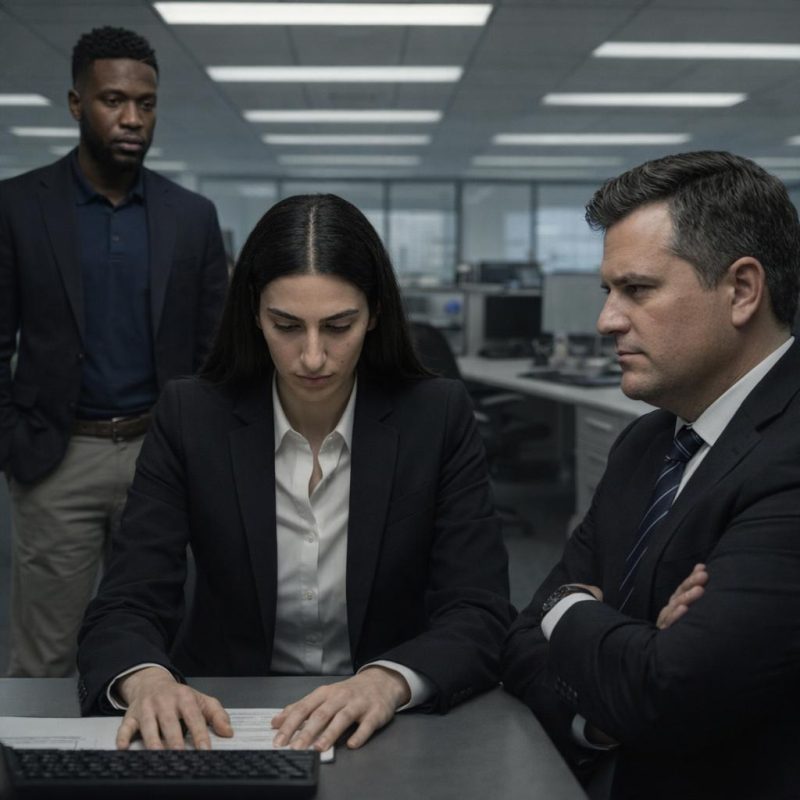 Image by RM AI
The Smirk by the Water Cooler
While Richard was still talking — something about the client relationship, the liability exposure, the board — my eyes moved across the room the way they do when I'm trying to find a pattern in a dataset. I wasn't looking for anything specific. I was just looking. And then I found Julian. He was standing near the water cooler, arms loose at his sides, not clustered with any of the other groups. Everyone else in that room had some version of the same expression — uncomfortable, uncertain, the look of people watching something they didn't want to see. Julian's face was different. There was a stillness to it that didn't match the moment, and at the corner of his mouth, something that wasn't quite a smile but wasn't not one either. It was the expression of someone watching a scene go exactly the way they expected it to go. I looked away before he could catch me looking. I didn't have anything concrete — no proof, no mechanism, nothing I could point to. But something about that expression sat wrong with me in a way I couldn't shake. The technical problems over the past few weeks, the access errors, the small things that hadn't added up — they arranged themselves differently in my mind now. I still didn't know what had happened or how. I just had the uncomfortable feeling that something in that room was not what it appeared to be.
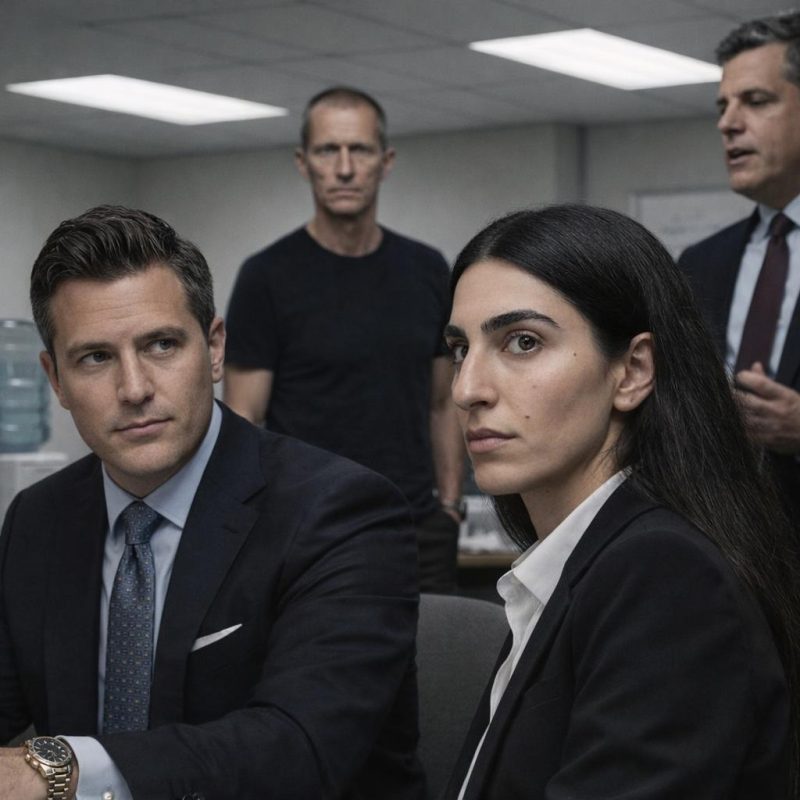 Image by RM AI
The Alibi I Didn't Know I Needed
Richard was still talking when the timeline locked into place in my head. I'd come in late — I had the coffee receipt on my phone to prove it. I'd walked onto the floor and Devon had intercepted me almost immediately. And before any of that, I'd gone straight to HR. Lila. The conversation about the Q3 compliance review that had run long because she'd had questions about the new reporting format. I'd been sitting across from her desk at nine-fourteen. I was certain of it because she'd glanced at her clock and apologized for keeping me, and I'd told her it was fine. I hadn't even been on the floor when the deletion happened. I hadn't touched my computer. I took a breath — slow, deliberate — and waited for Richard to finish his sentence. 'Richard.' My voice came out steadier than I expected. 'I wasn't at my desk at nine-fourteen. I was in HR with Lila. She can confirm that.' He stared at me. 'I'm not asking you to take my word for it,' I said. 'I'm asking for ten minutes with IT before you make a decision that can't be undone. My credentials were used — I'm not disputing that. But I didn't use them. Someone else did, and there's a way to prove it.'
 Image by RM AI
The Request That Changed Everything
Richard looked at me for a long moment, the kind of look that's doing a lot of work behind the eyes. Then he said, 'Ten minutes. Not eleven.' I asked for Sarah from IT — I'd worked with her on the network audit six months back and I knew she was fast and thorough and wouldn't need things explained twice. She arrived in the breakroom four minutes later with her diagnostic laptop under her arm, already pulling up a terminal window before she'd fully sat down. Richard stood near the door with his arms crossed, watching both of us like he was waiting for one of us to admit this was a waste of his time. I started explaining what I was thinking — the pattern of small technical disruptions I'd been experiencing over the past few weeks, the access errors that IT had logged but not fully resolved, the possibility that my credentials had been compromised through a vector that wouldn't show up in the standard access logs. Sarah nodded along, asking sharp clarifying questions. Richard's expression didn't change much, but he hadn't left. I told them I wanted to check an alternative data source — something on a separate network that might have captured activity the primary logs wouldn't show. Sarah looked up from her screen. 'What source?' I pointed toward the far end of the breakroom counter, where the machine sat humming quietly, and said, 'That one.'
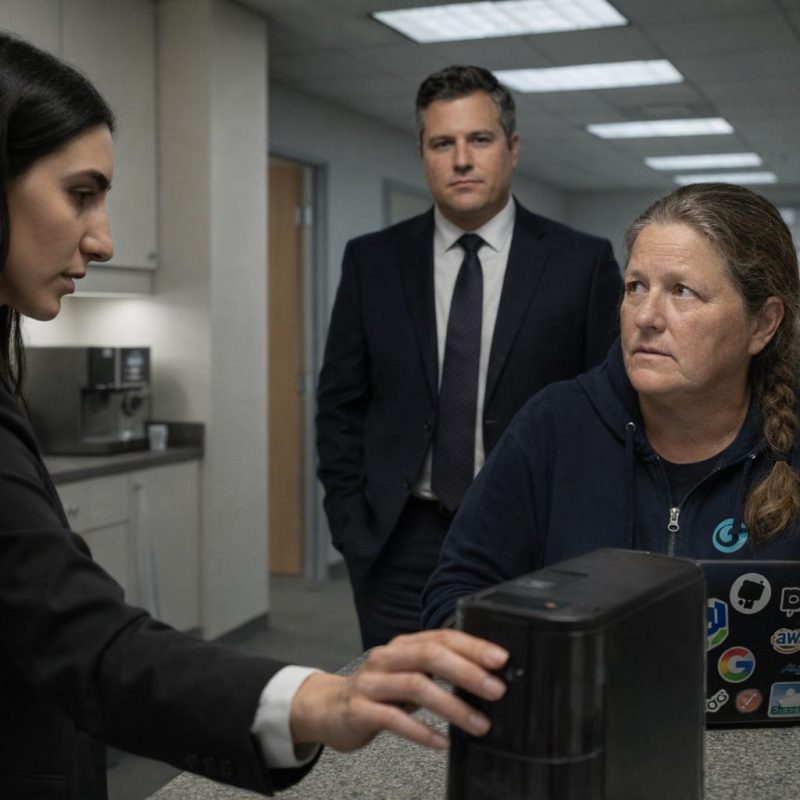 Image by RM AI
The Smart Coffee Machine
Sarah looked at the coffee machine the way most people look at something when they're recalibrating their expectations. Richard just looked at me. 'The coffee machine,' he said. It wasn't quite a question. 'It's IoT-enabled,' I said. 'It runs on a separate internal subnet — not the primary corporate network. It's not monitored the same way.' I explained that the machine logged the MAC addresses of nearby devices as part of its proximity-based personalization feature — the thing that remembered your preferred brew strength if you stood close enough with your phone. Sarah was already nodding, pulling up something on her laptop. 'The logs would capture any device that came within range during a given window,' I continued. 'Including the time stamp.' Richard rubbed the back of his neck. 'You're telling me a coffee machine might have recorded who was standing next to it at nine-fourteen this morning.' 'I'm telling you it might have recorded who wasn't at their desk,' I said. 'There's a difference.' I mentioned that one of my colleagues had a very consistent morning routine at this particular machine — same time, same spot, every day. If the logs showed a device in this room at the exact moment the deletion occurred, that would be worth knowing. Sarah said she could access the service port directly. Richard looked at the machine for another second, then at me, then back at the machine. 'Fine,' he said. 'Pull it.' The words had come out of my mouth sounding almost reasonable, which was the strangest part of all.
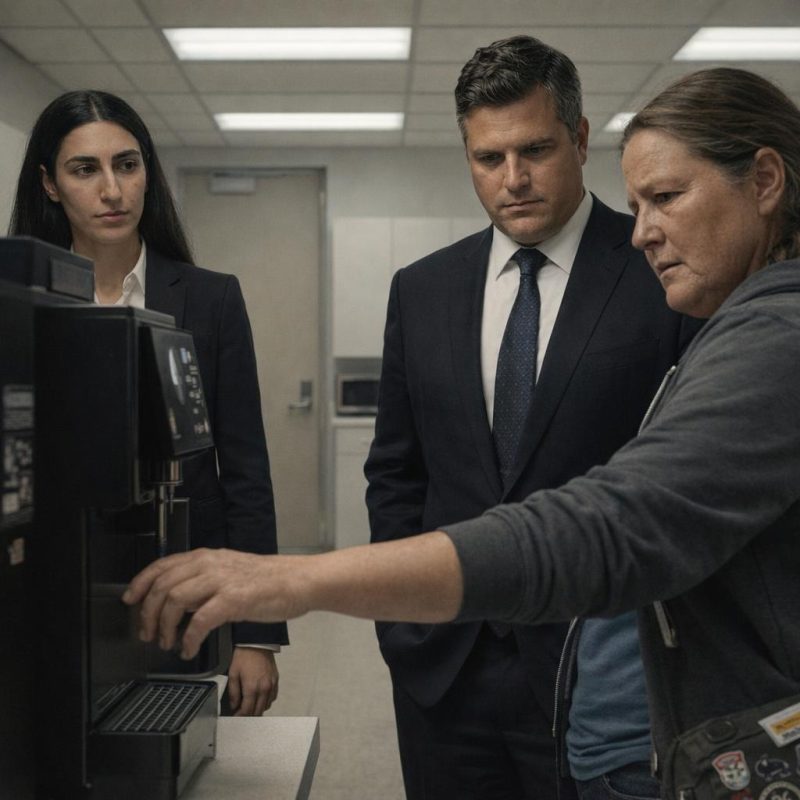 Image by RM AI
The Diagnostic Laptop
Sarah found the service port on the back panel of the machine and had her cable plugged in within about thirty seconds. She worked without narrating what she was doing, which I appreciated — just the quiet click of keystrokes and the occasional scroll of her trackpad. Richard stood to my left with his arms still crossed, checking his watch twice in the first minute. I stood very still and watched Sarah's screen without being able to read most of what was on it. The breakroom felt sealed off from the rest of the building. I could hear the faint noise of the floor through the glass partition — phones, voices, the ambient hum of an office that had gone back to pretending to work — but in here it was just the three of us and the sound of Sarah's laptop fan spinning up as she navigated deeper into the device's internal system. She pulled up a log file and started scrolling. The timestamps ran in a column down the left side of the screen. I watched her finger slow on the trackpad. She scrolled back up a few lines, then down again. Then she stopped. She didn't say anything yet. She just leaned slightly closer to the screen, and the room held whatever breath it had left.
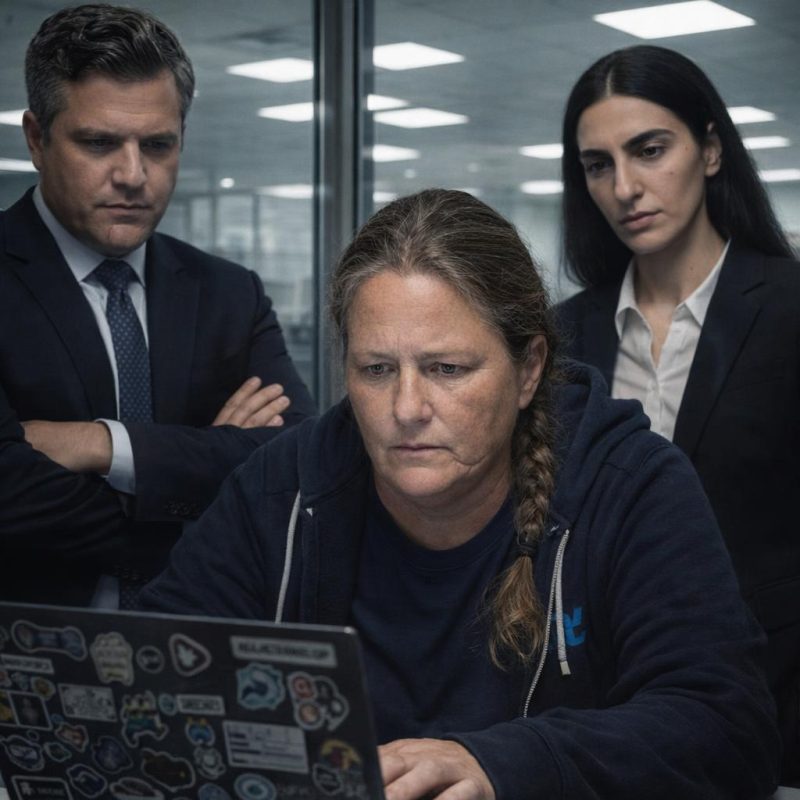 Image by RM AI
Leading Them to the Evidence
While Sarah worked, Richard turned to me with the expression of someone who had agreed to something and was now reconsidering it. I kept my voice even. I told him that the colleague I had in mind came to this machine every morning between nine and nine-thirty — same corner of the counter, same spot, consistent enough that the proximity log would have a clear pattern across multiple days. I pointed to where the machine sat: tucked against the far wall, angled away from the nearest security camera, on a subnet that ran its own logging protocol separate from anything the primary IT monitoring dashboard would flag. Sarah confirmed, without looking up, that the network architecture was exactly as I'd described — the device maintained its own internal activity record independent of the corporate system. Richard's frown shifted slightly, the way it does when something is starting to make structural sense even if he doesn't want it to. I was careful about how I framed the next part. I told him I wasn't pointing a finger at anyone. I was pointing at a location, a time window, and a data source that might tell us something the standard logs couldn't. Whether that something cleared me or implicated someone else, I said, was for the evidence to decide — not me. The distinction mattered to me, and I think some part of him heard that.
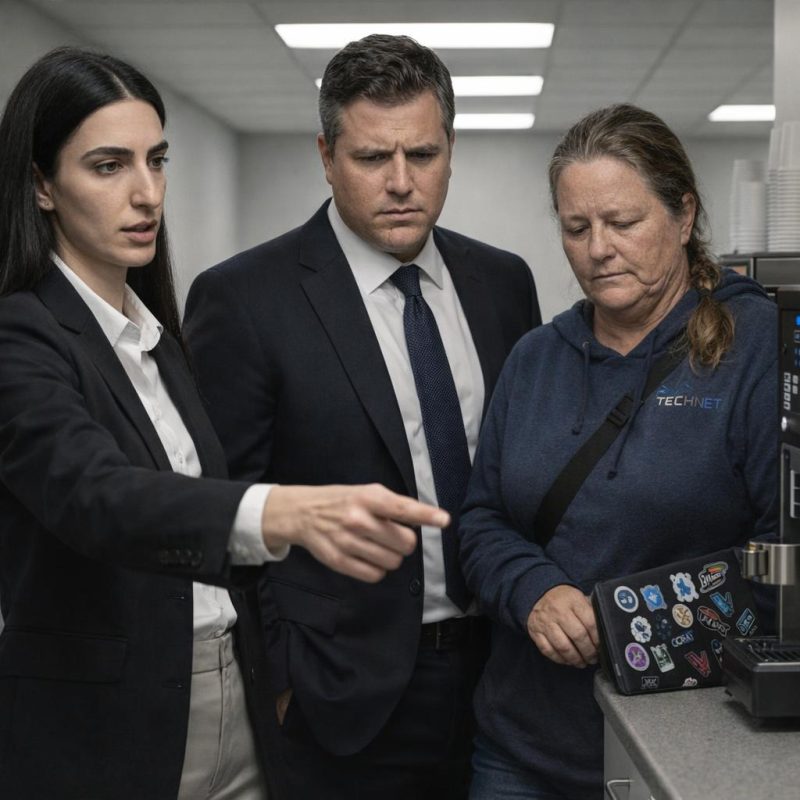 Image by RM AI
Two Minutes to Truth
The room had gone quiet in a way that felt different from before — not the uncomfortable silence of accusation, but something more like held breath. Sarah had stopped typing and was scrolling slowly, her eyes tracking left to right across the screen with the focused stillness of someone reading something that actually matters. I kept my hands flat on the counter because I didn't trust them otherwise. She said she had the timestamp data, and she was pulling the MAC address logs for the 9:14 AM window right now. Richard moved without being asked, stepping around the edge of the counter to position himself behind her left shoulder. I watched him lean in, arms crossed, jaw set — the posture of a man who had committed to looking at something he wasn't sure he wanted to see. Sarah cross-referenced the device signatures against the registered hardware list, her fingers moving in short precise bursts. She said the proximity log was clean, no gaps, no anomalies in the capture rate. Whatever had been near that machine at 9:14 had been logged. She scrolled to the exact minute. Then she stopped scrolling. She didn't say anything for a moment. I watched her expression shift as she read what was on her screen.
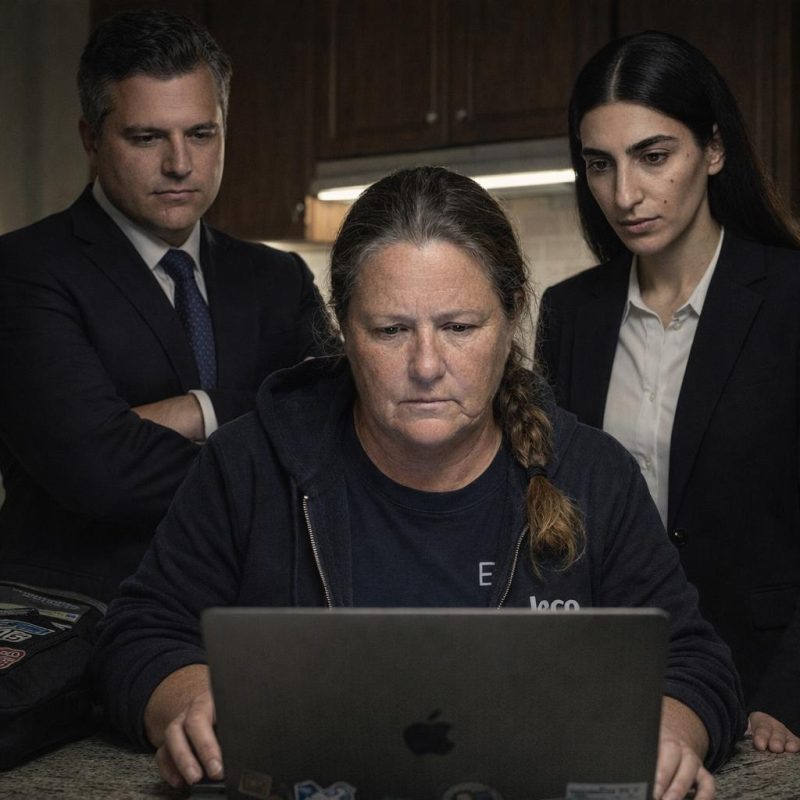 Image by RM AI
The MAC Address That Proved Everything
Sarah's voice came out measured, the way it does when someone is being careful not to get ahead of the data. She said the MAC address that registered at the machine at 9:14 AM matched a device on the corporate hardware inventory — a registered work phone, assigned to a specific employee. She turned the laptop so Richard could see the screen directly. The device ID was Julian's. I didn't say anything. Richard leaned in closer, reading the entry himself, and I could see his jaw tighten. Sarah kept going. She said the log wasn't just showing proximity — it was showing an unusually high volume of encrypted data packets transmitted during that two-minute window. She pulled up a secondary display showing the packet count against the baseline average for that device. The spike was not subtle. She explained that the volume and encryption pattern were consistent with a network spoofing application running in the background, the kind that could mirror a trusted device signature and push commands through a connected system. Richard straightened up slowly. He asked Sarah if she could print it. She said she already had it queued. The printer on the side table hummed to life, and thirty seconds later Sarah set two warm pages face-up on the counter — Julian's device ID, the 9:14 timestamp, and the packet data, printed in black and white.
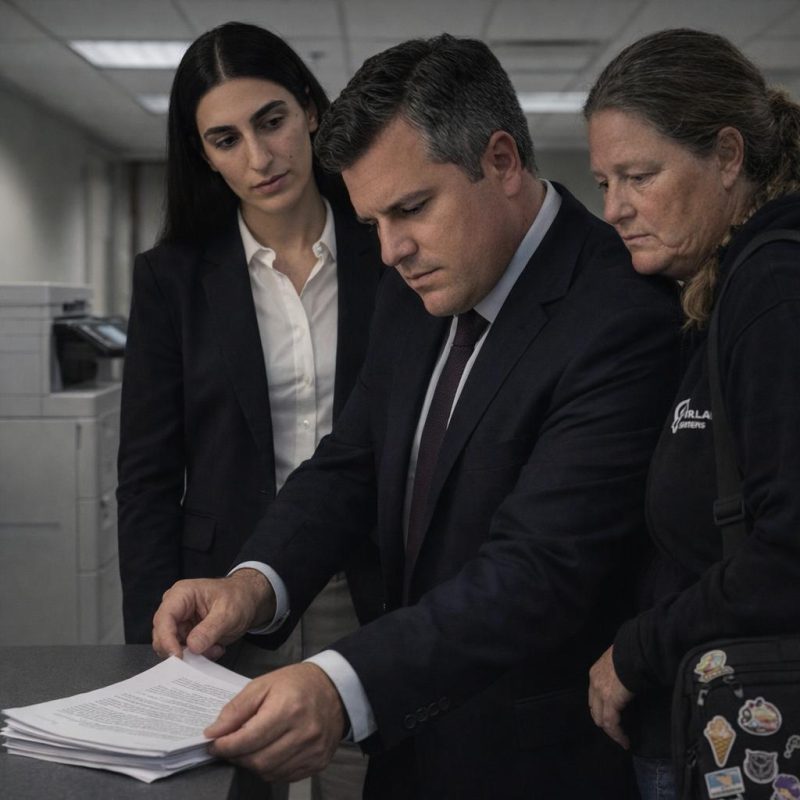 Image by RM AI
The Evidence in Hand
Richard picked up both pages and read them the way he reads everything — standing still, not moving, like the rest of the room has temporarily ceased to exist. Sarah stood quietly to the side. I didn't speak. I had said everything I needed to say, and the paper was saying the rest of it now. I watched his eyes move down the first page, then the second. Somewhere around the middle of the second page, something in his posture changed. The set of his shoulders dropped slightly. He looked up at me, then back at the page, then at Sarah. He asked her, in a voice that had gone flat and careful, whether the findings were conclusive. Sarah said yes. She said the device registration was unambiguous, the timestamp was exact, and the packet volume anomaly was not something that occurred by accident or background process. She said she could write a formal technical summary if it was needed for legal proceedings. Richard nodded once, slowly. His face had gone red — not the sharp red of anger, but the slower, deeper kind that comes with something else entirely. He set the pages down on the counter and looked at me for a long moment without speaking. I had spent three days being certain of something no one else would accept. The pages sat between us, and the room held the particular quiet of something that had finally been allowed to be true.
 Image by RM AI
The Smirk That Vanished
Richard picked the pages back up and walked out of the breakroom without announcing it. I followed, and Sarah fell in behind me. The main floor registered his entrance the way open offices always do — a ripple of heads turning, conversations dropping off, the ambient hum of keyboards going uneven. Julian was standing near the water cooler with Devon a few feet away, and he had the relaxed posture of someone who had been waiting out a storm he was confident had already passed. He saw Richard first. Then he saw the papers in Richard's hand. Then he saw me. The smirk — and there had been one, I caught it clearly before it started to move — began to dissolve somewhere between the second and third second of eye contact. Richard crossed the floor without slowing down. Devon stepped back slightly, reading the room. Julian straightened up, and I watched him try to reassemble something casual in his expression, the way you try to close a window that's already let the cold in. Richard stopped two feet in front of him and held up the printed log so the header was visible. Julian's face went the color of old paper.
 Image by RM AI
The Firing and the Phone Seizure
Richard didn't raise his voice, which somehow made it worse. He told Julian what the log showed — the device ID, the timestamp, the packet volume — in the same flat, precise tone he uses in budget reviews. Julian started talking immediately, the words coming out in a rush: it wasn't what it looked like, the data could be misread, someone could have spoofed his phone signature, he had been at his desk all morning. Richard let him finish. Then he said Julian was terminated, effective immediately, and that his personal phone was to be surrendered to legal for review as part of a corporate espionage proceeding. Julian went very still. He said he wasn't handing over his personal property. Richard said that was his choice, and picked up the desk phone on the nearest workstation and called security. The office had stopped pretending to work entirely. Devon was standing near the far wall, arms crossed, watching without expression. Security arrived in under four minutes — two of them, which felt deliberate — and Richard told them quietly to escort Julian out and to hold the phone pending legal instruction. Julian looked around the room once, the way people do when they're hoping someone will intervene. Nobody moved. Then Richard's voice carried across the floor, steady and final, telling security to take him out now.
 Image by RM AI
The Public Apology
Richard came back onto the floor alone, straightened his jacket, and asked for everyone's attention. The room was already paying it. He stood in the center of the open space and said, clearly enough that the people near the windows could hear it, that an accusation had been made earlier in the week against a member of the team — and that accusation had been wrong. He said the evidence gathered that morning confirmed it without question. He looked at me directly and said my name, and said he owed me a public apology for the way the situation had been handled, and that I had been completely innocent and had in fact been the one to prove it. Someone started clapping. It spread faster than I expected. Devon was grinning from across the room, the wide, relieved kind that he'd clearly been holding back for days. Sarah gave a single nod from near the breakroom door. Richard said he wanted a few minutes with me privately when I was ready. I told him I'd be there in five. After he walked away I stood where I was for a moment, the applause still settling around me. I had wanted this — the record corrected, the room knowing the truth. I had it now. I just hadn't anticipated how tired I would feel standing inside it.
 Image by RM AI
The Promotion and the Portfolio
The meeting request from Richard was already in my calendar when I opened my laptop Friday morning. I went in at nine. He had Julian's client portfolio printed and tabbed on his desk, and he slid it across to me before I sat down. He said the title change to Senior Team Lead was effective immediately, and that HR had processed a twenty-percent salary adjustment to reflect both the new responsibilities and — he paused here, choosing the word carefully — the circumstances. I thanked him. I meant it, mostly. The portfolio was real work, the kind I'd been ready for, and the title was something I'd earned before any of this happened. But sitting across from Richard with those tabbed pages in my hands, I kept thinking about the way Julian's name was still on the folder dividers, printed in the same font as mine would eventually be. Devon took me to lunch to celebrate, the good Thai place two blocks over, and he was genuinely happy in the way that only Devon manages — loud about it, ordering extra dishes, making a small occasion out of it. He noticed somewhere around the second course that I wasn't quite matching his energy. He asked if I was okay. I told him I was. I wasn't sure that was entirely true. Something about the whole resolution sat in my chest with a weight I couldn't account for, like a sum that had been corrected but still didn't balance.
 Image by RM AI
The Unease That Wouldn't Fade
I worked from home that Saturday, which I told myself was about the new portfolio and the client files I needed to get across. That was partly true. But I kept drifting back to the timeline, running it in my head the way you run a calculation you've already checked twice because the answer still doesn't feel right. Julian had the technical capability — the spoofing app confirmed that. He had the proximity, the timestamp, the motive. The evidence was clean and the case was closed. I knew all of that. What I couldn't stop circling was the specific target. Julian's grievances were about me — about credit, about advancement, about the kind of professional resentment that builds up over years in a shared space. I understood that. What I couldn't fit into the picture was why that particular database. I had been so focused on proving I hadn't touched it that I had never stopped to ask what it contained, or why it had been worth the risk of an operation that sophisticated. The question sat there without an answer, the way certain gaps in a data set do — not obviously wrong, just unaccounted for. I opened my encrypted investigation log — the one I'd been keeping since Tuesday — and typed a new question at the top of a blank page: what was really in that database.
 Image by RM AI
What Was Really in the Database
Monday morning I got in early and went straight to the backup system before anyone else had settled at their desks. I told myself I was just filling in a gap in my own understanding — that the case was closed and this was housekeeping. But the question I'd typed into my investigation log on Saturday wouldn't leave me alone. Devon arrived around eight-thirty and found me already deep in the directory structure, and when I explained what I was doing he pulled a chair over without asking. The backup records showed the database schema clearly enough: client transaction histories going back three years, account reconciliation records, and a full set of audit logs tied to high-value portfolio activity. Devon helped me map the table relationships, cross-referencing what had been stored against the deletion timestamp. What struck me — what I kept coming back to — was the audit log component. Transaction histories were one thing. But audit logs were the kind of records that existed specifically to catch discrepancies. They were the paper trail inside the paper trail. I saved everything I'd found to my encrypted investigation log and sat back. Devon looked at the screen for a moment without saying anything. I didn't have a conclusion yet, just a shape — the outline of something I couldn't quite name, pressing quietly against the edges of what I thought I already knew.
 Image by RM AI
Patterns in the Financial Data
Sarah met me in one of the smaller conference rooms Tuesday morning, laptop already open, coffee going cold beside her keyboard. I'd messaged her the night before asking if she could help me recover fragments from the deleted database, and she'd shown up with a forensic recovery toolkit and no questions — at least not yet. It took us most of the morning to pull together what was salvageable. The audit log fragments came through in pieces, partial records with gaps where the deletion had been cleanest. But there was enough. Sarah ran a pattern analysis across the recovered timestamps and I cross-referenced them against the client account activity reports I still had access to through the portfolio system. What came back didn't look like normal account behavior. There were small fund movements — amounts modest enough to avoid automatic flags — appearing at irregular intervals across multiple high-value accounts. The reconciliation timestamps didn't line up with the corresponding client activity. Sarah pointed at a cluster of entries and said, quietly, that the spacing looked like it had been structured to stay under reporting thresholds. I didn't say anything back. I just kept scrolling. The irregularities ran across eighteen months of records, touching accounts I recognized from my own client portfolio work. I saved the recovered fragments and closed the laptop slowly, and the room felt smaller than it had when we'd started.
 Image by RM AI
Following the Money Trail
We stayed in that conference room through lunch. Sarah pulled the authorization code structure from the partial records while I worked through the transfer approval chain, tracing each flagged transaction back to whoever had signed off on it. Most routine transfers carried mid-level authorization codes — standard for the volume. But the ones that matched the irregular pattern were different. They carried senior finance approval signatures, the kind that required executive-level access credentials. Sarah cross-referenced the codes against the executive access log registry she'd pulled from the compliance archive, and we started matching signatures to names. Most of the approvals on the suspicious transfers clustered around a single authorization identifier. Sarah ran the identifier twice to be sure. I remembered the executive cocktail event — the easy confidence, the pointed questions about my database work, the way he'd seemed genuinely curious about what the audit logs contained. I remembered thinking at the time that it was just networking, the kind of interest a senior executive takes in a junior analyst's technical work. The questions hadn't felt innocent then, exactly, but I hadn't known what to do with that feeling. Now I was looking at Marcus Holloway's digital authorization signature on transfer approval after transfer approval, and the feeling I hadn't been able to name finally had a shape.
 Image by RM AI
The Puppet and the Puppeteer
Sarah had been working on the deleted email fragments for two hours before she said anything. I watched her expression shift — not dramatically, just a tightening around her eyes — and she turned the laptop toward me without a word. The recovered thread was incomplete, chunks of text missing where the deletion had been thorough, but enough remained to follow the shape of it. Marcus had written to Julian in a register that was almost casual, the way someone speaks when they know they hold every card. He had found the discrepancy in Julian's resume — a project management certification that didn't exist, from an institution that didn't offer it. The implication in the emails was clear: cooperate, or the credential gets flagged to HR and to Richard. Julian's replies came back shorter, more compressed, the language of someone trying to find a way out of a room with no doors. He'd agreed. What stopped me was a line buried in the middle of the thread, where Marcus had told Julian the deletion was about a rival's misconduct — framed it as protecting the team from someone who'd been manipulating records. Julian had believed him. He'd deleted the database thinking he was doing something justified, never knowing he was erasing the only evidence of a multi-million dollar fraud. I read the thread a second time, then a third. Sarah sat quietly across from me while I did.
 Image by RM AI
The Evidence No One Can Ignore
We worked through the rest of Tuesday afternoon building the evidence package. I created a master document and started organizing everything into sections: the recovered audit log fragments showing the irregular transfers, the authorization signatures tied to Marcus's credentials, the email thread between Marcus and Julian, Sarah's technical analysis of the deletion event and the spoofing sequence. Sarah ran the numbers on the flagged transactions while I cross-referenced the authorization records, and when she read the total out loud I had to ask her to repeat it. Three point two million dollars, moved across client accounts over eighteen months in increments small enough to avoid automated flags. She documented her methodology in a separate technical annex so the analysis could be independently verified. I created three encrypted backups — one on a personal drive, one on a secure cloud partition I'd set up outside the company network, one on a USB I locked in my desk drawer at home. Every piece of evidence was timestamped, sourced, and cross-referenced. I wrote a two-page summary at the front of the document laying out the sequence of events in plain language, the kind a compliance officer or a lawyer could follow without needing a background in database architecture. When I finally saved the last version and closed the file, the evidence package ran to over two hundred pages of financial records, communications, and technical logs.
 Image by RM AI
Recovering the Smoking Gun
Sarah messaged me at half past six Tuesday evening asking if I could come back in. She'd been working through the remote access logs from the morning of the deletion and had found something she wanted me to see in person. I took the stairs up to the server room and found her at the terminal with three windows open side by side. She walked me through it methodically, the way she always did — no drama, just the sequence of facts in order. At 9:14 AM on the morning of the deletion, an executive VPN connection had opened on the company's remote access system. Sarah had traced the session credentials to Marcus's registered device. The connection had stayed active for forty-seven minutes, spanning the entire window of Julian's spoofing attack and the database deletion. She pulled up the access directory log for that session and pointed at a line near the top: Marcus had navigated directly to the audit log directory at 9:16 AM, two minutes after connecting, four minutes before the deletion began. He hadn't just known it was happening. He'd been watching the directory in real time as Julian worked through it. Sarah documented everything and saved her analysis to the shared encrypted folder. I stood there looking at the two timestamps side by side — Marcus's remote login session and Julian's spoofing attack, running in perfect parallel on the same morning.
 Image by RM AI
Devon's Steady Support
I texted Devon that evening and asked if he could meet me somewhere away from the office. We ended up at a coffee shop three blocks from the building, in a corner booth near the back. I laid it out for him from the beginning — the database contents, the audit log fragments, the transfer patterns, Marcus's authorization signatures, the email thread, the remote login session running alongside Julian's attack. Devon didn't interrupt. He sat with his hands wrapped around his coffee cup and listened until I'd finished. Then he was quiet for a moment. He said, slowly, that he'd always thought Julian was capable of something petty, but that this was a different category entirely. I told him Julian hadn't known what he was actually covering up. Devon absorbed that and nodded, and something in his expression shifted — not toward Julian exactly, but toward the fuller picture of what had happened. We talked through the risks carefully. Marcus had executive access, institutional credibility, and every reason to move fast if he suspected someone was looking at the transfers. Devon helped me think through who inside the company could be trusted and who reported through channels Marcus might influence. By the time we left, we had a plan. Walking back through the cold air, I felt the particular steadiness that comes not from certainty about the outcome, but from knowing someone else understood exactly what you were carrying.
 Image by RM AI
Contacting Corporate Compliance
I spent Wednesday morning researching the corporate compliance structure from my personal laptop at home, away from any network Marcus might have visibility into. The chief compliance officer sat outside the normal executive reporting chain — her office reported directly to the board's audit committee, which meant Marcus had no line of authority over her and no routine access to her communications. Devon had confirmed that through his own quiet research the night before. I called from my personal phone, standing outside on the pavement two streets from my apartment, and asked to speak with her office directly. I gave my name, said I had urgent information regarding potential financial fraud, and asked for a confidential meeting at the earliest available time. The assistant put me on hold for less than two minutes. The meeting was set for Thursday morning at nine, in a conference room on a floor I'd never worked on. I gave no details over the phone. Devon and I spent that evening going through the evidence package one more time, tightening the summary document, making sure every claim was sourced and every source was backed by at least one independent corroborating record. I saved a final encrypted copy to the cloud partition and locked the USB in my bag. There was nothing left to prepare. The only thing between me and Thursday morning was the careful, necessary weight of not moving too fast.
 Image by RM AI
Presenting the Case
Devon and I arrived at the compliance floor at eight fifty-five, both of us carrying nothing but the evidence package and a practiced calm I wasn't entirely sure I felt. The chief compliance officer — a composed woman named Lila — was already seated when we were shown in, along with two investigators I hadn't met before. I set the USB on the table, opened my summary document, and started from the beginning. I walked them through eighteen months of transfer patterns, the reconciliation gaps Marcus had exploited, the authorization records that didn't match any legitimate approval chain. I showed them the communications log — the messages that traced how Julian had been positioned to take the fall. I pulled up Sarah's technical analysis of the database deletion, the VPN session timestamps, the authentication tokens. I kept my voice level. I answered every question they asked, and they asked a lot of them — good ones, precise ones, the kind that told me they were following every thread. Devon sat quietly to my left, and I was grateful he was there. About forty minutes in, I watched the lead investigator lean forward over the financial summary, and the two compliance officers exchanged a look across the table that shifted the temperature of the entire room.
 Image by RM AI
The Investigation Begins
Lila told me to return to my desk and act normally. Those were her exact words — act normally. Devon and I rode the elevator back down in silence, and I spent the rest of that day doing exactly what she said, answering emails and reviewing reports while somewhere above me forensic accountants were pulling apart eighteen months of client account records. Sarah texted me that afternoon to say the compliance team had reached out to her directly for the server log files, and that she'd handed over everything. I told her she'd done the right thing. The next two days moved like cold syrup. I kept my head down. I didn't ask questions. Devon checked in twice a day, always casual, always in person rather than over any company channel. On the third day, Lila called my personal phone during my lunch break and told me the internal findings had been confirmed. She said it in a measured, careful tone, but the words landed hard anyway. Then she told me the company had brought in external auditors to independently verify the embezzlement figures, and that those auditors had already been in contact with federal authorities.
 Image by RM AI
The Emergency Board Meeting
I got to my desk Monday morning and knew immediately that something had shifted on the executive floor. There were more people moving through the corridor than usual, and the energy was tight in a way that had nothing to do with a normal Monday. Richard appeared at my cubicle just after nine, leaned against the partition, and told me quietly that the board had convened an emergency session and that my evidence package was on the agenda. He didn't say much else, but the way he looked at me — steady, almost apologetic — told me he understood now what the last several weeks had cost. Devon pulled his chair close to mine and we both pretended to work. I refreshed a spreadsheet I had no interest in. I watched the clock. Around ten-thirty, Richard sent me a text that just said still going. I set my phone face-down on the desk. Somewhere on the floor above me, Marcus was sitting in a room with the board of directors and a set of documents that laid out everything he had done, and he still didn't know how thoroughly the ground had already shifted beneath him. I sat at my desk and let the quiet of that knowledge settle over me.
 Image by RM AI
Testifying to the Board
The call came just before noon — an attorney I hadn't spoken to before, asking me to come up to the executive conference room immediately. Devon squeezed my shoulder once as I stood. I took the elevator alone. When the doors opened and I walked in, the room was fuller than I'd expected: eight board members, three attorneys with open laptops, and Richard seated along the side wall. Marcus was at the far end of the table, jacket on, hands folded, expression composed in a way that looked like it required effort. I took the seat they indicated and opened my folder. I started with the timeline — the first anomaly I'd noticed in the audit logs, the pattern that emerged over weeks of cross-referencing, the moment the coffee machine access data gave me the alibi that broke the whole thing open. The attorneys asked precise, technical questions and I answered each one without rushing. The board members were quiet, attentive, leaning in. I described Marcus's manipulation of Julian, the communications trail, the database deletion and what it was designed to conceal. I didn't look at Marcus while I spoke. I didn't need to. When I finally finished and set my folder down, the weight of every eye in that room pressed against me, and I held it without flinching.
 Image by RM AI
Marcus's Failed Defense
Marcus was given the floor after I finished. He straightened in his chair, adjusted his cuffs, and began in a tone that was measured and almost sympathetic — as if he were gently correcting a well-meaning but mistaken junior employee. He said the evidence was circumstantial. He said the transfer patterns I'd identified had legitimate operational explanations he could document. He suggested, carefully and without raising his voice, that my analysis might be colored by the fact that I'd recently been under investigation myself. One of the attorneys slid the forensic accounting summary across the table and asked him to explain a specific sequence of transfers on a specific date. He looked at the page. He said the authorization signatures on those records may have been forged by someone with access to his credentials. The attorney asked him to identify who. He couldn't. Another attorney pulled up the remote access log and asked him to account for his authenticated VPN session during the deletion window. He said his account had been compromised. She asked when he had reported that compromise to IT security. The silence that followed stretched long enough that one of the board members shifted in his seat. I watched Marcus's composure hold, and then, in the space between one question and the next, I watched it stop holding.
 Image by RM AI
The Technical Evidence Confirmed
Sarah was brought in about twenty minutes after Marcus's explanations had started unraveling. She came in with her laptop already open, glasses slightly crooked, and she didn't waste time on pleasantries. She connected to the conference room display and pulled up the server log visualization she'd built — color-coded session timelines, authentication token records, the VPN access mapped against Julian's activity in precise overlapping windows. She walked the board through each layer methodically, the way she always explained technical problems: no jargon she didn't immediately define, no assumption that her audience would fill in the gaps. She showed Marcus's authenticated session opening four minutes before Julian's first action in the audit log directory. She showed it remaining active and accessing specific subdirectories throughout the entire deletion sequence. She showed the personal authentication token — not a shared credential, not a compromised generic account, but the token tied to Marcus's individual profile, generated by his registered device. One of the attorneys asked whether there was any technical scenario in which someone else could have produced that token without Marcus's knowledge. Sarah looked at the attorney, then at the board, and said that given the two-factor authentication architecture in place, the probability of that was effectively zero. Then she said, clearly and without qualification, that the remote session record proved Marcus had been present and active during every stage of the deletion.
 Image by RM AI
The Forensic Accountants' Verdict
The lead forensic accountant was a quiet man who spoke in the unhurried cadence of someone who had delivered findings like these before and understood the weight they carried. He presented his team's audit summary on the conference room screen without theatrics — just columns, dates, transfer amounts, and a pattern so consistent it looked almost mechanical. He confirmed the total: three point four million dollars, moved across eighteen months in increments small enough to avoid automated flagging thresholds. He showed how each transfer cluster aligned with Marcus's access schedule, how the reconciliation gaps had been exploited at predictable intervals, how false authorization records had been inserted into the approval chain at the exact points where a manual review would have caught the discrepancy. He explained that the audit log database — the one that had been deleted — was the single system that would have surfaced the full pattern automatically during the next quarterly compliance review. He paused there, let the board absorb that, then moved to his final slide. He looked up from his notes, addressed the board chair directly, and said the transfer architecture, the false records, and the timing all required senior executive system access and could not have been executed without it — this was systematic, premeditated theft.
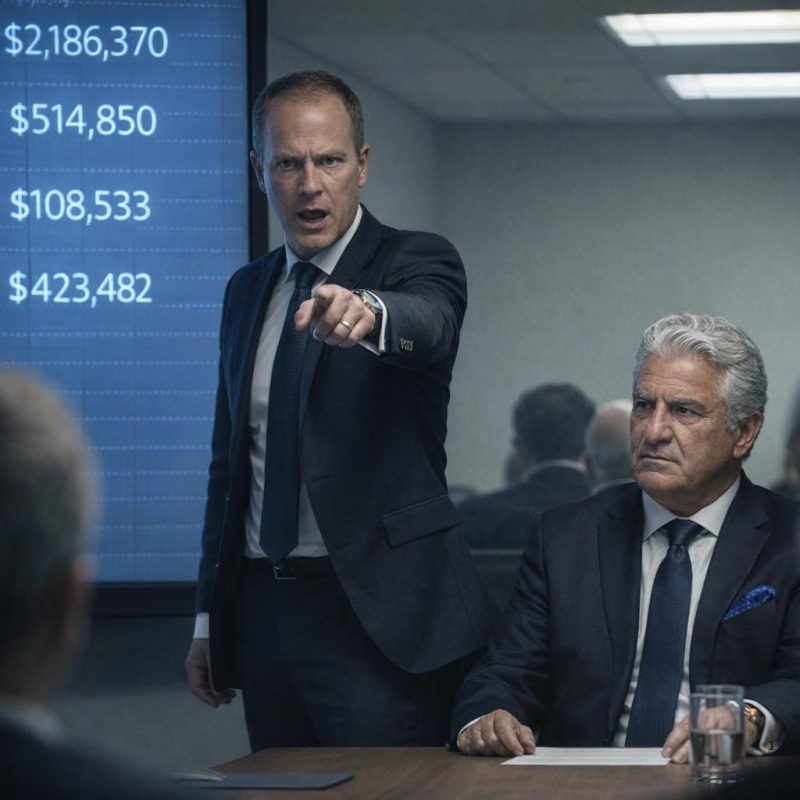 Image by RM AI
Federal Agents and Handcuffs
The board chair spoke for less than two minutes. He said Marcus's employment was terminated effective immediately, that all system credentials had already been revoked, and that the company's cooperation with federal authorities was unconditional. Marcus sat very still through all of it. He didn't argue. He didn't look at me. The door to the conference room opened and two men in dark suits stepped in — they'd been waiting in the corridor, I realized, probably for the better part of an hour. One of them addressed Marcus by name, identified himself and his partner as FBI agents, and stated the charges: federal wire fraud and embezzlement. Marcus stood when they asked him to stand. He straightened his jacket with both hands, a small automatic gesture, and then his hands were no longer his to move. Richard walked me back to the main floor afterward, and Devon was already there, standing near my desk. Word had moved faster than we had. People had stopped at their cubicles and stood in the corridor, and the whole floor had gone quiet in that particular way that means everyone is watching the same thing. I stood next to Devon and watched two FBI agents walk Marcus through the open office toward the elevator, his hands cuffed behind him, and not a single person in that room looked away.
 Image by RM AI
Company-Wide Security Review
The all-staff meeting happened two days after Marcus was walked out. The board chair stood at the front of the main conference room — every seat taken, people standing three deep along the walls — and laid it out in plain language. A senior executive had been systematically diverting client funds for nearly three years. The scheme had been uncovered through internal analysis. Federal authorities had been notified. Marcus's name wasn't spoken, but everyone in that room already knew it. The board chair announced a full company-wide security review, new financial oversight protocols, mandatory dual-authorization on all transfers above a certain threshold, and quarterly external audits going forward. Sarah's name came up twice — once when they announced she'd be leading the security review team, and again when they described the database integrity measures she'd already begun implementing. Afterward, Richard pulled me aside near the corridor. He didn't make a speech about it. He just said, quietly, that what I'd done had saved the company from something that could have ended it, and that he wouldn't forget that. Devon was waiting for me when I came back to my desk. He handed me a coffee without saying anything, which was somehow exactly right. I looked at the new security framework document Sarah had already circulated — twelve pages, dense with protocols — and thought about the coffee machine timestamp that had started all of it.
 Image by RM AI
Recognition and Reflection
The meeting with the CEO and board chair was scheduled for a Thursday morning, and I almost asked to reschedule it twice. Devon talked me out of both attempts. The CEO was a compact, precise woman I'd only ever seen from a distance at company-wide events, and she shook my hand and thanked me before I'd even sat down. The board chair presented a formal commendation letter — my name on it, the company seal, language about integrity and analytical rigor that I read three times because it didn't quite feel real. They offered me a seat on the new oversight committee, and I said yes. Richard was there too, and he apologized again — not the quick, pressured version from before, but something slower and more considered, and I believed it this time. That evening, Devon and Sarah took me to dinner at a place Devon had been recommending for months. Sarah ordered for the table with the confidence of someone who had strong opinions about everything, which she did, and Devon made a toast that was equal parts sincere and embarrassing. I thought about how close the whole thing had come to going the other way — the suspension, the accusations, the days when I genuinely didn't know if I'd have a job at the end of it. The commendation letter was still in my bag. I didn't need to take it out again. I already knew what it said, and I sat with the weight of it quietly, the way you do when something finally lands after a very long fall.
 Image by RM AI
Director of Financial Integrity
The formal offer came on a Monday — Director of Financial Integrity, a title the company had created specifically for the role. Lila walked me through the paperwork with her usual calm precision, explaining the scope: oversight of all financial audit systems, direct reporting line to the board on compliance matters, authority to flag and freeze transactions pending review. It was more than I'd expected, and I told her that. She smiled and said the board had been very clear about what they wanted, which I took to mean they weren't taking any more chances. Richard stopped by my office that afternoon — my new office, one floor up, still smelling faintly of fresh paint — and said he was glad it had worked out the way it did. I think he meant it as an understatement, which was his way. Devon appeared in the doorway about ten minutes after Richard left, looked around the room with exaggerated appreciation, and said he expected a better view from his own desk once I'd sorted out the team structure. Sarah sent me a message that same evening: three lines, no punctuation, entirely characteristic, saying she was ready to start on the security protocol integration whenever I gave the word. I signed the offer letter that night at my kitchen table. The role had come out of the worst professional experience of my life, and I understood that clearly. But sitting there with the pen in my hand, what I felt most was the particular steadiness that comes from knowing exactly why the work matters.
 Image by RM AI
Rebuilding Trust and Moving Forward
The first month moved fast. I implemented the new audit procedures in the second week — transparent, documented, every step logged and time-stamped in a system Sarah had built with redundancies I hadn't even thought to ask for. We set up an anonymous reporting channel for financial concerns, something that hadn't existed before, and Lila helped draft the communications so it didn't read like a liability exercise but like something the company actually meant. Devon's promotion to senior analyst came through mid-month, and he marked the occasion by rearranging his desk setup and buying a plant he immediately named after a compliance regulation, which I chose not to question. Richard backed every initiative I brought to the executive team without hesitation, which made things move faster than I'd expected. The fraud detection training sessions started in week three — mandatory, department-wide, no exceptions — and the attendance was better than I'd anticipated. People were paying attention in a way they hadn't before. I think the arrest had made it real for them in a way that policy documents never could. There were still awkward moments — colleagues who'd kept their distance during the investigation, conversations that went slightly too careful — and I didn't pretend those weren't there. But the floor felt different when I walked through it in the mornings. Not fixed, not finished, but honest in a way it hadn't been before.
 Image by RM AI